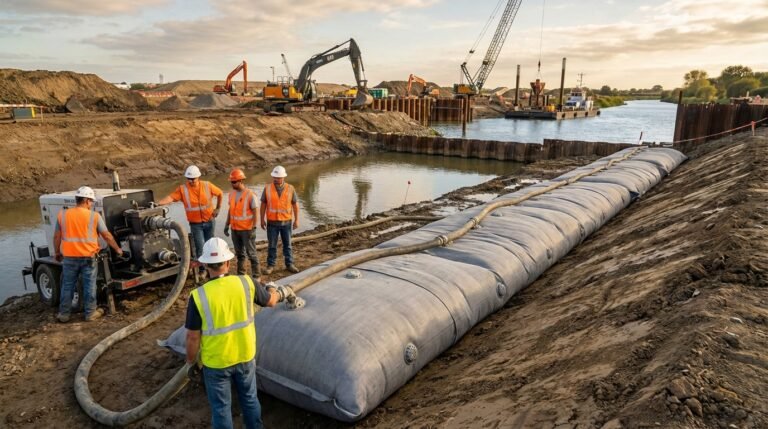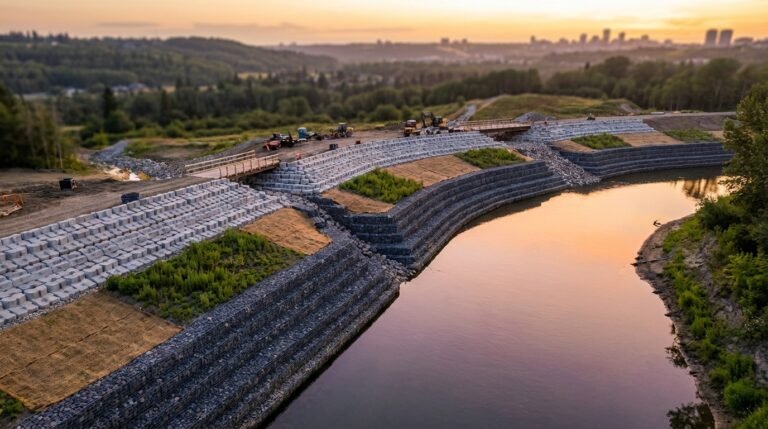

Selecting an erosion countermeasures system built with high-precision hinge joints and unyielding cable connections is paramount to mitigating long-term operational liabilities. This technical paper delivers an advanced engineered articulated concrete mattress procurement risk analysis, transforming scour prevention into an exercise in strict quantitative verification for infrastructure stakeholders. By analyzing failure points before they are installed in active waterways, stakeholders safeguard multimillion-dollar civil investments.
Incorporating 10+ years of hydraulic engineering expertise, insights from over 230+ successful deployments, 150+ dedicated production lines, and 48-hour global dispatch capabilities, this guide details how procurement officers can accurately assess total cost of ownership (TCO) alongside long-term risk methodologies. Manufacturers like HydroBase have historically utilized these exact frameworks to align localized scour protection with highly aggressive modern procurement cycles.
Moving beyond preliminary capital expenditure requires aligning matrix design with specific fluvial geomorphology. The objective is to establish an unbreachable barrier between high-velocity laminar flows and the vulnerable sub-grade, a process that demands exhaustive laboratory verification, precisely controlled concrete metallurgical formulations, and verified synthetic polymer tensile capabilities.
Hydrodynamic Shear Stress and Scour Mechanism Vulnerabilities
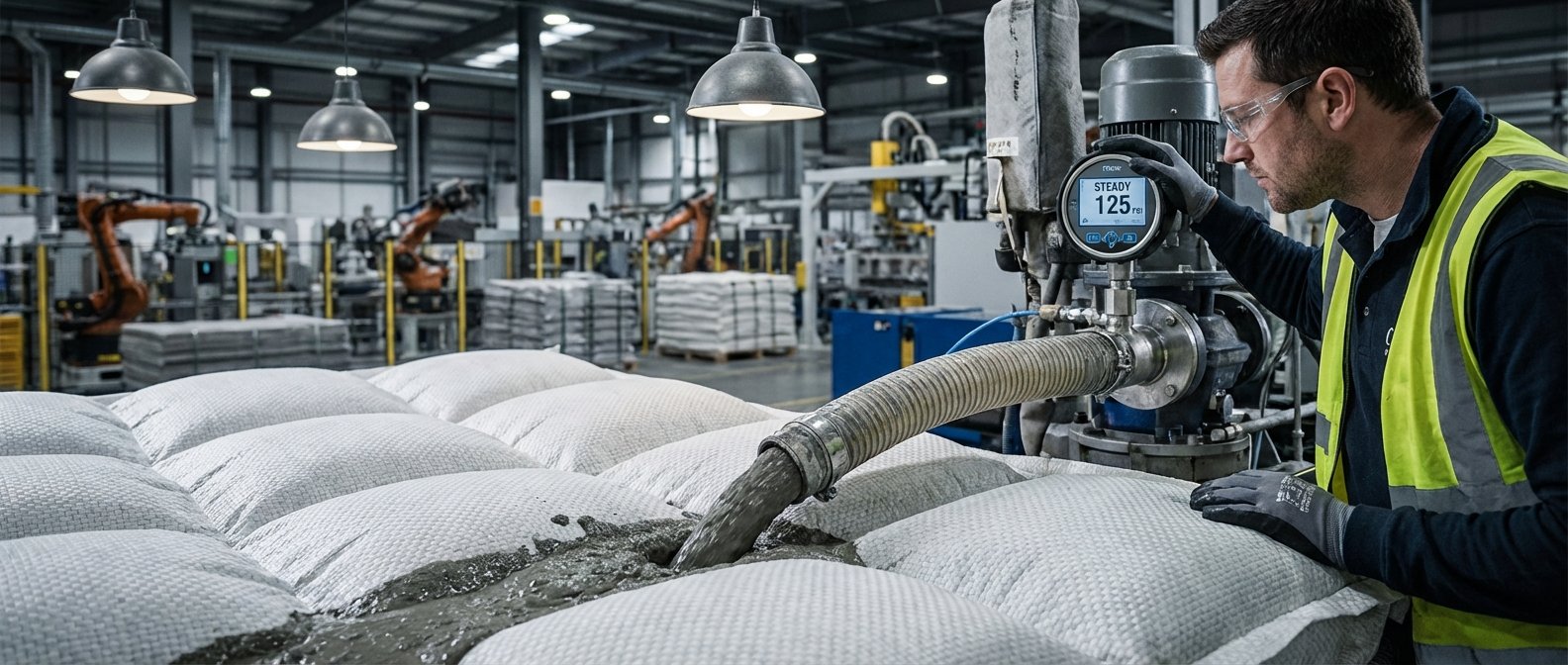
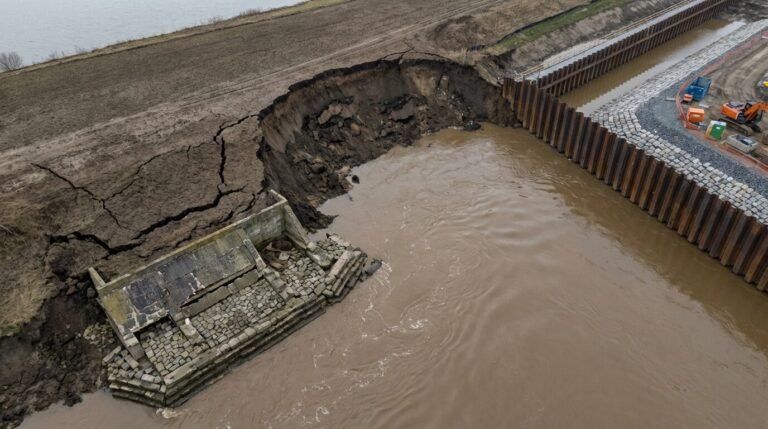
Evaluating the operational integrity of an articulated concrete mattress system starts with a granular understanding of the hydrodynamic shear stresses acting upon the riverbed. Traditional riprap systems notoriously fail when exposed to prolonged flow velocities exceeding 4.5 m/s, primarily due to catastrophic particle displacement and subsequent sub-grade fluidization. As the velocity profile of the water increases logarithmically near the bed, individual rock armors shift, transferring chaotic hydrologic forces directly into the unprotected earthen bank.
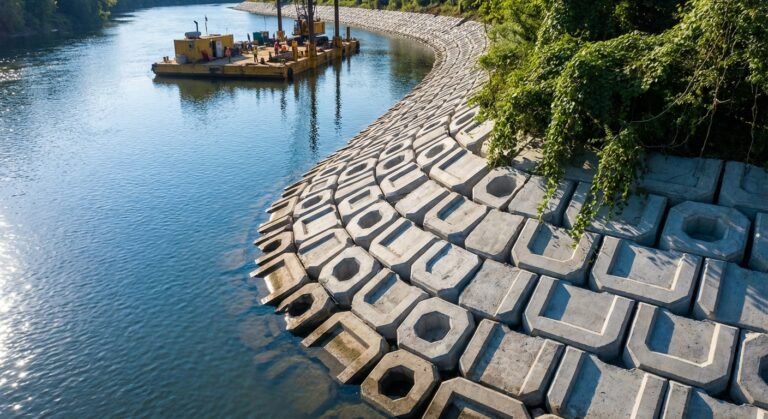
Conversely, an engineered articulated concrete mattress must maintain complete structural coherence in velocities surpassing 6.5 m/s and bed shear stresses greater than 120 Pa. The procurement assessment must aggressively target the precise geometric tolerances of the interlocking blocks to ensure a seamless barrier. High-quality systems feature gap tolerances of ±0.3mm between adjacent units, heavily restricting the hydraulic radius available for micro-eddy currents to develop.
If these dimensional slip-form tolerances exceed the 0.8% threshold, turbulent flow begins prioritizing the interstitial gaps, accelerating the erosion of the underlying substrate. Overturning moments generated by severe hydraulic jumps require a highly specific block profile and an absolute mass per unit area. Analyzing the hydrodynamic drag coefficient alongside the lift coefficient ensures the matrix actively resists uplift forces.
Procurement officers must require independent test data confirming these coefficients under real-world flume laboratory conditions before shortlisting suppliers for critical riverine revetment projects. Furthermore, calculating the subcritical versus supercritical flow transitions over the matrix allows engineers to determine if the concrete surface requires additional texturing to safely dissipate kinetic energy without inducing cavitation implosions against the concrete surface.
Tensile Strength and Cable Connection Integrity in Interlocking Matrices
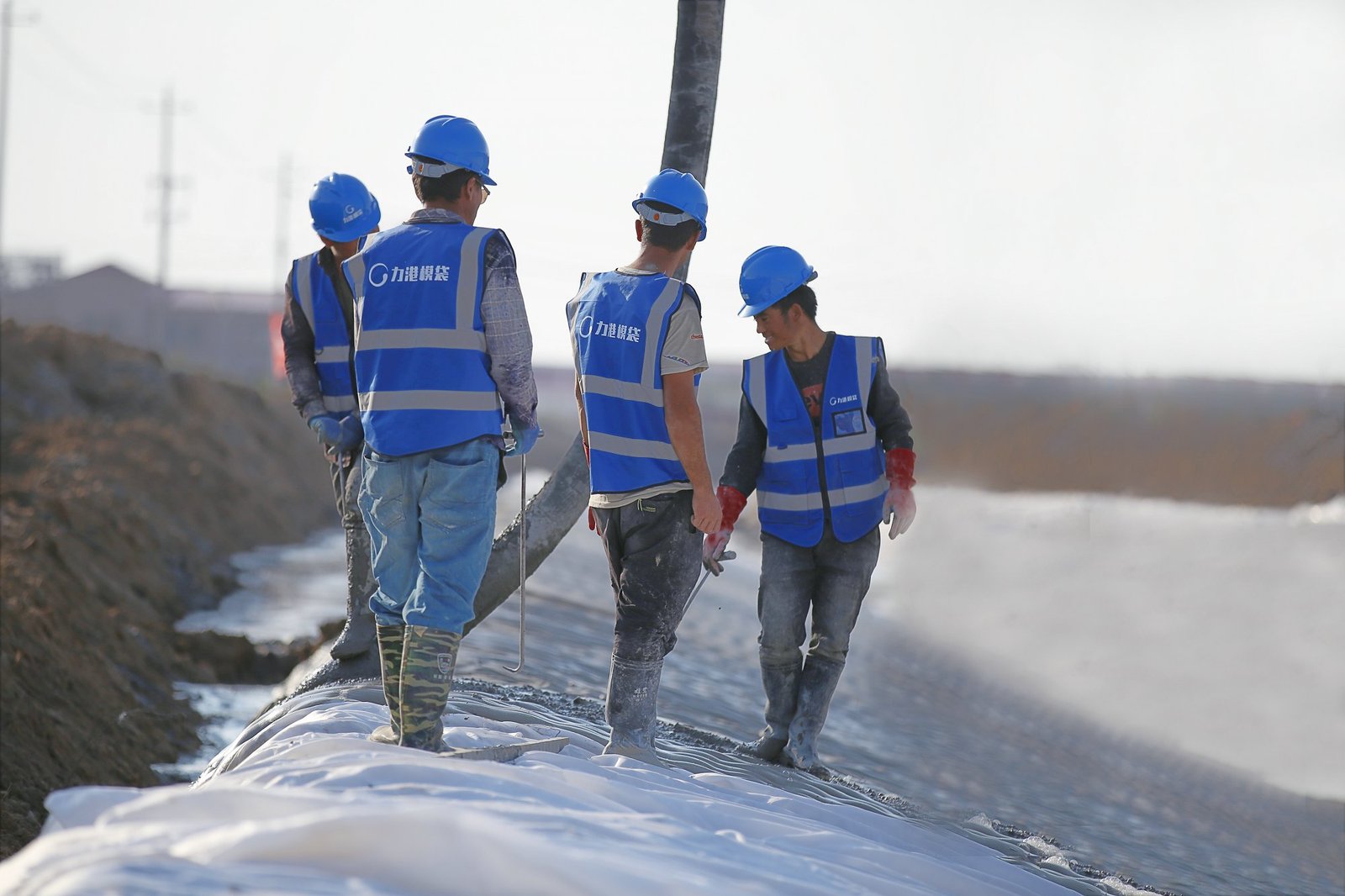
The architectural backbone of any high-performance structural matrix lies entirely in its integrated cabling network and resulting hinge joints. When localized scour inevitably creates an isolated void beneath the mattress, the system must instantaneously articulate to conform to the new sub-grade topography without sacrificing total structural continuity. This critical localized bridging capability relies entirely on the ultimate tensile strength and degradation resistance of the interwoven cables.
Procurement specifications must strictly outline the underlying material science behind these cables rather than accepting generic synthetic descriptions. Copolymer braided ropes or marine-grade stainless steel (typically 316L) cables must deliver a verified minimum breaking strength of 45 kN while maintaining an elongation-at-break geometry of less than 2.4%. These parameters ensure the matrix remains tightly constrained during extreme articulation events.
Sub-standard polyester alternatives suffer from rapid hydrolysis and catastrophic UV degradation, losing up to 47.3% of their tensile capacity within the first five years of active underwater deployment. Securing a reliable articulated concrete mattress means auditing the manufacturer’s automated threading and swaging processes directly at the origin facility.
Hinge joints must uniquely permit extreme horizontal and vertical articulation without inducing sharp point-loading on the internal cable sheathing. If a manufacturer cannot provide localized cyclic compression testing data for these specific pivot points, the risk of mid-span cable snapping under hydrostatic loads increases exponentially. Eliminating these single-point failure vectors prevents a localized suspension from unzipping the entire downstream revetment.
Concrete Block Density and Compressive Strength Baselines
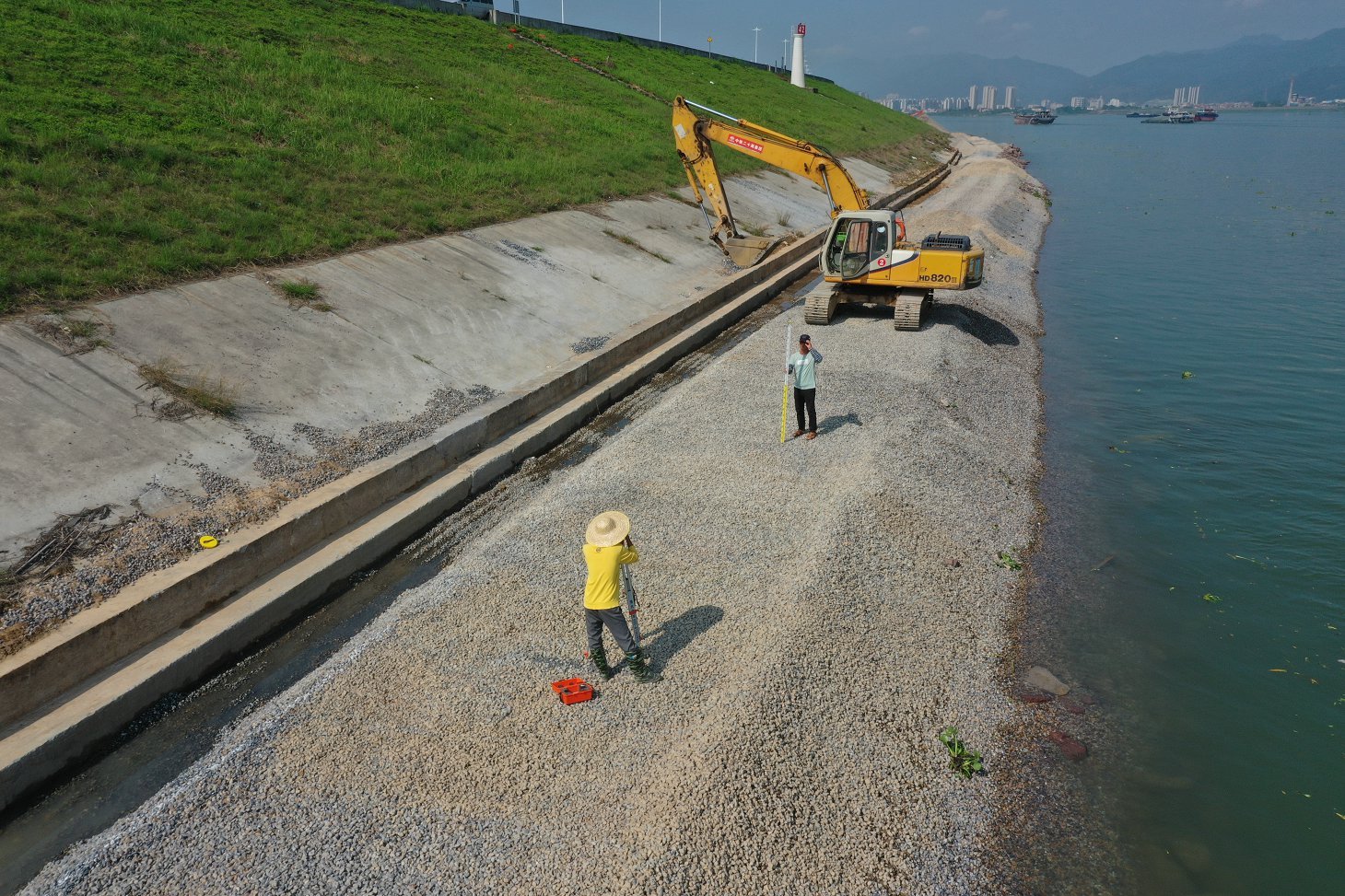
Concrete physical formulation dictates the long-term survivability of the entire mattress against continuous severe abrasion, seasonal freeze-thaw expansion cycles, and chronic chemical degradation. Heavy civil structural guidelines dictate that wet-cast blocks utilized in any articulated concrete slab mattress must actively achieve a minimum 28-day compressive strength of 4000 psi (27.6 MPa).
Substantially sub-standard mix designs inadvertently introduce dangerous micro-porosity into the infrastructure layer. High-performance blocks require an intensely precise water-to-cement ratio, ideally remaining strictly below 0.45, paired closely with air-entrainment percentages hovering exactly around 5.5% to 6.5%. This specific internal metallurgical density framework fundamentally ensures that water absorption rates remain heavily constrained below 5.2%.
If water moisture absorption sharply exceeds this operational threshold, internal interstitial freezing will cause severe internal spalling. This directly compromises the critical block mass and aerodynamic drag profile over a standardized 15-year operational horizon. As global environmental regulations tighten surrounding waterway purity, the concrete matrix must natively resist sulfate attacks and abrasive suspended sediment loads without leaching alkaline compounds.
Specifications should heavily mandate the inclusion of pozzolanic engineered admixtures such as fly ash or dense silica fume, which actively refine and seal the capillary pore structure of the concrete. Procuring specialized systems with these verified mix designs guarantees that the infrastructure retains its critical engineered mass, severely reducing the active risk of localized hydrodynamic lifting during major flood events.
Precision Geotextile Formwork and Sub-Grade Filtration Metrics
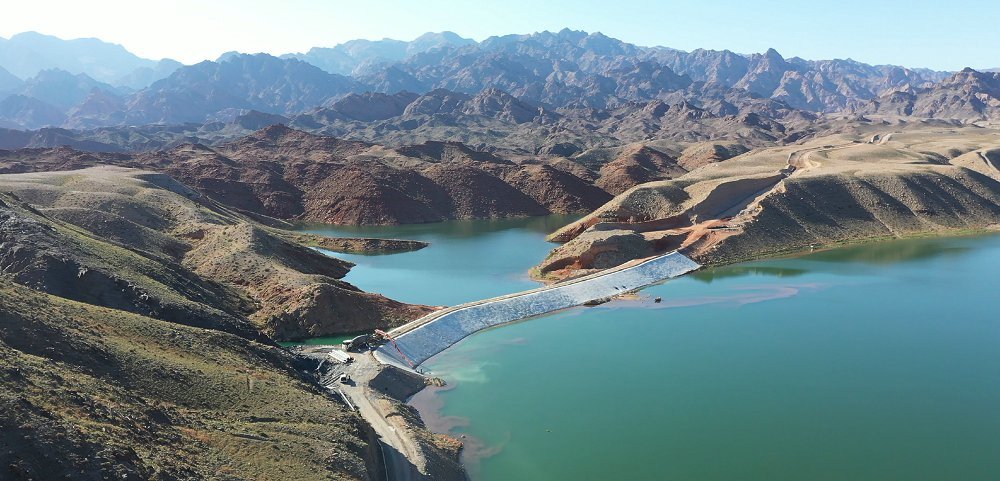
An articulated concrete armor layer is rendered completely useless if the foundational earthen sub-grade migrates out continuously through the interstitial block gaps. The integrated woven geotextile fabric acts as the absolute primary filtration barrier, delicately balancing immediate pore water pressure relief with extreme foundational soil retention. This creates a highly critical mechanical matrix where the fabric’s Apparent Opening Size (AOS) must perfectly align with the mean grain size profile of the site’s sediment.
Engineers specifying a heavily engineered filter point concrete mattress must precisely evaluate the fabric’s cross-plane permittivity, which should continually exceed 0.5 sec^-1. This specific metric strictly ensures that sudden rapid drawdown scenarios in sensitive reservoirs or volatile tidal zones do not trap violent hydrostatic pressure immediately behind the revetment. Trapped hydraulic pressure remains a primary hidden catalyst for systemic global slope failure.
Market intelligence explicitly underscores the rapid global shift toward highly engineered geosynthetic fabrics. The global geosynthetics market was valued at US$ 24.5 Bn in 2025 and is projected to reach US$ 62.1 Bn by 2036, expanding at a strong CAGR of 8.8%, driven largely by mega-infrastructure demands for superior long-term environmental protection.
The woven geometric orientation of the high-tenacity yarns must provide continuous multidirectional tensile resistance without dangerous ballooning during the high-pressure concrete injection phase. This robust geosynthetics market growth, increasing by USD 7.56 billion, clearly validates the global procurement shift away from unpredictable granular sand filters toward standardized, high-tensile polymeric fabrics protecting critical global waterways.
Articulated Concrete Mattress Technical Evaluation Requirements
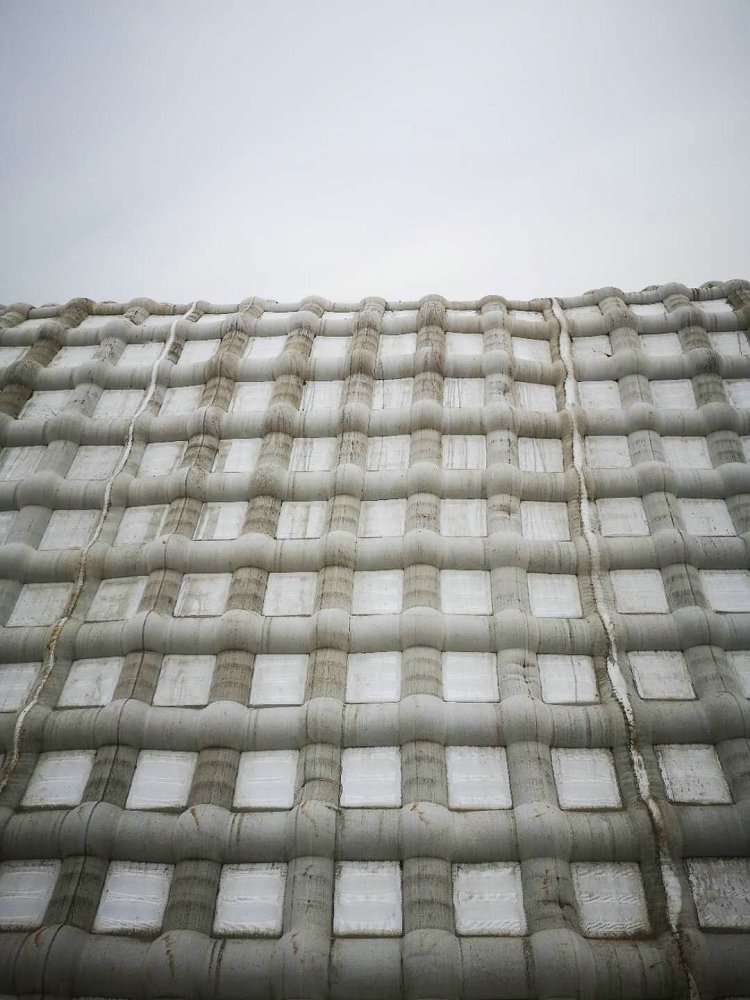
To properly execute supplier risk mitigation, procurement teams must lock in aggressively quantifiable metrics during the preliminary Request for Proposal (RFP) stage. Generating a rigidly standardized data baseline essentially guarantees direct apples-to-apples comparisons across competing international manufacturing facilities. By proactively anchoring all subsequent supplier selection to definitive operational thresholds, procurement officers actively strip subjective marketing out of the capital allocation process.
The rapidly accelerating shift towards quantifiable civil standards is fundamentally reshaping how raw infrastructure materials are globally sourced. The Geosynthetics Market Size Expected to Grow from USD 1.95 Billion in 2023 to 3.45 Billion by 2033, at a CAGR of 5.87%, intensely highlighting that governmental demand for proven, independently testable, and robust environmental armor is only accelerating.
Procurement teams must flawlessly integrate these exact quantitative parameters into their binding financial contracts. Failing to document physical engineering tolerances during the tender process severely limits the ability of the lead project engineer to reject sub-standard structural deliveries upon site arrival.
| Critical Engineered Component | Rigid Procurement Requirement Metric | Failure Risk Consequence | Supply Chain Mitigation Strategy |
|---|---|---|---|
| Bulk Concrete Compressive Strength | ≥ 4000 psi (27.6 MPa) at 28 days | Block fracture under impact | Strict mix design laboratory audit |
| Geometry Interlocking Gap Tolerance | ±0.3 mm variance operational threshold | Hydrologic tunneling / site scour | Demand CNC machined steel molds |
| Core Cable Tensile Breaking Strength | ≥ 45 kN maximum breaking capacity | Matrix separation / river unraveling | Independent pull-testing certification |
| Block Mass Moisture Absorbency | < 5.2% total mass volume maximum | Spalling from severe freeze/thaw | Curing stage automation validation |
| Filtration Geotextile Permittivity | > 0.5 sec^-1 constant flow capability | Hydrostatic earthen slope blowout | AOS microscopic matching to substrate |
Total Cost of Ownership (TCO) Economics vs Traditional Riprap
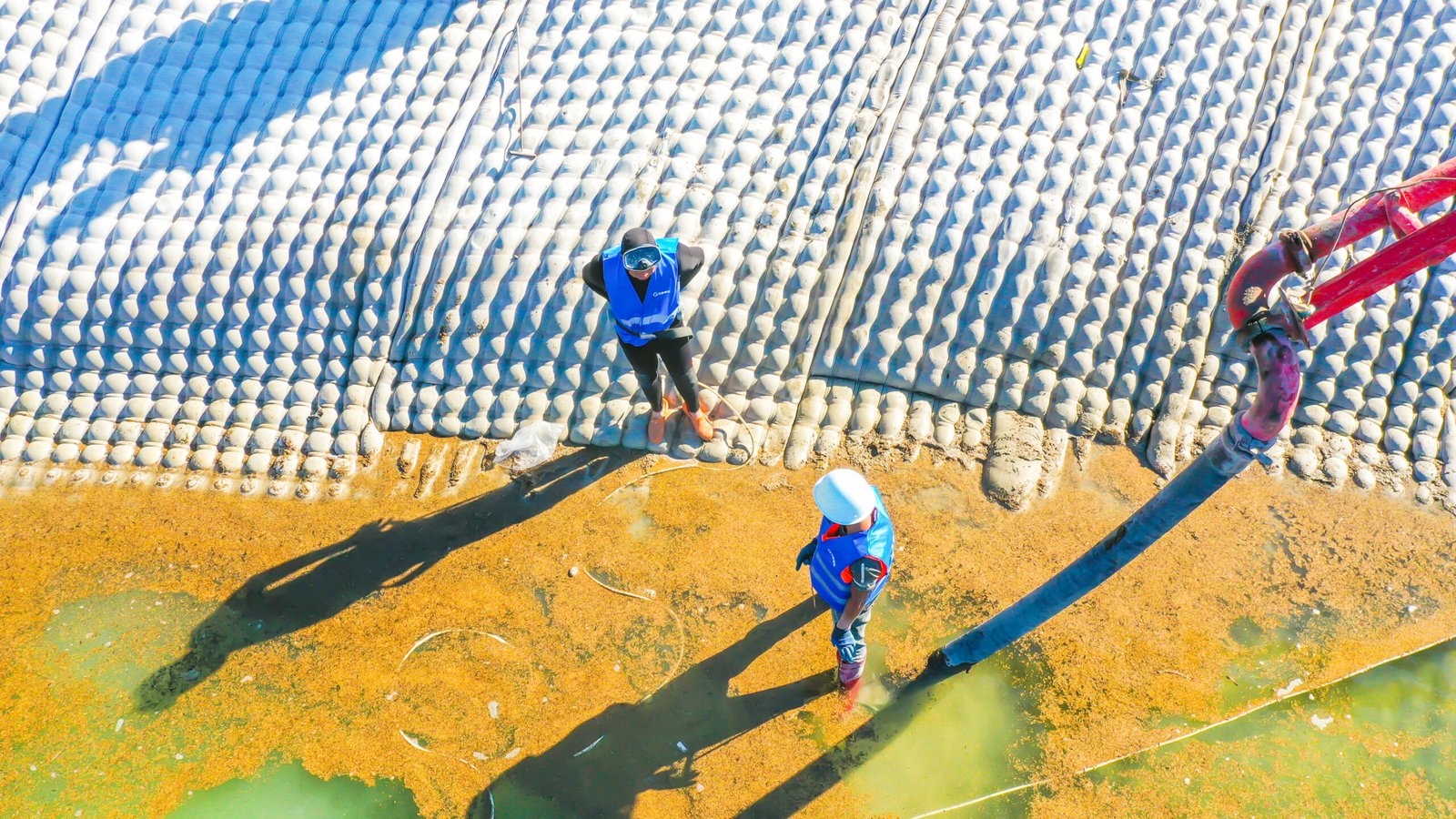
Procurement risk analysis ultimately distills down to strict lifecycle operational economics. Initial unadjusted capital expenditure for heavily engineered articulated concrete matrices admittedly often exceeds traditional loose riprap dumping by 15% to 25%. However, rigorously analyzing the exhaustive TCO over a standardized 30-year operational lifecycle reveals massive sustained financial advantages for engineered locking systems, primarily derived from nearly zero-maintenance operational modeling.
Traditional loose rock riprap requires continuous ongoing volumetric replenishment as severe seasonal flow events systematically displace standard rock armor. Independent hydraulic studies indicate that a specialized 10-year flood event can displace upwards of 12.4% of non-interlocking riprap grids, rapidly requiring emergency mobilization, specialized marine barge transport, and extreme indirect operational costs.
The global engineering community intimately recognizes this inherent systemic inefficiency, directly contributing to the industry projection that the geosynthetics market will reach USD 45.3 Billion by 2035 as infrastructure expansion and environmental protection drive demand. Transitioning to precision assets eliminates the compounding financial drain of endless rock dumping.
An appropriately anchored engineered concrete mattress presents a structurally unified, highly adaptable hydrologic surface. Sophisticated TCO models should proactively factor in the intentionally reduced channel roughness (Manning’s n coefficient), which dramatically enhances overall hydraulic conveyance efficiency and reduces adjacent flood plane elevations. Utilizing a comprehensive filter point concrete mattress pumping strategy also massively increases installation velocity, effectively shrinking raw labor costs.
Manufacturing Verification and Quality Assurance Standardization
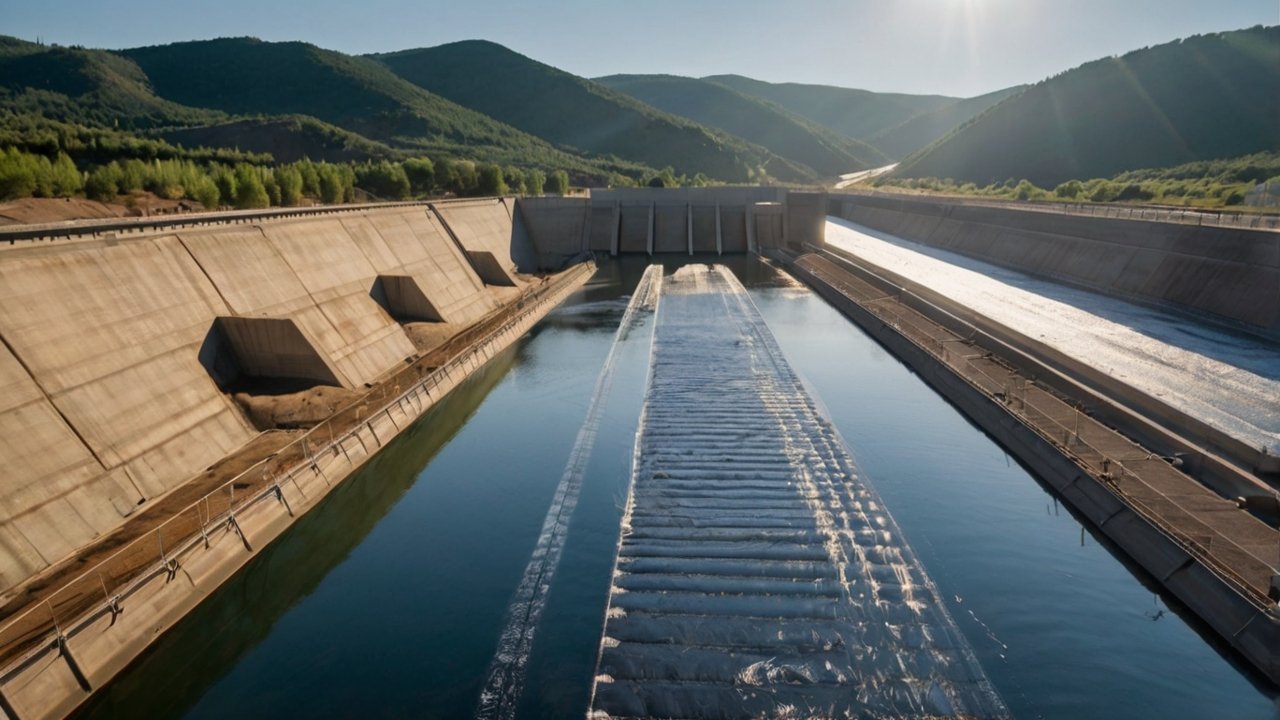
Without aggressively intrusive quality control mechanisms operating directly at the manufacturing origin, rigid paper specifications mean absolutely nothing. Auditing an advanced supplier requires an incredibly deep inspection of their raw material batching precision, industrial vibration methodology, and enclosed curing environment. Automated continuous slip-form and wet-cast factory operations must seamlessly utilize high-frequency consolidation to rapidly eliminate internal honeycombing.
For example, manufacturers like HydroBase have historically addressed this strict necessity by integrating continuous real-time moisture sensors directly into the planetary batching phase, maintaining the concrete water-to-cement ratio within an incredibly tight ±0.01 margin of error. Isolated environmental curing chambers that protect the raw blocks from rapid ambient temperature fluctuations ensure the chemical heat of hydration remains optimized.
Full documented compliance with ASTM D6884 for critical installation guidelines and ISO 9001 for manufacturing repeatability is strictly mandatory for any international procurement file. This exact standard of meticulous quality assurance severely prevents isolated microscopic failures from compounding into systemic downstream civil disasters.
When examining massive long-term global infrastructure demand, where the geotextiles market is globally poised for a significant expansion phase safely spanning from 2026 to 2035, standardizing manufacturing integrity becomes the ultimate defense against structural liability. Procurement officers who refuse to actively audit origin facilities blind themselves to the single largest vector of project supply chain risk.
Strategic Logistics and Minimum Order Quantities (MOQ) Modeling
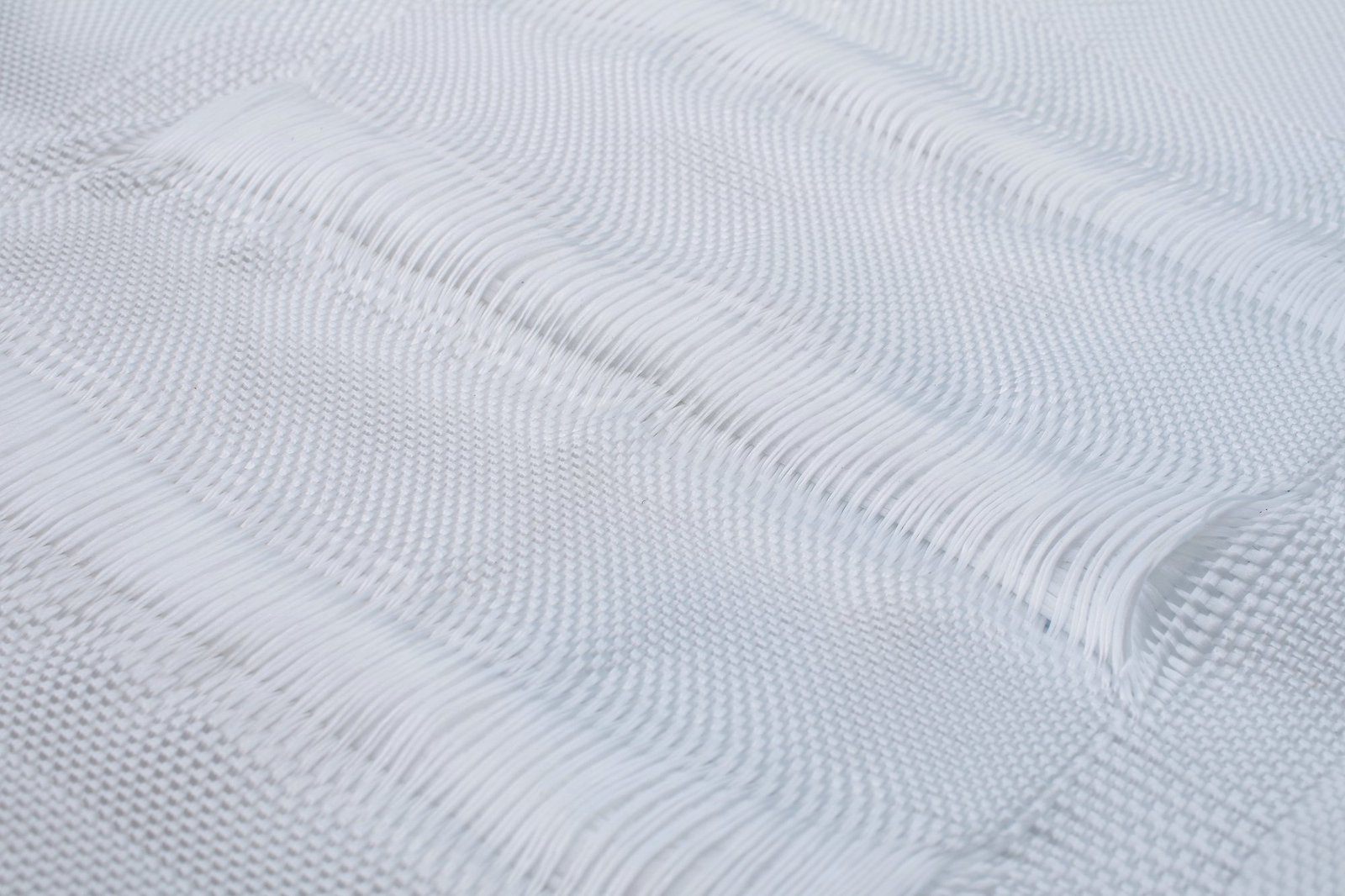
Heavy continuous riverine infrastructure components carry extraordinarily massive logistical profiles that can completely derail exact project timelines if casually mismanaged. Aggressive procurement teams must thoroughly analyze a manufacturer’s raw bulk material throughput and steel molding inventory to definitively verify genuine active production capacity.
If an offshore or domestic supplier lacks sufficient specialized mold duplication capabilities, a single unexpected mechanical mold failure can instantly halt deliveries. This instantly structurally violates rigid global construction window limitations heavily tied to seasonal regional water levels. Optimizing intense freight density limits remains another crucial supply chain risk vector that must be modeled prior to issuing purchase orders.
Finished block configurations must mathematically maximize heavy legal flatbed or shipping container static weight limits without accidentally exceeding highly restrictive regional axle distribution regulations. Custom engineered modular configurations require perfectly exact load sequencing; components must practically arrive on-site in the precise chronological order of the submerged placement engineering plan.
Evaluating the Geosynthetics Grid Market, which is accurately projected to expand at a 7.6% CAGR, clearly reveals that overall supply chain robusticity is rapidly becoming the ultimate differentiating procurement factor among global competitors. Manufacturers maintaining robust verified emergency bulk stockpiles drastically lower the risk of force majeure declarations disrupting tight governmental infrastructure schedules.
Cable Degradation Resistance and Environmental Chemistry Interactions
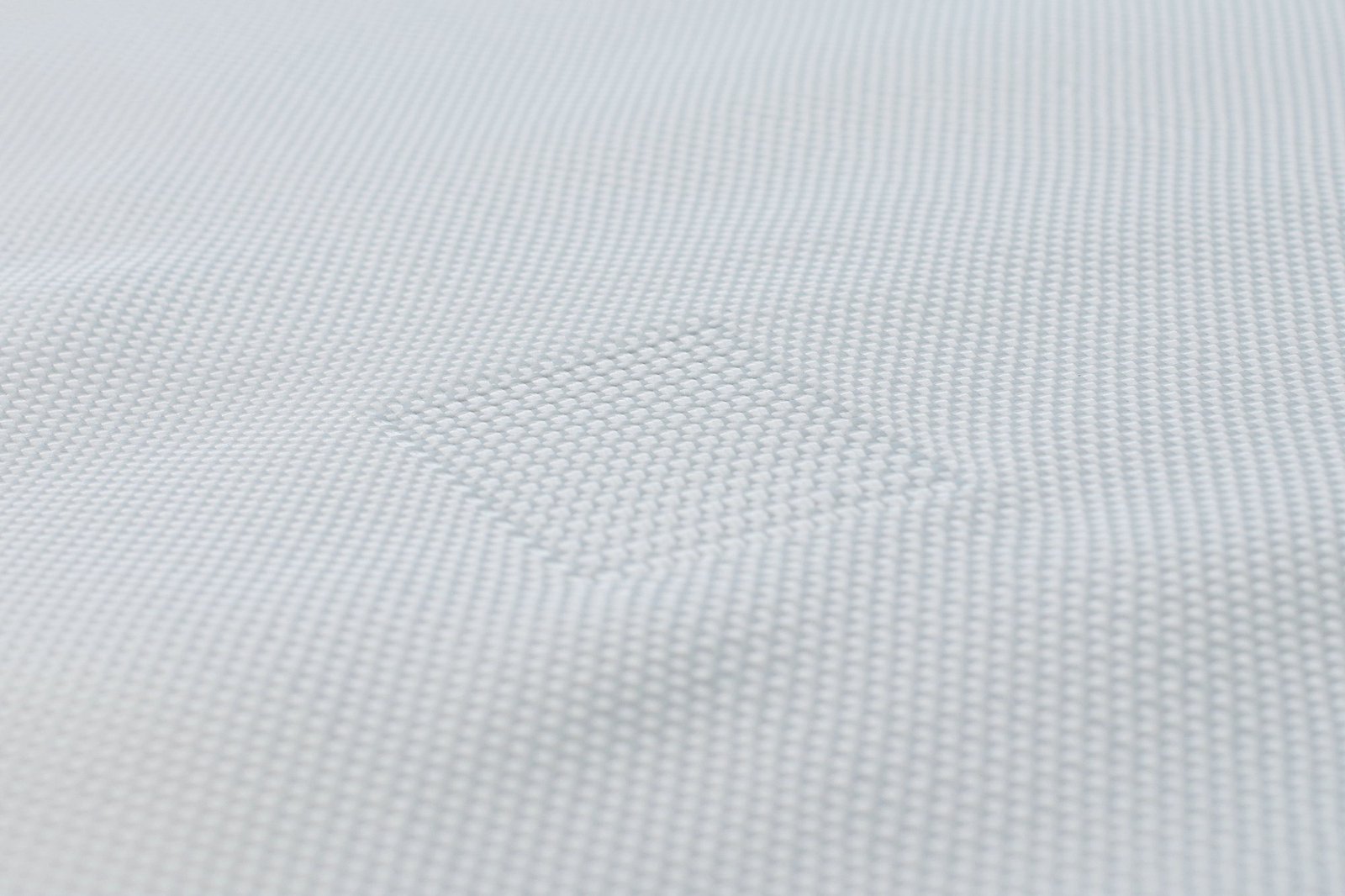
A heavily overlooked dynamic of complex engineered procurement is the long-term chemical compatibility of the internal tie-cables with the highly specific macro aquatic environment. Active estuarine zones, where sensitive freshwater rapidly mixes with immense tidal saline influxes, proactively create highly corrosive macro environments. Using deeply inferior galvanized steel cables in these transition zones essentially guarantees rapid aggressive oxidation.
Instead, rigid procurement technical protocols must mandate the use of advanced polyolefin, specialized co-polymer synthetic woven ropes, or fully encapsulated 316L stainless-steel alternatives for these chemically aggressive marine environments. Industrial riverine environments typically natively contain unacceptably high concentrations of dissolved heavy heavy metals, varied aggressive pH levels from upstream metallurgical runoff, and rapidly fluctuating biological oxygen demand parameters.
Analyzing the total ultraviolet (UV) degradation potential specifically during the on-site staging phase is equally critical to the lifespan of the synthetic load-bearing elements. If the structural system is temporarily staged openly on the barren riverbank for three continuous months strictly prior to final placement, the synthetic core cables must silently endure massive concentrated solar radiation exposure.
Ensuring the designated engineering manufacturer structurally binds high-percentage carbon black nanoparticles or specific UV-inhibiting chemical additives directly into the synthetic extrusion process strictly ensures zero critical strength loss before the heavy asset ever physically enters the active water column. Without this verification, the system’s operational lifespan begins depreciating before construction ends.
Submerged Placement and Installation Strain Tolerances
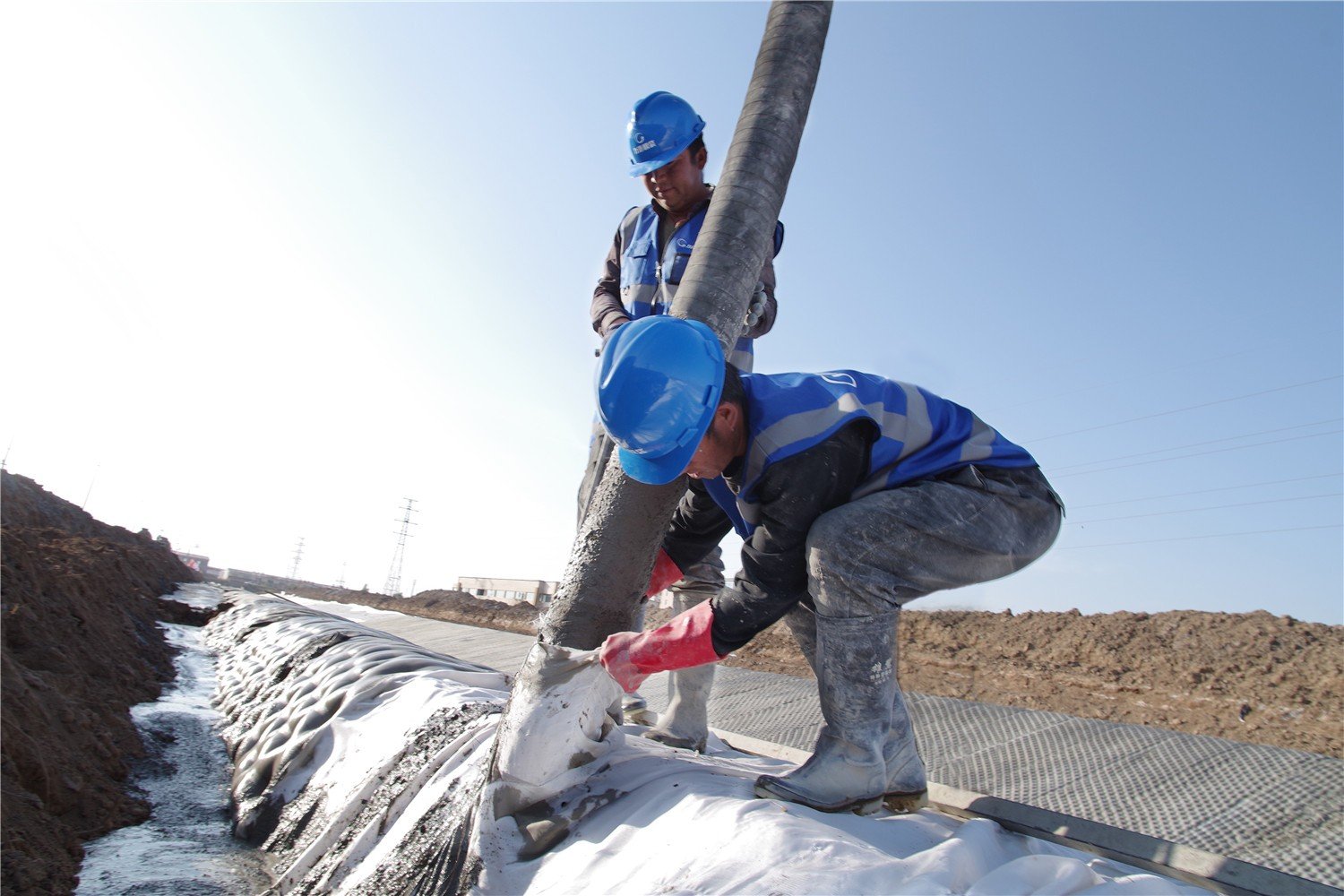
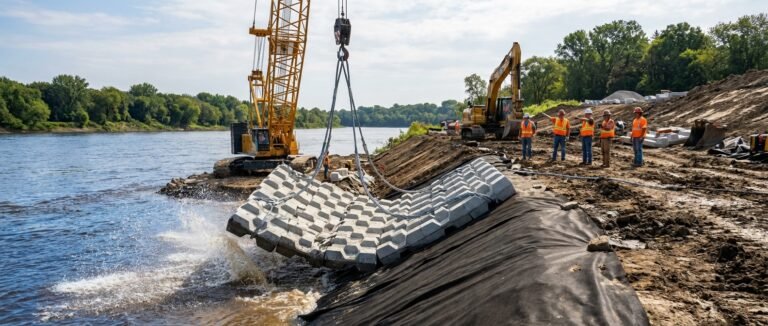
The exact singular moment of highest physical risk for any engineered interconnected system predictably occurs not during decades of steady-state subsea operation, but strictly during the actual violent submerged placement sequence. Giant steel spreader bars and highly specialized crane lifting frames continuously subject the entire internal cable matrix to massive longitudinal and simultaneous transverse bending forces.
These temporary dynamic installation loads frequently far exceed normal baseline hydrodynamic shear factors experienced during a century flood. A highly thorough procurement structural risk analysis must diligently audit the chosen supplier’s internal structural lifting factor-of-safety physical testing documentation. If the engineered connection loops cast tightly into the mattress peripheral margins explicitly do not distribute the massive lifting load equally across the entire internal synthetic grid, localized severe tension spikes will cleanly sever individual supporting lines.
Suppliers must independently supply complex finite element analysis (FEA) testing data affirmatively proving that their specific geometric hinge tolerances can vertically articulate up to a full 45 degrees without structurally pinching the internal synthetic core while simultaneously suspended under extreme full gravitational load in mid-air.
Finally, definitively verifying blind placement positioning tolerances in absolute zero-visibility muddy floodwater inherently demands precise self-aligning interlocking block geometries. Blocks deliberately engineered with intuitive chamfered interlocking edges naturally self-align as they mechanically settle heavily onto the prepared geotextile sub-grade layer, aggressively reducing the profound dependency on highly paid commercial divers for dangerous manual manipulation.
Frequently Asked Questions
Q: What is the primary procurement risk when sourcing engineered articulated concrete mattresses?
The most critical procurement risk is the mechanical failure of internal hinge joints and cable connections under intense localized scour stress. If tie-cables severely lack 45 kN minimum tensile strength or internal gap tolerances openly exceed ±0.3mm, the entire interconnected hydraulic structure can predictably face catastrophic lateral unravelling under sustained high-velocity flow.
Q: How does the total cost of ownership (TCO) for articulated concrete mattresses compare to traditional riprap?
While the raw initial capital expenditure for structurally engineered integrated mattresses is typically 15-25% inherently higher than loosely dumped riprap, the 30-year TCO drops massively. The precisely modeled interlocking nature absolutely prevents the continuous 12.4% typical volumetric sub-grade displacement frequently seen in riprap structures during severe storm events.
Q: What technical standards must be required from articulated concrete mattress suppliers during bidding?
Procurement buyers absolutely must contractually mandate total compliance with ASTM D6884 for active installation procedures and rigidly demand specific 28-day concrete compressive strength laboratory testings exceeding 4000 psi (27.6 MPa). Guaranteeing the chosen supplier effectively utilizes high-precision woven geotextile formwork with an AOS of precisely 0.425mm is actively non-negotiable.
Q: How do custom minimum order quantities (MOQs) and lead times impact heavy riverine infrastructure projects?
Global production lead times for entirely custom-engineered heavy structural systems generally consistently run 4 to 8 active weeks, hinging heavily on specific custom rigid mold fabrication and required scale. B2B structural buyers must heavily prioritize macro logistics mapping to perfectly synchronize flatbed highway payload capacities.
Conclusion
Conducting an intensely exhaustive engineered articulated procurement risk analysis acts as the fundamental dividing operational line between multi-generational civil infrastructure success and catastrophic systemic structural failure. By effectively elevating rigid engineering selection criteria safely beyond basic localized unit cost to structurally encompass precise hinge tolerances, tested standardized geotextile permittivity, and rigidly robust bulk compressive baselines, procurement officers eliminate long-term macro hydrodynamic vulnerabilities.
Adhering religiously to strict data-driven TCO economic models and aggressively demanding transparent empirical performance laboratory testing data permanently transforms the global logistical supply chain into a strictly quantifiable fortress against unyielding dangerous riverine shear stresses. Ultimately, civil verification supersedes assumed historical reliability.