
Diagnosing Filter Point Concrete Mattress Installation Problems

Most project delays stem from a fundamental misunderstanding of how fluid concrete behaves inside a closed, restricted geotextile envelope. Operators frequently push material too fast, assuming the fabric will simply stretch to accommodate the volume. Woven forms designed for erosion control do not stretch like elastic; they tense up under hydrostatic load. When concrete hits a bottleneck, the pressure immediately transfers to the internal binding threads.
Understanding the sheer mechanical force involved helps clarify why equipment selection matters. The global Concrete Construction Equipment Market Size $10.8Bn (2025) reflects massive ongoing investments in specialized high-pressure line pumps engineered specifically for delicate grout applications. Utilizing a standard boom pump meant for heavy slabs often delivers erratic, pulsating bursts. These sudden volumetric spikes easily exceed the seam peel strength of the formwork, causing catastrophic blowouts that bleed fine aggregate directly into your riverway or drainage channel.
Maintaining uniform thickness requires treating the fabric as a dynamic pressure vessel. The integrated filter points act as mechanical constraints, pinning the upper and lower fabric layers tightly together to create dual-functioning valleys. If the pump surge is too aggressive, lateral flow across the mattress cavity stalls. Material begins stacking vertically instead of spreading horizontally, creating isolated bulging mounds rather than a unified revetment surface.
Fine Aggregate Concrete Mix Design Fundamentals

Successful installation hinges entirely on your aggregate selection. Using standard ready-mix concrete will instantly clog the injection ports and choke the narrow pathways winding between the filter points. Specifications typically require a highly fluid, fine aggregate grout featuring a maximum aggregate size of just 8mm to 10mm. This ensures smooth passage through the internal structural maze of the woven formwork.
Achieving a C30/C35 grade concrete with such small aggregate demands a higher cementitious material content to hit your target structural strength. It takes precision to balance that high cement factor against the necessary 150-180mm slump. Too much water induces severe bleeding through the non-woven geotextile backing, weakening the final cured matrix and leaving a hollow, powdery crust. Conversely, too little water creates a stiff, unworkable paste that refuses to travel laterally.
Some experimental slope protections dabble with chemical alternatives mapped within the Polyurethane Foam Market Size & Industry Share 2031 data, but traditional high-flow concrete remains the definitive standard for heavy hydraulic environments. Chemical plasticizers and water reducers become your best tools here. They provide the required fluidity without compromising the critical w/c ratio, ensuring the grout navigates the complex internal geometry without honeycombing or premature setting.
Dialing in Grout Pump Pressure Settings
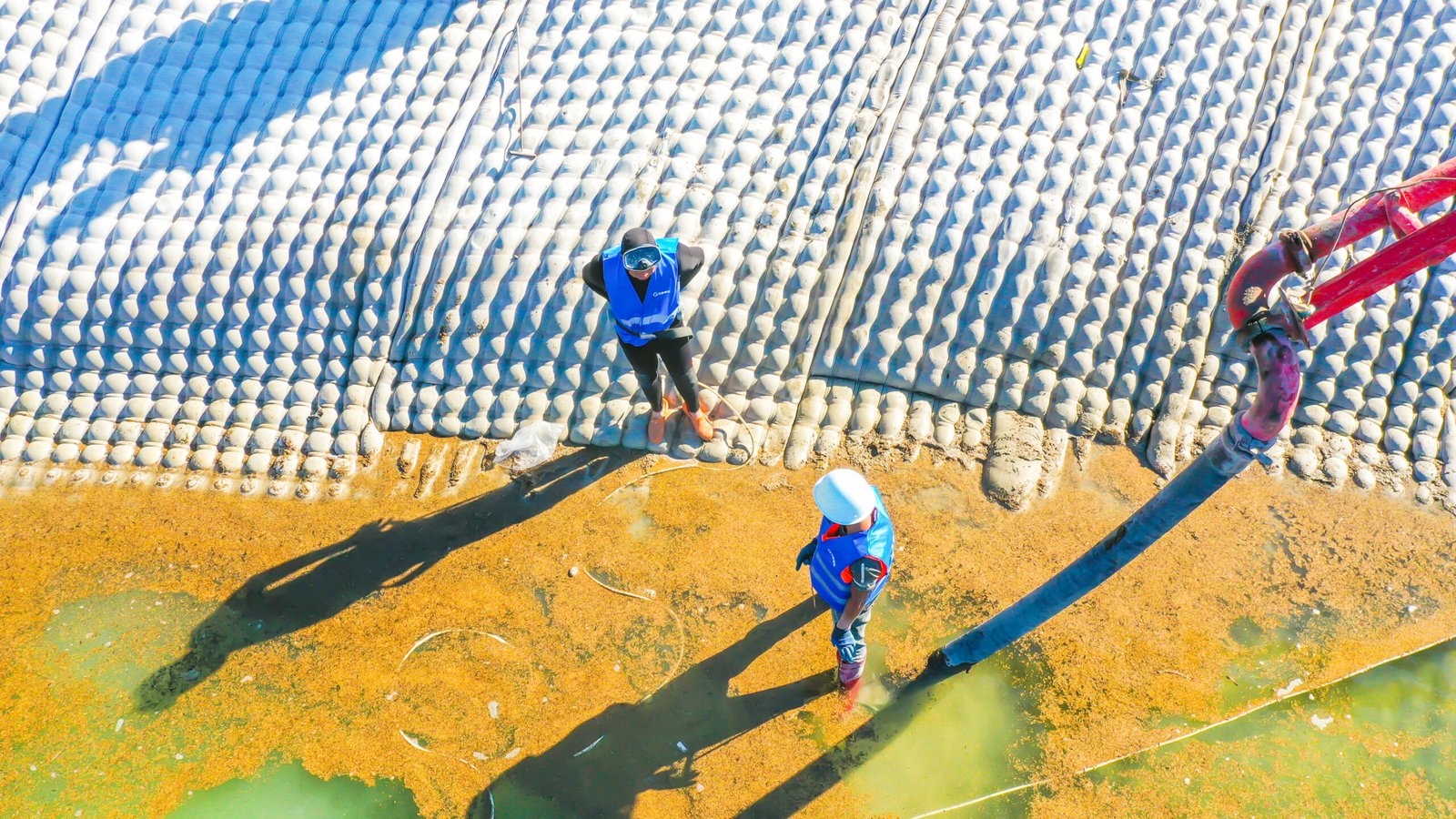
Gauge monitoring dictates the survival of your geotextile fabric. Most standard operations require maintaining pump pressure between 15 and 30 psi at the injection nozzle. Allowing pressure to climb above this threshold signals that a downstream blockage has formed, usually due to aggregate bridging behind a filter point. Pushing through the blockage by increasing manifold throttle invariably terminates in a ruptured panel.
While guidelines for hand-placed articulating concrete block (ACB) installation outline distinct manual bedding rules, fabric-formed systems rely entirely on internal hydraulic pressure to bed themselves against the subgrade. The injected grout forces the lower fabric layer down into the soil profile, conforming perfectly to minor ruts and ground irregularities. This intimate contact eliminates the microscopic voids where foundational scour typically initiates.
Managing the flow rate directly influences that ground conformation. We see the best results when the field team throttles the output to roughly 10 to 15 cubic meters per hour. Pumping too slowly risks the concrete taking its initial set inside the delivery hose during minor layout pauses. Finding the exact operational rhythm keeps the material moving constantly enough to sustain a wet edge inside the fabric while remaining gentle enough to respect the tensile limits of the woven seams.
Navigating the Pumping Sequence
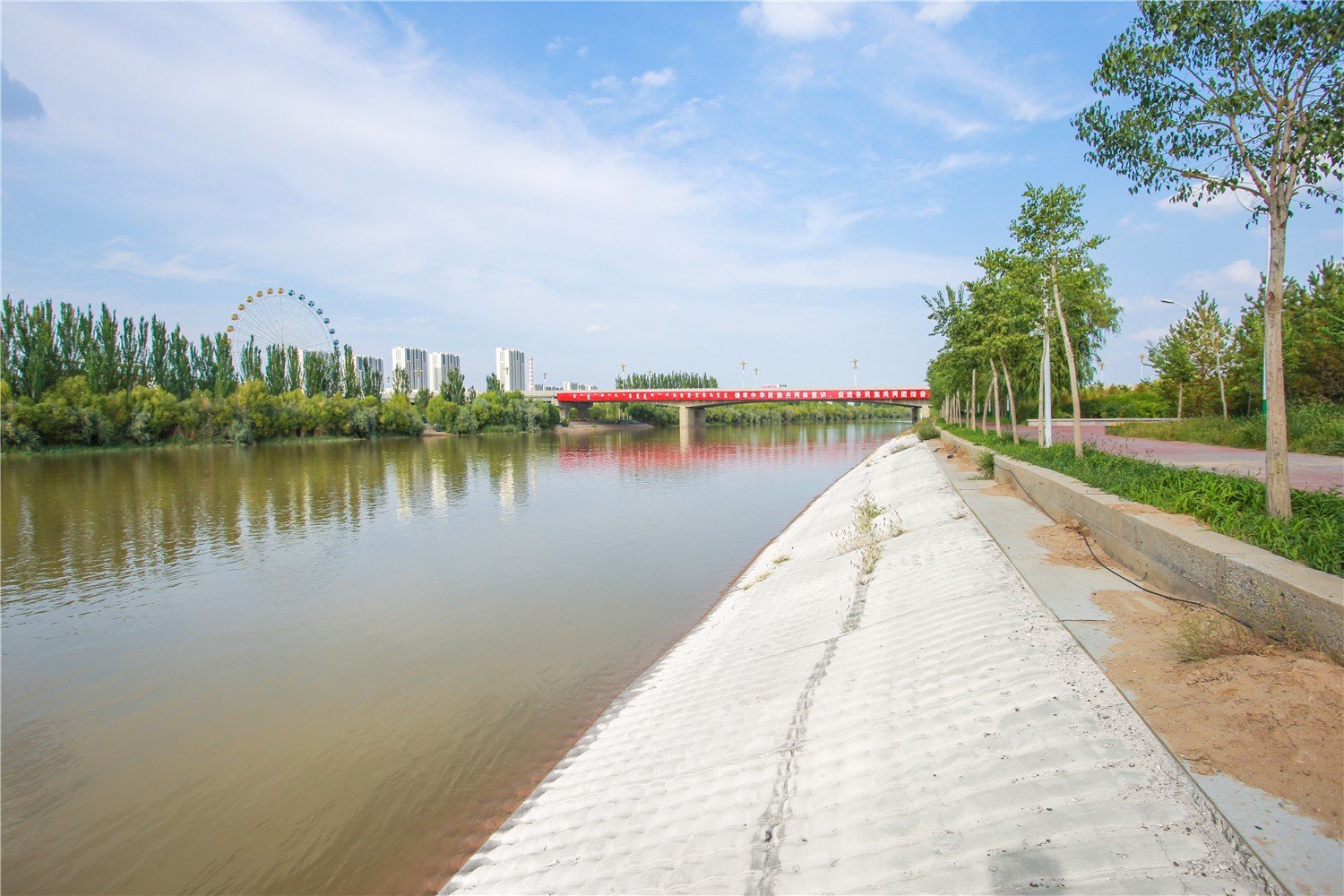
Always start your injection process at the lowest elevation point of the prepared slope. Pumping bottom-to-top forces the fluid grout to fight gravity, ensuring every single cavity packs tightly before the material can crest over the internal baffles. If you start from the crest, the concrete simply races down the internal channels, trapping massive air pockets and leaving critical basal sections dangerously void.
You won’t find fabric formwork covered in general consumer official mattress industry statistics, yet the global infrastructure reliance on these civil engineering solutions continues to expand exponentially precisely because of their monolithic stability. Attaining that stability means coordinating your hose movements meticulously. Operators must withdraw the injection pipe smoothly as the adjacent cells inflate to the specified 100-300mm block thickness, never allowing the pipe head to become buried in stiffening grout.
Similar to how synthetic geogrids confine and stabilize granular fill materials to increase load distribution, the dimensional fabric pockets confine the wet concrete. Working steadily across the slope profile in measured lateral sections prevents the formation of cold joints. A cold joint inside a continuous fabric form acts as a structural hinge under hydraulic loading, totally undermining the rigid scour resistance the product is meant to deliver.
Filling Fabric Formwork Underwater
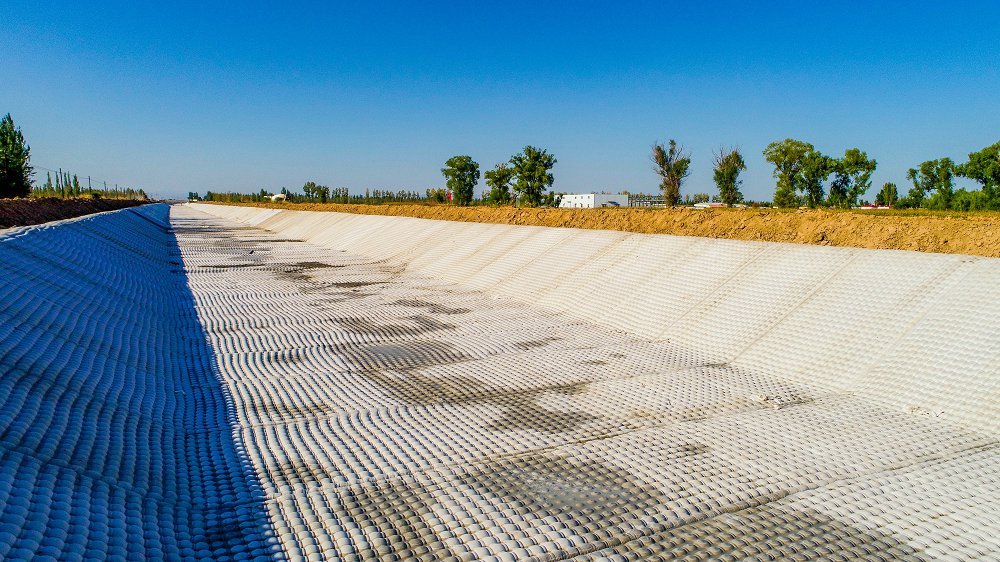
Subaquatic operations introduce entirely different hydrostatic dynamics to the filling sequence. The ambient water pressure pressing against the exterior of the deflated fabric actually assists the operation by supporting the grout column as it inflates. This counter-pressure prevents the heavy liquid concrete from rushing to the toe of the slope too violently. As our lead craftsman always says, “You can feel when the concrete mattress is right.”
Many designers specify solutions conceptually mirroring Hydrotex® formed concrete mattresses, utilizing specialized filter points to actively release pore water pressure from the embankment. When pumping underwater, these same filter points allow river water trapped inside the empty fabric envelope to expel cleanly as the heavier concrete displaces it from the bottom up. Without this displacement mechanism, trapped water would severely dilute the incoming grout.
Maintaining the tremie seal becomes your primary focus below the waterline. The tip of your injection hose must remain submerged within the protective mass of the expanding concrete at all times. Breaching the surface of the wet grout inside the fabric introduces ambient water into the mix, washing out the cement paste and leaving behind a brittle pocket of loose gravel.
Spillway & Specialized Slope Applications
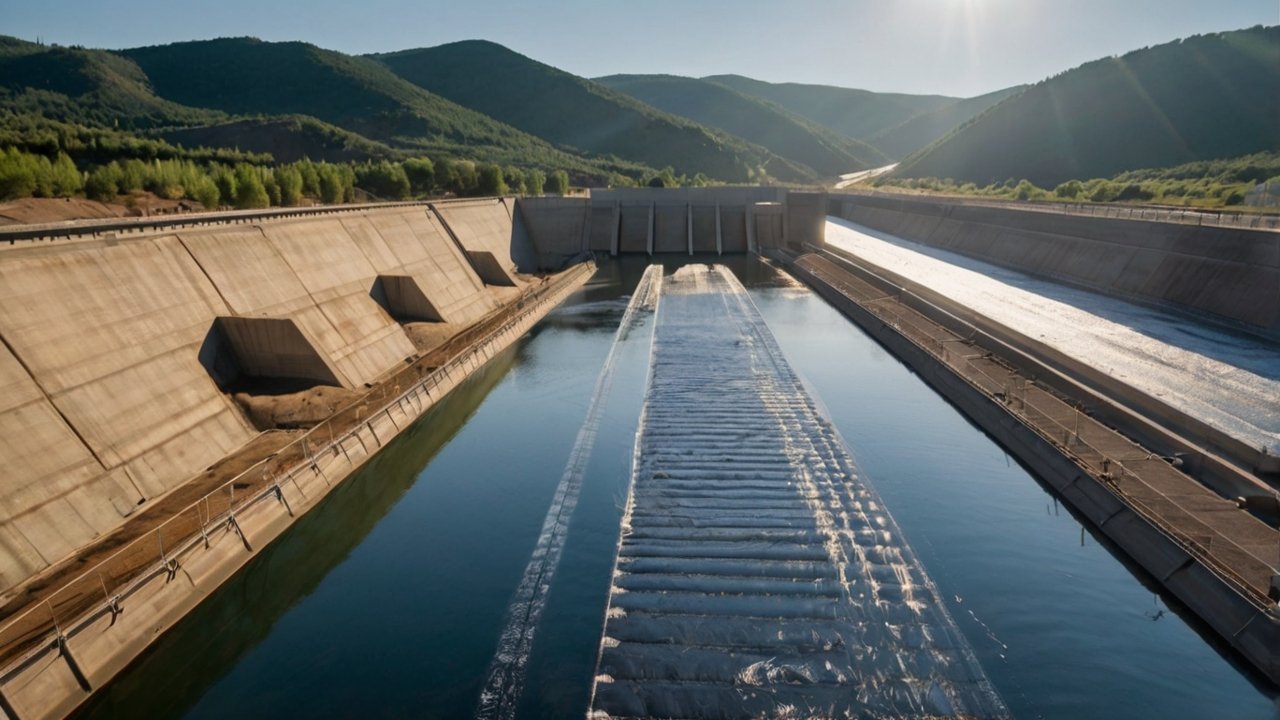
Steep gradients on dam faces and spillways tax both the machinery and the materials to their absolute limits. The heavy downward pull of standard concrete formulas threatens to burst the lower transverse seams before the upper sections can fully hydrate. To combat this sliding force, steep applications mandate a severely reduced slump, often dropping into the 100-120mm range.
This stiffer mix requires operators to space their injection ports much closer together. You simply cannot expect a low-slump mix to travel six or seven meters laterally across a 2:1 slope without separating. Tighter port spacing means more frequent hose moves, demanding a highly coordinated deck crew to manage line transitions without causing pump delays.
If the spillway design incorporates a Vegetated Concrete Mattress at the upper crests for ecological tying, the transition zone requires careful grout management. The open-cell structure designed to allow vegetation growth or soil fill depth introduces distinct edge-stress concentrations. Field teams must regulate output carefully as the grout approaches these transitional open boundaries to avoid spilling over into the intended planting zones.
Controlling Seam Stress & Uplift Pressures
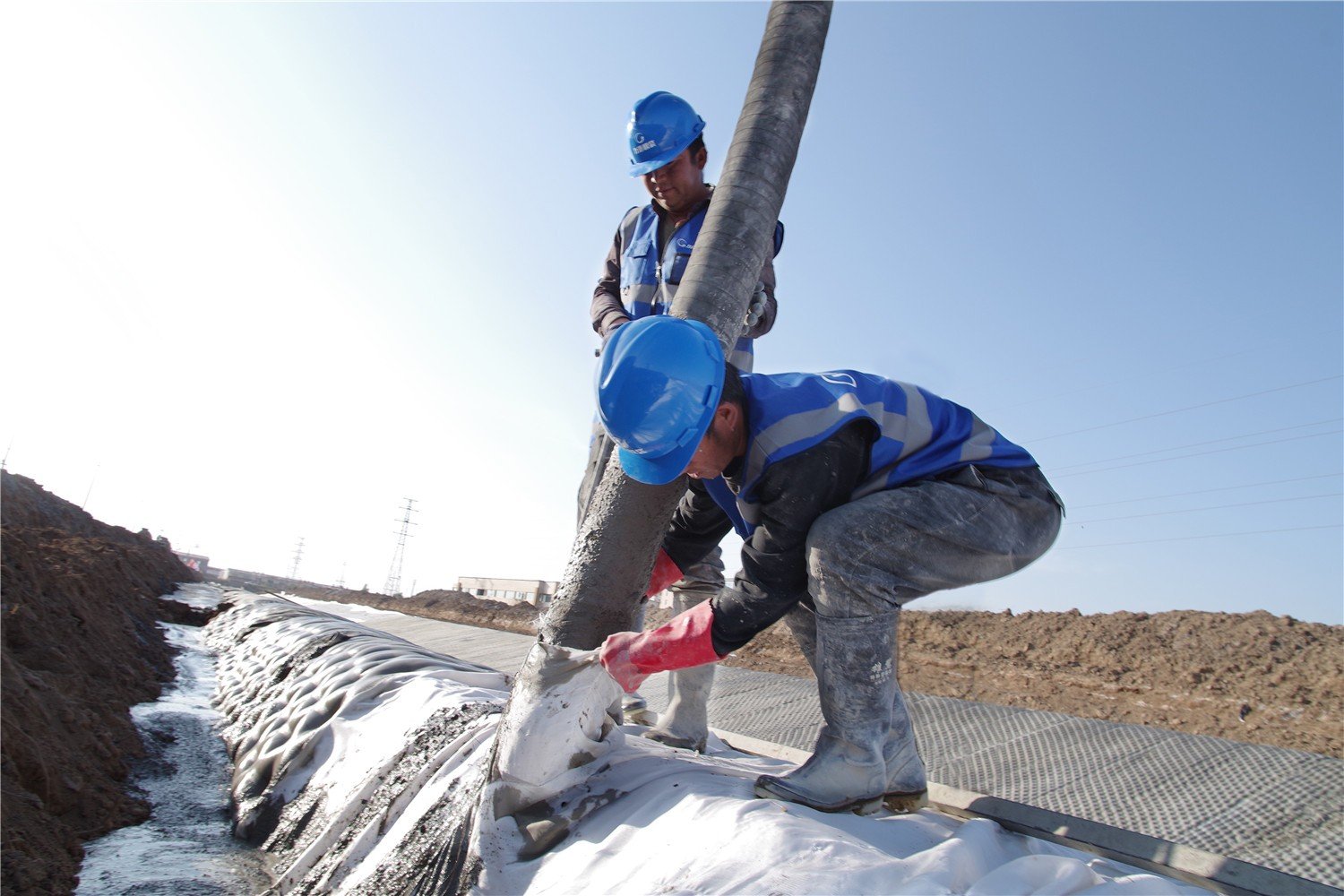
Once the material cures, the functional life of the installation relies entirely on how well those integrated filter points manage subsurface hydrology. Hard-armoring a fast-flowing channel without providing groundwater relief guarantees massive hydrostatic uplift beneath the slab. The filter points serve as engineered drainage conduits, dropping the permeability coefficient to acceptable levels.
Contractors scaling cross-border supply chains frequently analyze databases like U.S. Partner Trade Insights to source globally validated woven fabrics boasting a tensile strength of ≥50kN/m. That high tensile threshold is non-negotiable. During a rapid drawdown event in a reservoir, the water trapped in the embankment soils wants to escape into the channel. The filter spacing must accommodate that rapid outflow to prevent the entire concrete layer from popping completely off the slope.
Verification of seam peel strength prior to the pour provides peace of mind. Factory-stitched joints must resist immense outward burst pressure during the liquid phase and enduring sheer stress during thermal expansion in the cured phase. Verifying these specs off-site ensures your crews aren’t gambling with critical infrastructure tolerances once the mixer trucks arrive.
Evaluating Fabric Formwork Durability
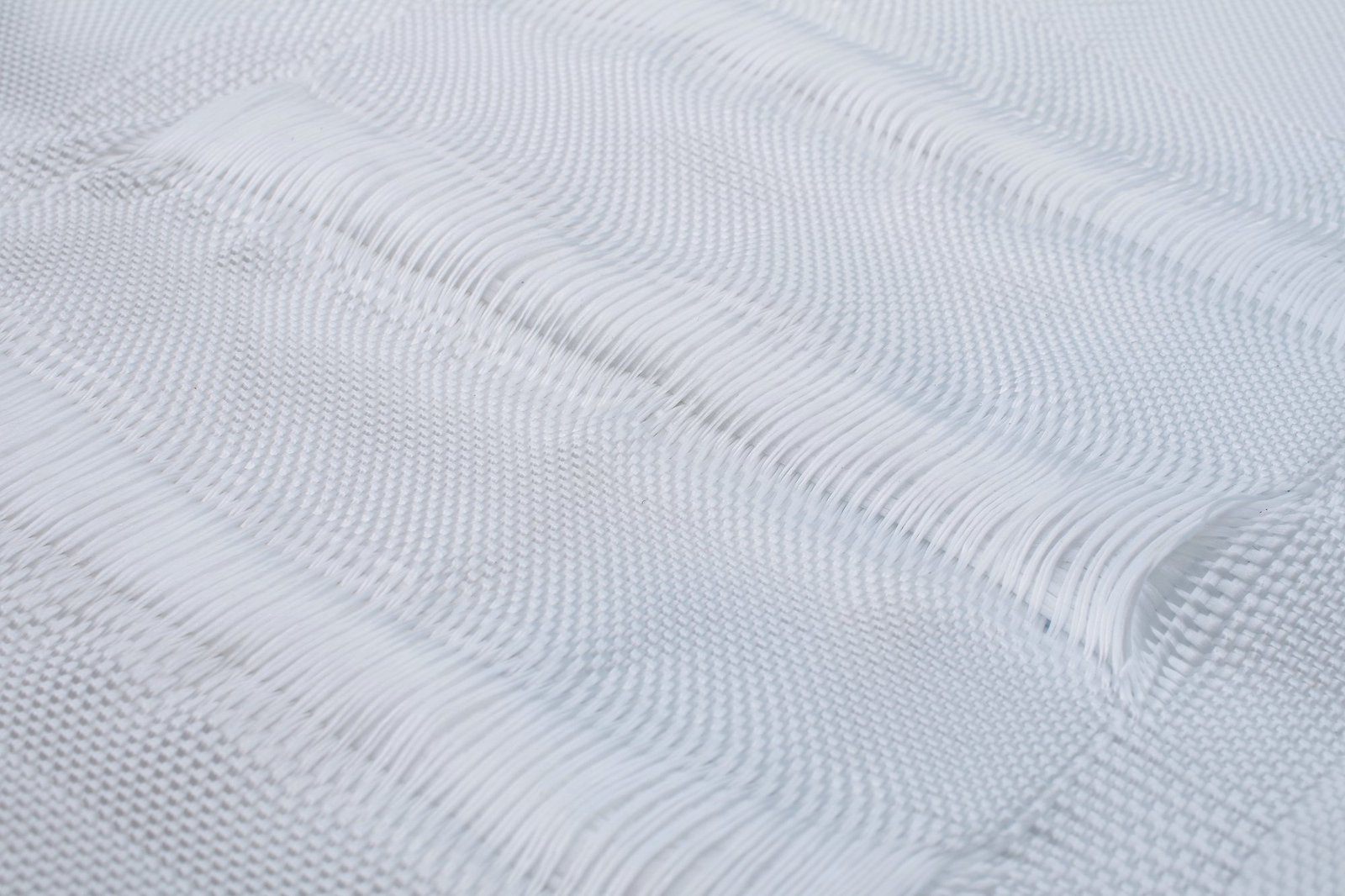
Securing resilient materials is where theory meets practical site execution. Manufacturers deeply integrated into erosion defense, such as HydroBase, engineer their fabric matrices specifically to survive aggressive filling environments. Their specialized woven forms feature exact geometric filter spacing designed to relieve groundwater uplift pressure without compromising the continuous concrete cross-section.
Working with sub-par textiles routinely results in severe aggregate bleeding. Reliable Concrete Mattress Solutions utilize heavy-duty, multi-layer woven fabrics that securely retain fine cementitious paste while actively shedding excess mix water. This controlled bleeding mechanism dramatically boosts the surface strength of the final cured slab, maximizing the critical scour velocity resistance at the exact boundary layer where water friction is most destructive.
The ‘Perfect Fill’ B2B Site Checklist
To eliminate pumping failures on your next installation, execute these verified protocols before initiating output:
- Mix Design Verification: Confirm max aggregate size strictly ≤10mm.
- Slump Testing: Validate a consistent 150-180mm slump at the pump hopper.
- Hose Priming: Flush lines with a rich cement slurry before pumping heavy grout.
- Pressure Baseline: Cap manifold throttle at 30 psi max under normal flow.
- Sequence Layout: Map all injection ports starting sequentially from toe to crest.
- Visual Watch: Position a spotter strictly monitoring the fabric for stretching or bulging.
Advanced Geotextile Integration Examples
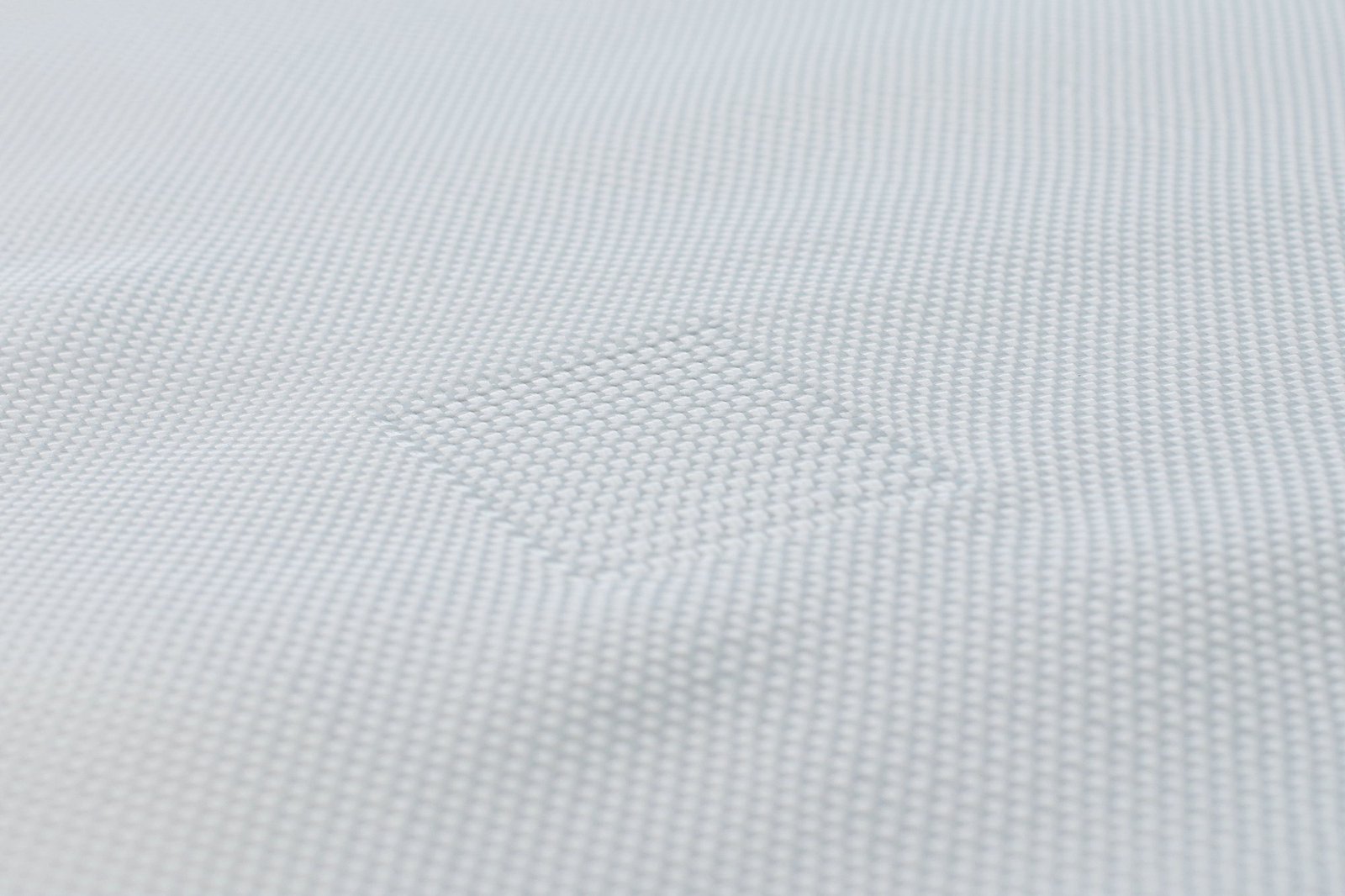
When assessing long-term channel lining, you cannot isolate the concrete from the textile. HydroBase integrates a robust non-woven geotextile backing mechanically bonded to the system. This secondary layer prevents internal soil fines from migrating up through the filter points and washing away into the channel, halting the subsurface void creation that eventually collapses unlined slopes.
The structural integrity of a Filter Point Concrete Mattress relies on uniformity. Factory-controlled sewing guarantees that the distance between connection points remains absolute. This exactness regulates the specified block thickness across undulating terrain, ensuring engineers get the precise unit weight and hydraulic roughness coefficient they calculated in their initial scour models.
Choosing a proven fabrication partner removes the guesswork from field operations. Instead of operators constantly battling erratic mattress inflation on the riverbank, they can follow a standardized injection map. The fabric effectively acts as a rigid, compliant partner in the casting process rather than a liability fighting the pump.
Frequently Asked Questions
Q: What is the typical fill rate for pumping a filter point mattress?
A standard high-pressure line pump should deliver between 10 to 15 cubic meters of fine aggregate grout per hour. Exceeding this fill rate causes rapid pressure spikes that can easily exceed the internal >200kPa seam peel strength of the woven formwork.
Q: What is the difference between a filter point mattress and an articulated concrete mattress (ACM)?
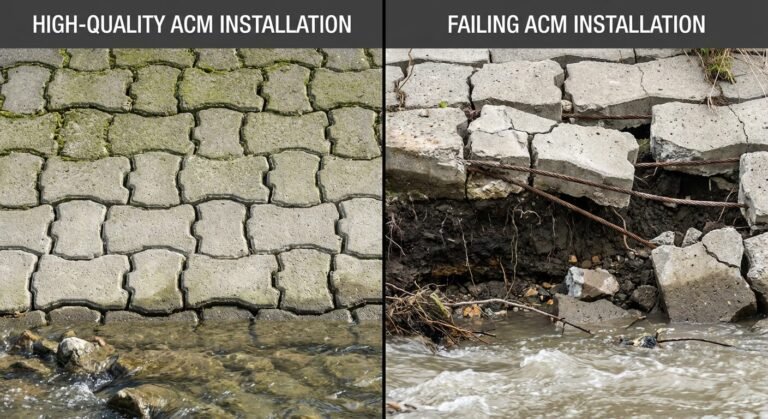
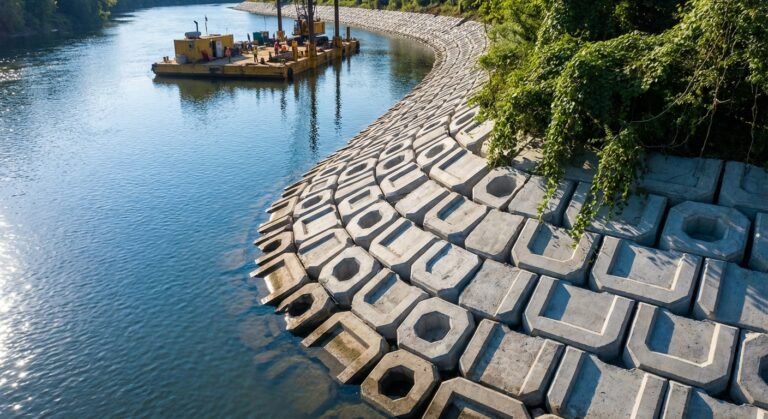
A filter point system is pumped in-situ into a continuous fabric form containing drainage points, while an Articulated Concrete Mattress consists of precast concrete blocks laced together with cables. Filter point mattresses conform perfectly to uneven subgrades, whereas ACMs offer immediate scour protection without requiring cure time.
Q: Can you pump fabric formwork in freezing weather conditions?
Pumping in sub-zero temperatures requires strict thermal containment because the thin concrete profile (100-300mm) loses hydration heat extremely rapidly. You must utilize heated mix water, non-chloride accelerators, and heavy insulating blankets covering the fabric immediately after injection to prevent catastrophic frost damage to the curing paste.
Q: How do MOQ and lead times impact custom fabric formwork orders?
Most high-end manufacturers require a Minimum Order Quantity of roughly 1,000 square meters for custom filter point geometries. Because the fabric is woven and dimensionally stitched to exact project topography, lead times generally range from 3 to 5 weeks before direct-to-site dispatch.
Strategic Project Execution
Securing a reliable hydraulic defense perimeter requires moving past theoretical fabric specs and dialing in your field operations logic. Your pump operators, mix suppliers, and deck hands must function in complete sync, treating the woven formwork not as a generic tarp, but as a calibrated pressure vessel. Maintaining an unwavering 0.45 water-to-cement ratio, throttling manifold output accurately, and mapping out a strict subaquatic tremie sequence guarantees a monolithic, scour-resistant slab.
When your channel lining demands absolute precision to counteract aggressive ground uplift and severe scour velocities, guessing at your equipment limits guarantees failure. Equipping your teams with rugged, dimensionally perfect formwork built for extreme fluid loads entirely changes the dynamic on site.
Download the concrete mattress specification sheet to lock exactly the right weave, tensile capacity, and filter integration for your next hydraulic challenge. Validate your structural models with technical field insights and ensure your next riverbank or spillway pour goes off without a single pressure blowout.