
Advanced Manufacturing and Technical Tolerances

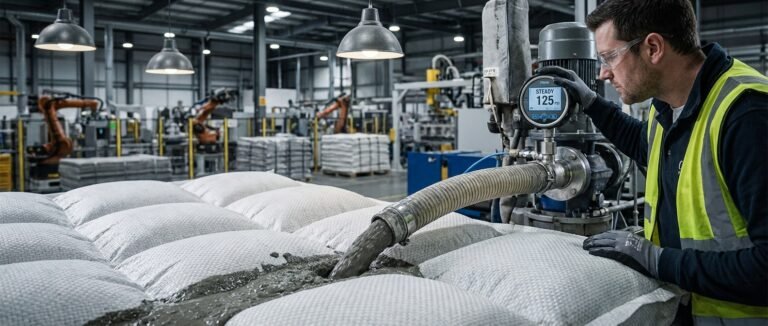
The performance of a filter point system relies heavily on manufacturing precision. Specifying the correct technical parameters is crucial for ensuring hydrostatic pressure relief and long-term durability. Quality materials ensure that concrete pumping proceeds without delays and mitigates the risk of form failure during injection.
Optimal specifications include:
– High-strength woven polyester/polypropylene fabric with a mass of 450g/m².
– Precise weaving ensuring ±0.5% dimensional tolerance across large panels.
– Advanced filter points engineered for up to 92% water permeability to relieve uplift pressure.
– Concrete injection capacity supporting 25MPa to 40MPa compressive strength mixtures.
HydroBase leverages advanced weaving technology to ensure consistency across every roll, preventing weak points during the concrete pumping phase. Unmatched precision at the factory level simplifies the civil contractor’s job on site.
Evaluative Sourcing Checklist and Material Matrix

When procuring erosion control materials, procurement managers must evaluate more than just upfront costs. The interaction between soil mechanics, hydrodynamic forces, and the fabric matrix dictates long-term project success. Understanding comparative advantages allows for better budgeting and project timelines.
| Evaluation Criteria | Traditional Riprap | Filter Point Concrete Mattress |
|---|---|---|
| Installation Speed | Slow, labor-intensive | High (up to 400m²/day) |
| Hydrostatic Relief | Variable and unpredictable | Highly controlled via built-in filter points |
| Logistics & Transport | High carbon footprint (dozens of trucks) | Low footprint (shipped flat in containers) |
| Flow Coefficient | High friction resistance | Predictable, customizable friction levels |
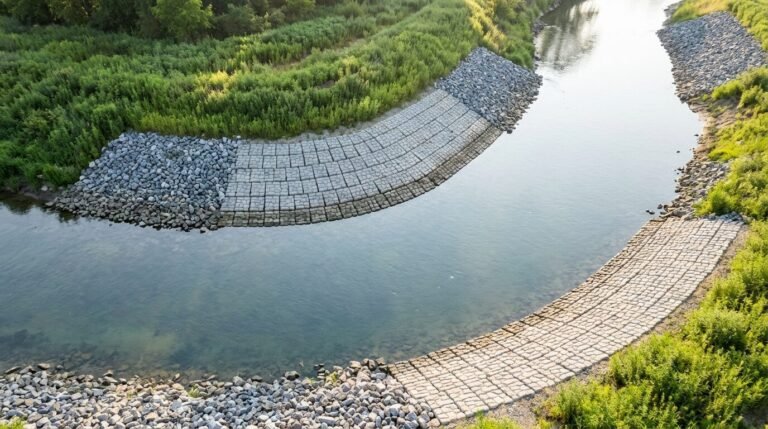
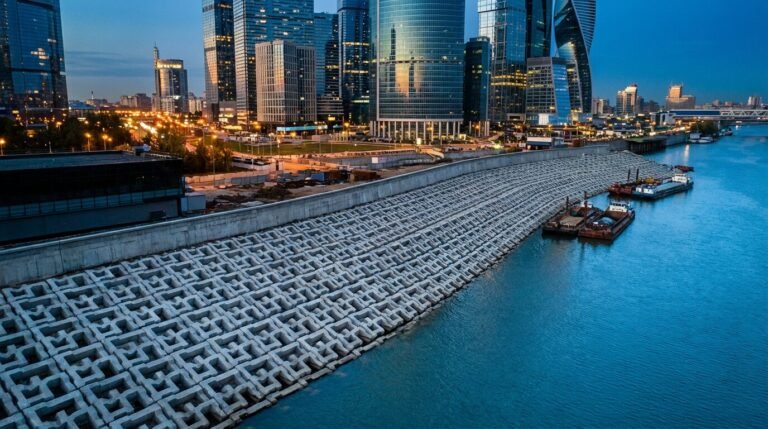
According to industry leading coastal engineers, utilizing fabric-formed concrete drastically reduces heavy machinery requirements compared to traditional stone riprap. It minimizes subgrade preparation and limits environmental degradation during installation, keeping worksites safer and cleaner.
Lifecycle Cost and Project ROI

Efficiency in logistics translates directly to improved ROI. Since the fabric forms are shipped flat and filled on-site, transportation costs drop significantly. A single container of HydroBase fabric forms can cover the same protection area as hundreds of tons of imported rock. Over a 50-year lifecycle, maintenance and reinforcement costs are dramatically lowered.
Continuous quality control during the manufacturing process guarantees that the seams and filter points will withstand extreme concrete pumping pressures, eliminating on-site blowouts and associated delays. Every step of the precise production process serves to reduce risk for engineering firms.
Conclusion
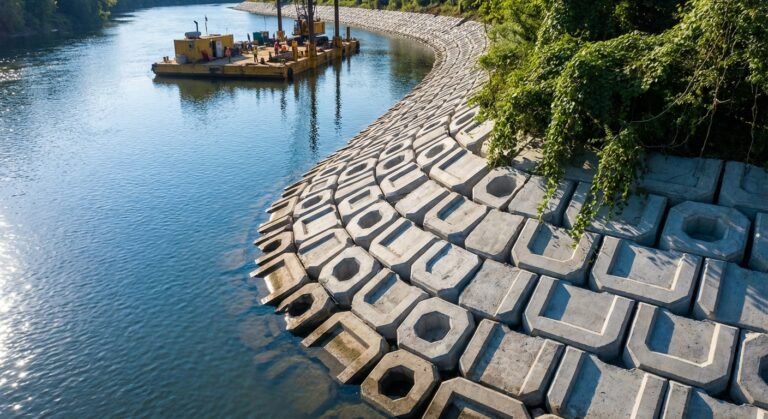
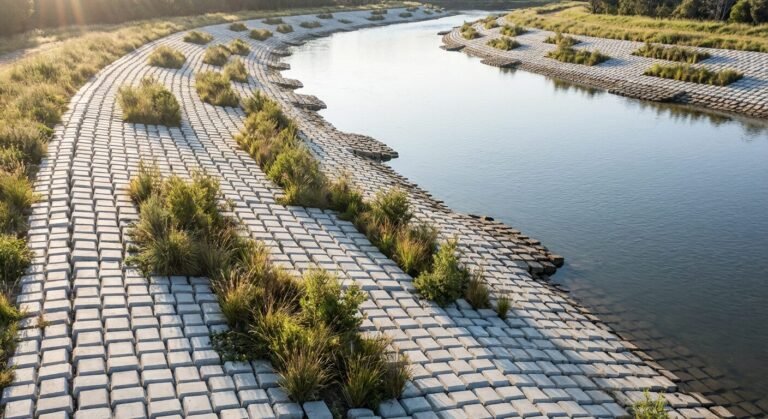
Selecting the right slope protection system is critical to the structural integrity of channels, spillways, and shoreline revetments. Advanced geosynthetics offer a superior blend of cost-efficiency, speed, and durability. By prioritizing technical tolerances and manufacturing quality, procurement and project managers can ensure resilient infrastructure that stands the test of time.
Get a project-specific quote within 48 hours.