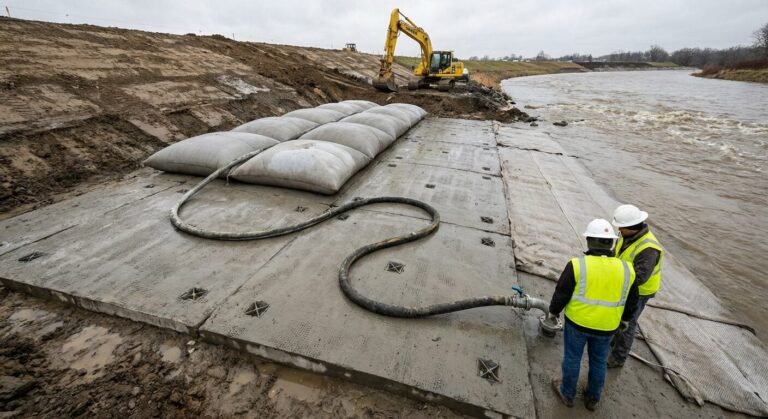
Selecting the exact revetment geometry for high-energy hydraulic channels requires looking far beyond standard generic terminology. Design engineers face a persistent dilemma when calculating threshold velocities for spillways, culvert outfalls, and steep embankment curves. You finalize the discharge rates, calibrate the boundary parameters, and suddenly the projected bed shear stress aggressively exceeds standard vegetative or riprap limits.
Deciding strictly between a modular block matrix and a continuous articulated concrete slab mattress dictates whether your embankment survives a fifty-year flood event. Having spent over a decade consulting on high-velocity hydraulic environments, my analysis relies heavily on comparison charts for hydraulic shear and citations from ASTM hydraulic lab testing standards. These objective metrics strip away the marketing noise and reveal exactly how water interacts with different concrete profiles.
Geometry heavily dictates hydraulic performance. Engineers traditionally use “ACM” as a broad bucket term that completely ignores the hydrodynamic differences between a raised, cabled block and a low-profile continuous slab. Pushing water over a jagged, highly textured block matrix creates vastly different boundary turbulence compared to accelerating it over a smooth, fabric-formed concrete slab.
Specifying the wrong profile means battling unwanted uplift pressures or localized scour long before the system’s design life expires. True stabilization requires digging into the granular details of shear stress resistance, subgrade interaction, and structural articulation parameters. Evaluating the exact mechanics of these configurations allows specifiers to match the concrete geometry perfectly to the channel’s velocity profile.
The Mechanics Behind Articulated Concrete Slab Mattress Systems
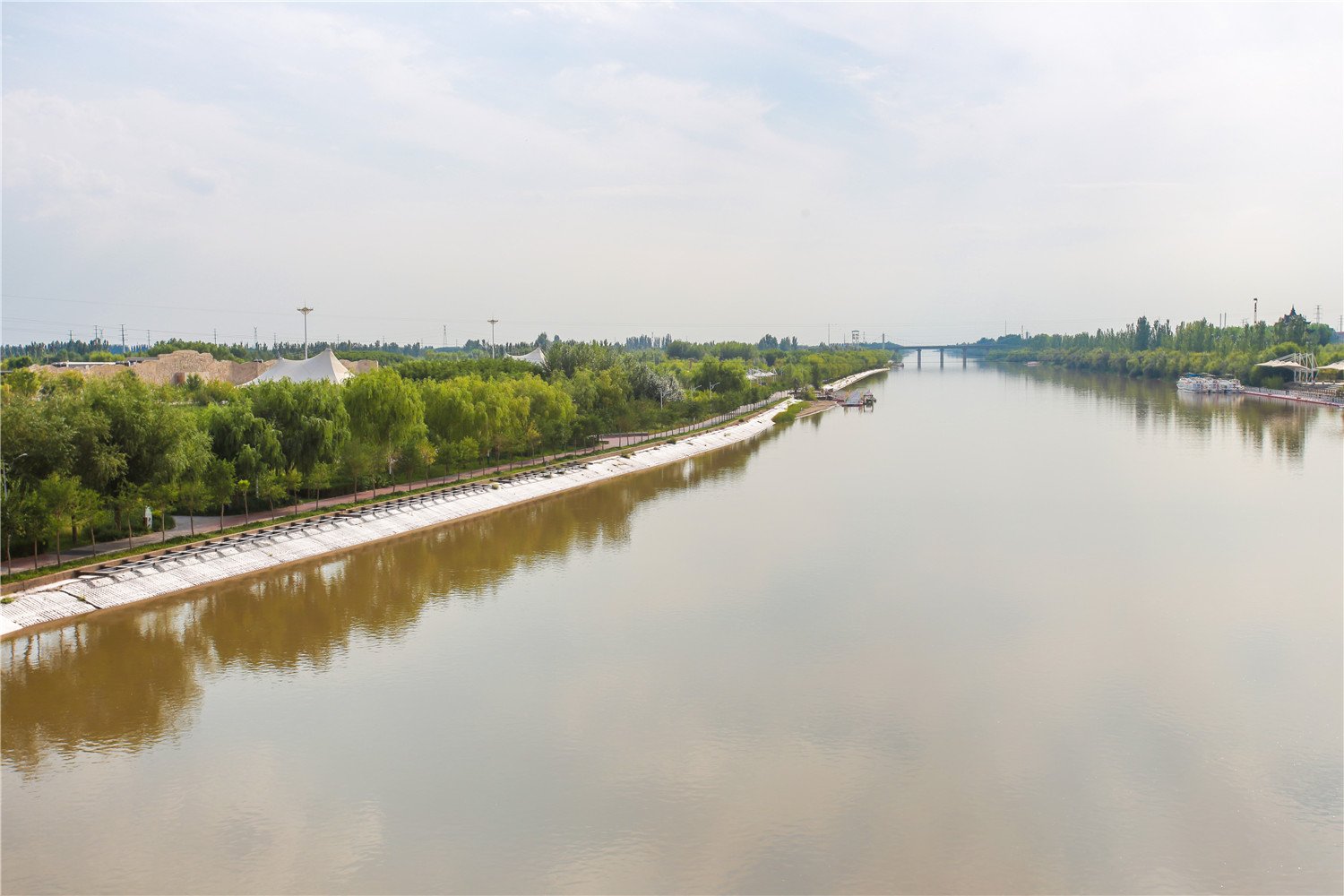
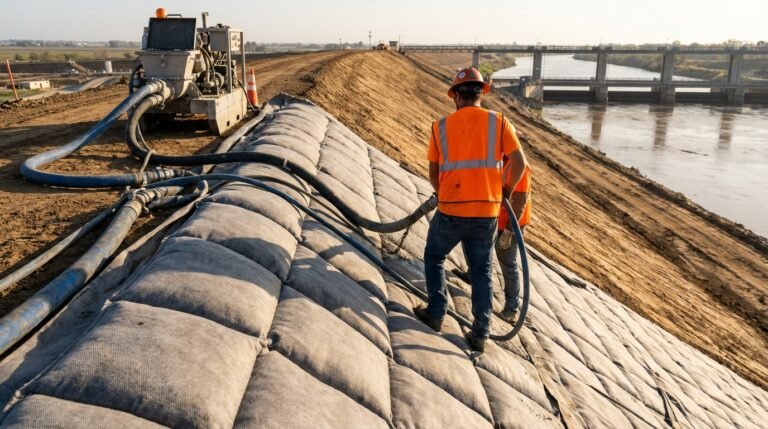
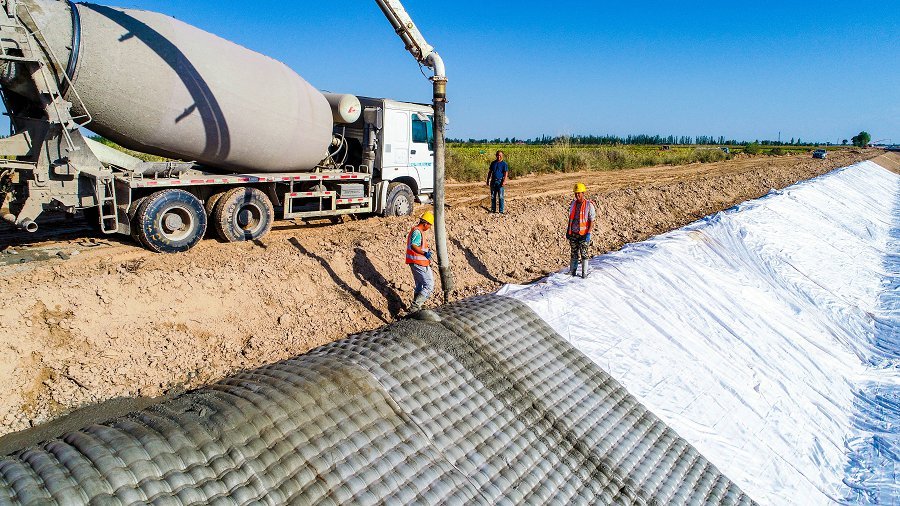
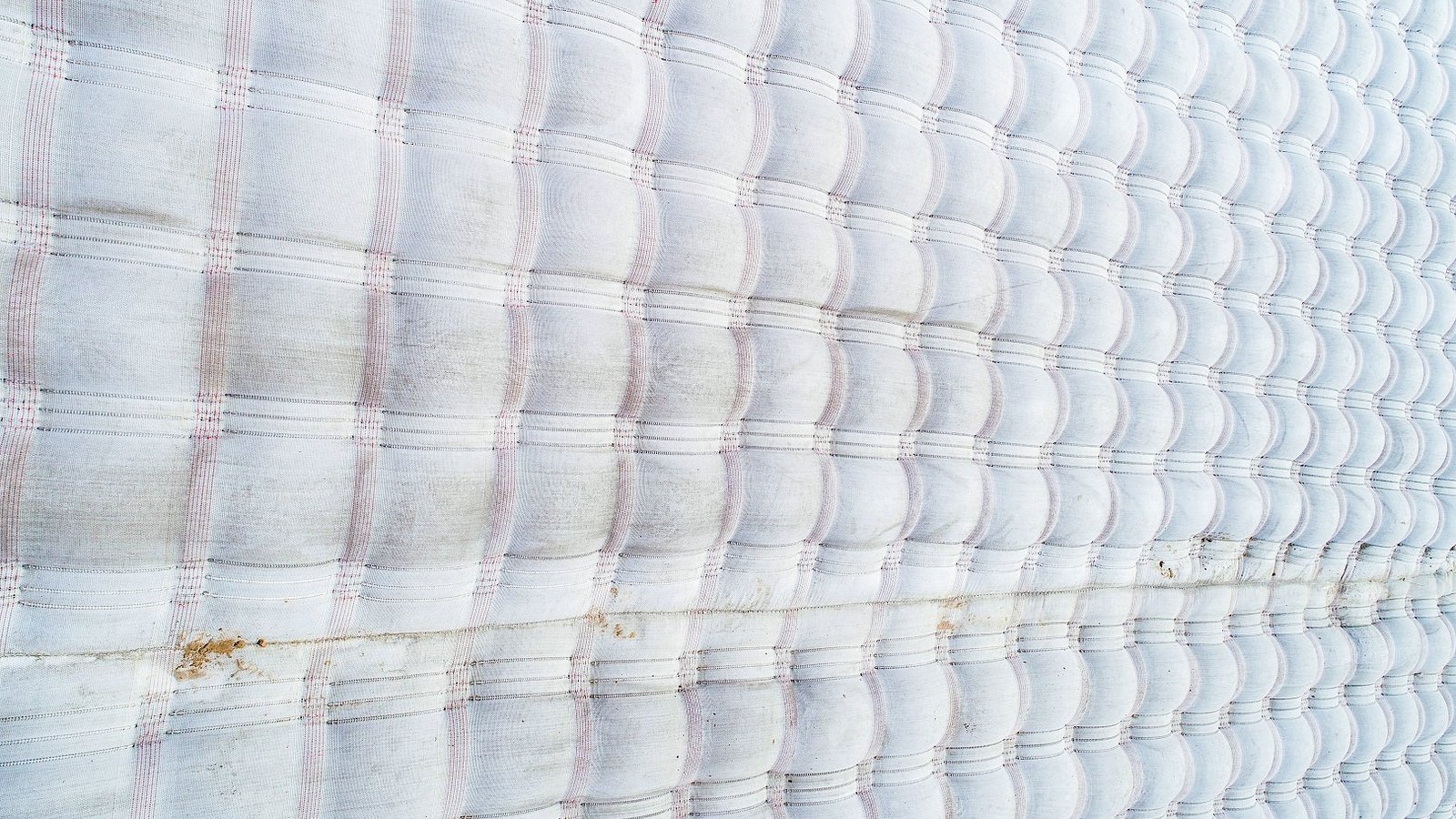
Understanding how these continuous mat structures function starts with their fundamental material interaction. Traditional modular block layouts feature individual precast units tied together by high-strength polyester or stainless steel cables. Fabric-formed slab configurations utilize a dual-layer woven geotextile casing pumped full of fine aggregate concrete.
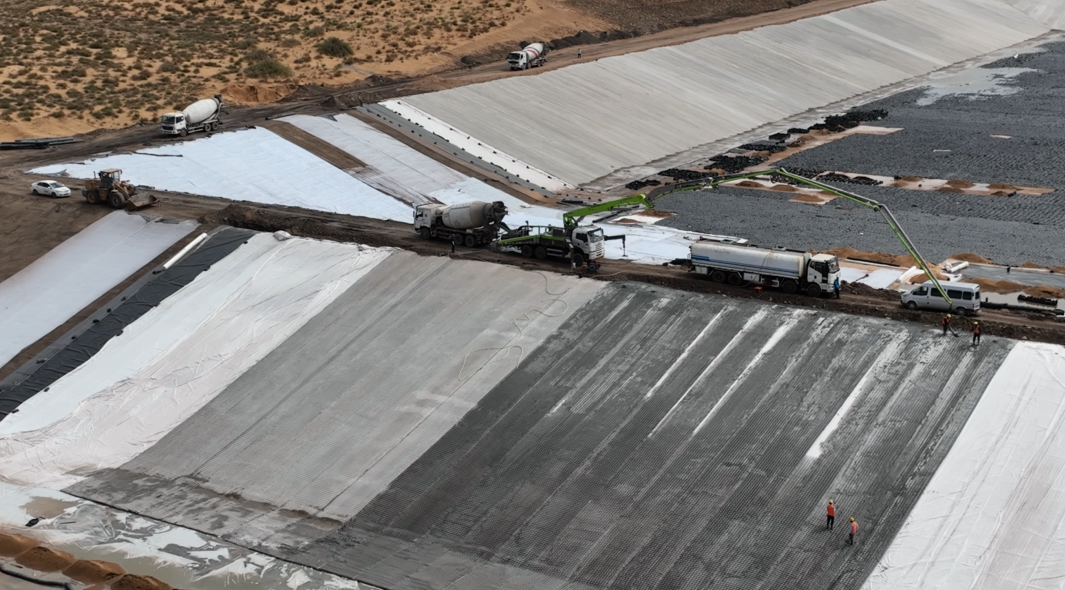
Choosing a pumped slab approach creates a uniform protective layer intimately matched to the subgrade contours. The fabric framework acts as the permanent forming constraint, eliminating the need for complex external shuttering during installation. Historical civil documentation notes that concrete slab construction gained immense popularity largely because it minimized expensive on-site labor and reused forms. Modern geotextile containment systems take this efficiency an evolutionary step further by completely eliminating removable formwork.
Pouring these slabs requires strict adherence to concrete mix specifications. A standard mix design usually calls for a flowable C30/C35 grade concrete with an aggregate size strictly limited to 8mm to ensure smooth pumping over long distances. The containing geotextile must boast a tensile strength of ≥50kN/m to withstand the intense hydraulic pressure exerted by the wet grout during filling. Modifying the block thickness anywhere between 100mm and 300mm provides specifiers with a highly tunable mechanism for increasing the overall unit weight against severe hydrodynamic lift.
Hydraulic Shear and Velocity Limits in Slab Geometries
Surface friction plays a massive role in how water behaves inside a confined channel. When an engineer specifies an articulated concrete block mattress vs slab, the primary variable altering the Manning’s roughness coefficient is the surface texture. Individual raised blocks create micro-turbulences at every joint, which effectively slows down the water but significantly increases localized shear stress on the concrete edges.
Industry guidelines detailing ACB installation heavily emphasize that these revetment matrices must withstand the full force of subcritical and supercritical flow transitions. Opting for a low profile concrete mattress essentially streamlines the channel. The flattened top profile drastically reduces the physical interference between the racing water column and the bed layer.
Lowering the hydraulic roughness coefficient becomes critical when managing flood diversion channels where maximum throughput speed is the ultimate goal. Slab geometries inherently generate lower overturning moments because they offer minimal vertical face for the water to impact. Designing a spillway with a 200mm thick continuous slab can effectively handle scour velocities exceeding 6.0 meters per second, provided the toe trench is properly keyed into the bedrock or stable subsoil.
Flexible Formwork and Subgrade Interaction
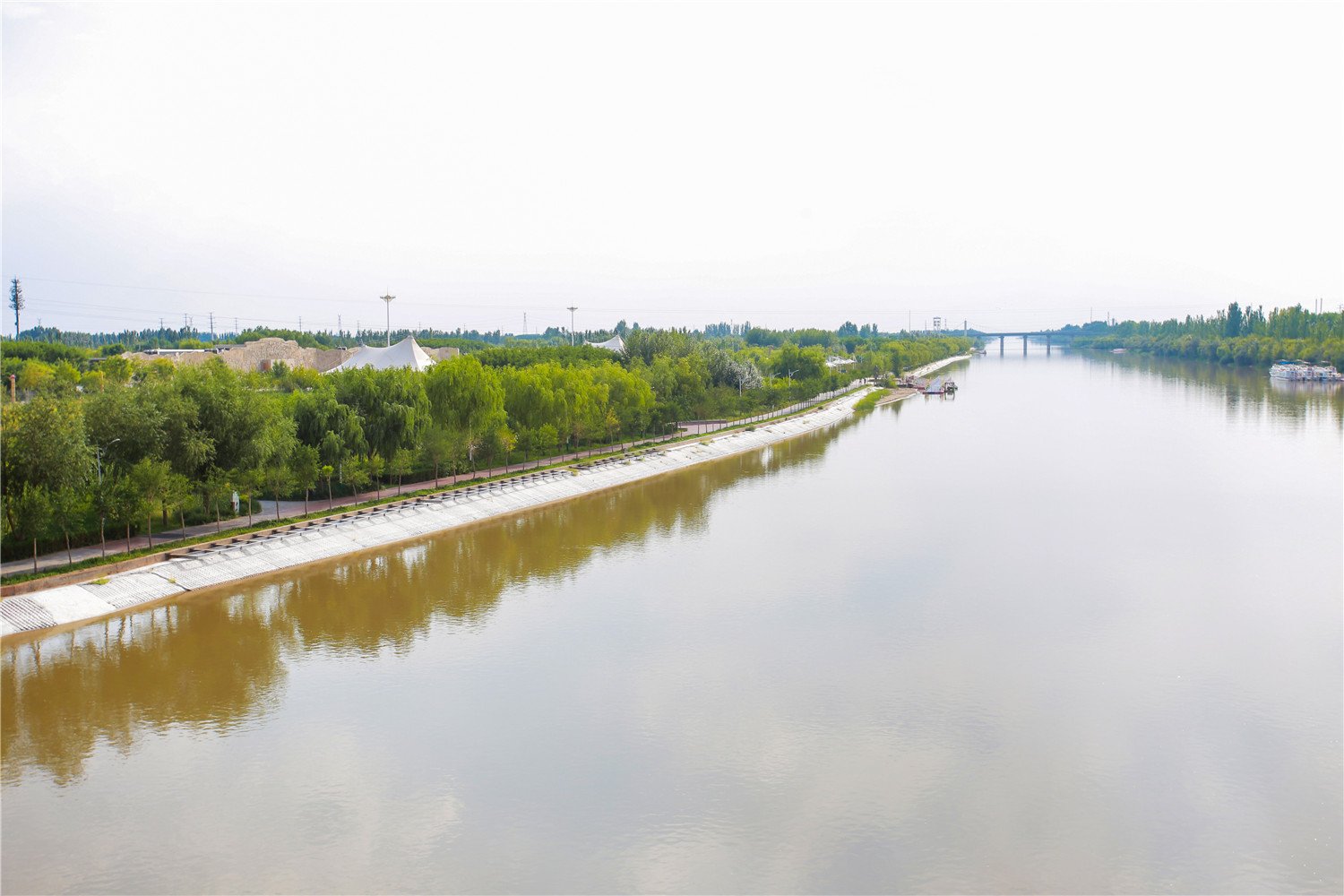
Subgrade settlement instantly destroys rigid concrete structures in riverbank environments. What separates an engineered articulated concrete slab mattress from a rigid poured pavement is the carefully designed internal hinge joints woven directly into the fabric jacket. These interwoven seams lack concrete, acting purely as flexible hinges that permit the heavy cured slabs to bend and shift as the soil underneath inevitably consolidates.
Groundwater moving behind the revetment poses the greatest threat to long-term stability. While some projects utilize a heavily permeable filter point concrete mattress to relieve massive hydrostatic uplift, standard slab configurations manage drainage through specially designed weep holes or permeable fabric zones inserted at regular intervals. Failing to properly address this groundwater pressure inevitably results in catastrophic piping failures where the fine subsoil washes away.
Regional infrastructure groups frequently assess erosion protection solutions based on how intimately the base material hugs the native earth. Pumping flowable concrete into a fabric envelope resting strictly against bare soil guarantees absolute continuous contact. Precast blocks, regardless of their weight, often bridge over minor soil depressions, leaving deadly microscopic void spaces where localized scour can easily initiate during peak discharge events.
Evaluating Scour Velocity Resistance in Channels
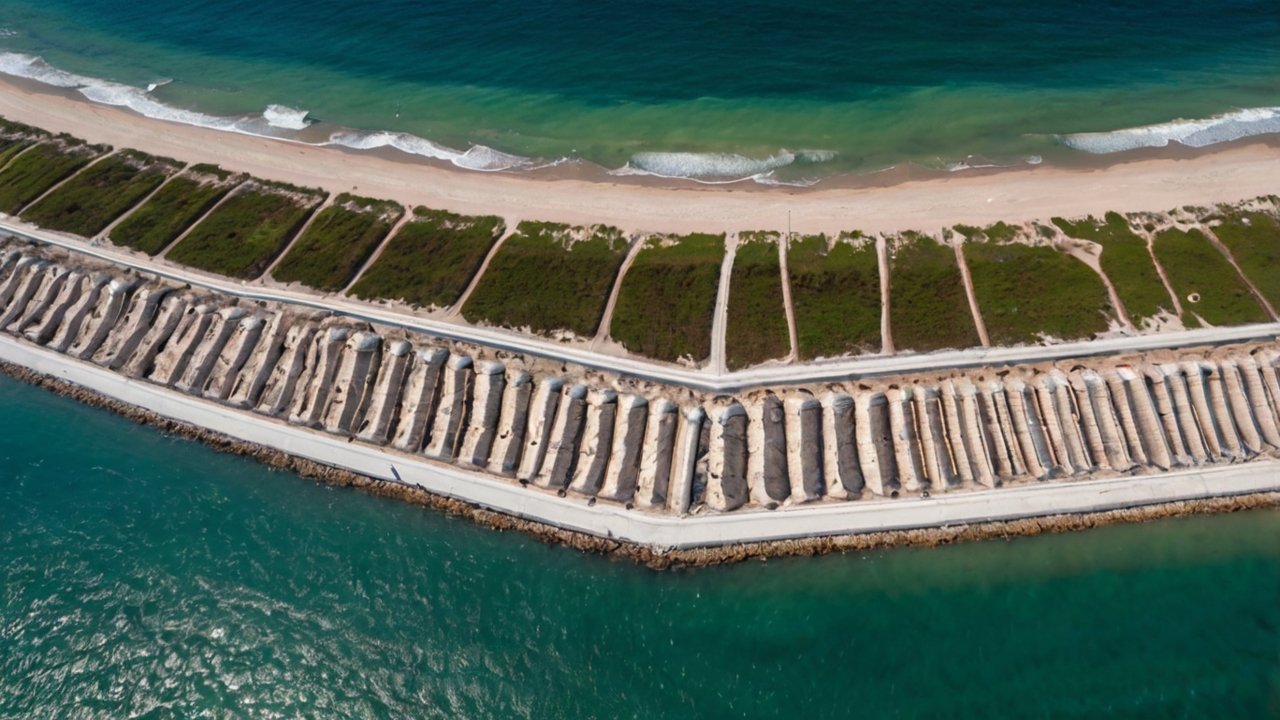
Determining the exact failure threshold of a revetment requires complex bed shear stress mathematically converted into Pascals (Pa). Smooth slab geometries generally report a lower resisting shear capacity compared to aggressive block profiles of identical weight because they lack the deep interlocking frictional forces generated by heavy neighboring blocks. However, their unified mattress weight heavily compensates for this when the concrete completely cures.
Government procurement schedules and federal pay items frequently differentiate between articulated concrete blocks and precast prestressed slabs based entirely on structural independence. A continuous pumped slab acts as a monolithic defensive shell rather than a collection of independent armor units. Calculating the uplift pressure resistance demands cross-referencing the channel slope with the mattress’s specific unit weight per square meter.
Steep embankments exceeding a 2:1 slope angle often test the upper limits of gravity-based armor. Relying purely on specific gravity works well in flat canal beads, but elevated slopes mandate extreme tensile restraint. The biaxial woven formwork surrounding the slab handles the downslope shear forces, preventing the massive concrete sections from tearing apart or sliding downward into the channel toe.
Structural Integrity During Lifting and Placement
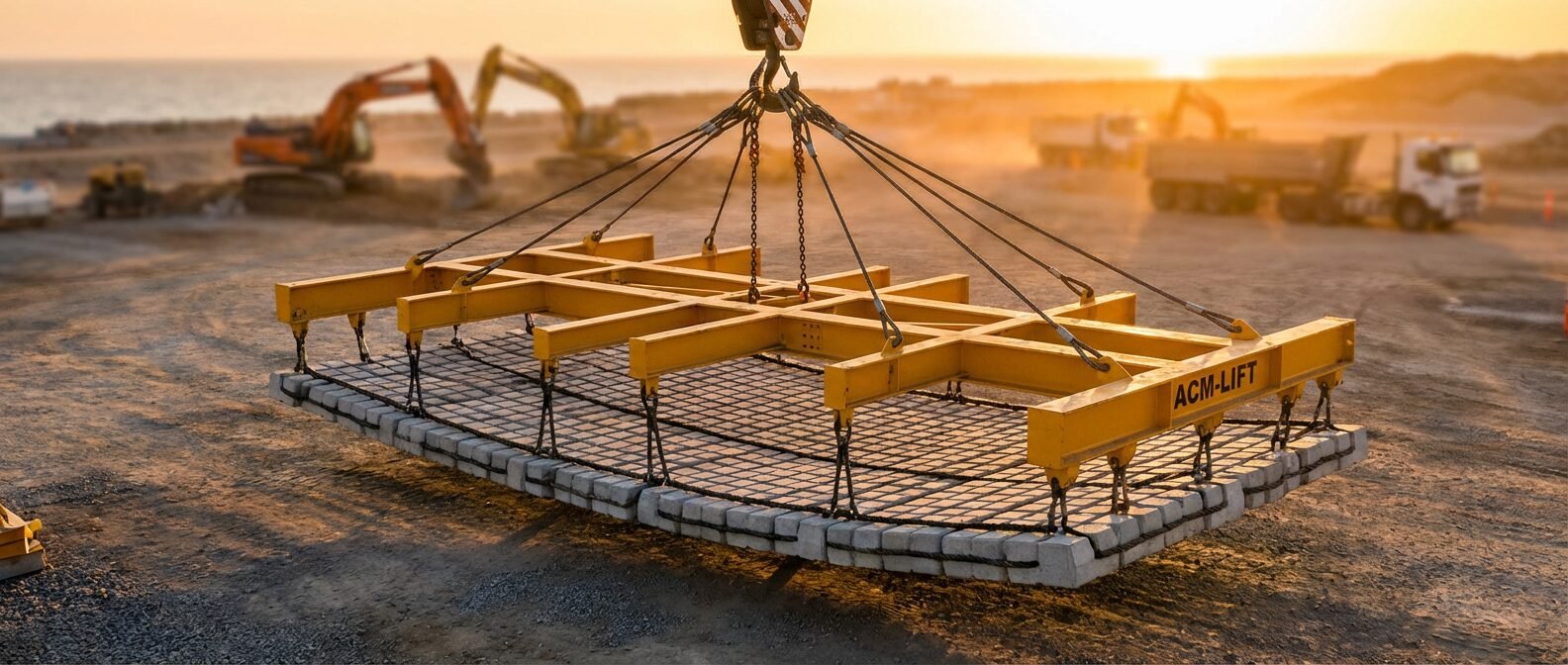
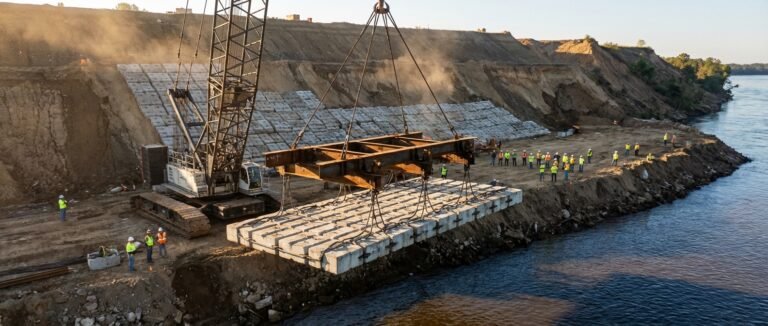
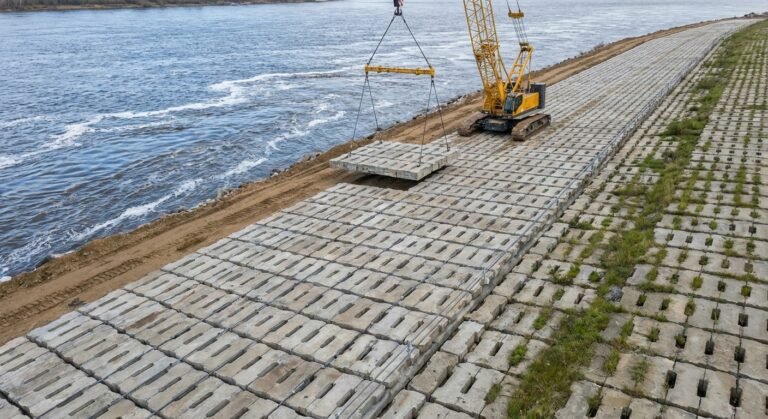
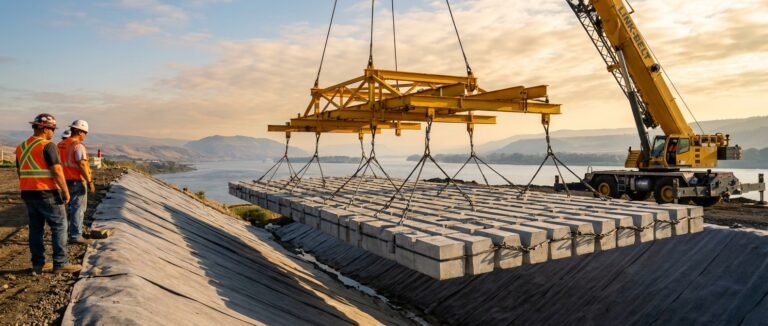
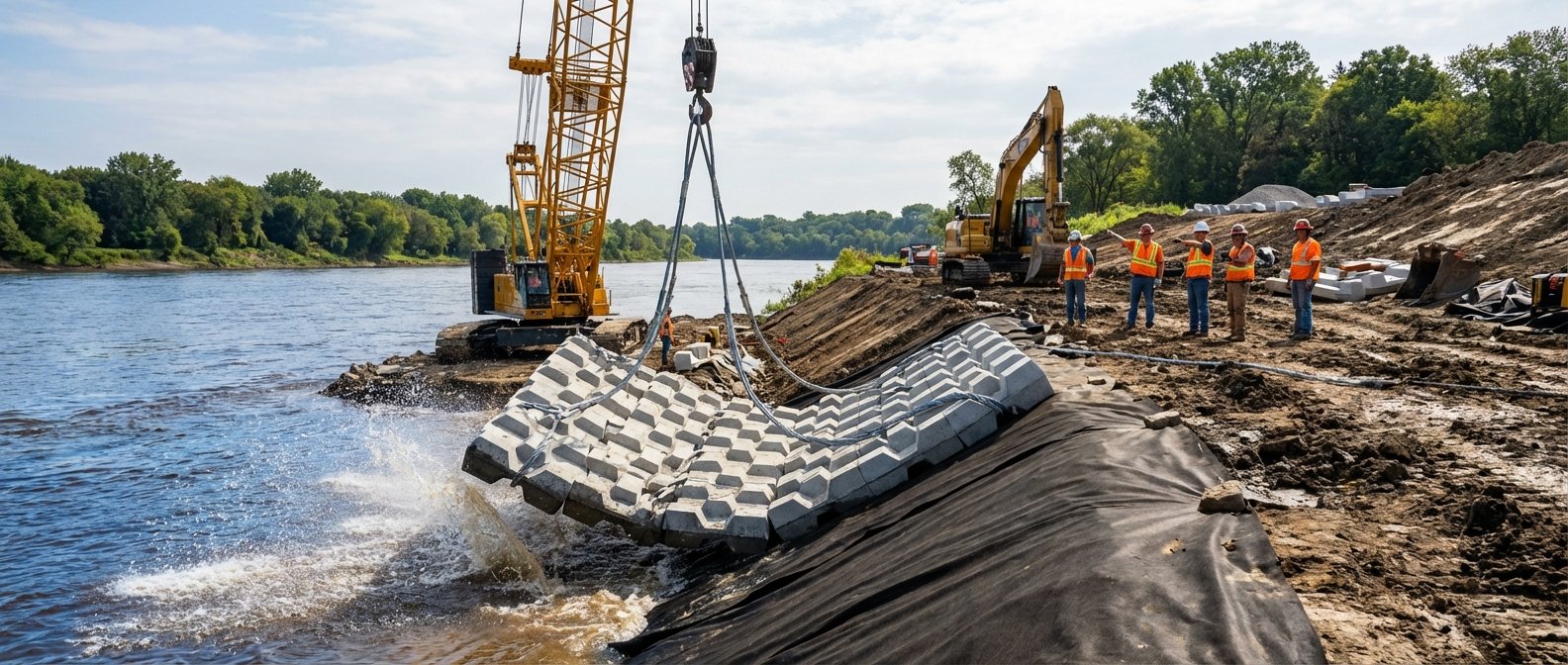
Executing the actual installation separates theoretical design from rugged field application. Poured-in-place fabric slabs eliminate heavy lifting entirely since teams simply roll out lightweight spools of geotextile before pumping. Conversely, handling precast cable reinforced concrete mat types requires massive crawler cranes, highly specialized spreader beams, and meticulous rigging geometry.
Getting bogged down in logistical crane sizing often kills a project’s budget before the first bucket of earth moves. Precast mats generally weigh several tons each, severely limiting the daily installation footprint in remote locations where heavy equipment access is structurally impossible. Pumping wet concrete directly into a pre-laid fabric matrix drastically reduces the required heavy machinery footprint on sensitive ecological streambanks.
Cables running through precast systems endure immense point-loading during the aerial transfer from the flatbed to the slope. If a contractor utilizes improper lifting techniques, the hidden internal cables stretch or permanently deform, instantly compromising the interlocking integrity of the entire matrix once submerged.
When to Spec Block Profiles Over Slabs
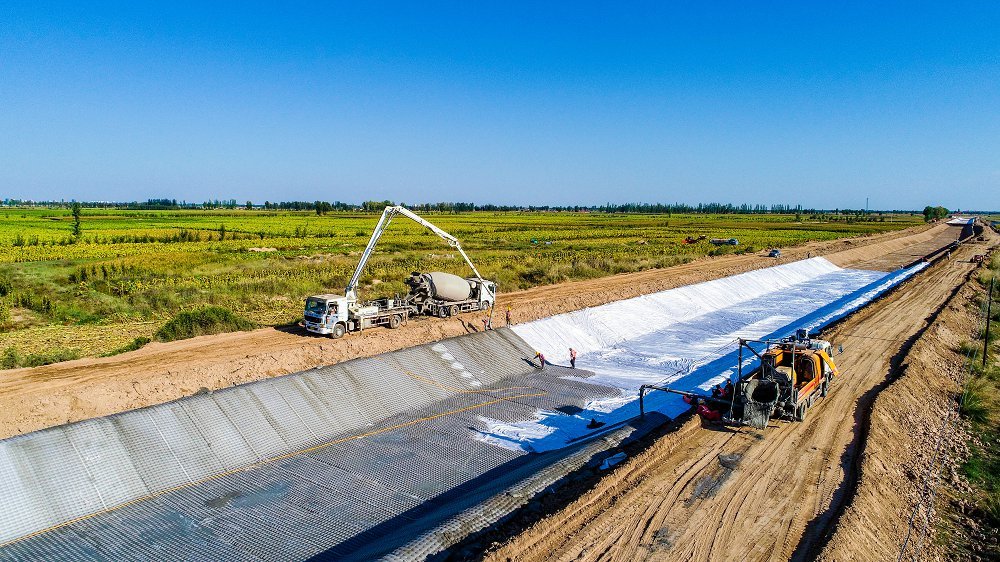
While smooth profiles dominate high-capacity diversion channels, elevated block geometries dominate highly irregular terrains. Deeply contoured river bends containing sharp, jagged bedrock protrusions demand the aggressive micro-flexibility that only individual, small-scale cabling offers. Pumping a continuous slab over a severely jagged surface creates awkward stress points in the fabric that easily tear under hydraulic loading.
Environmental recovery mandates often favor open-cell configurations. Strict stream bed restoration guidelines frequently demand returning waterways as close to their original biological state as possible. Open-cell cabled blocks featuring an open area ratio of ≥20% allow deep root penetration for native willows and sedges. Solid pumped slabs create completely sterile environments, which works perfectly for industrial spillways but fails miserably against modern ecological biodiversity regulations.
Sharp curves in a river alignment create intensely localized outer-bank shear stresses known as helical flow. Cabled blocks naturally dissipate this aggressive vortex energy through their varied surface heights, breaking the boundary layer turbulence apart before it can pull the armor blocks off the subgrade layer.
Diffusion of Standardized Mattress Dimensions
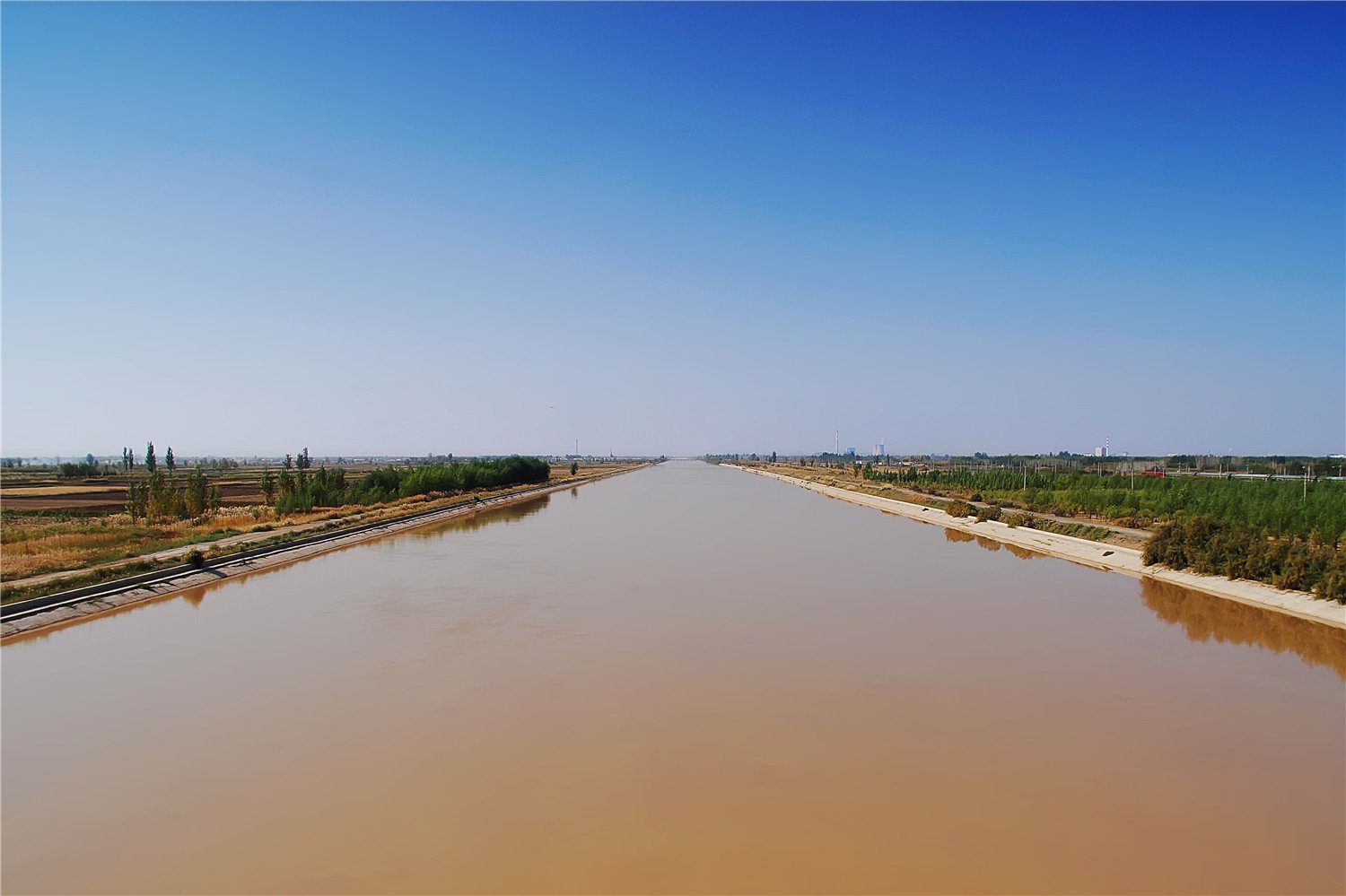
Achieving global manufacturing consistency drastically lowered the cost of large-scale embankment protection. Early iterations of coastal defense systems heavily relied on completely bespoke, hand-drawn configurations that forced local concrete plants into logistical nightmares. Tracing industrial history reveals that standardizing standard sizes originally drove the rapid diffusion of mass manufactured goods, scaling industries by eliminating unnecessary bespoke variations.
Today’s geotechnical sector operates on rigid standardized parameters. A modern articulated concrete slab mattress typically features uniform modular segmentations—often patterned into rigid 400mm x 400mm squares—integrated via narrow 30mm hinge joints. Standardizing these internal panel dimensions guarantees accurate friction calculations for civil design software arrays.
Predictable panel geometries allow contractors to accurately calculate their daily concrete pumping yields. Ordering precise cubic meter volumes based on strictly verified fabric expansion limits prevents expensive material waste or dangerous cold joints in the middle of a continuous pour. Predictability at the production level always translates safely into predictable long-term scour defense.
Bridging the Gap With Engineered Manufacturing
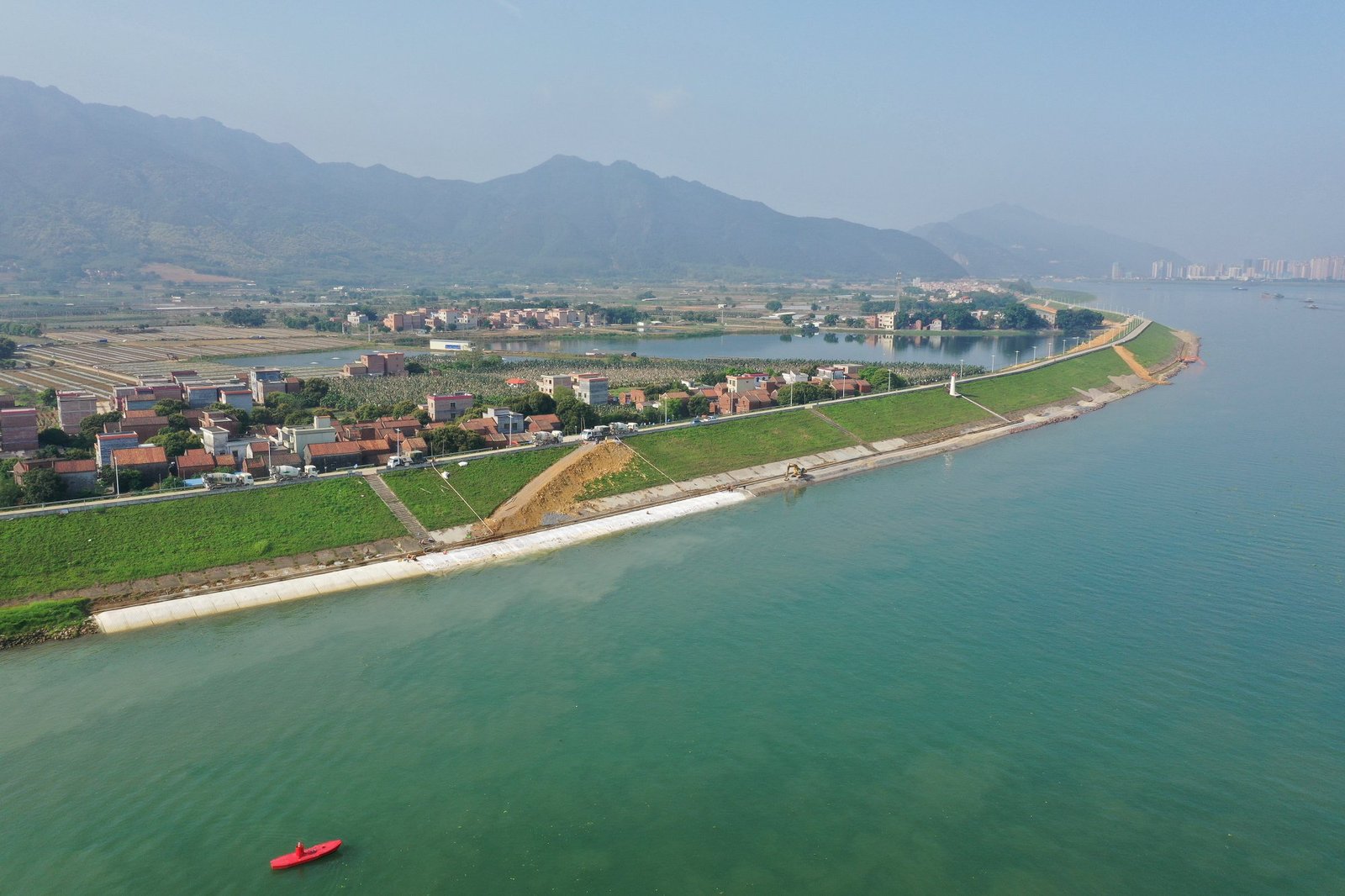
Procuring industrial geotechnical materials requires more than just pulling a generic specification completely off the shelf. Design parameters clearly establish the critical necessity for specific tensile strengths, exact pumpable volumes, and precise hinge gap ratios. Finding a manufacturing partner fully capable of translating these rigid hydraulic requirements into field-ready materials forms the absolute core of successful civil execution.
State and provincial agencies strictly regulate what enters their waterways. Scanning any official recognized products list highlights specific brands rigorously tested for critical subgrade contact and extreme shear velocity scenarios. It becomes incredibly vital to source materials from organizations demonstrating massive internal quality control parameters rather than simple bulk textile brokers.
Certain specialized manufacturers, such as HydroBase, heavily address this massive gap by engineering specific concrete mattress solutions explicitly tailored for high-stakes municipal and federal applications. Relying on an entity operating extensive automated production lines ensures that the woven parameters holding your aggregate remain absolutely uniform across thousands of square meters.
Executing large-scale river containment demands massive logistical certainty. HydroBase has specifically optimized their supply chains to facilitate specialized bulk dispatch protocols, severely cutting down the chaotic lead times that usually plague large municipal infrastructure overhauls. Procuring high-strength continuous formwork directly from a dedicated manufacturer completely removes the unpredictable third-party variables from your timeline.
B2B Practical Tool: Geometry Selection Matrix
Engineering teams frequently hit a wall when trying to quickly isolate the correct revetment profile. Use this rigorous technical assessment matrix whenever you need to clearly justify specifying an articulated concrete slab mattress against traditional cabled block alternatives.
| Engineering Parameter | Fabric-Formed Slab Profile | Cabled Block Matrix | Application Target |
|---|---|---|---|
| Hydraulic Flow Limit | Exceeds 6.0 m/s (low turbulence layer) | Up to 4.5 m/s (high turbulence drag) | Slab dominates high-velocity spillways and outfalls. |
| Subgrade Adaptation | 100% continuous contour contact | Bridging gaps over minor depressions | Slab prevents all micro-scour beneath the armor. |
| Installation Machinery | Minimal footprint (hoses & spools) | High tonnage crawler cranes required | Slab wins on restricted-access ecological sites. |
| Permeability Factor | Low (unless utilizing filter points) | High (open joints and open cells) | Blocks win for rapid groundwater pressure relief. |
| Vandalism Resistance | Monolithic structure is immovable | Individual cables can be compromised | Monolithic slabs secure urban pedestrian channels. |
| Ecological Greening | Sterile / Clean concrete face | Supports ≥20% open root penetration | Blocks dominate strict bio-restoration zones. |
Running your peak discharge figures directly through these definitive parameters instantly narrows down your protective strategy. When the primary threat revolves around sheer destructive velocity along a smooth alignment, continuous pumped geometries reliably provide the most robust defense mechanism available.
Frequently Asked Questions
Q: What is the main structural difference between an articulated concrete block mattress vs slab?
An articulated block mattress uses heavy individual precast concrete units mechanically linked by stainless steel or polyester cables, whereas a slab mattress utilizes a continuous dual-layer woven geotextile fabric pumped full of highly flowable concrete on-site. The slab forms a monolithic but flexible shell that permanently hugs the precise contours of the existing subgrade.
Q: What is the maximum scour velocity a low profile concrete mattress can withstand?
A properly keyed-in 200mm thick continuous slab mattress can successfully resist subcritical flow velocities exceeding 6.0 meters per second. Because the flattened geometry minimizes surface protrusion, it drastically lowers the Manning’s roughness coefficient and dramatically reduces hydrodynamic lift opposing the bed layers.
Q: How do cable reinforced concrete mat types compare to slabs regarding heavy lifting?
Cabled precast mats require massive mobilization of heavy crawler cranes and custom spreader bars to safely lift the multi-ton units into the channel. Fabric-formed slabs completely eliminate heavy lifting from the installation equation, requiring only lightweight fabric spool unrolling followed by standard mobile concrete pumping equipment.
Q: What are typical lead times and minimum order quantities (MOQ) for custom slab solutions?
Top-tier industrial manufacturers typically process commercial fabric formwork orders starting at a 1,000 square meter MOQ to optimize their automated weaving looms. Lead times depend heavily on the woven tensile specifications (e.g., ≥50kN/m), but dedicated suppliers like HydroBase often execute priority project dispatches within remarkably short fulfillment windows.
Strategic Outlook on Hydraulic Stabilization
Navigating aggressive hydraulic forces successfully requires matching the exact physical revetment geometry to the channel’s dynamic flow signature. Attempting to force a generic block matrix into an environment begging for a streamlined, continuous profile simply guarantees extensive long-term maintenance liabilities.
Locking down the precise C30/C35 concrete mixtures alongside the correct woven tensile limits determines exactly how well your embankment holds together during unexpected catastrophic flood stages. Recognizing how a low-profile fabric formulation naturally mitigates extreme bed shear stress protects your underlying subgrade permanently from destructive piping phenomena. Specifying an intelligent material dictates absolutely everything about the eventual survival of your civil infrastructure.
If your upcoming channel alignment demands precise hydrodynamic control and seamless subgrade interaction, secure your technical parameters early in the assessment phase. Download the concrete mattress specification sheet to properly align your revetment geometry with the absolute highest tiers of modern hydraulic defense.
Related Resources
- Articulated Concrete Mattress Systems — ACM product range
- Vegetated Concrete Mattress Systems — Alternative system
- Concrete Mattress Engineering & Installation Services — Design consultancy
Need a concrete mattress solution for your project?
HydroBase provides end-to-end concrete mattress engineering & installation services — from hydraulic design and factory-direct ACM supply to on-site supervision and post-project inspection. Trusted by civil engineers in 50+ countries.