
Preparation and Alignment Before Pumping
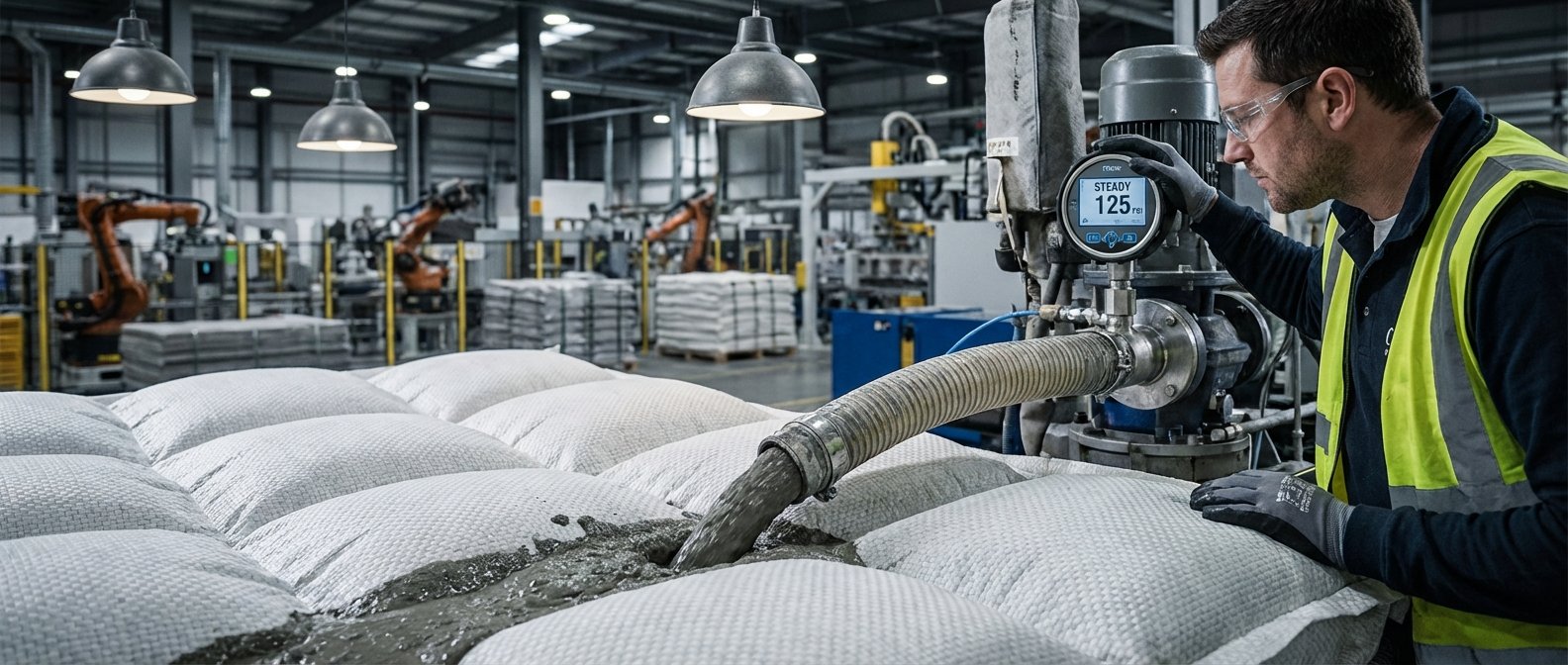
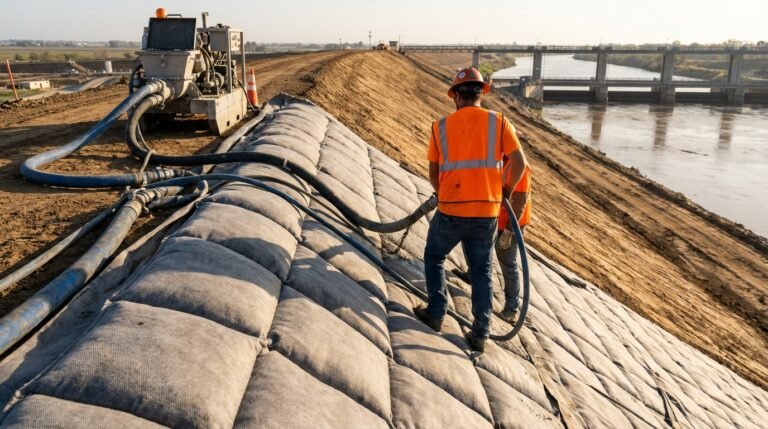
Getting the fabric layout perfect dictates the structural integrity of your entire grout phase. Crews often rush the unrolling process to beat the weather. You have to anchor the top perimeter deeply into a custom-dug terminal trench before turning on the hopper hopper. The non-woven geotextile backing relies entirely on proper tension to achieve its designed thickness profile once inflated.
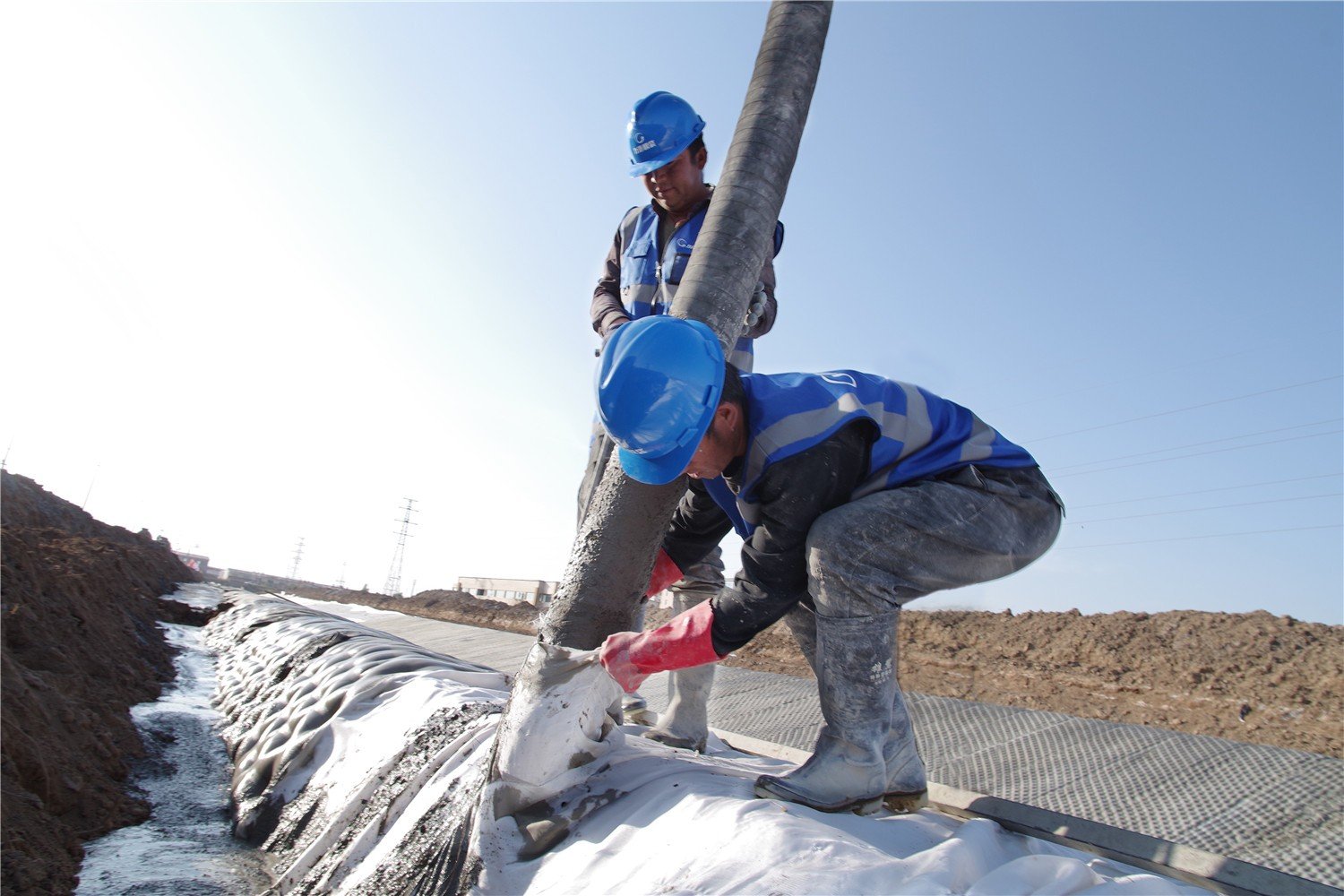
Slopes exceeding a 2:1 ratio require special staging to avoid fabric migration downslope under the immense deadweight of wet concrete. Heavy-duty ground stakes placed strategically along the upper panels keep the fabric from sagging. Traditional riprap or a matrix of individual concrete blocks require different mechanical staging, but fabric formed units demand high tensile continuity before the pumping begins. Any slack left in the material creates severe wrinkles, which ultimately compress the target thickness (100-300mm) and create weak points against future scour velocity resistance. Subgrade preparation determines everything. If you leave large rocks or deep ruts, the resulting concrete shell inherits those topographic defects and creates localized stress concentrators.
Fine Aggregate Concrete Mix Design Parameters
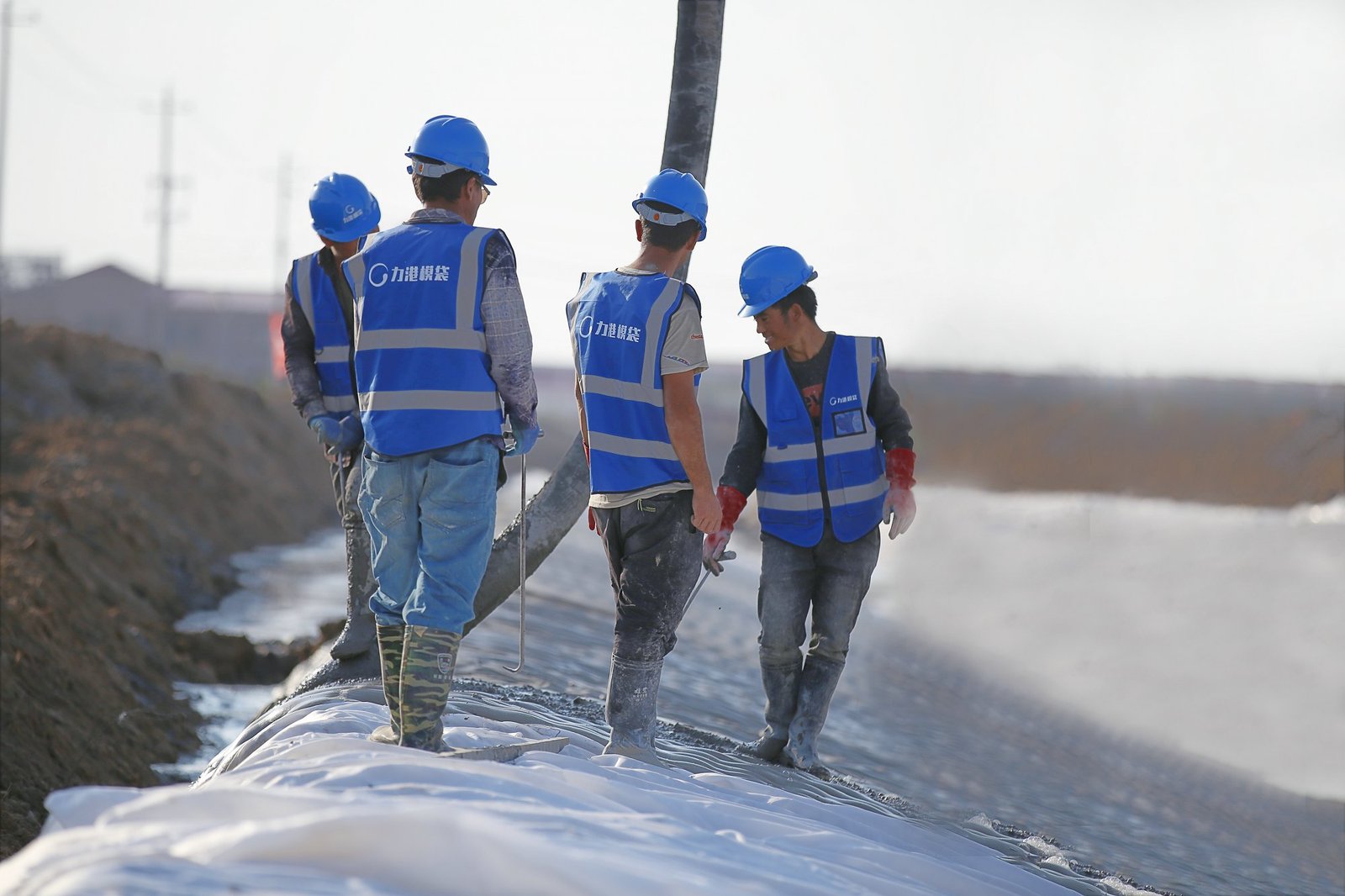
Pumping a high-performance system requires highly specific slurry characteristics. Your standard structural ready-mix will completely fail in this application. Field engineers rely on a high-slump, fine aggregate concrete mix design to navigate the tight woven compartments.
Maximum aggregate size cannot exceed 10mm. Exceeding this limit guarantees severe line clogs at the injection manifold. A typical baseline mix demands roughly 400 kg of cement per cubic meter, often heavily blended with fly ash to temporarily retard setting times and drastically improve pumpability. Maintaining a strict 0.45 water-to-cement ratio prevents excessive paste bleeding through the permeable fabric pores while yielding a rigid 28-day compressive strength of C30/C35. Slump tolerances should target a highly flowable 200mm to 250mm range. Pumping a stiff mix forces operators to ramp up the line pressure, inevitably tearing the internal spacer threads that control unit thickness. Every batch ticket must undergo rigorous field verification for slump and temperature before the truck reverses to the pump grate.
Executing the Underwater Fill Sequence
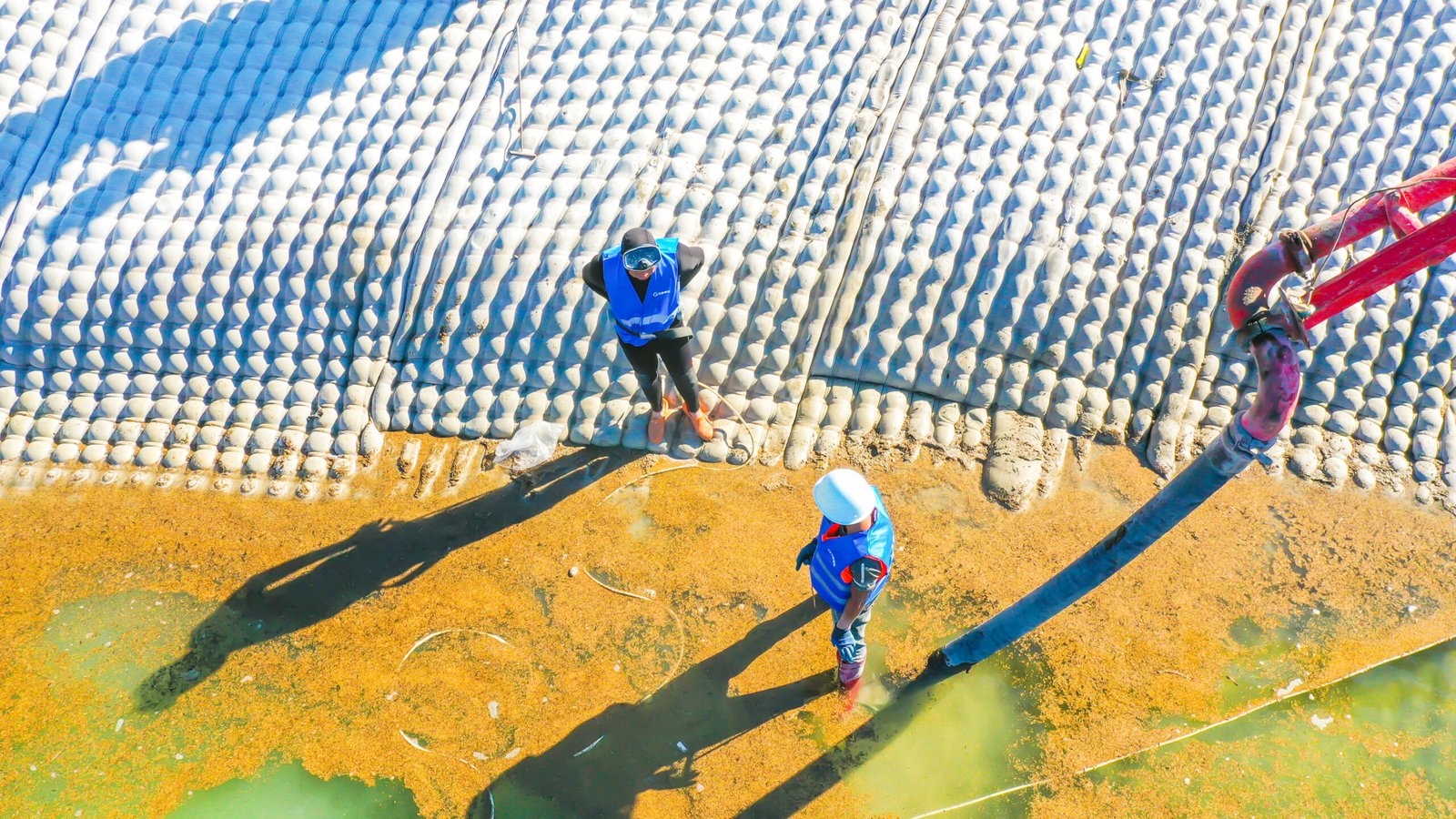
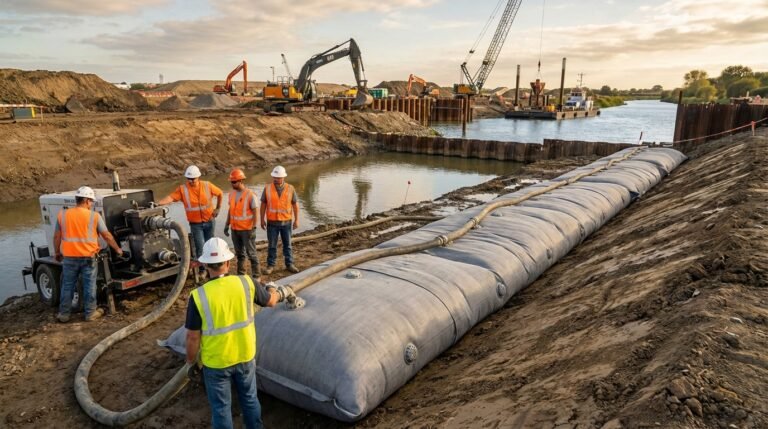
Filling fabric formwork underwater introduces a massive shift in fluid dynamics. River currents and tidal movements exert constant structural drag forces on the deflated fabric canopy. You must meticulously sequence the fill from the lowest subaqueous elevation moving systematically upward.
This bottom-up approach naturally displaces trapped water and entrained air through the upper woven matrix. Pumping vertically downward traps massive air pockets, creating void cavities and critically weak zones in the cured concrete structure. Experienced divers often guide a rigid steel tremie pipe directly into the fabric’s lower injection ports, keeping the line buried in the fresh grout to maintain a steady head pressure. Field operations managers leading rehabilitation type projects frequently navigate compromised staging areas. Working around existing structural components forces longer hose runs, which magnifies the frictional losses inside the pumping line. Communication between the site diver and the pump operator becomes the absolute most critical safety factor to prevent sudden blowouts.
Managing Groundwater and Uplift Pressures
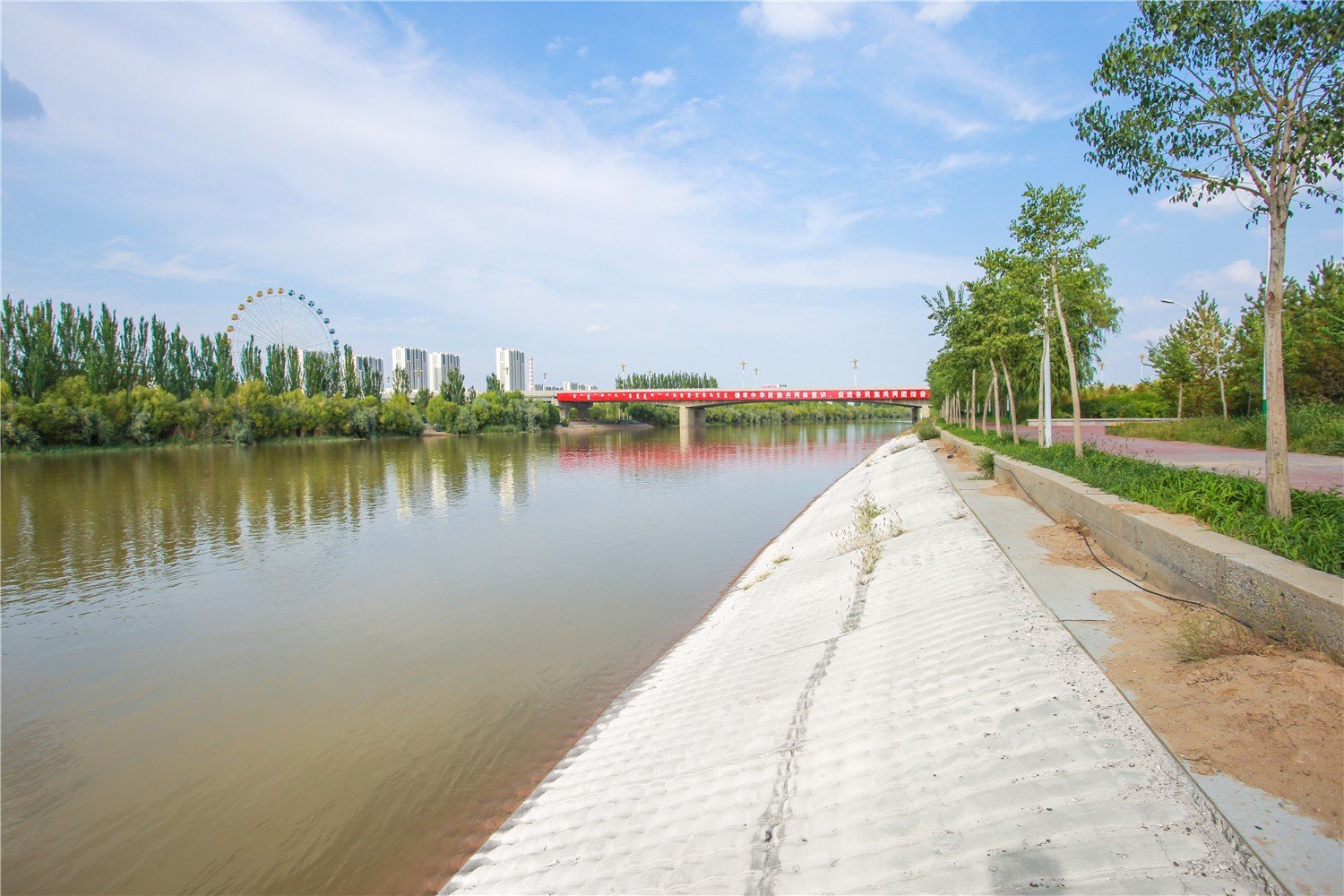
The integrated fabric nodes serve a highly specialized geotechnical engineering function. They act as permanent pressure relief valves for the underlying soil. Whenever you construct heavy revetments in tidal zones, fluctuating water tables generate massive hydrostatic uplift forces beneath the rigid concrete shell.
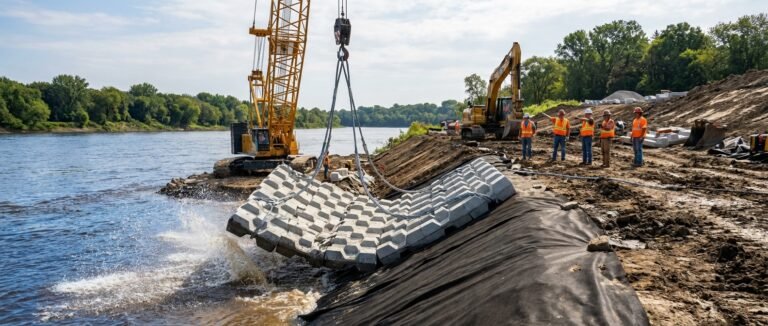
Engineers specify these systems specifically because they feature provisions to release pore water pressure safely from the embankment face. This fluid transfer mechanism dramatically increases the localized stability of the system. Filter point spacing directly correlates with the expected permeability coefficient necessary for your specific subgrade soil type. Standard configurations usually feature filter points spaced exactly at 200mm to 400mm centers. This spacing maintains critical drainage capacity without compromising the overriding concrete counter-weight necessary to resist hydraulic lift. Reviewing similar Articulated Concrete Mattress (ACM) | Erosion Control applications helps clarify how static weight interacts with active groundwater weeping systems.
Troubleshooting Grout Pump Pressure Settings
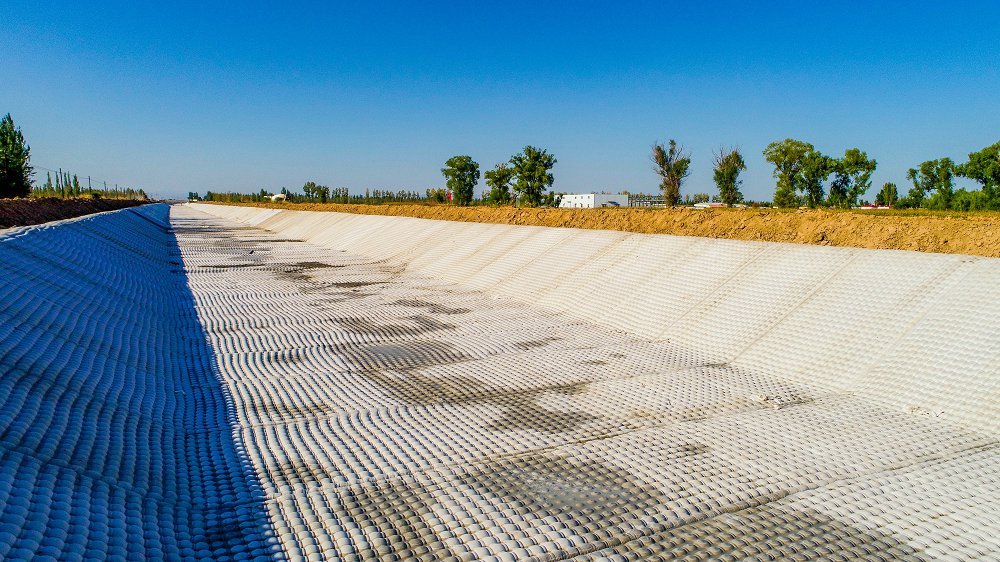
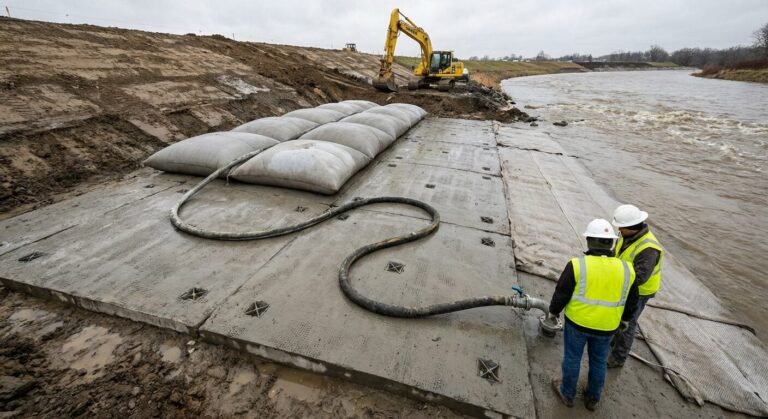
Operators routinely overdrive their concrete pumps to compensate for challenging distances or highly viscous materials. High pump pressure spikes physically tear the internal drop-stitch spacer threads inside the mattress cavity.
The exact moment you rupture these woven ties, the fabric balloons completely out of control. This permanently alters the designed unit weight and ruins the intended hydraulic roughness coefficient of the entire slope. If the mix starts noticeably stiffening in the delivery line, crews must immediately resist the common urge to simply throttle up the diesel engine. Stop the pump entirely. Check for fine aggregate bridging at the line reducer, and immediately verify the arriving mix slump. High-quality pump operations keep the digital line pressure steady and incredibly low. Encountering a sudden drop in pressure accompanied by an expanding fabric bulge means a catastrophic seam peel failure has unfortunately occurred. Dialing in your exact grout pump pressure settings prevents these expensive material losses.
Common Fabric Formwork Installation Problems
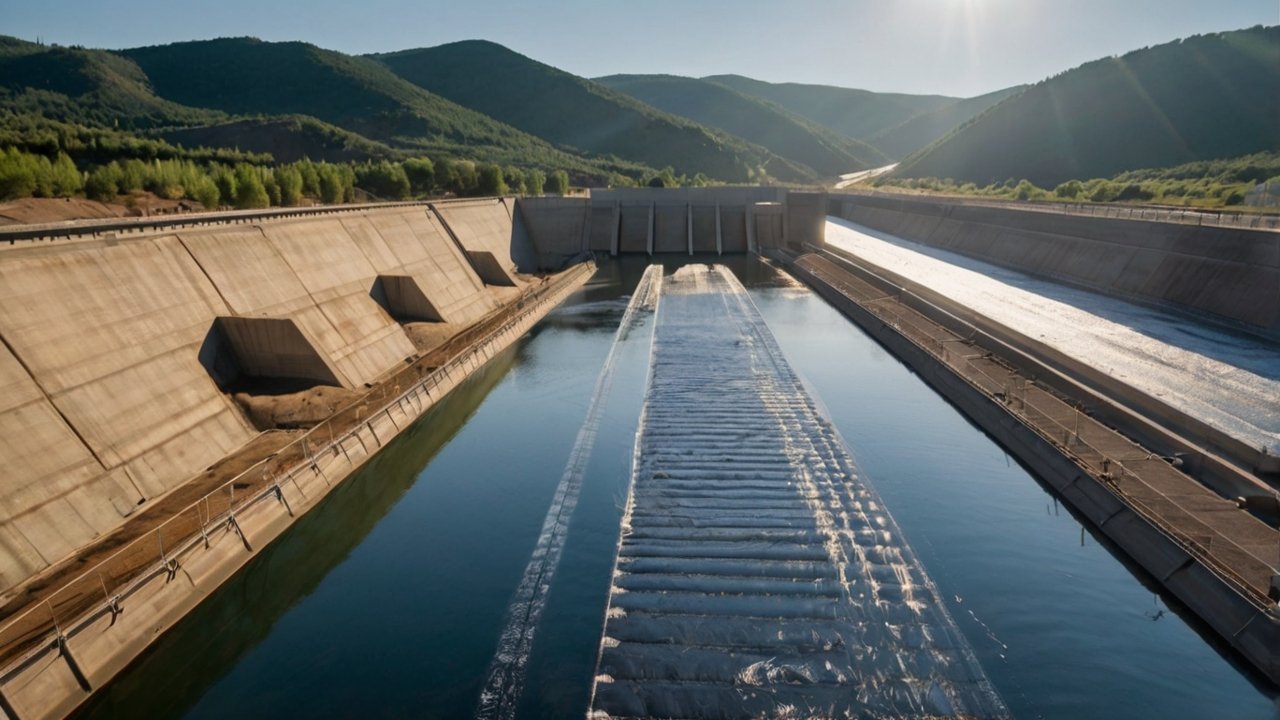
Real-world site conditions consistently challenge pristine engineering drawings. One routine hurdle involves dealing with active water seepages causing deep subgrade scour before the concrete can even cure.
Fabric forms conform precisely to whatever broken geometry they lay upon. Leaving uneven shelves in the riverbank ensures the concrete shell inherits those stress fractures. When tackling filter point mattress installation problems, crews must ensure tightly graded and uniformly compacted profiles. Inadequate field sewing of the adjacent geotextile panels causes massive headaches during the active pour. Crews relying on standard single-stitch methods often watch their seams burst open when heavy grout hits the junction. Using heavy-duty portable industrial sewing machines with high-tensile Kevlar thread prevents lateral leaks. Poor panel overlaps let fluid grout escape, causing environmental contamination in active waterways and halting the pour sequence while divers attempt emergency patching underwater.
The Role of Advanced Manufacturing in Pumping Success
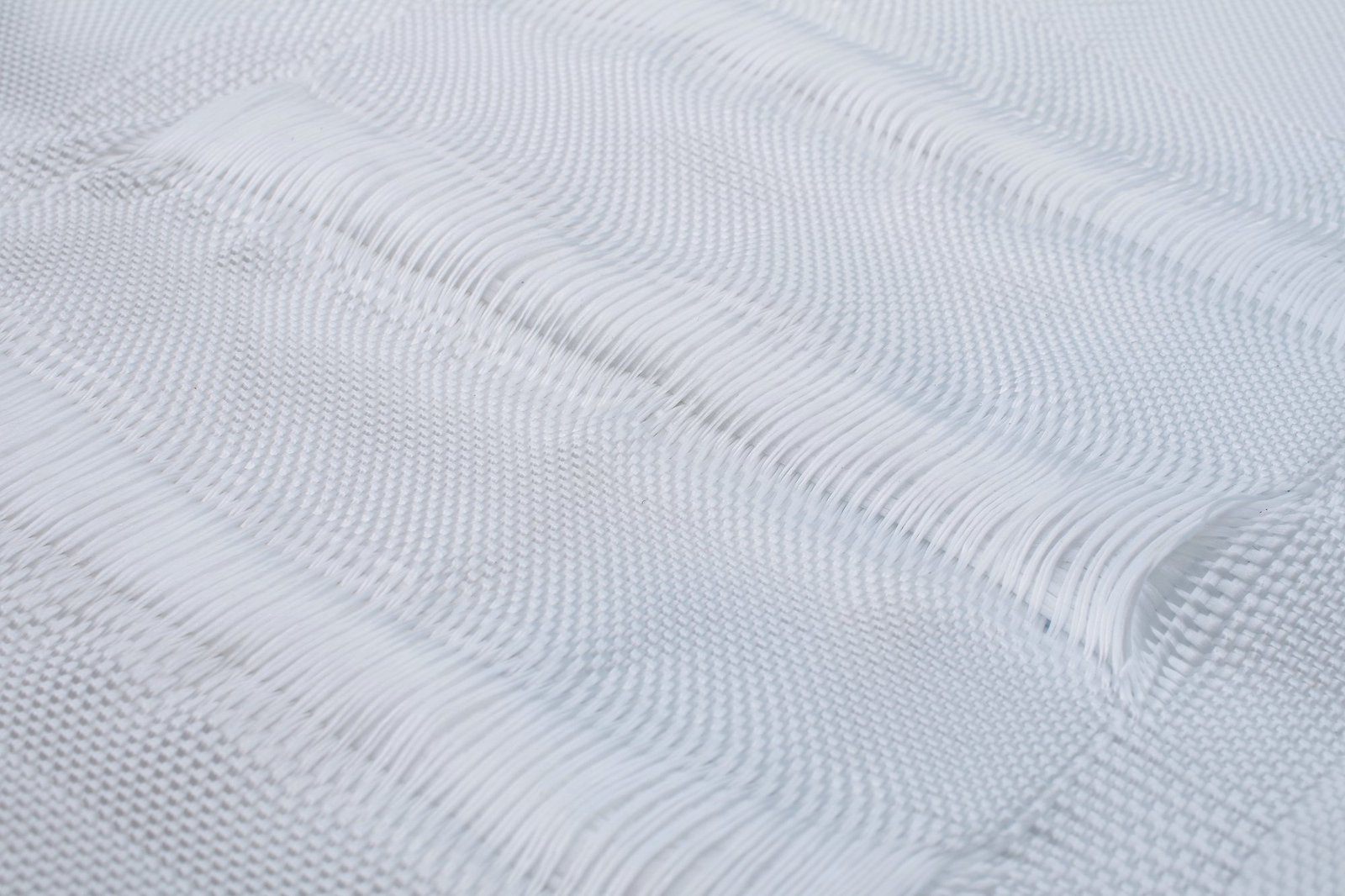
Field execution improves drastically when your source materials feature tighter factory engineering tolerances. Pumping failures often stem directly from inconsistent fabric weaving that simply cannot handle standard site injection pressures. Minor variations in the loom tension create weak vectors that eventually fail under the hydrostatic load of wet cement.
Top-tier manufacturers engineer their production lines specifically to tackle these high-stress field scenarios. For example, HydroBase utilizes heavy-duty weaving looms that generate extraordinary fabric consistency. Their forming fabrics achieve a documented seam peel strength exceeding 50kN/m, which provides a massive safety buffer for the pump operator pushing heavy grout up a steep embankment. By standardizing the woven yarn tension properties, the massive fabric panels inflate perfectly evenly across highly complex channel curves. This exact manufacturing precision means your installation crews spend significantly less time patching ugly field ruptures. Your pump operator can finally maintain a steady, efficient pour rhythm rather than constantly cycling the throttle to manage uneven inflation risks.
Technical Specification Verification
Matching the fabric’s precise physical properties to the site’s aggressive scour velocity resistance requirements prevents long-term subgrade degradation. The non-woven geotextile backing layer does significantly more than just contain the raw cement paste. It acts as an active, permanent filtration barrier blocking subsoil fines from migrating into the water column.
Reputable China concrete mattress manufacturing facilities utilize advanced dual-layer extrusion processes. This permanently binds the high-tenacity industrial yarns securely around the critical filter points. When actively evaluating a system supplier, project managers must always verify their open area testing metrics and permeability coefficients. Ensuring the fabric structure retains optimum flexibility and UV resistance before the filling stage fundamentally prevents micro-creasing and localized high-pressure points during the critical underwater inflation phase. Robust fabric translates directly to faster, safer field pumping.
Pumping Sequence Field Checklist
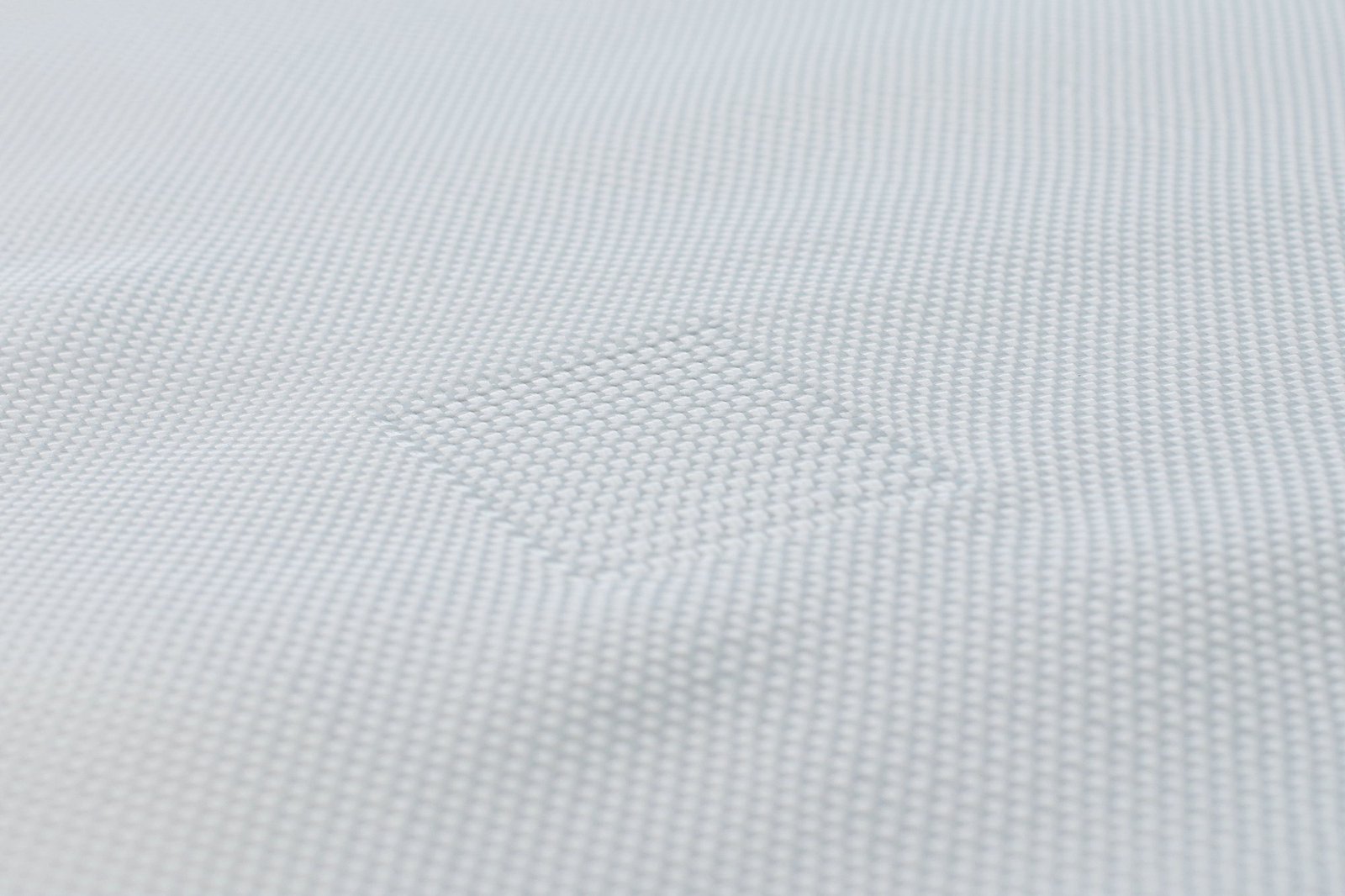
Executing the perfect fill requires strict adherence to progressive procedural checks. Relying on this structured verification tool prevents common blowout scenarios and ensures structural conformity.
| Operational Phase | Critical Check Item | Target Specification / Action |
|---|---|---|
| Pre-Pump Inspection | Trench Anchoring Depth | Verify top perimeter buried minimum 500mm deep |
| Material Verification | Mix Design Parameters | Maximum 10mm aggregate, 0.45 w/c ratio |
| Material Verification | Field Slump Test | Confirm 200mm – 250mm flowable slump |
| Equipment Setup | Pump Line Configuration | Minimal elbows, strict adherence to 2-inch reducer sizing |
| Execution Sequence | Injection Port Staging | Always pump from lowest subaqueous elevation upward |
| Active Pouring | Pressure Monitoring | Keep engine throttle low, monitor for fabric bulging |
| Curing Phase | Washout Prevention | Clean fabric surface before final concrete set |
Implementing these specific steps dramatically limits your exposure to mid-pour failures.
Frequently Asked Questions
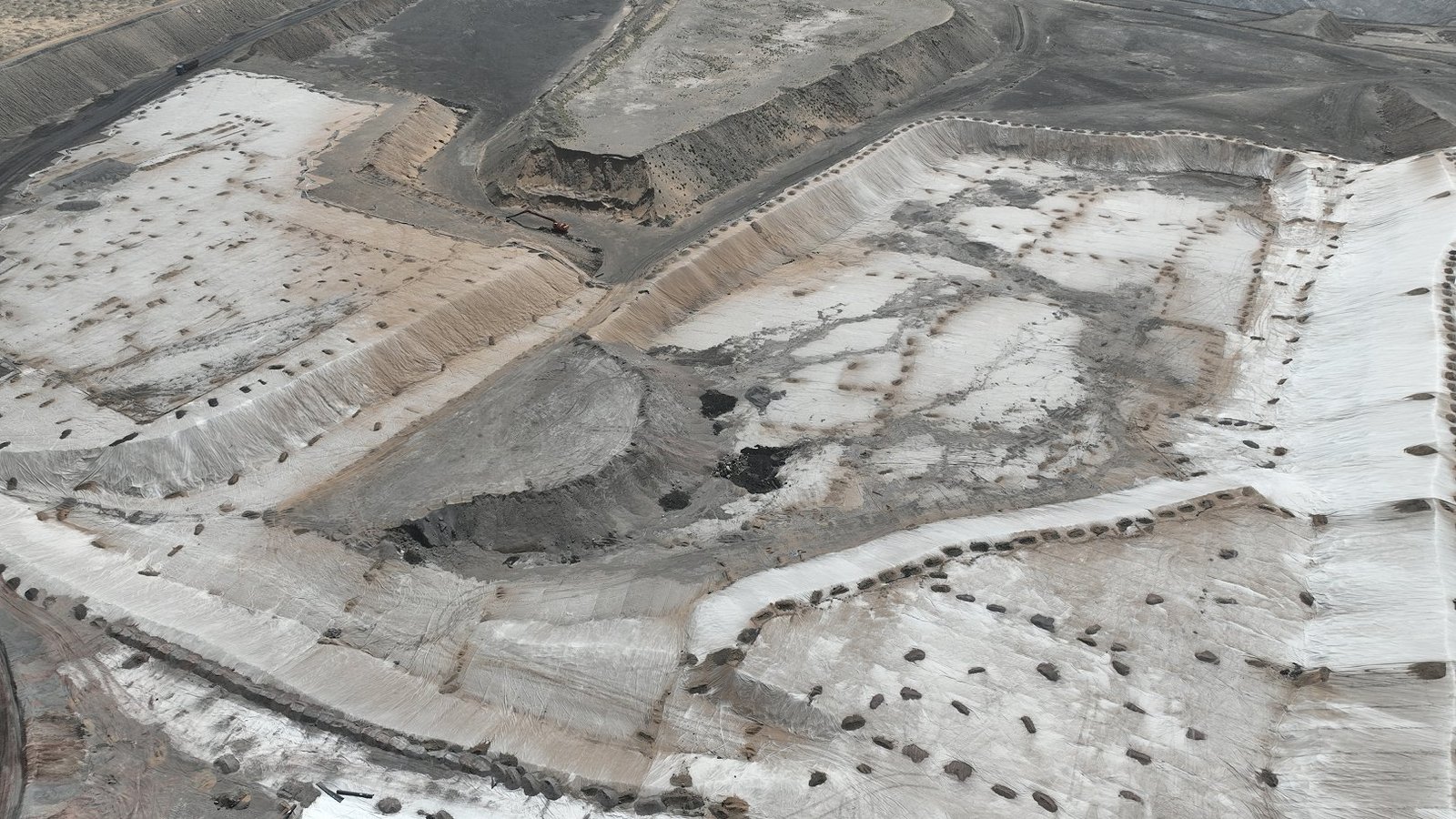
Q: What is the optimal grout mixing ratio for a filter point concrete mattress?
The optimal mix requires a 0.45 water-cement ratio using fine aggregates capped at 10mm. You need up to 400 kg of cement per cubic meter to achieve a C30/C35 strength rating. High slump (200mm-250mm) is mandatory to ensure the slurry travels smoothly through the complex woven fabric matrix without clogging the pump lines.
Q: Why do fabric formwork seams blowout during underwater inflation?
Standard seams rupture because pump line pressure exceeds the fabric’s rated peel strength, or the concrete slump is too stiff. HydroBase systems prevent this by engineering high-tenacity yarns that deliver a seam peel strength of ≥50kN/m. Always maintain low, steady pumping pressure and routinely check for line blockages to avoid catastrophic seam failure.
Q: What is the main difference between filter point and vegetated concrete mattresses?
Filter point mattresses feature distinct spaced nodes designed exclusively to relieve groundwater uplift pressure while providing an impenetrable concrete shell. Vegetated configurations have large structural openings (open area ratio ≥20%) intentionally designed to hold soil fill depths for active root penetration. Filter point styles prioritize extreme hydraulic resistance over ecological integration.
Q: How long does manufacturing and delivery take for custom fabric forms?
Production lead times usually span 2 to 4 weeks depending entirely on the requested square meter variations and specific geotextile thickness profiles required. Bulk B2B orders generally mandate a minimum order quantity (MOQ) of 1,000 square meters. Engaging a manufacturer early ensures the custom weaving process perfectly aligns with your mobilization schedule.
Securing Your Hydraulic Infrastructure
Achieving the perfect fill ultimately relies on marrying a flawless fine aggregate mix design with highly controlled pumping operations. When field crews respect the underlying fluid dynamics and maintain strict oversight on slump measurements, the installation sequence flows without interruption. Overdriving the hopper to push stiff concrete through tight fabric cavities will always result in costly blowouts.
Investing the time to secure your terminal trenches, sequence the flow from bottom to top, and manage hose pressures transforms a difficult underwater hazard into a highly predictable engineering achievement. Combining precise field execution with factory-verified seam peel strength creates a revetment shell capable of outlasting the surrounding infrastructure. Review your subgrade specifications carefully and build your operational workflow around steady, controlled inflation.
Get our comprehensive technical data and download the complete filter point concrete mattress specification sheet to ensure your next deployment meets exact project tolerances.
Need a concrete mattress solution for your project?
HydroBase provides end-to-end concrete mattress engineering & installation services — from hydraulic design and factory-direct ACM supply to on-site supervision and post-project inspection. Trusted by civil engineers in 50+ countries.