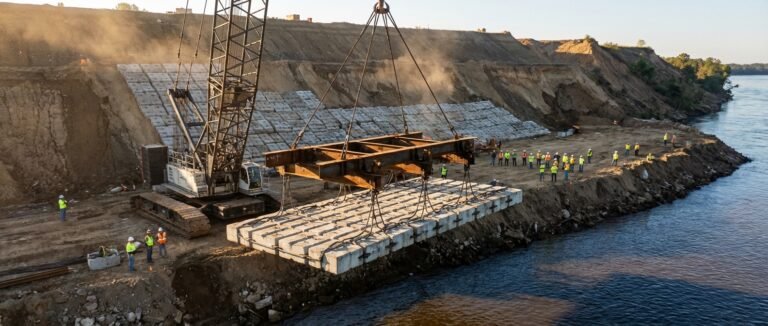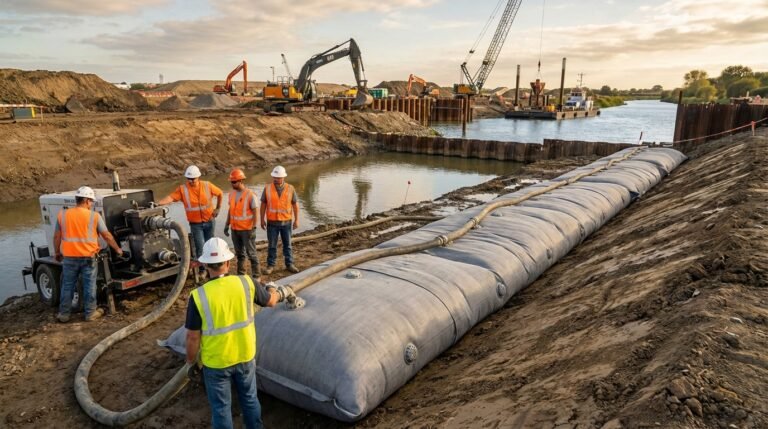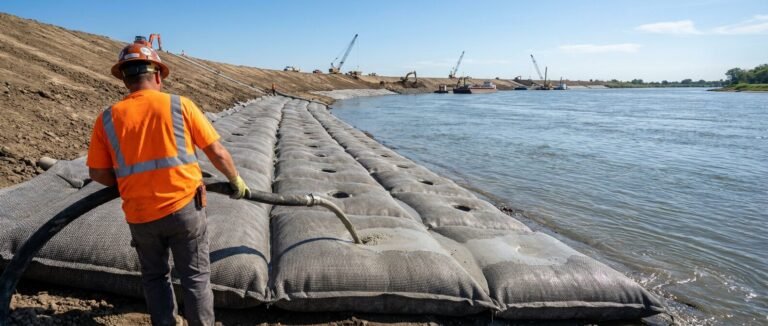

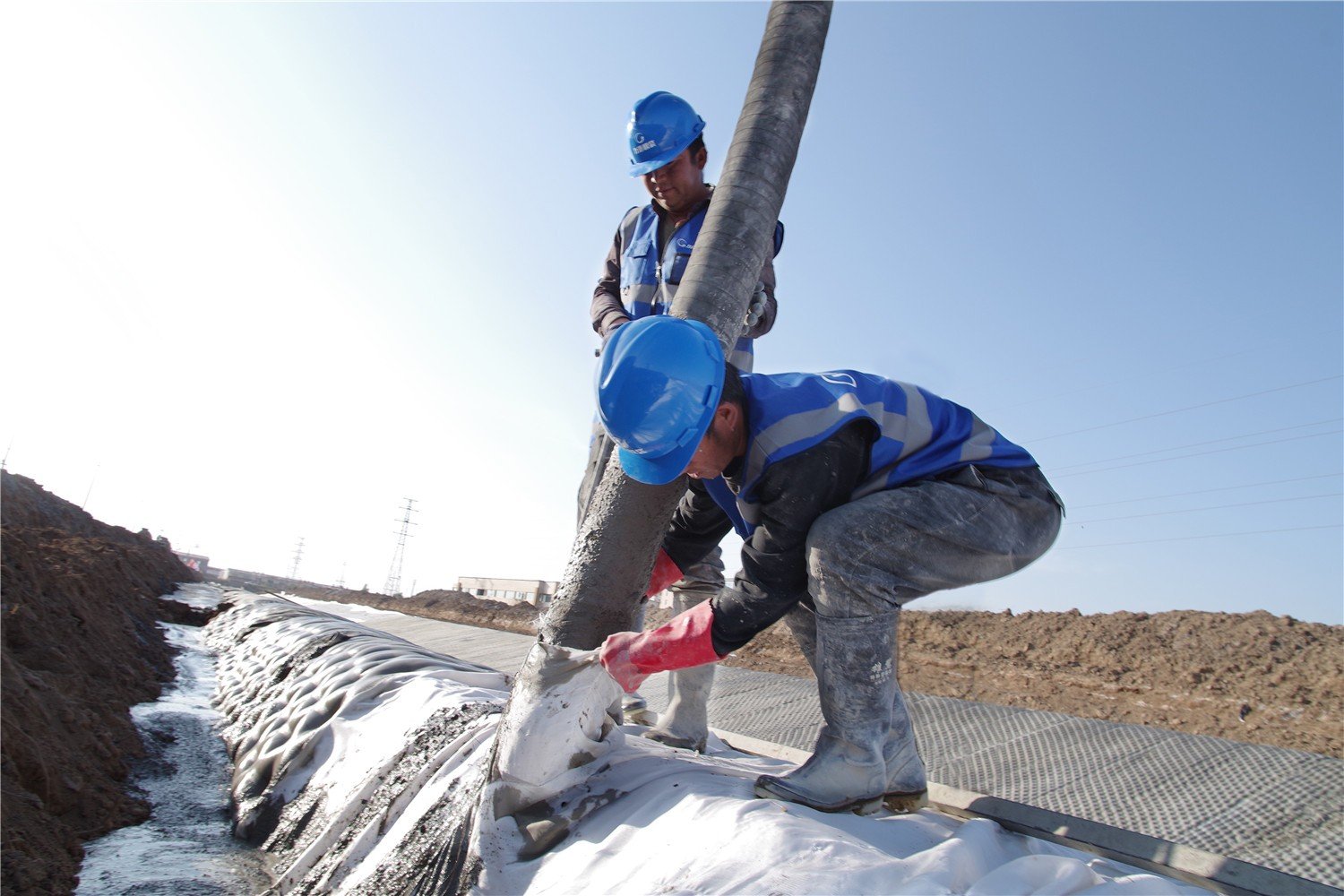
Solving these installation failures requires shifting our focus away from basic material selection. We need to master the exact fluid mechanics acting inside the formwork during the critical injection phase. Implementing a flawless filter point concrete mattress pumping guide strategy prevents sudden blowouts and ensures consistent armor thickness. A successful sequence guarantees the integrated drainage ports remain clear to function exactly as calculated. Let us break down the exact field procedures required to execute the perfect fill.
Fine Aggregate Concrete Mix Parameters
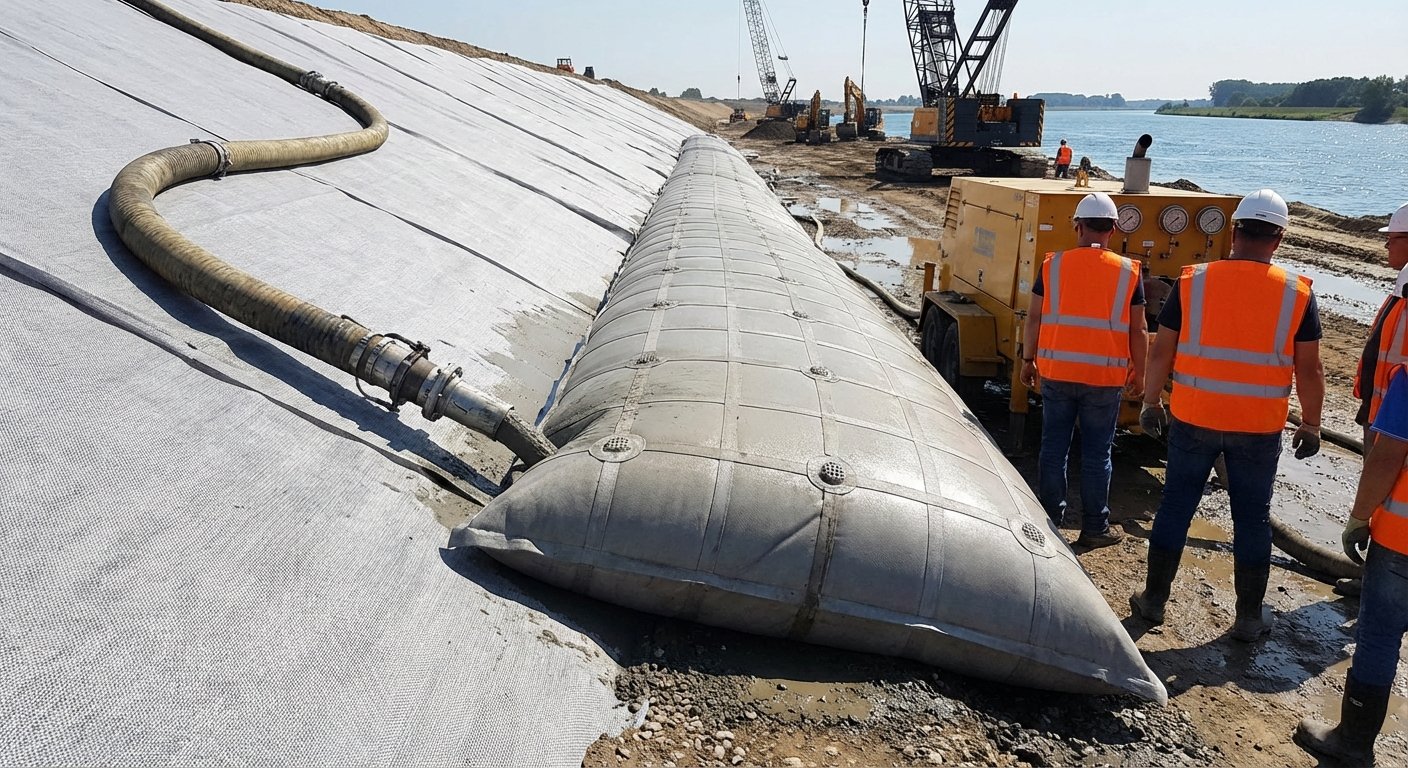
Pumping a dense slurry into woven constraints requires a highly specific mix design that prioritizes extreme flowability over traditional structural compressive strength. Standard coarse aggregates will bridge inside the fabric channels within seconds, dead-heading the pump and ballooning the injection hose. Specifying a maximum aggregate size of exactly 9.5mm ensures the material navigates the internal woven baffles without causing mechanical blockages.
Water-cement ratios dictate the viscosity of your fill. Hitting a precise 0.44 w/c ratio strikes the necessary balance between pumpability and rapid setting times. Highly fluid mixes frequently suffer from aggregate segregation if field crews rely exclusively on water to increase the slump. Modern projects incorporate high-range water reducers to achieve the required 195mm to 215mm slump. Industry tracking of the concrete admixtures market size indicates a strong operational shift toward advanced rheology modifiers that maintain flowability in restricted spaces without inducing heavy bleeding. Maintaining this strict viscosity ensures the grout naturally pushes out trapped air pockets rather than encapsulating them.
Grout Pump Pressure Calibration
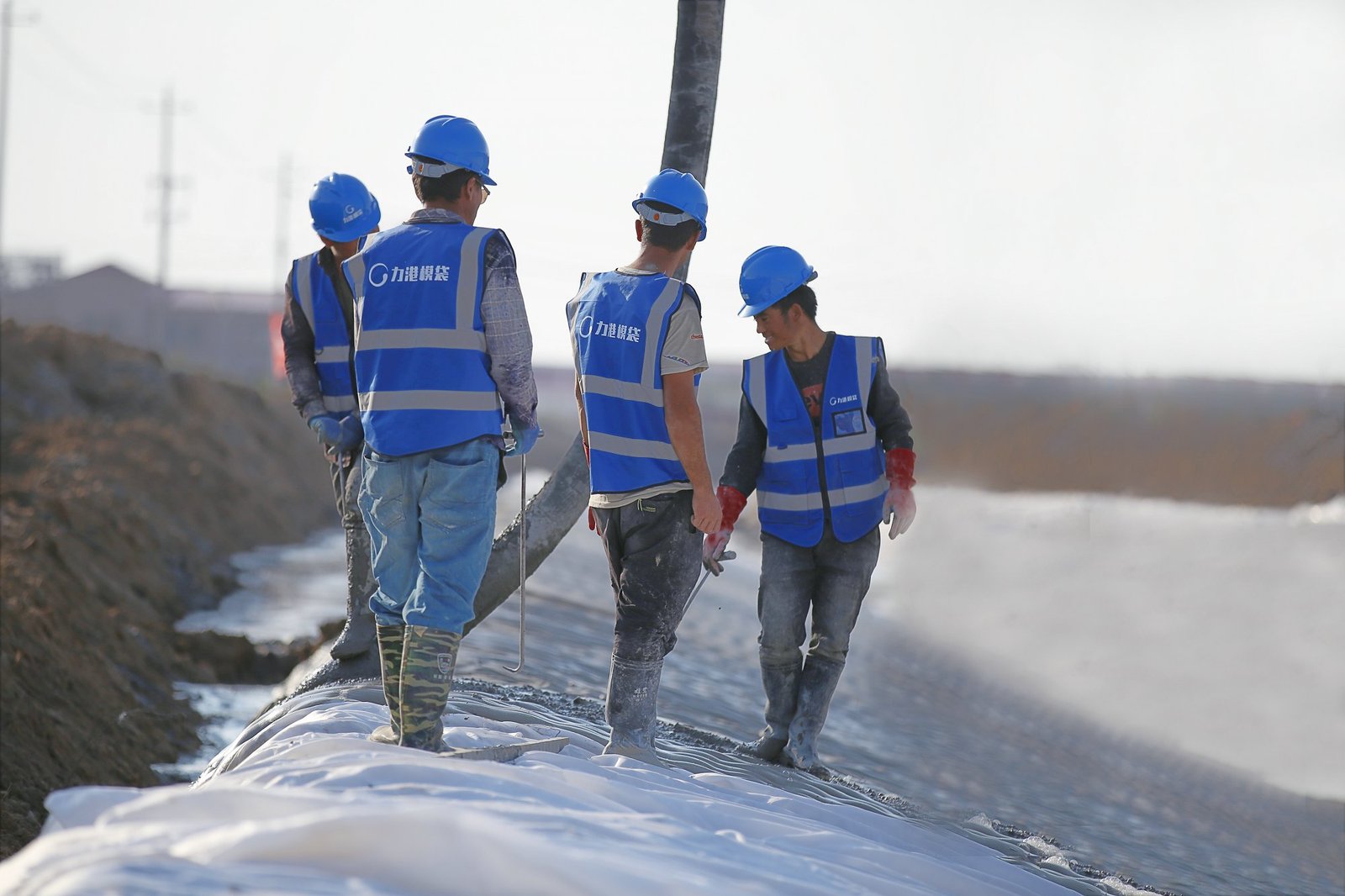
Controlling the throttle on the grout pump separates seamless installations from catastrophic fabric ruptures. High-velocity pumping spikes the internal hydrostatic load against the woven seams far faster than the fabric can displace the displaced air. Starting the injection at an aggressive throttle is a reliable way to rip a lateral seam wide open. Operators must restrict the initial injection pressure strictly below 24.5 kPa at the nozzle interface.
Monitoring the visual expansion of the geotextile dictates when operators can marginally increase the flow rate. Woven formworks typically feature a baseline seam peel strength of 28.5 kN/m under dynamic load. Surpassing this threshold creates microscopic tearing that bleeds cement paste into the adjacent waterway. Crew chiefs should designate one technician exclusively to watch the mattress profile, signaling the pump operator to throttle down the exact moment the fabric crown reaches its designated 150mm depth profile.
Overcoming Underwater Placement Hazards
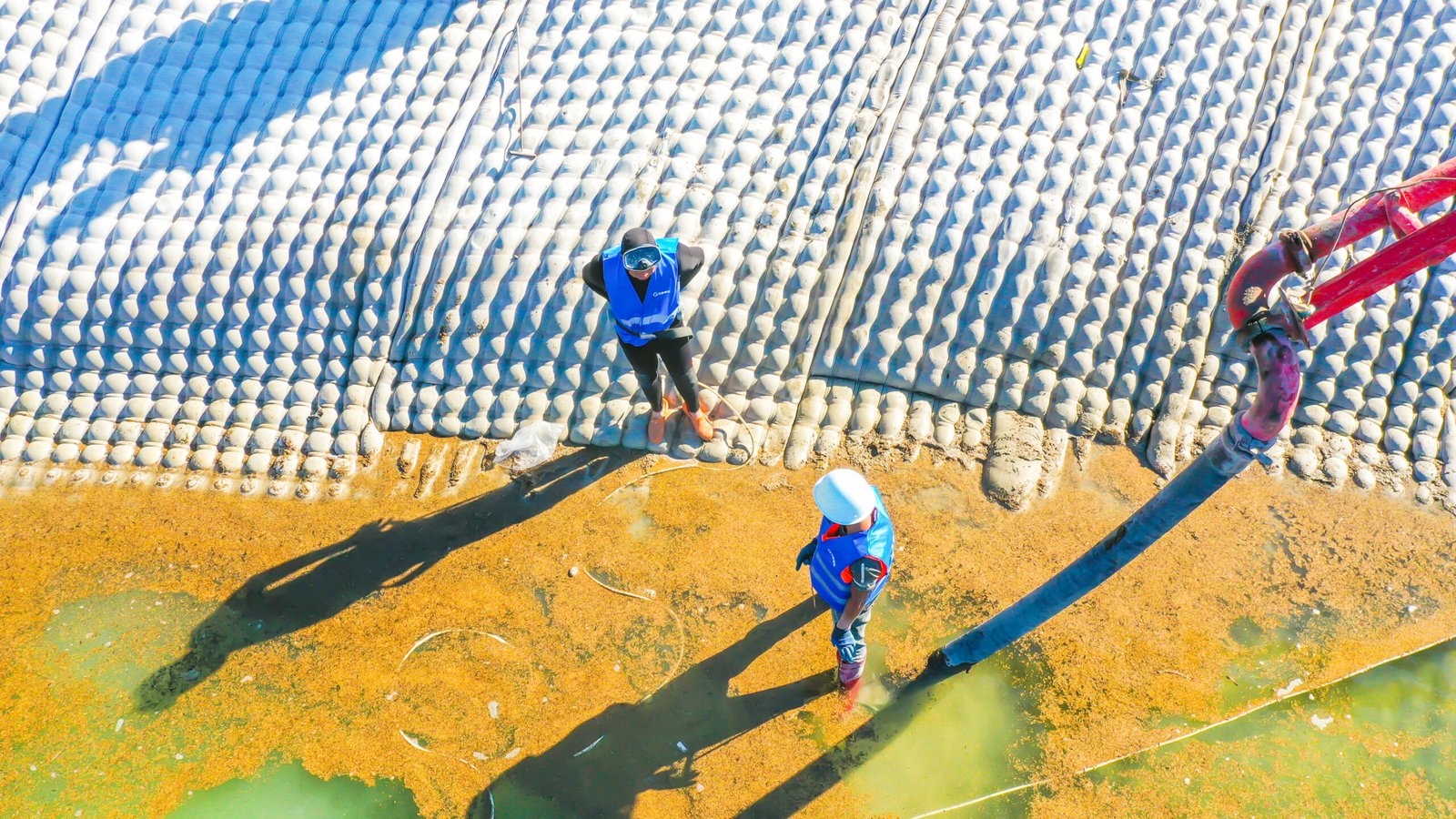
Submerged injections introduce complex hydrodynamic variables that dry-land crews rarely anticipate. Ambient water pressure actively compresses the empty formwork, meaning the pump must overcome the dynamic weight of the channel current just to inflate the initial chambers. Displacing this surrounding water rapidly creates immense lift forces. Many crews watch their layout shift downstream because they failed to properly sequence the fill from the deepest toe trench upward to the crest.
Managing subgrade saturation is equally critical to the curing phase. Many embankment failures happen purely because field operations ignore how the system releases hydrostatic pressure beneath the armor. Proper engineering requires a provision of filter points to release pore water pressure safely from the subgrade, preserving the stability of the entire revetment. A high-quality non-woven geotextile backing with a permeability coefficient of at least 0.12 cm/s allows this trapped groundwater to escape without pulling fine subgrade soils through the drainage ports.
Mitigating Fabric Contraction During the Fill
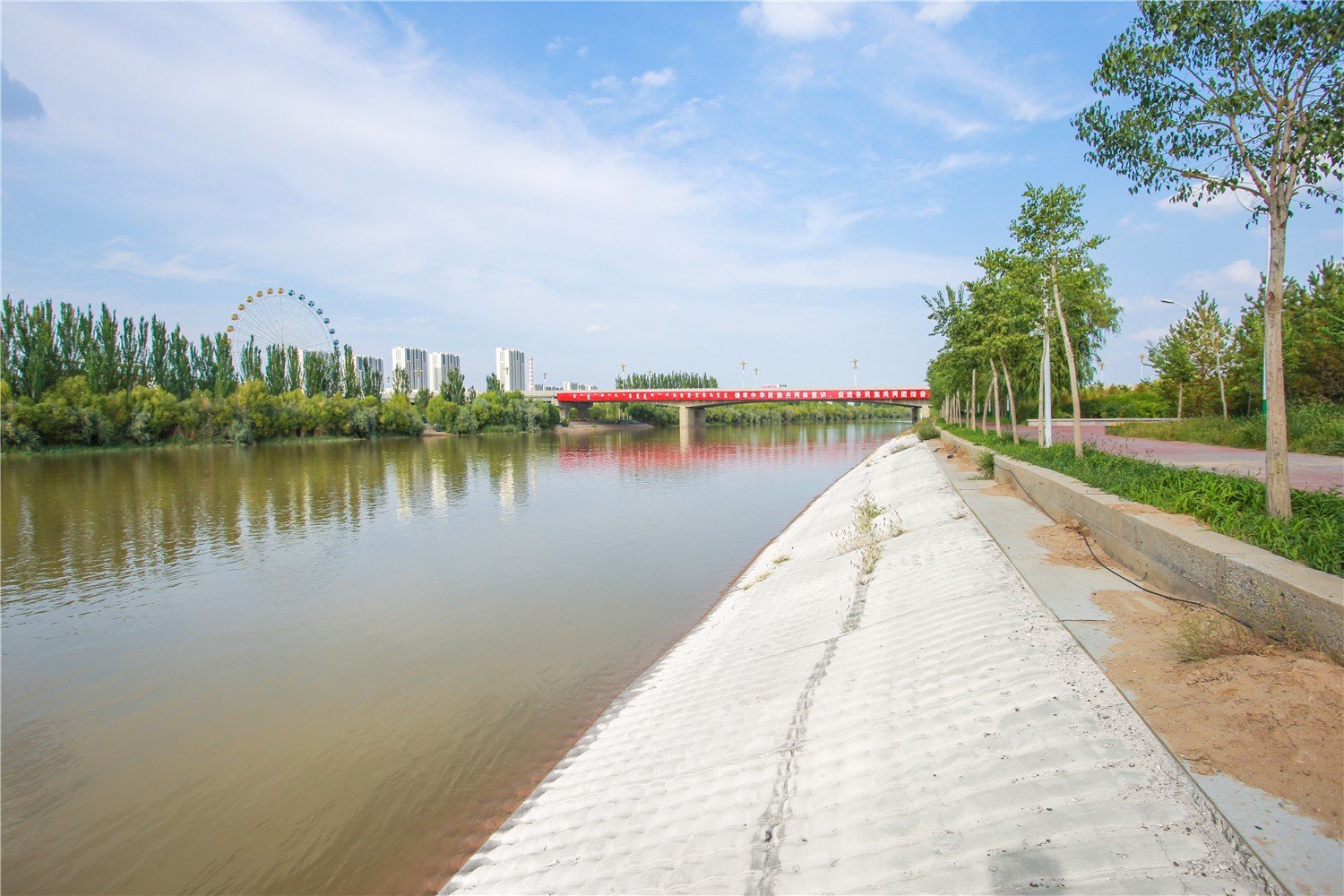
Inflating a flat, two-dimensional fabric into a three-dimensional armored envelope inevitably causes the entire footprint to shrink. A standard interwoven configuration will contract laterally by approximately 9.4% to 11.2% during a rapid fill sequence. Crews that fail to calculate this dimensional shift end up with exposed perimeter soils and compromised anchor trenches. As our lead craftsman always says, “You can feel when the concrete mattress is right.”
Tensioning the fabric prior to the concrete injection mitigates wild, unpredictable bunching. Field teams must secure the top edge in an anchor trench excavated to a minimum depth of 0.75m before pumping begins. Familiarizing field engineers with established methods of low cost shore protection proves that active dimensional shifts require continuous manual adjustment. Technicians must walk the perimeter during the early injection stages, releasing temporary zip-ties or guide ropes to allow controlled, uniform contraction toward the center of mass.
Filter Point Integrity and Groundwater Relief
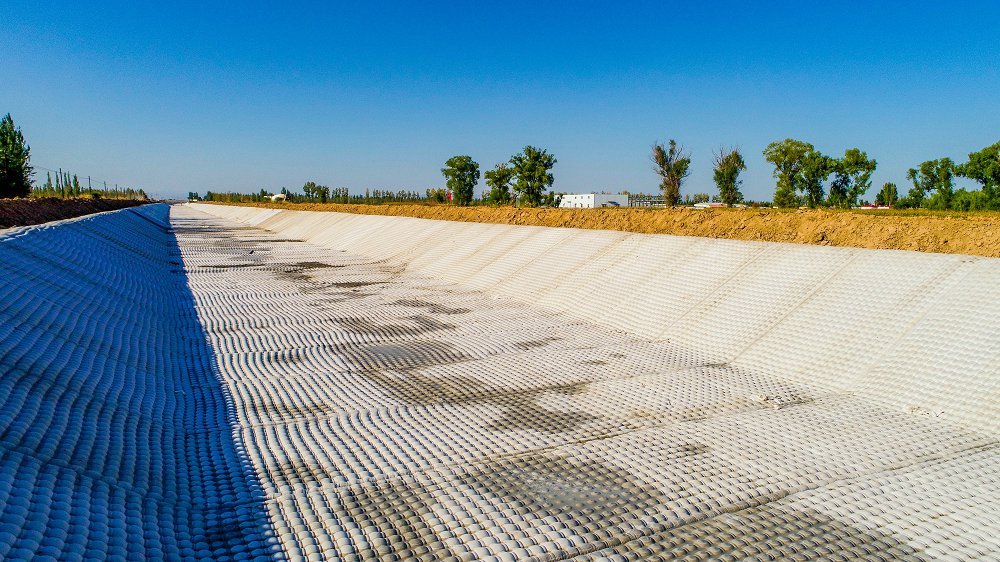
Protecting the integrated drainage ports from concrete bridging requires pinpoint accuracy from the nozzle operator. If the grout viscosity is too thick or the pumping pressure is too high, the fluid matrix will force its way across the interwoven connections. This seals the designated relief points shut, effectively turning a highly permeable system into a solid slab. Blocked ports cause a total loss of the target 3.4 L/min/m² drainage capacity.
Working systematically around the designated spacing zones—typically placed 203mm or 406mm on center—prevents this concrete bleed. Insert the injection pipe deeply into the lower ports and allow the slurry to rise naturally through gravity rather than pushing it aggressively across the top layer. Clearing any accidental grout splatter from the filter fabric immediately with a high-pressure water wand guarantees the ports remain open to safely vent future groundwater surges.
Equipment Setup and Hose Management
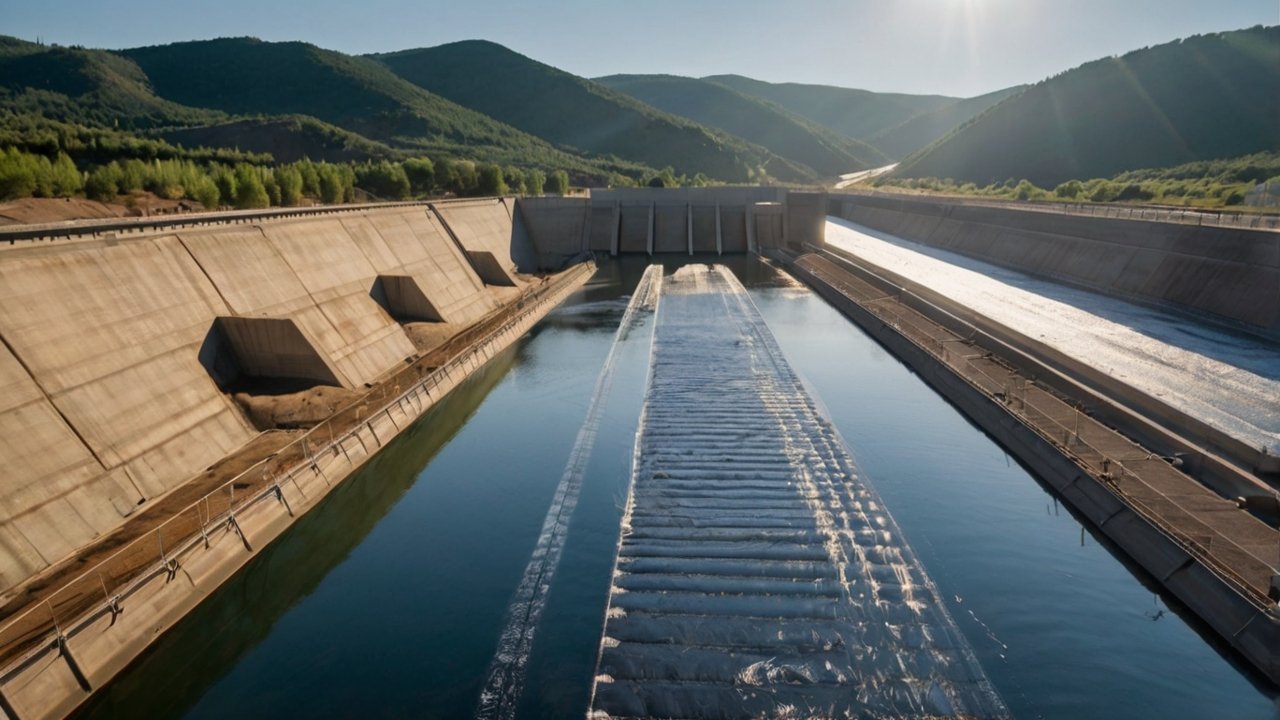
Field logistics heavily dictate the efficiency of the injection. Pumping fine concrete over long distances amplifies friction within the delivery lines, increasing the baseline pump pressure required simply to move the material. Placing the concrete staging area as close to the anchor trench as physically possible reduces this internal line friction. Operators relying on pipeline runs exceeding 45 meters will constantly battle premature mix stiffening and sudden line kicks.
Using the correct insertion pipe prevents severe damage to the factory-cut injection valves. The elephant trunk assembly should measure exactly 38mm or 50mm in diameter to cleanly seat inside the geotextile collars. Forcing an oversized hose into a standard containment collar shreds the woven fibers immediately. You will often find the most successful field crews utilize steel pipe reducers at the nozzle tip to smoothly transition the dense material directly into the fabric matrices without violent splashing or air entrainment.
Transitioning to Predictable Formwork Systems
When complex shorelines require aggressive armoring timelines, relying purely on manual field adjustments becomes an unacceptable project risk. Pumping fluid concrete consistently relies entirely on how well the specified fabric absorbs and distributes the dynamic loads. Evaluating specialized concrete mattress solutions reveals why certain field deployments execute flawlessly while others constantly battle equipment failures and blown seams.
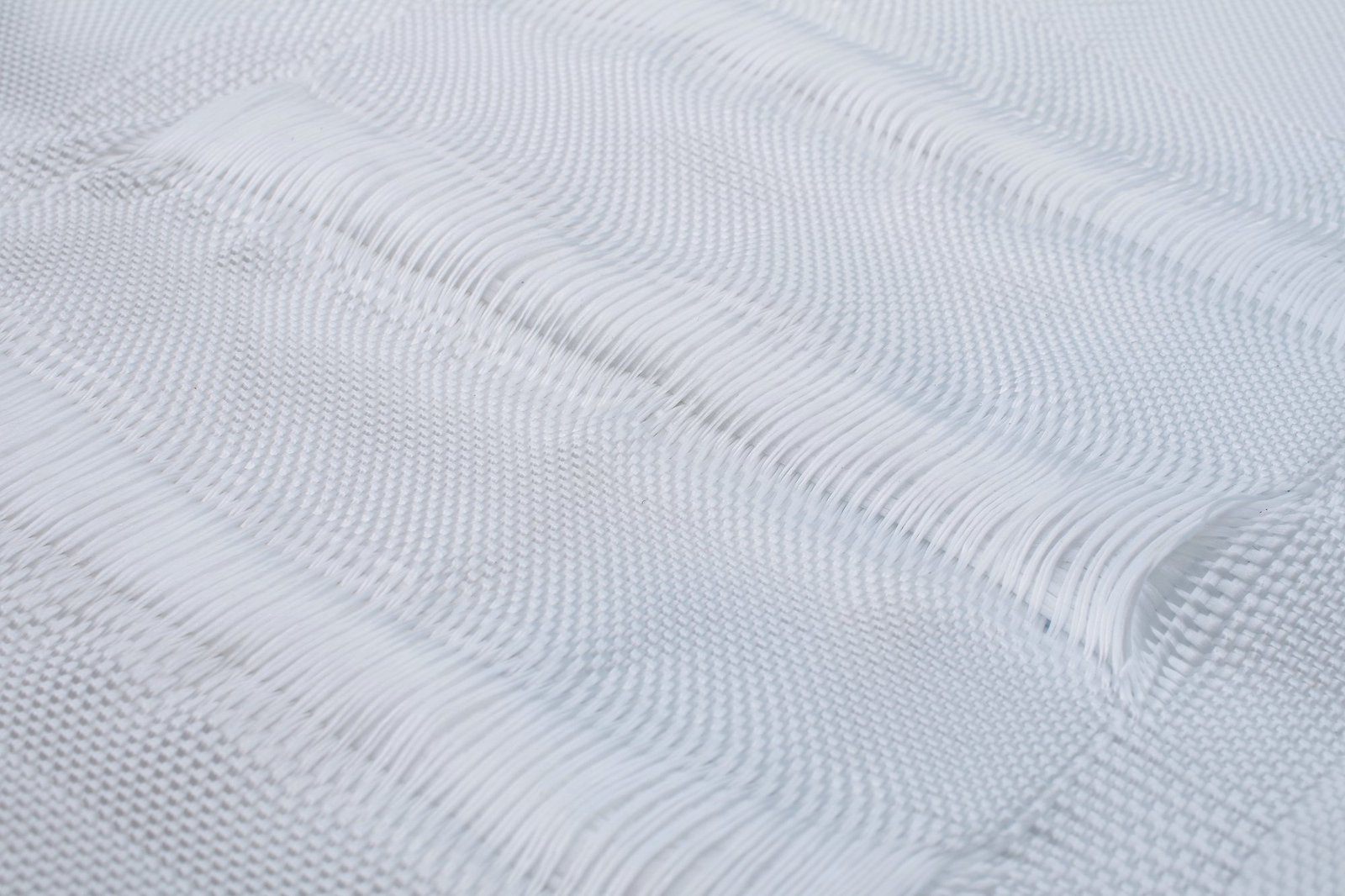
High-performance manufacturers engineer their retaining structures specifically to combat operator error. HydroBase, for example, integrates extreme tolerance limits into their filter point concrete mattress arrays. By utilizing advanced looming technology, they achieve a woven geotextile fabric strength measuring an impressive 52.4 kN/m. This massive tensile threshold acts as a mechanical safety net against accidental pump surges. Crews operating under high-pressure conditions have significantly more margin for error before risking a lateral blowout.
The integration of precision-spaced drainage nodes ensures that subgrade stabilization remains consistent regardless of the installation depth. With verified uplift pressure resistance reaching up to 3.8 kPa, these specific formworks allow active groundwater relief even during rapid tidal drawdowns. Transitioning to standardizing high-end factory tolerances streamlines the chaotic variables inherently found in wet-site hydraulic deployments.
Field Execution Troubleshooting Matrix
Diagnosing irregularities during the active pumping phase saves substantial remediation costs. Ground crews must recognize the subtle visual indicators of pressure failures before they trigger outright structural collapse. Implement this diagnostic matrix to govern real-time pump operations.
| Field Symptom | Root Mechanical Cause | Immediate Correction Strategy |
|---|---|---|
| Pillowing / Uneven Panel Height | Slump is too low (viscosity is too thick), causing grout to stack near the nozzle rather than flowing. | Halt pump. Inject high-range water reducer directly into the hopper. Clear insertion port. |
| Bleed-out Over Filter Nodes | Pump pressure exceeds 24.5 kPa, forcing concrete matrix across interwoven spacer yards. | Reduce pump throttle by 30%. Clean affected node immediately with a localized water jet. |
| Anchor Trench Pull-out | Failure to account for the geometric 11.2% contraction rate during rapid initial inflation. | Stop injection. Manually release tension lines to allow fabric to relax toward the deeper toe. |
| Sudden Line Kick / Dead-head | Aggregate bridging inside the 50mm insertion nozzle, or concrete mix has exceeded max aggregate sizing. | Reverse pump flow to clear line pressure. Detach nozzle and manually clear the coarse blockage. |
| Fabric Seam Shearing | Hydrostatic fill rate outpaces the ambient displacement of internal trapped air in the baffles. | Decrease injection rate. Create a tiny 5mm relief puncture at the highest dry elevation. |
Utilizing standardized reference checks allows quick adjustments without paralyzing the workflow. Your field superintendent should memorize these mechanical thresholds to maintain authority over the grout pump operator. Strict adherence to reaction protocols prevents minor fluid dynamic imbalances from spiraling into massive material losses.
Frequently Asked Questions
Q: What is the optimal slump requirement for a successful fabric formwork injection?
The required concrete slump sits rigidly between 195mm and 215mm for a fine-aggregate mix. Achieving this extreme flowability demands high-range water reducers rather than simply adding water, ensuring the grout navigates intricate woven baffles without segregating or clogging the pump lines.
Q: How does filter point spacing affect hydrostatic uplift resistance?
Tighter filter spacing geometrically increases the total percentage of open drainage area per square meter. A configuration engineered with 203mm on-center spacing evacuates pore water pressure significantly faster than a 406mm layout, drastically reducing the risk of subgrade soil liquefaction under severe wave action.
Q: What is the standard minimum order quantity for specialized mattress orders?
Base production typically requires a minimum order quantity of 1,500 square meters for custom-woven geotextile forms. With advanced manufacturing capabilities, standard dimension configurations from HydroBase can be fully dispatched within 48 hours to meet emergency scour protection deadlines.
Q: What differentiates a filter point configuration from articulated slab versions?
A filter point system integrates heavily reinforced drainage nodes to constantly relieve subgrade groundwater pressure. In contrast, heavy articulated concrete slab mattress systems deploy solid armored faces that provide superior defense against extreme high-velocity scour but demand complex, completely independent subgrade pipe networks to manage drainage.
Advancing Your Asset Protection Layout
Executing a flawless installation ultimately depends on harmonizing the engineered fabric specifications with rigid ground-level fluid mechanics. Mastering concrete mix viscosities, controlling precise injection pressures, and planning for physical fabric contraction eliminates the chaotic guesswork that ruins hydraulic margins. When field operators stop fighting the formwork and start managing the internal pumping dynamics, embankment stabilization transforms into a highly predictable, repeatable science.
Equipping your crews with advanced woven materials guarantees that your initial engineering math holds true against relentless local currents. By prioritizing seam strength and verified permeability coefficients, project managers establish long-term scour resilience that requires practically zero remediation.
Download the concrete mattress specification sheet and comprehensive pumping guide to dial in your next field operation. Explore precise technical parameters today.
Need a concrete mattress solution for your project?
HydroBase provides end-to-end concrete mattress engineering & installation services — from hydraulic design and factory-direct ACM supply to on-site supervision and post-project inspection. Trusted by civil engineers in 50+ countries.