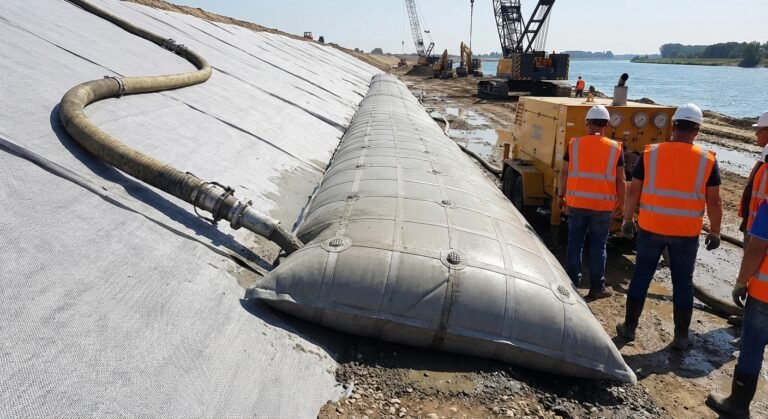

Dynamics of the Pumping Stage

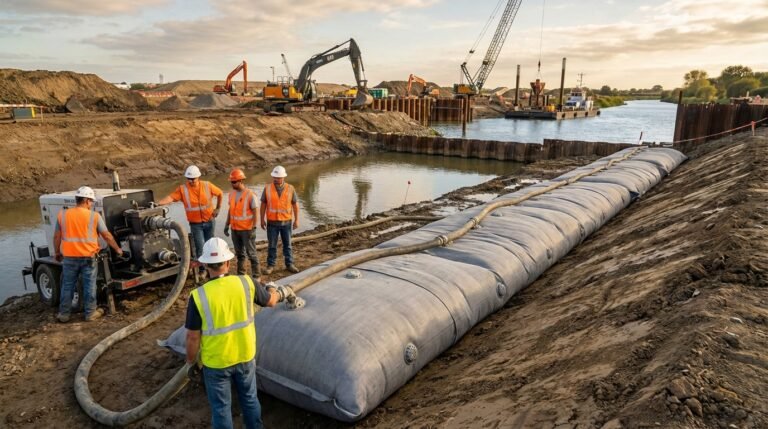
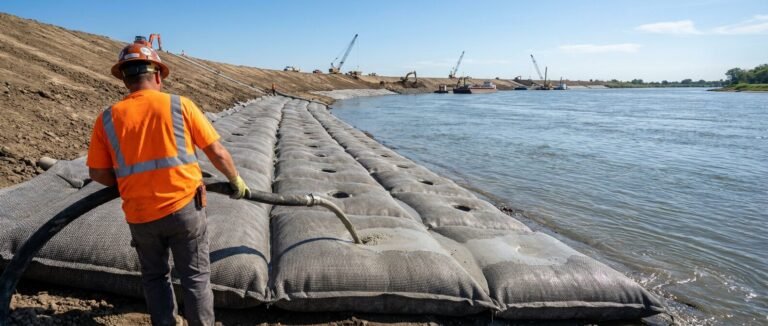
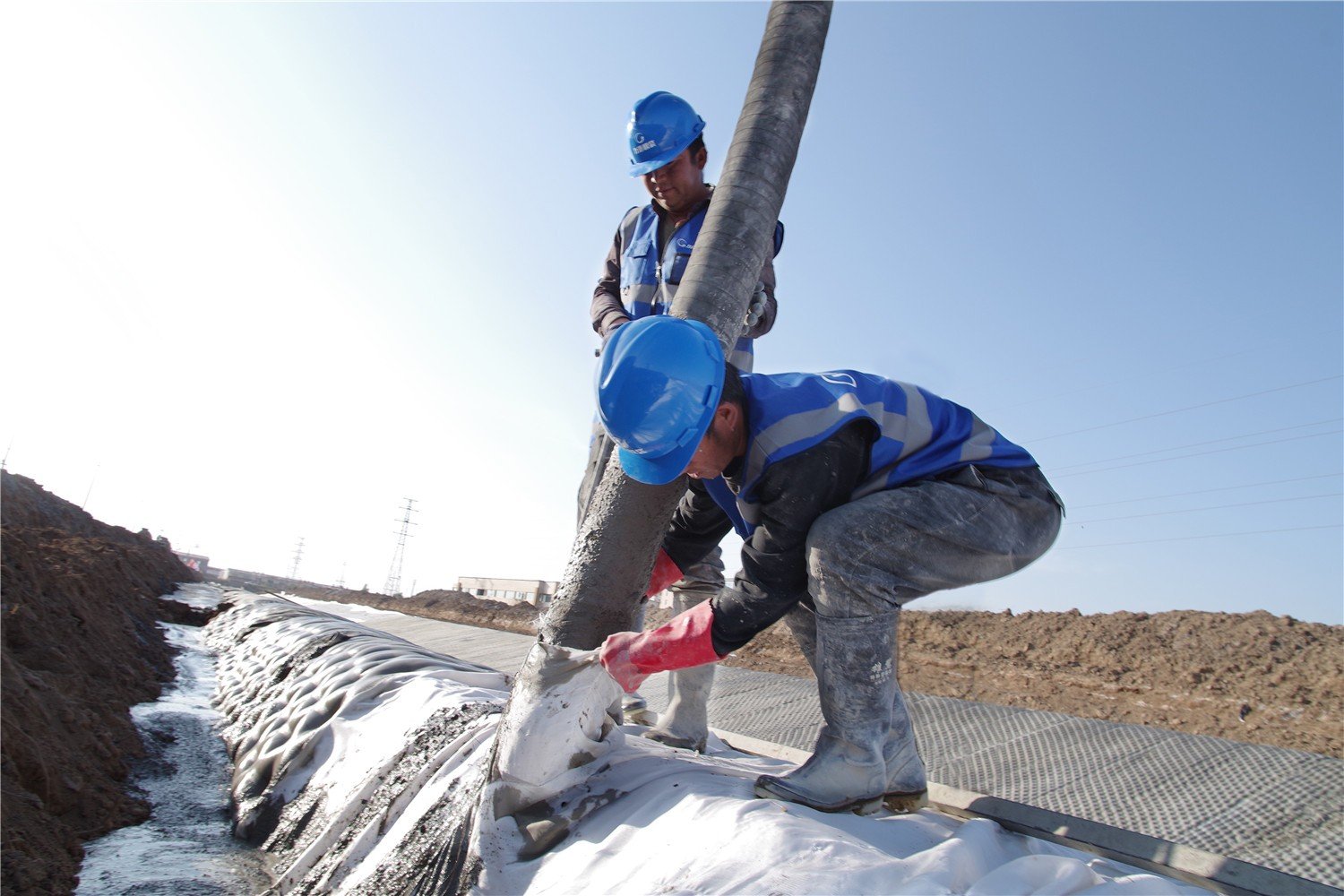
Fluid behavior changes entirely when wet cement hits an integrated non-woven geotextile backing. Internal cavity pressure spikes radically as heavy material fills the constrained voids. Field ops teams constantly balance material flow rates against the sudden expansion limits of the fabric envelope. Push the throttle too hard, you risk massive seam rupture across the embankment. Dial it back too slow, and rigid cold joints start forming deep inside the mattress matrix.
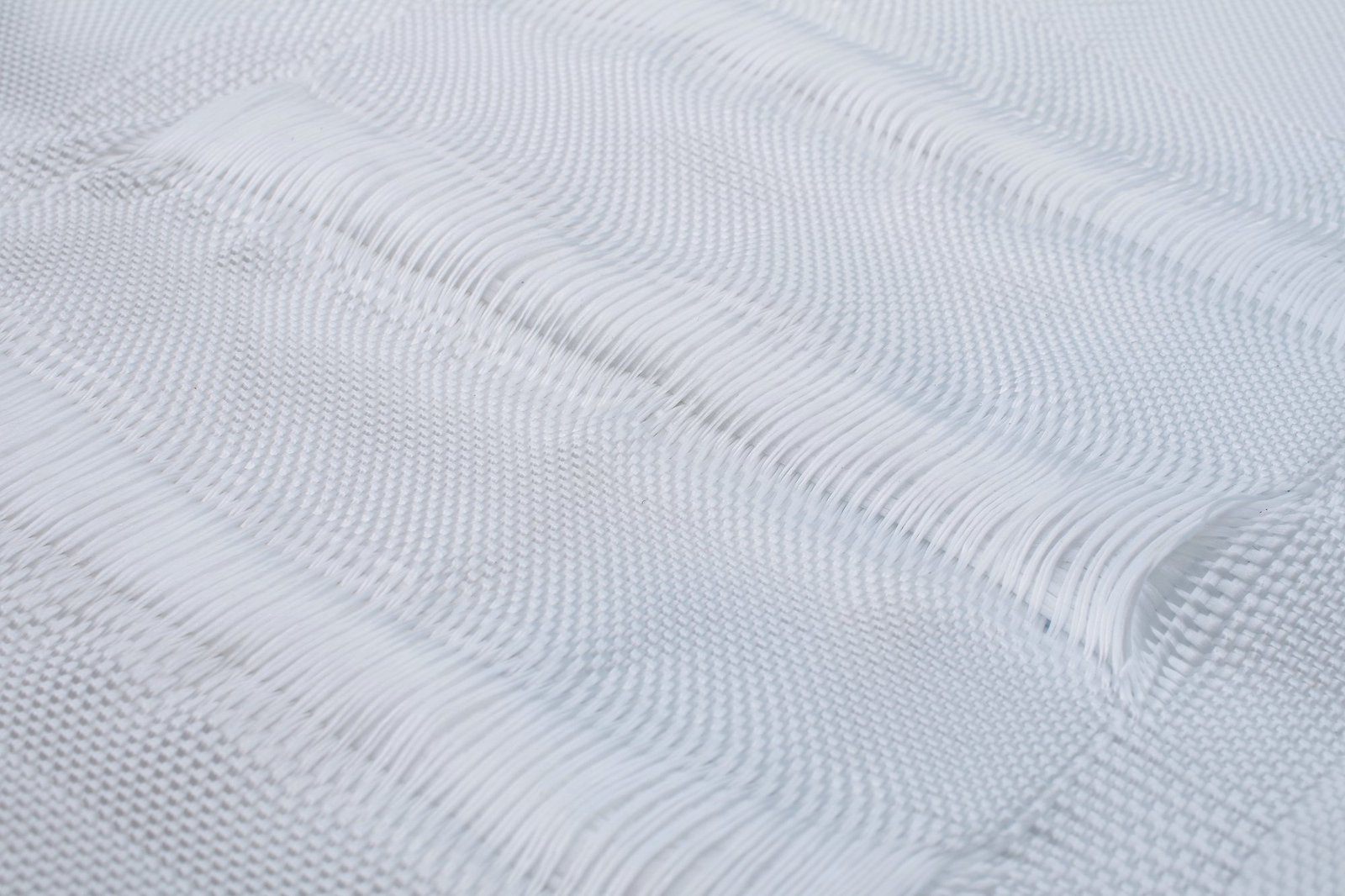
Woven drains naturally handle environmental stress, but they act as rigid tension concentrators if the surrounding envelope inflates unevenly. Typical filter point spacing varies from 200mm to 400mm depending entirely on local drainage capacity calculations. Every single centimeter of that measured spacing relies on consistent internal head pressure during execution. Variations in flow tear at the micro-fibers, degrading long-term durability drastically.
Fine Aggregate Concrete Mix Formulation
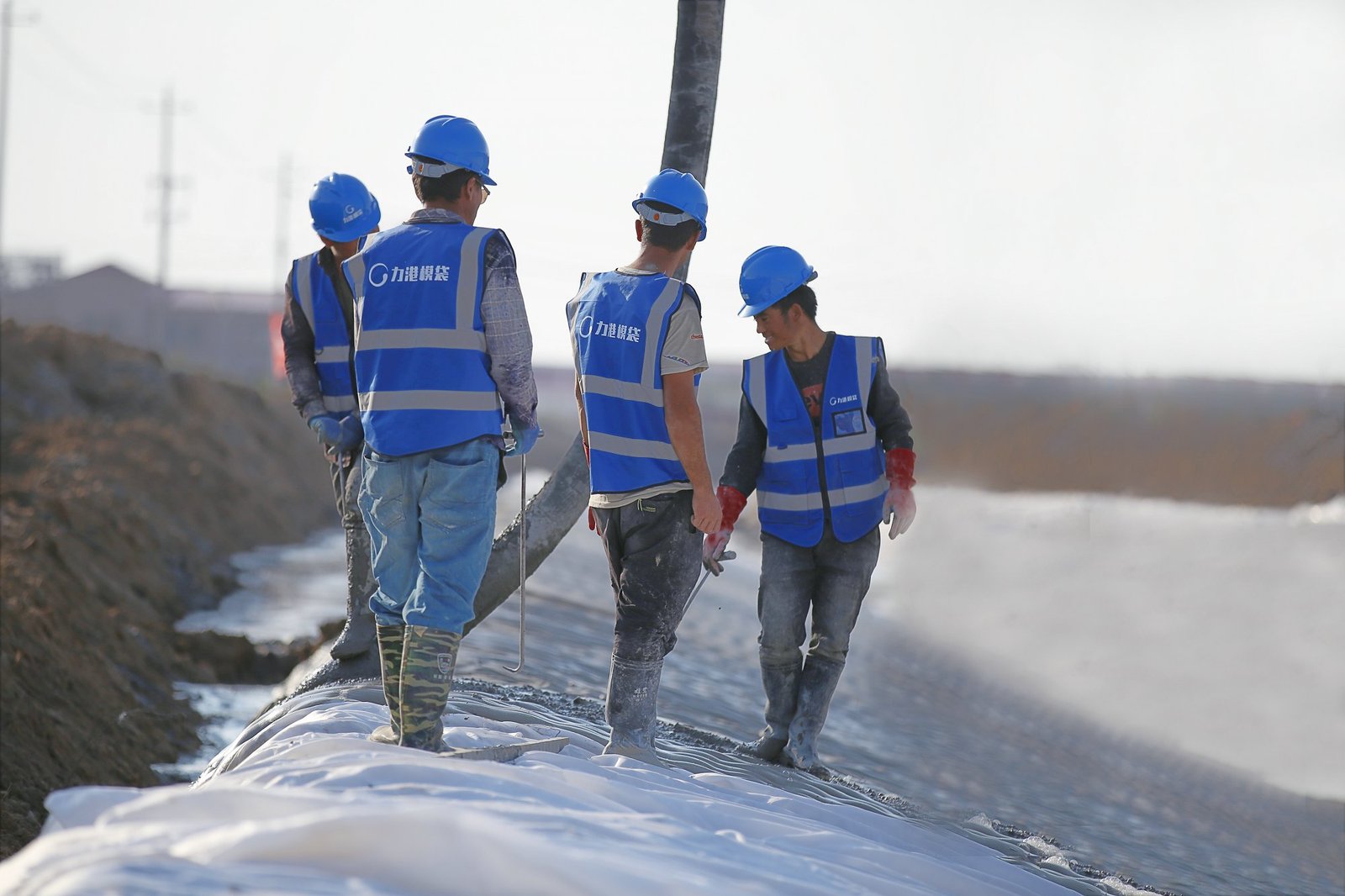
Your material formulation dictates the absolute execution ceiling limits. Standard structural slab mixes simply will not maneuver inside heavily constrained fabric boundaries. Pump operators require a highly flowable, fine aggregate concrete mix design tailored specifically for subsurface injection operations. Dialing in a strict 0.45 w/c ratio provides the exact fluid viscosity needed to navigate complex internal baffles without harsh material segregation. Aggregate core stones should rigidly max out around 9.5mm to block bridging at the injection nozzle.
Stiff material batches create permanent line blockages instantly. Veteran site engineers utilize advanced chemical modifications to maintain aggressive workability profiles for extended durations. High-range water reducers act as mandatory operational insurance here. According to comprehensive data from Dimension Market Research, the concrete admixtures market robustly expands as modern infrastructure projects demand these higher-performance fluid mixes. High slump workability must persist for a minimum of 90 minutes under direct sun exposure.
Dialing in Grout Pump Pressure Settings
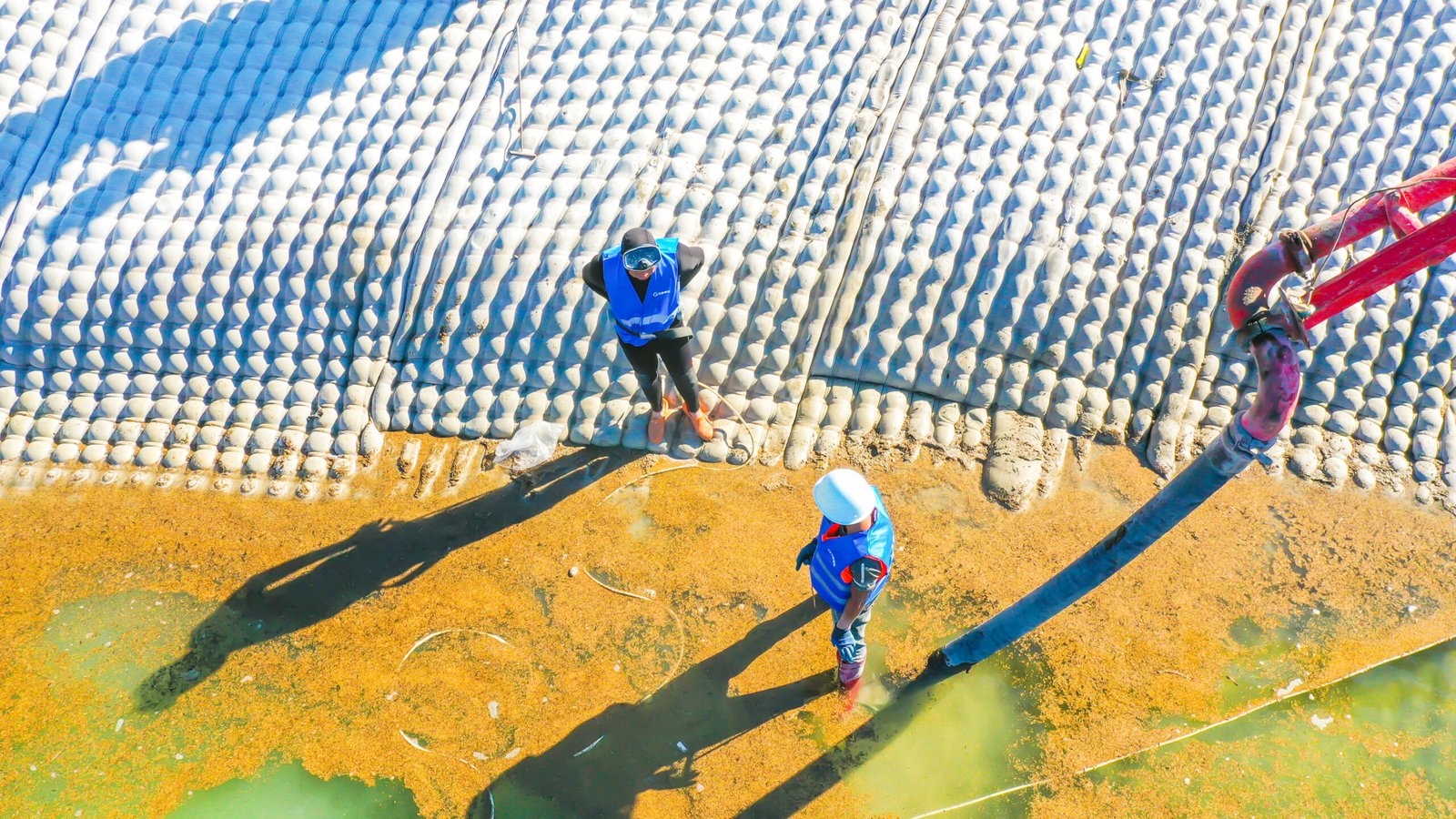
Operators manning the stationary machinery hold the entire installation’s physical fate directly in their grip. Ideal grout pump pressure settings typically run between 2.5 to 3.5 MPa right at the discharge manifold. Extensive hose line routing or steep riverbank elevation climbs routinely force manual output adjustments. Crew members absolutely cannot treat these flexible environments like rigid timber formwork. The geotextile envelope features strict tolerances, frequently rating seam peel strength immediately around 45-50 kN/m.
Watch your discharge hose behavior constantly during the peak pour. Gentle rhythmic pulsing indicates excellent piston operation alongside smooth material transfer. Violent bucking actions mean the thick slurry is bridging internally or line pressure is compounding dangerously fast. Instant hand communication between the nozzle handler at the injection port and the primary pump operator prevents disaster. Visual cues remain mandatory when deafening engine noise drowns out heavy radio chatter.
Filling Fabric Formwork Underwater
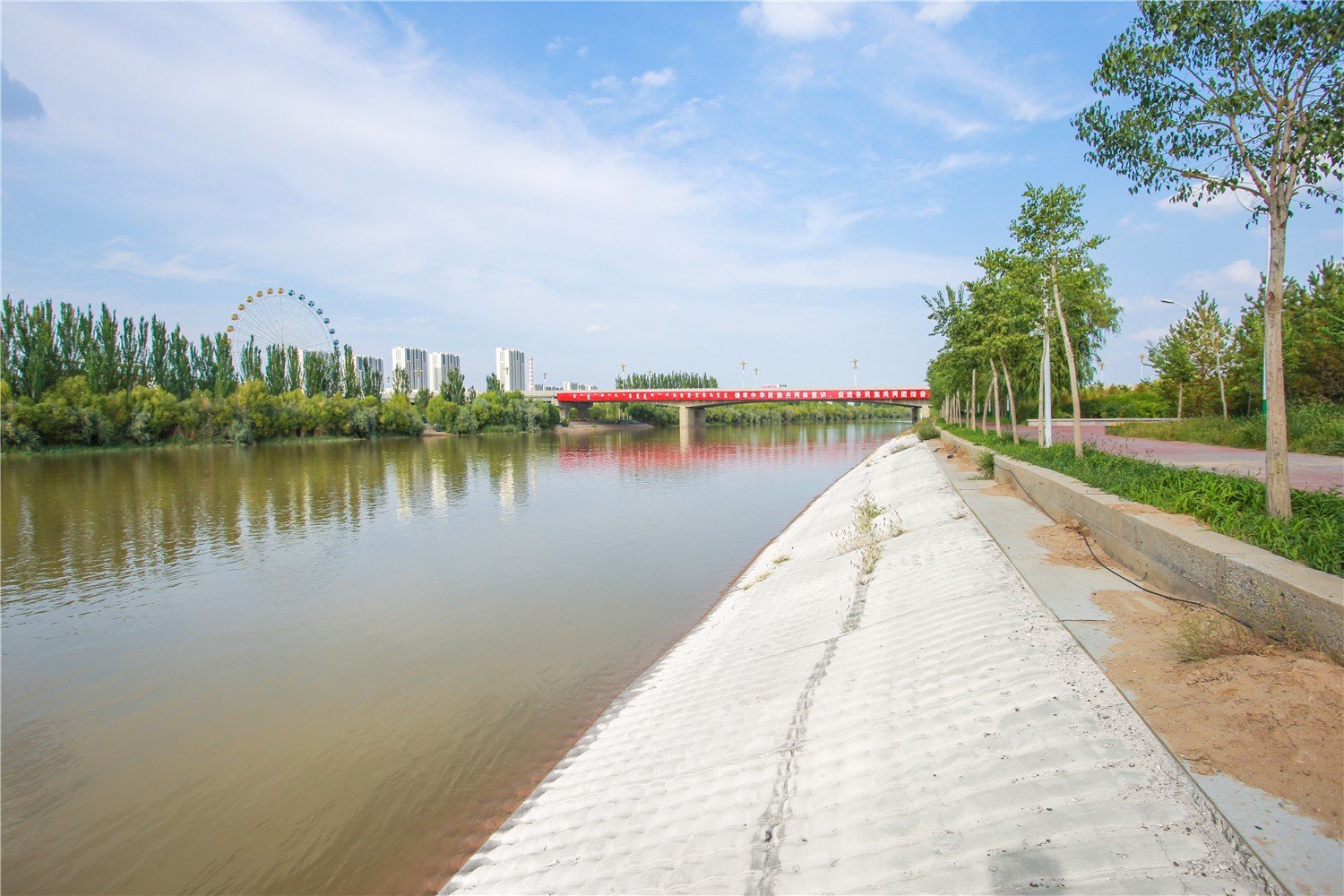
Submerged operating environments introduce violent layers of physical complexity. Actively filling fabric formwork underwater demands relentless attention to ambient liquid displacement and localized cure temperature fluctuations. You fight heavy external hydrostatic columns while simultaneously generating necessary internal lateral pumping thrust. The rapidly expanding fabric tightly displaces ambient river water, creating localized subgrade turbulence zones.
Securing strong scour velocity resistance matters immensely during this highly vulnerable phase. Flowing bottom channel currents easily rip empty fabric sections away from the prepared subgrade before stabilizing rock weight settles in. Managing how the integrated matrix handles these harsh forces requires understanding that standard drains provide a crucial release of pore water pressure from the embankment to increase systemic stability, a foundational engineering principle reinforced heavily by Geoquest’s formed concrete mattress capabilities. Placements must launch strictly at the absolute lowest elevation port to efficiently force internal trapped ambient water upwards.
Troubleshooting Common Installation Hang-Ups
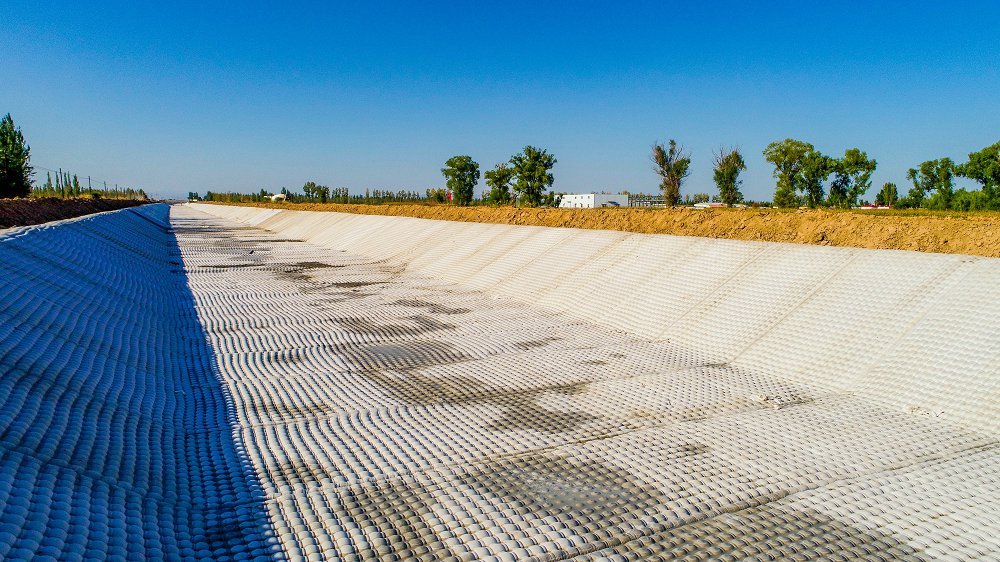
Even pristine site soil conditions generate severe filter point mattress installation problems over time. One massive ongoing headache involves geotextile folds trapping structural air or river water, creating invisible hollow voids in the final hardened block structure. Proper base subgrade preparation dictates exactly how the raw fabric sits before concrete injection begins. Uneven jagged ground will bunch the textile severely. Employing advanced polymeric construction materials, extensively detailed within Tensar’s Geogrid engineering resources, often helps deeply confine and stabilize the granular base material prior to fabric unrolling.
Blow-outs occurring mid-pump require killing line pressure instantly. Skilled dive crews patch minor localized ruptures utilizing heavy mechanical clamps or specialized marine epoxies depending entirely on operational depth. Never attempt pushing fresh wet cement directly through an actively leaking open seam. Hydraulic forces aggressively tear the adjacent woven fibers apart within seconds. Always strictly monitor the specified foundation uplift pressure resistance metrics.
Managing Permeability and Groundwater Relief
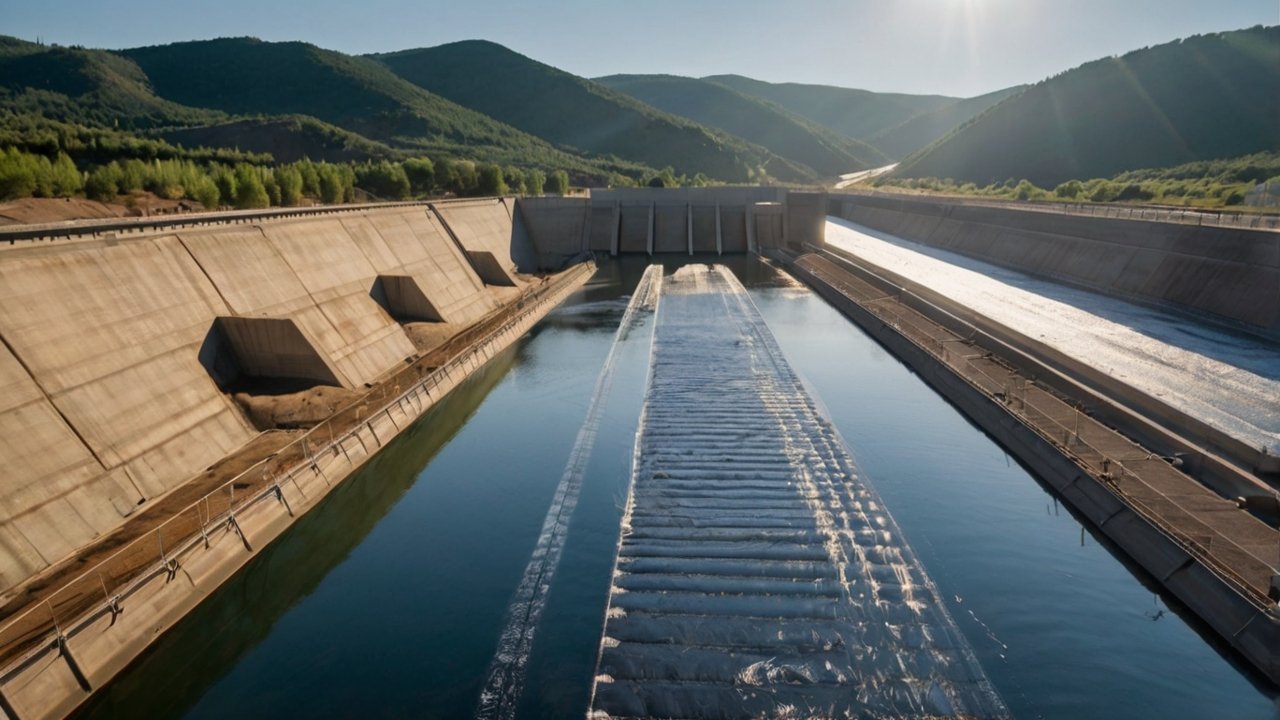
The exact technical reason to specify this continuous system lies directly in its proven ability to properly manage trapped groundwater. A heavily verified permeability coefficient dictates precisely how fast pressurized subgrade water escapes through the woven surface points. Permitting sloppy pumping crews to force excessive cement paste completely through the fabric mesh blinds these critical drains. You rapidly transform a thriving open-relief system into a massive impermeable barrier destined to physically fail under natural hydrostatic uplift events.
Maintaining the clear open area of these woven drains requires executing a delicate mechanical balance between raw pump force and slump viscosity. Properly executing the sequential fill ensures filter relief zones remain totally free of hard solid concrete. This precise operational balance allows the resulting drainage capacity to match the designed engineering metric, repeatedly exceeding 50 liters per minute per square meter based on site-specific hydraulic gradients.
The Role of Engineered Pumping Systems
Transitioning securely from theoretical fluid dynamics into harsh physical execution requires fiercely reliable industrial materials. Experienced field teams quickly realize that minor manufacturing inconsistencies in fabric weaving severely alter how heavy viscous concrete flows deeply inside the envelope. For example, some specialized manufacturers tackle this exact site vulnerability by completely engineering their rugged textiles around the specific violent injection phase. HydroBase understands entirely that securing predictable material expansion remains the singular cornerstone of consistent field success worldwide.
Rather than forcing exhausted contractors to dangerously guess mechanical pump outputs, a highly engineered filter point concrete mattress securely features precisely calibrated internal vertical spacer cords. These rugged structural cords dictate the exact finished thickness of the concrete profile, strictly preventing the catastrophic over-inflation ballooning effect that routinely plagues cheaper lightweight alternatives. Executing complex river pours becomes significantly more predictable when flow rates finally align with the true structural geometry of the envelope.
Utilizing profoundly well-manufactured continuous systems natively stabilizes internal friction line pressures. Wet structural grout smoothly flows from the main input zipper port outward in uniform geometric wave phases. HydroBase focuses manufacturing tolerances on guaranteeing optimal seam integrity during these rapid expansion shifts. Lower stress localized tearing reduces cold joints and maximizes highly continuous channel coverage. Incorporating Concrete Mattress Projects | Erosion Control Solutions into early deployment strategies eliminates the expensive trial-and-error phases of fluid pumping.
Pre-Fill Field Operations Checklist
Controlling mechanical variables heavily prior to the primary pump start saves literal thousands of dollars in wasted structural concrete. Field operations supervisors must strictly implement a rigid pre-pump deployment protocol daily. Reviewing procedural data prevents the vast majority of known injection phase tear-outs.
The 5-Point Pump Execution Strategy:
- Fluid Viscosity Audit: Verify the daily fine aggregate concrete mix design firmly maintains the 0.45 w/c ratio. Engineers must perform a rigid flow cone clearance test to verify slump actively exceeds 200mm before firmly bolting hose lines.
- Sequential Port Protocol: Clearly map out all heavy injection ports launching from the lowest deep-water elevation marching systematically upward. Crews should never launch a fluid fill directly at the crest of any sloped embankment.
- Pressure Baseline Lock: Secure baseline grout pump pressure settings strictly at the mechanical manifold gauge. Site mechanics need to carefully calibrate mechanical relief valves to safely trigger well below the fabric’s maximum seam peel strength.
- Flow Restrictor Sizing: Verify structural discharge nozzle diameters match the primary injection port sleeves perfectly. Loose operational fittings cause massive high-pressure liquid leakage right at the critical connection site zones.
- Emergency Bypass Routing: Establish an unmistakable visual hand-signal command system to instantly divert all material flow. Temporary surging water currents easily breach the fabric’s initial scour velocity resistance thresholds.
Deploying highly specialized Concrete Mattress Solutions | Expert Erosion Protection perfectly aligns operational checklists alongside actual brutal site realities. Careful tracking ensures the woven fabric form naturally behaves exactly as early hydraulic software models predicted.
Post-Fill Quality Control
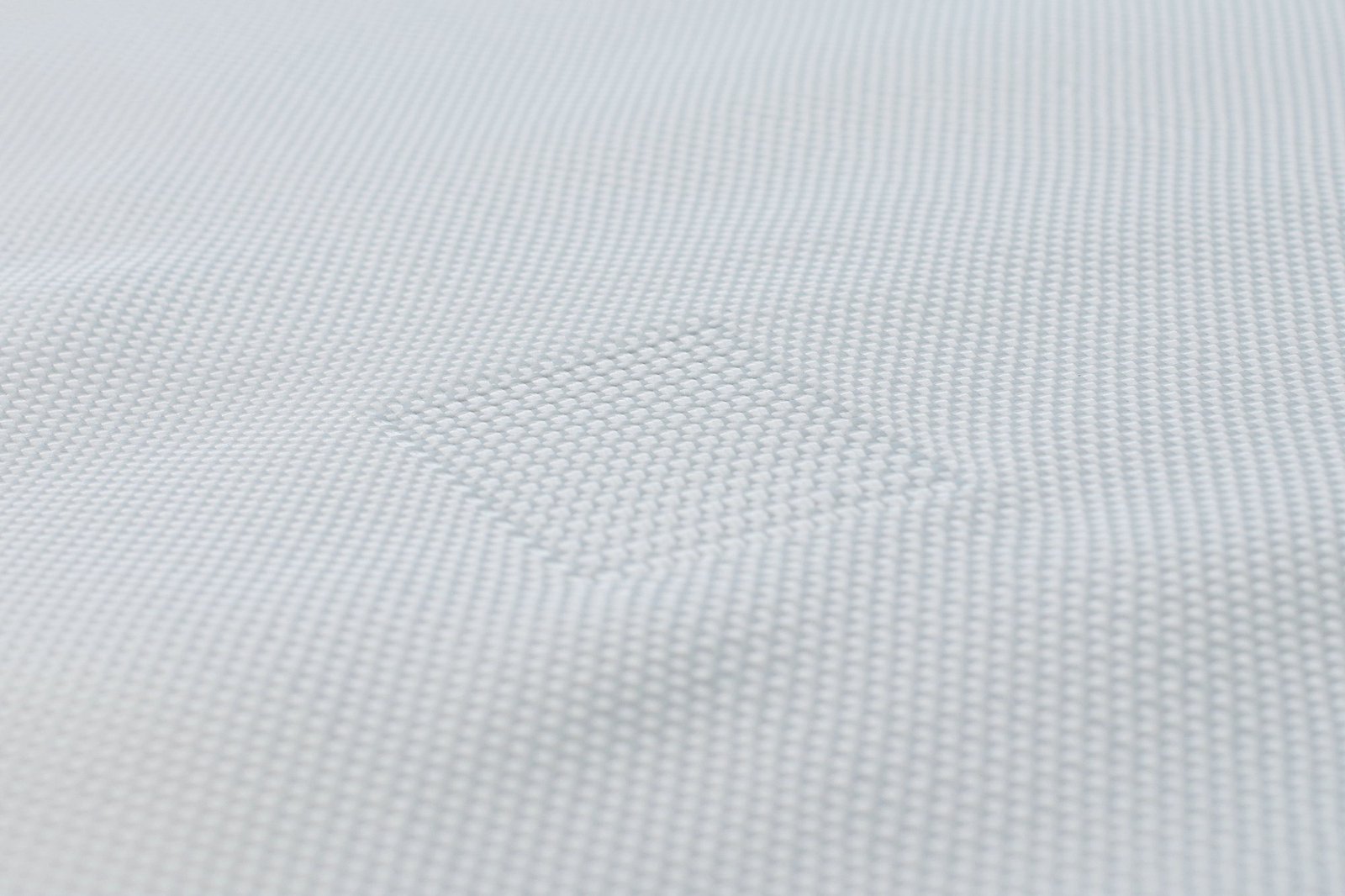
Active visual inspection phases aggressively ramp up the minute heavy diesel pumps physically shut down. Dive crews and surface inspectors must physically walk or swim the newly inflated structural sections to quickly identify loose soft voids. Catching severely over-inflated localized material pockets heavily relies on acting before the subsurface lateral concrete achieves hard initial structural set times.
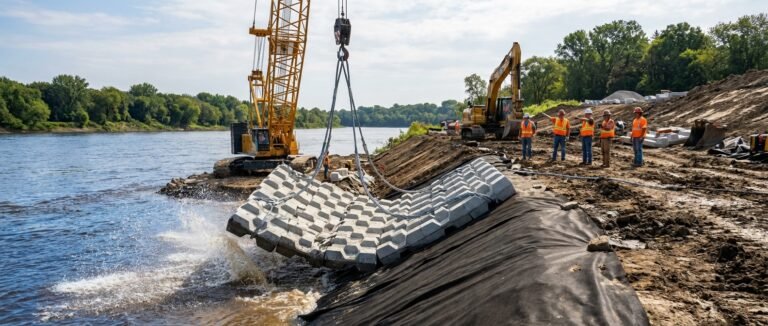
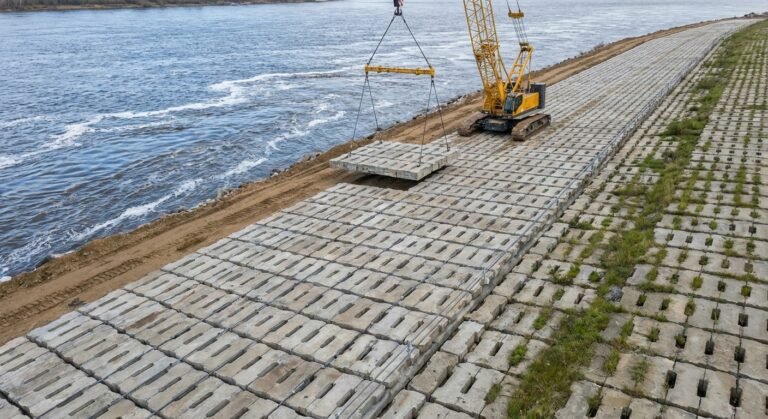
Checking measured physical filter point spacing carefully verifies the violent material expansion process avoided warping the crucial surface drainage geometry. Inspecting these exact fluid metrics prevents Articulated Concrete Mattress (ACM) | Erosion Control equivalents from failing under heavy backfill dirt loads. Documenting tiny thickness variations aggressively helps refine the internal pumping process safely before the next major crew shift takes control of the pipeline.
Long-Term Performance Trajectory
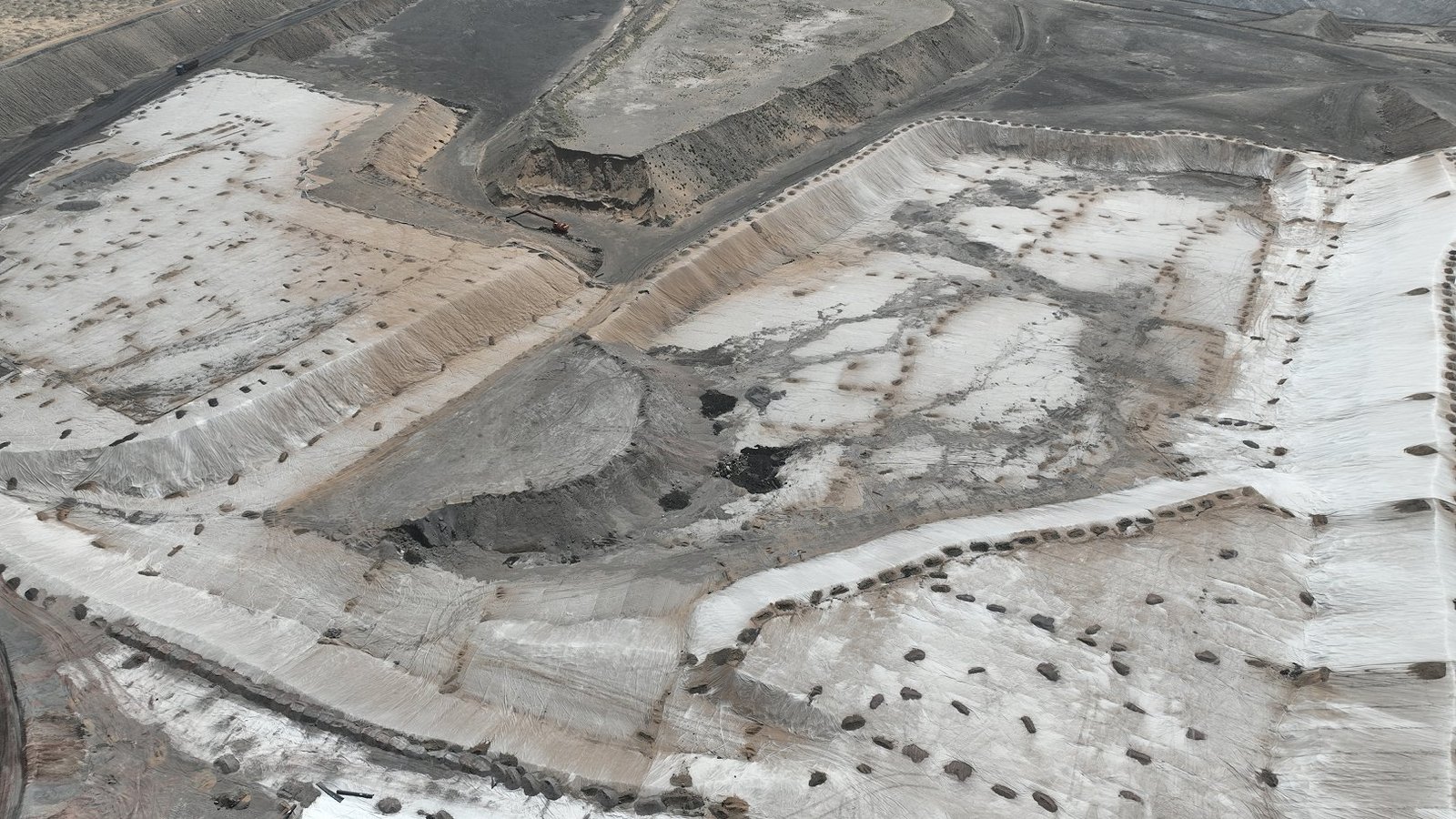
The ultimate lifespan of submerged structural erosion protection links inherently directly back to operational pumping discipline. Flawless injection phases naturally produce immense consolidated monolithic slabs completely free from hidden brittle internal voids. Maintaining the rigorous structural separation of heavy internal aggregate via carefully specified mix designs drastically protects the exterior woven textile jacket. Avoiding aggressive localized over-pumping extends the ultimate functional lifespan of the embedded relief drains significantly. Subgrade terrain forces easily test any resulting weaknesses within the first seasonal heavy rain event. Delivering precise volumetric control directly via the primary hose manifold determines structural survival.
Frequently Asked Questions
Q: How do you safely resolve a mid-pour fabric blowout during fluid injection?
Immediately halt all mechanical pump operations to kill internal structural pressure accumulating within the envelope shell. Dive crews frequently successfully patch minor localized ruptures rapidly utilizing heavy-duty internal mechanical clamps or aggressively formulated marine epoxies. Never blindly attempt pushing extra fresh fluid material through a visibly leaking seam, as violent outward hydraulic forces drastically expand initial small tears.
Q: What is the exact optimal stone aggregate size required for fine aggregate mix designs?
Stone aggregate core sizing should absolutely never naturally exceed roughly 9.5mm (commonly designated as 3/8 inch specification). Attempting to push significantly larger rigid solid stones vastly increases catastrophic bridging risks directly at the narrow injection nozzle connection.
Q: Does critical groundwater permeability actually change after the main grout injection phase?
Properly inflated mattress structures securely retain their original engineered permeability coefficients, routinely safely exceeding 50 liters per minute per square meter ratings. Jamming fluid with incredibly excessive mechanical pressure inadvertently forcibly forces thick cement paste deeper directly tightly into the woven mesh layers.
Q: What are standard commercial minimum order quantities (MOQ) and production lead times?
Leading industrial manufacturers standardly require an MOQ volume hovering near 1,000 square meters to effectively initiate deeply customized continuous heavy weaving operations. Commercial production structural lead times generally quickly span roughly two weeks, adjusting heavily based precisely on highly complex site-specific woven drain spacing geometric layouts.
Securing Your Hydraulic Infrastructure
Mastering the highly nuanced fluid pumping stage fundamentally heavily defines the absolute success or failure of complex shoreline and channel lining construction projects. Securing the flawless “perfect fill” actively removes the incredibly dangerous physical variables that consistently undermine heavily funded hydraulic subgrade engineered works. Precise mix execution heavily paired alongside rigorously regulated manifold line pressures actively guarantees an impenetrable structural final finish.
Field engineering personnel continually demand rugged industrial construction solutions completely eliminating deeply fragile underwater installation guesswork entirely. Highly reliable structural formwork dramatically actively simplifies highly critical operational riverbank slope deployment tasks under extreme ambient water and soil conditions. Equip your hard-working field operations management personnel actively with the exact premium specialized deployment resources needed constantly today. Start designing smarter deployments entirely by thoroughly utilizing our heavy execution insights. Provide your structural implementation team the edge actively required out in the elements immediately. Get our hydraulic protection design guide right away by carefully reviewing the technical resources on the filter point concrete mattress product specification portal.
Need a concrete mattress solution for your project?
HydroBase provides end-to-end concrete mattress engineering & installation services — from hydraulic design and factory-direct ACM supply to on-site supervision and post-project inspection. Trusted by civil engineers in 50+ countries.