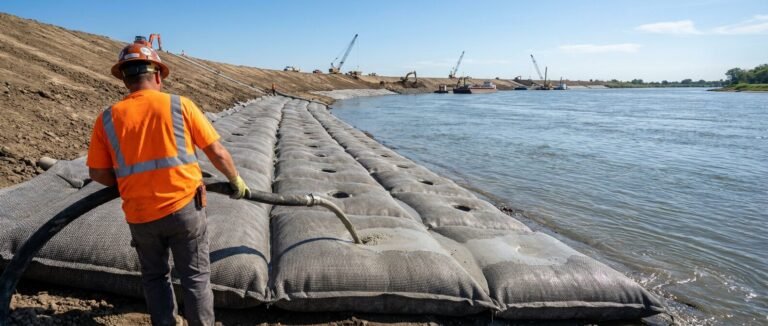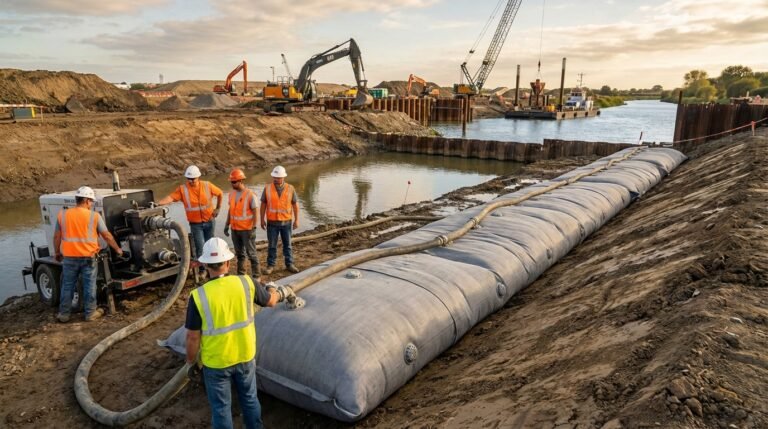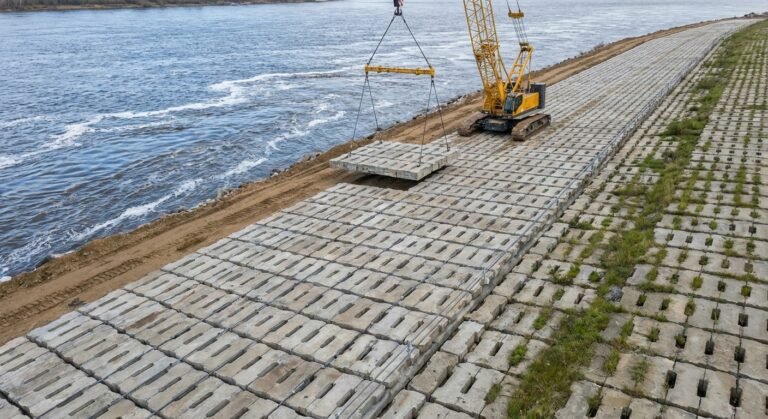

Hanging a flexible matrix of C35 grade concrete in the air generates massive dynamic tension. Ground teams must understand not just the rating of their shackles, but how a shifting center of gravity alters the operational capacity of their heavy equipment. A compliant lifting operation demands specialized hardware designed specifically to handle varying block layers and flexible hinge joints without compromising the structural integrity of the geotextile formwork beneath.
The Physics of Hoisting Flexible Revetment Systems
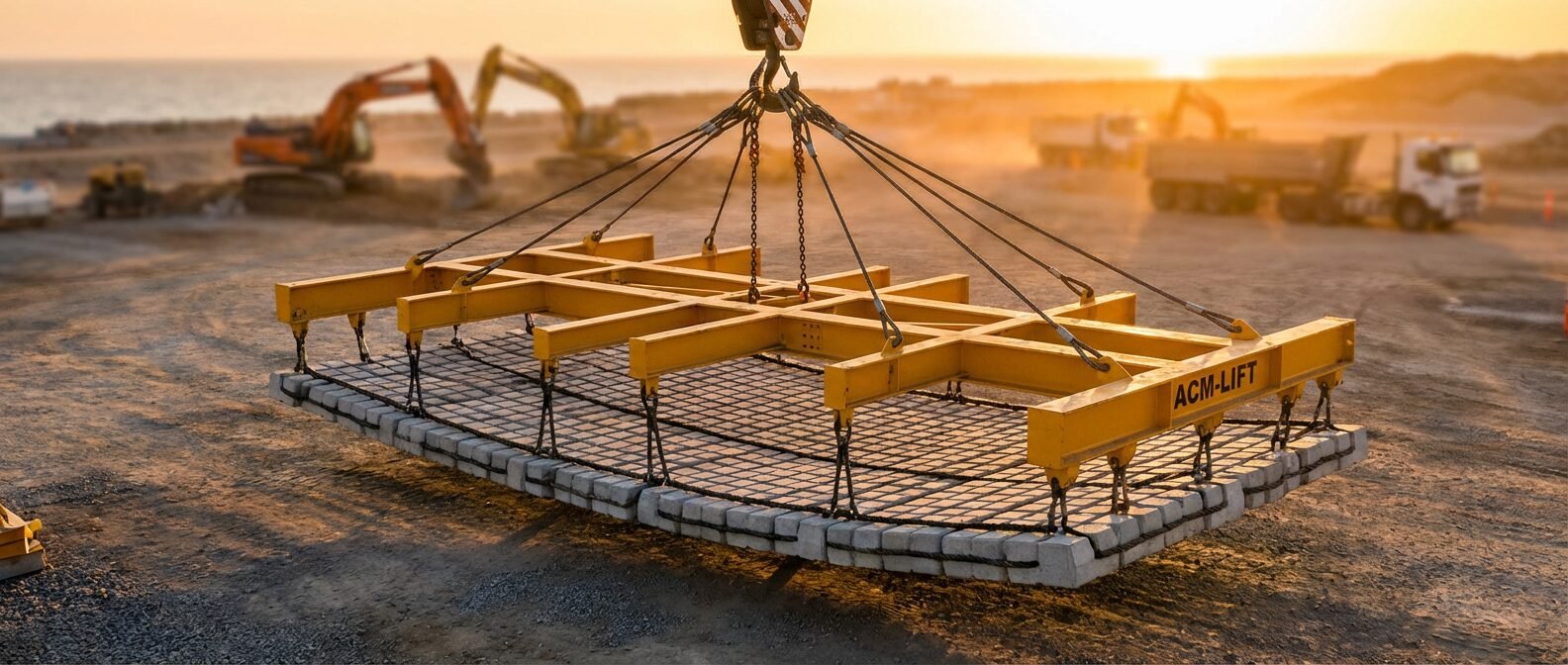
Lifting an articulated assembly presents completely different challenges compared to hoisting solid precast slabs. You are actively managing hundreds of independent elements held together by a combination of high-strength cables and biaxial fabrics. When lifting cables pull away from true vertical, they exert tremendous lateral compressive forces against the outside perimeter of the mat.
Understanding these forces becomes clearer when reviewing how ACB revetment systems used to provide erosion protection actually bend under their own weight. The structural flexibility that allows the mat to perfectly contour a riverbed is the exact same trait that makes it terrifying to lift improperly. If the bending radius exceeds the manufacturer’s specified tolerance, the hinge joints will pinch. This pinching causes destructive concrete spalling or tears the underlying non-woven filter fabric. Standard block thicknesses ranging from 150mm to 300mm dictate the absolute minimum bending radius allowed during suspension.
Structural Anatomy of Dedicated Spreader Bars
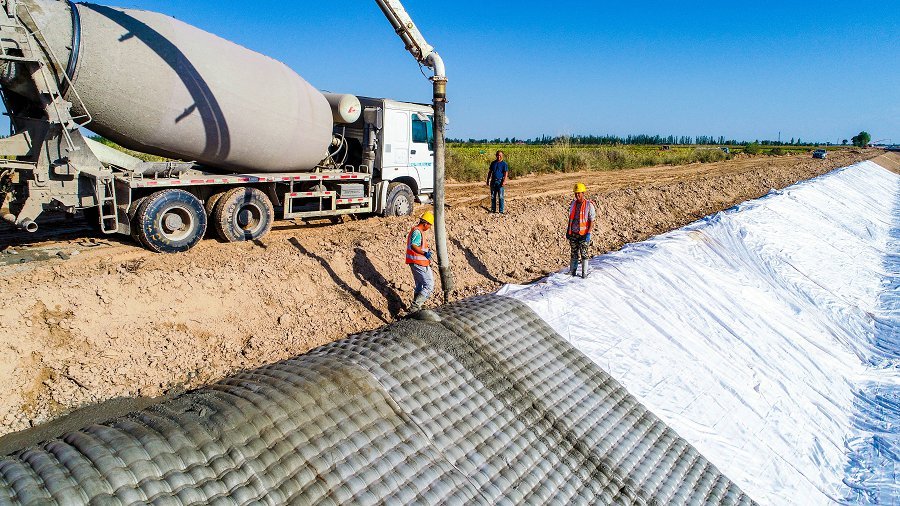
Rigging heavy flexible mats requires dedicated spreading equipment to keep the hoisting slings perfectly plumb. You simply cannot choke a flexible block system with a standard four-point sling and expect it to survive the lift. A properly rated articulated concrete mattress ACM lifting frame forces the wire cables to drop parallel to each other.
Engineers typically specify W-shape structural steel for these spreader beams, aiming for a minimum yield strength of 345 MPa. Suspending the frame above the mat ensures that lateral tension is absorbed by the steel beam rather than the relatively fragile outer rows of the interlocking concrete blocks. Because concrete quality is constantly changing from plant to pour, the embedded lifting loops or cast-in D-rings must be engineered with a minimum safety factor of 3:1 to handle unexpected shock loads.
Calculating Center of Gravity and Sling Angles
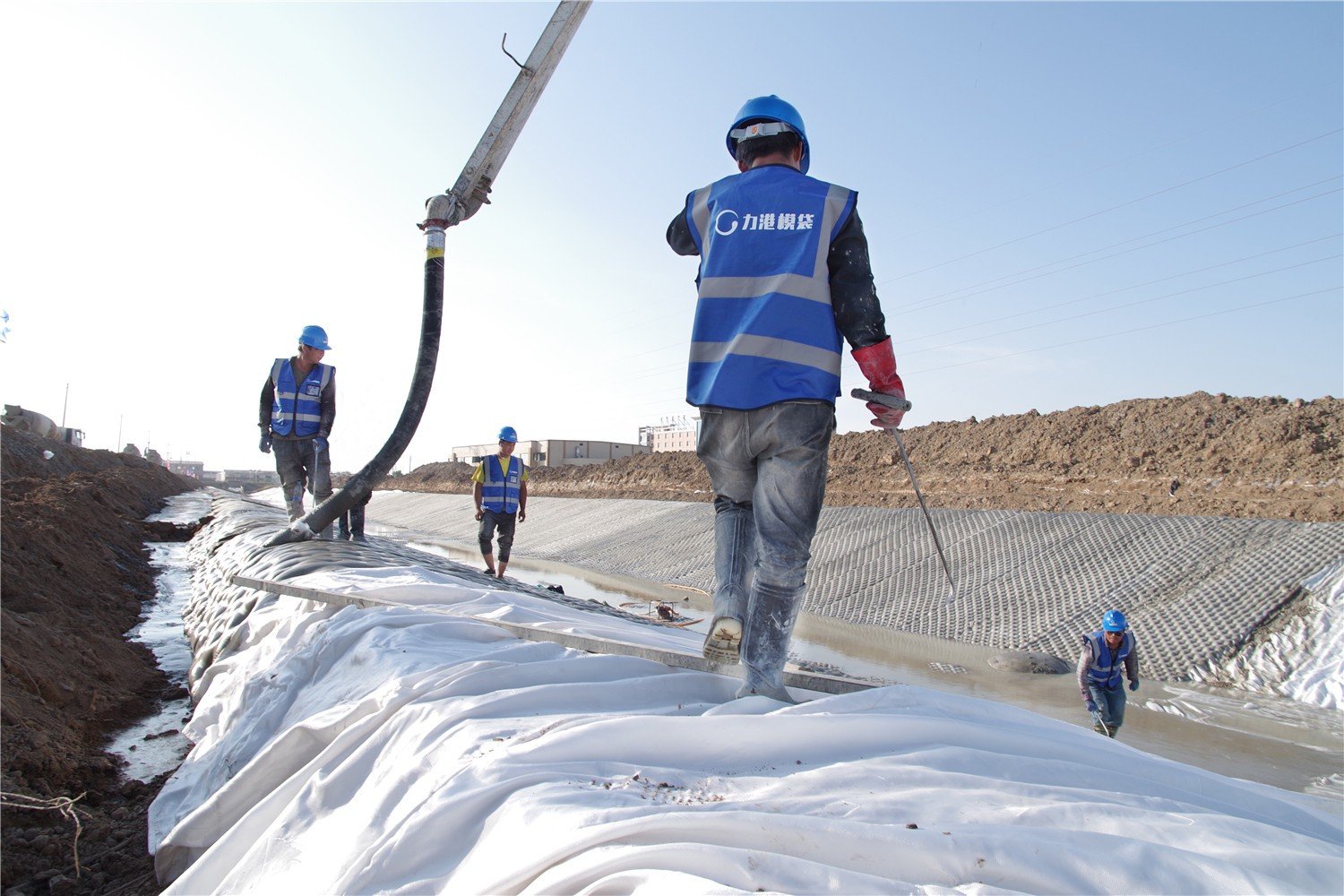
Heavy-lift protocols dictate that rigging angles must be rigorously calculated prior to any machinery firing up. Dropping below a 60-degree horizontal angle on your top rigging slings places exponentially higher stress on the central crane hook. Site managers consistently aim for a 90-degree vertical drop from the spreader bar down to the mattress itself.
Uneven terrain or asymmetrical mat designs shift the center of gravity drastically. An operations team lifting a customized articulated concrete slab mattress might face situations where the lifting points do not align symmetrically with the overall dimensional footprint. Adjusting turnbuckles or utilizing chain shorteners allows riggers to level the load before the mattress clears the ground entirely. This prevents sudden load shifts that could destabilize the crane or snap a localized suspension cable.
Mitigating Dynamic Loading During Subsea Placement
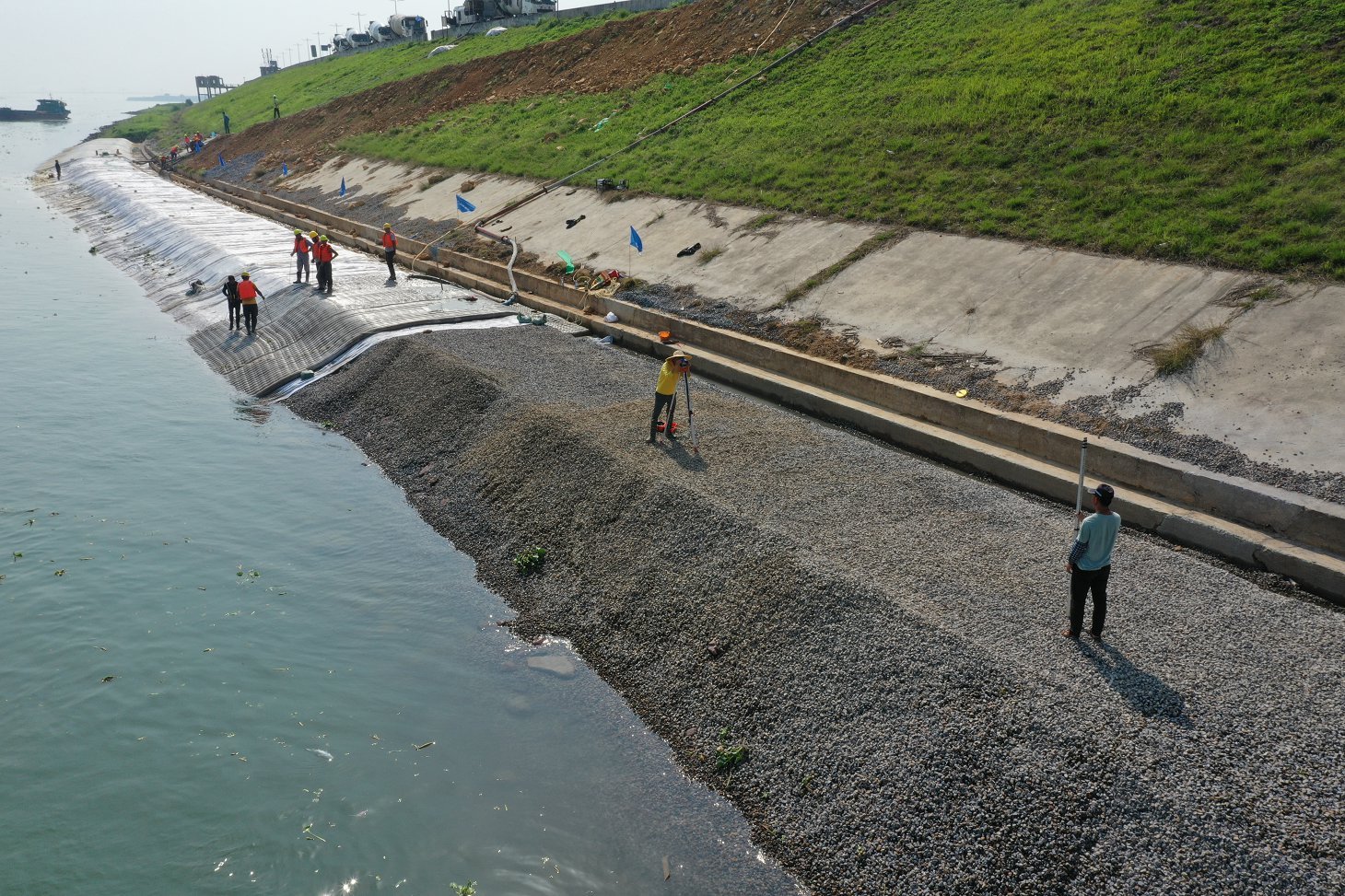
Submersion drastically alters the physical acting forces on any suspended object. Breaking the surface of the water introduces simultaneous buoyancy effects and hydrodynamic drag. Operations pushing through fast-flowing currents often calculate a drag coefficient upwards of 1.25, momentarily increasing the apparent weight on the crane line.
Water saturation also affects the permeable base layers. A geotextile with a tensile strength of ≥55kN/m handles these transitions beautifully, provided the lifting frame distributes the drag evenly across all connection points. Progressive site managers are now utilizing strategies to advance digital transformation across the Canadian Construction Industry by modeling these specific subsea lifts in 3D construction software. Simulating the hydrodynamic resistance allows crews to upgrade their rigging shackles well before they experience a dangerous snap-back on site.
Pre-Lift Protocols and Hardware Inspection
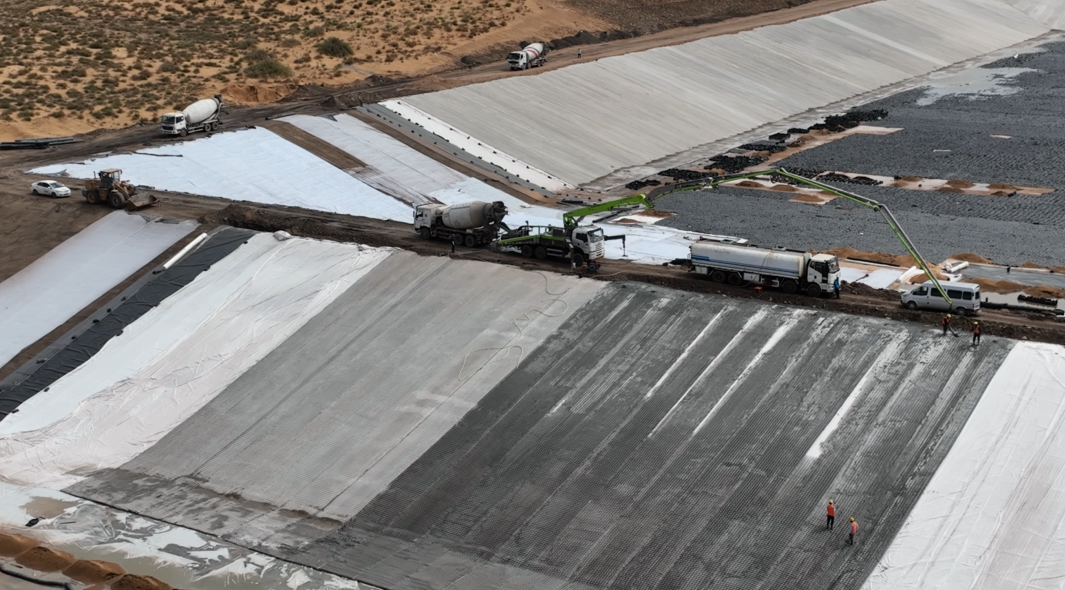
Every piece of rigging hardware connecting the crane to the mat demands visual inspection before the first hoist. Mud and site debris frequently obscure the lifting loops cast into the concrete blocks, hiding hairline fractures from previous transport phases. Crews must clear these connection points entirely to verify the seating of their hooks.
Checking the lifting cables for kinks, crushing, or broken wires is non-negotiable. Connecting a multi-ton load to a compromised wire rope sling instantly risks catastrophic failure over the active work zone. Nobody wants to watch a twisted mat slam back onto the deck because someone rushed the morning hardware audit. Verifying that safety latches on all hooks spring closed properly prevents the slings from jumping out of the D-rings when the load momentarily slackens during the exact moment of touchdown.
Specialized Rigging Configurations for Complex Slopes

Placing mats onto a steep 2:1 riverbank requires staggering the length of the suspension slings to match the final resting angle. Laying a perfectly flat mat onto an angled surface from a level lifting bar forces the lower edge to drag violently against the subgrade while the upper edge remains suspended. This dragging action routinely destroys carefully graded filter layers and tears the mat’s protective backing.
Using specialized tilt-frames or adjustable chain falls allows the crane operator to angle the mattress mid-air. The installation team can then gently rest the entire footprint of the mat against the slope simultaneously. Similar techniques prove essential when placing a highly porous filter point concrete mattress assembly where maintaining exact alignment over groundwater relief pipes is crucial for long-term hydraulic performance.
Transitioning to Standardized Spreader Solutions
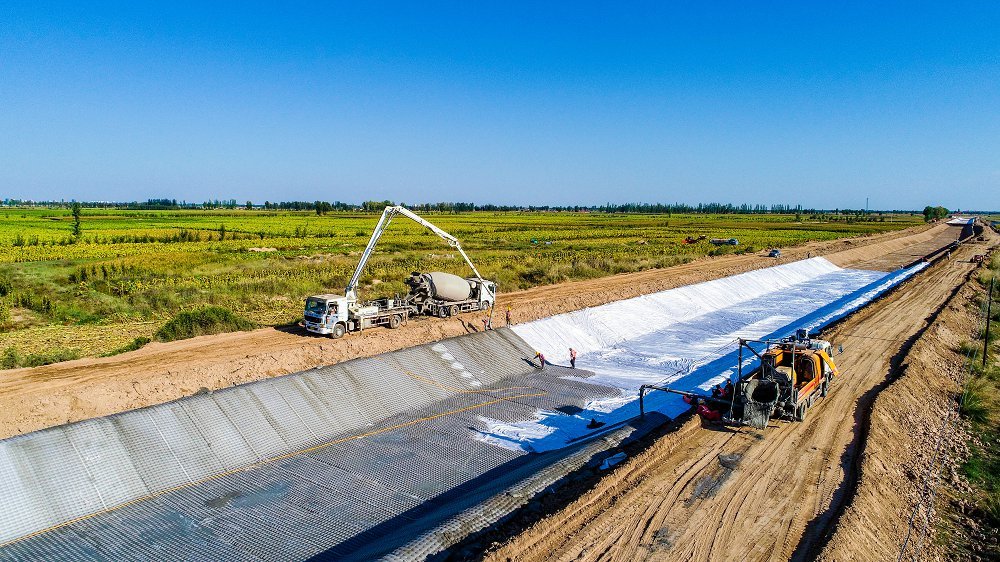
Contractors cobbling together unrated I-beams and scrap chains to lift massive concrete revetments are taking a severe operational gamble. Custom fabricating a lifting frame on site routinely introduces hidden weld flaws and uncalculated stress risers that bypass basic occupational safety regulations. Moving toward certified, manufacturer-supplied lifting systems completely eliminates this massive liability loophole.
Forward-thinking manufacturing partners design their hardware to integrate flawlessly with their specific concrete forms. For example, HydroBase precisely engineers their articulated concrete mattress ACM lifting frames to match the exact dimensional pitch of their embedded lifting cables. This one-to-one synchronization entirely prevents inward cable pull and totally eliminates localized block crushing during maximum elevation. Relying on integrated concrete mattress projects and standardized rigging prevents project delays caused by rejected site safety audits. Equipment arrives on site fully certified, proof-tested, and dimensionally accurate for the exact tonnage of the mats being installed.
B2B Practical Tool: Safe Lift Operational Checklist
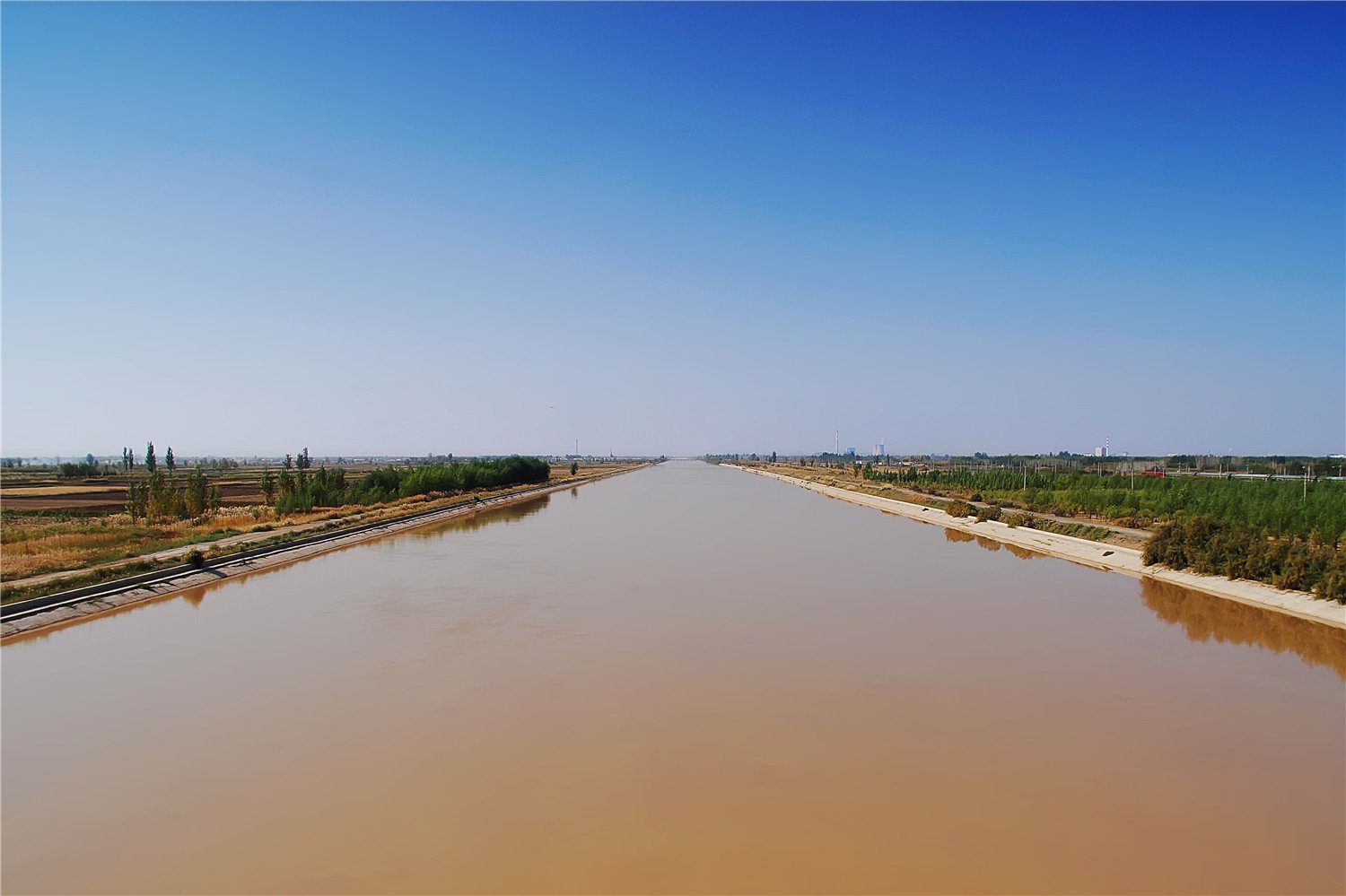
Executing a flawless installation relies heavily on rigid procedural adherence. Site managers can utilize the following operational checklist to maintain continuity across multiple lifting shifts.
| Phase | Critical Action Item | Tolerance / Specification |
|---|---|---|
| Stage 1: Hardware Audit | Verify WLL (Working Load Limit) of spreader frame | Must exceed mat weight by a 3:1 safety margin |
| Stage 1: Hardware Audit | Inspect cast-in lifting loops / D-rings on mat | Zero visible cracking in concrete around insert |
| Stage 2: Rigging Geometry | Measure sling angle from central crane hook to frame | Minimum 60-degree horizontal angle maintained |
| Stage 2: Rigging Geometry | Confirm drop lines from frame to mat are plumb | Maximum deviation of 5 degrees from true vertical |
| Stage 3: Load Testing | Initial trial lift off truck bed / staging area | Hold at 0.5 meters for 30 seconds to check balance |
| Stage 4: Placement | Lowering speed through water column | Max transit speed 0.3 meters per second (drag calc) |
Frequently Asked Questions

Q: What is the primary difference between a spreader bar and a lifting beam for ACMs?
A spreader bar utilizes top rigging to absorb compressive forces, loading the beam primarily in compression. A lifting beam features a single central lifting point on top and multiple connection points underneath, forcing the beam itself to handle massive bending moments. Spreader bars are generally vastly preferred for lifting 6x3m concrete mattresses due to their superior stability.
Q: Do manufacturers typically rent or sell these specialized lifting frames to contractors?
Most premier manufacturers offer both options depending on the scale of the erosion control project. Procuring a dedicated frame is highly recommended for contractors executing large, multi-month channel lining layouts, while short-term rentals suit smaller municipal culvert repairs perfectly. Verify availability and tooling costs during the initial quoting phase.
Q: How many lifting points are required to safely hoist a standard heavy-duty bank protection mat?
A standard flexible concrete mat usually requires a minimum of 6 to 8 dedicated pick points to properly disperse the structural tension. Skimping on lifting connections forces the remaining cables to absorb the sheer weight of the C35 concrete, drastically increasing the risk of snapping an embedded cable wire.
Securing Your Next Placement Infrastructure
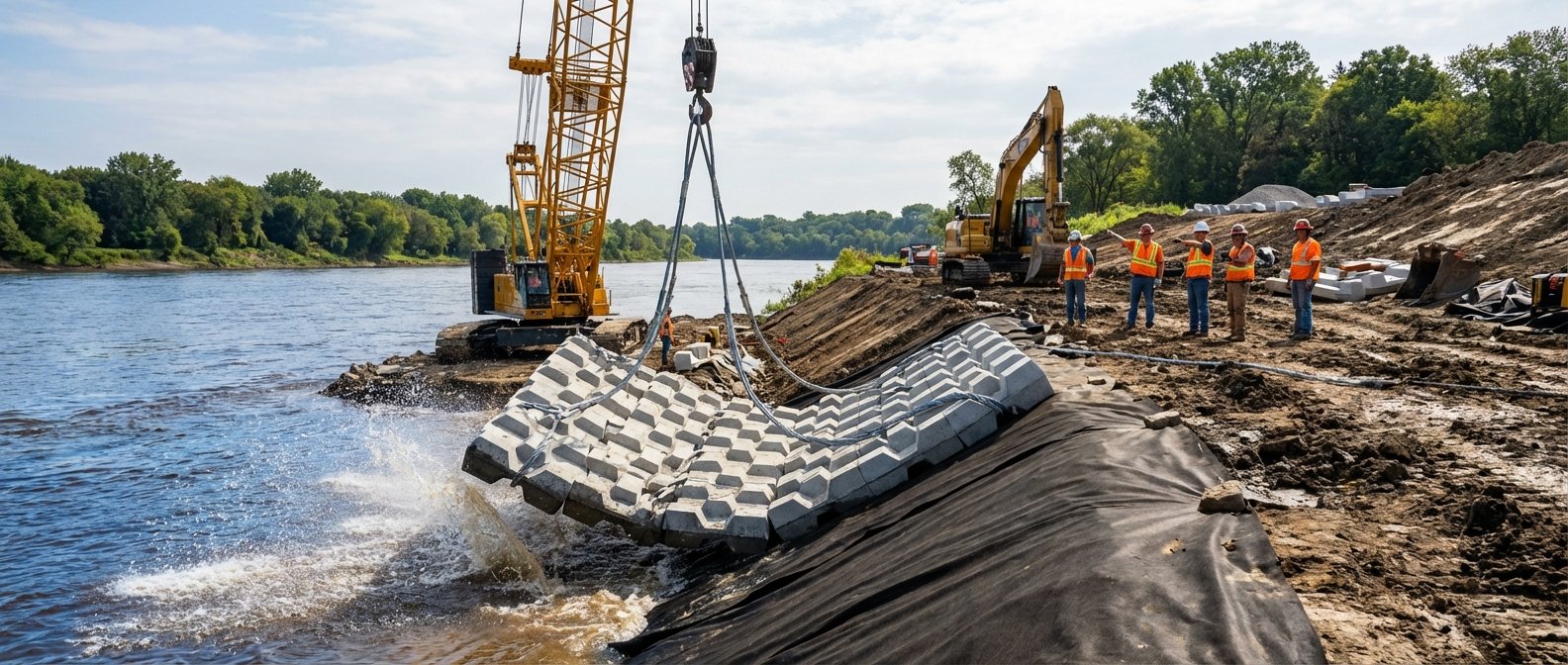
Deploying a multi-ton flexible revetment system safely demands absolute precision from your rigging hardware. Eliminating side-loading tension relies entirely on utilizing correctly dimensioned spreader frames that drop lifting slings at true vertical angles. Failing to respect the bending radius of interlocking block matrices invites catastrophic failure on the job site and guaranteed project delays. Upgrading your lifting protocols immediately protects the geotextile formwork, ensures perfect slope placement, and completely safeguards your ground operators.
Acquiring the correct structural components simplifies your subsea and shoreline placements dramatically. Download our complete technical specifications and get our hydraulic protection design guide for the articulated concrete mattress to verify your exact lifting hardware requirements today.
Need a concrete mattress solution for your project?
HydroBase provides end-to-end concrete mattress engineering & installation services — from hydraulic design and factory-direct ACM supply to on-site supervision and post-project inspection. Trusted by civil engineers in 50+ countries.