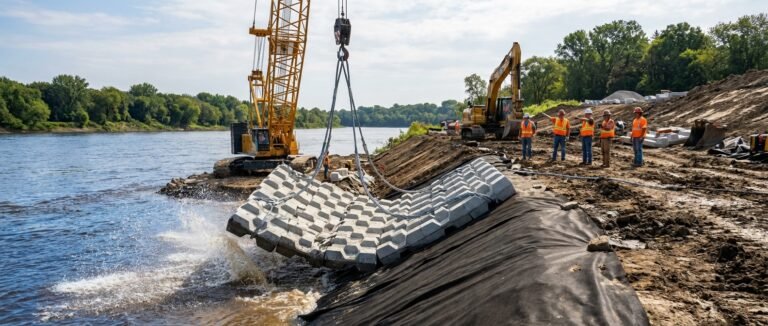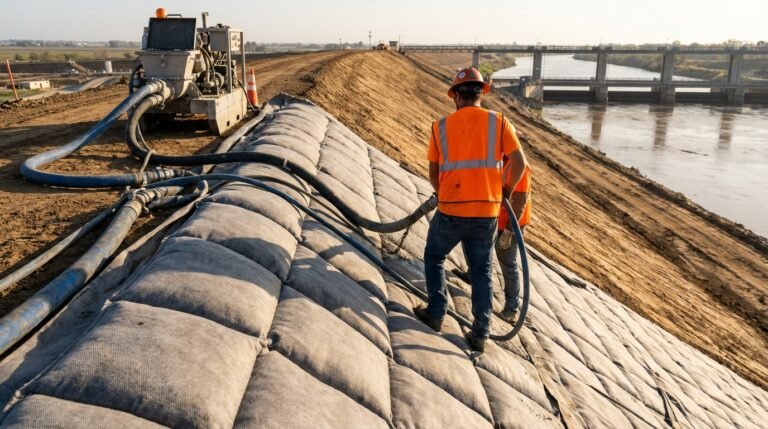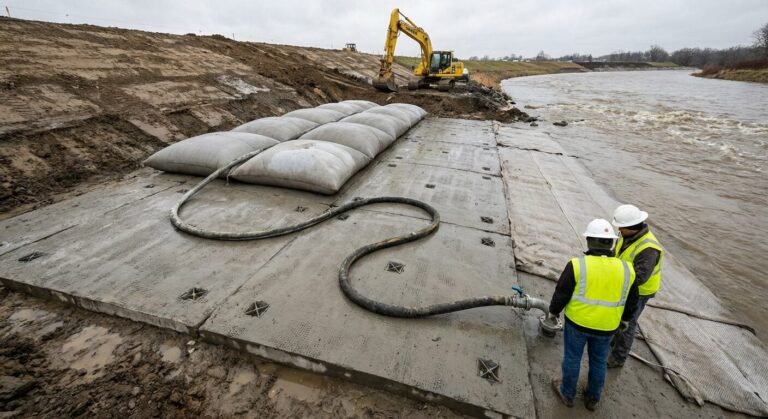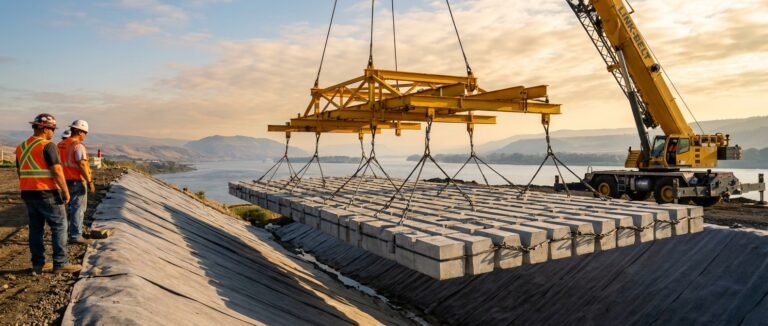

Engineers and site superintendents face immense pressure to stabilize coastal and inland shorelines rapidly. Yet, the physical block dimensions and the sheer density of a fully saturated unit introduce significant logistical hurdles before the mat even touches the water. Navigating these parameters requires deeply technical method statements. The interaction between crane capacity, rigging hardware, and environmental factors dictates the flow of the entire operation. An under-dimensioned lifting beam or an incorrect sling angle will quickly compromise the structural integrity of the individual concrete units.
Every localized deployment zone presents unique environmental constraints. Coastal shorelines battered by tidal currents demand rapid installation windows, forcing crane operators to work with extreme efficiency. Inland canal revetments often restrict heavy machinery access, requiring longer boom reaches and heightened load sway management. Ignoring the technical interplay between the spreader bar, the shackles, and the embedded lift loops creates a recipe for disaster. This guide breaks down the core hardware specifications and procedural safety steps necessary to execute these high-tonnage maneuvers flawlessly.
The Physics of ACM Spreading Bars
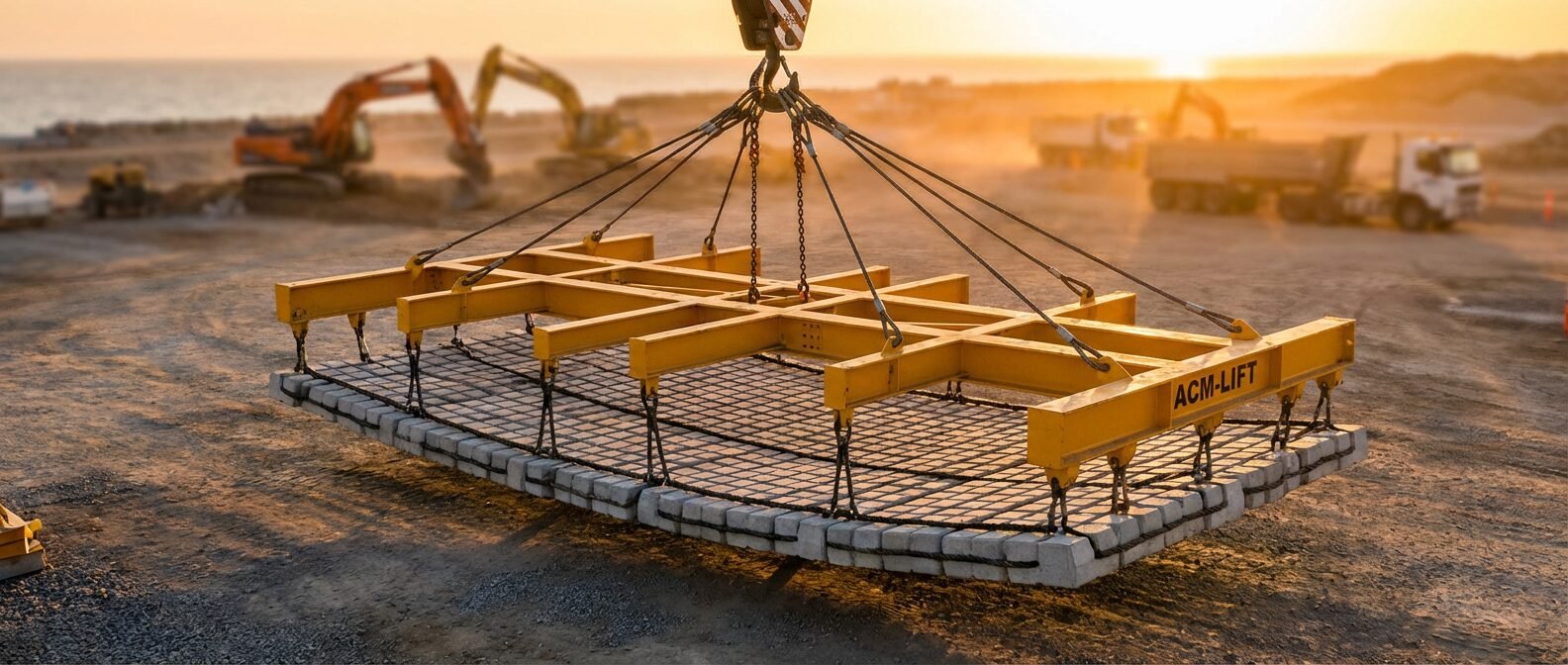
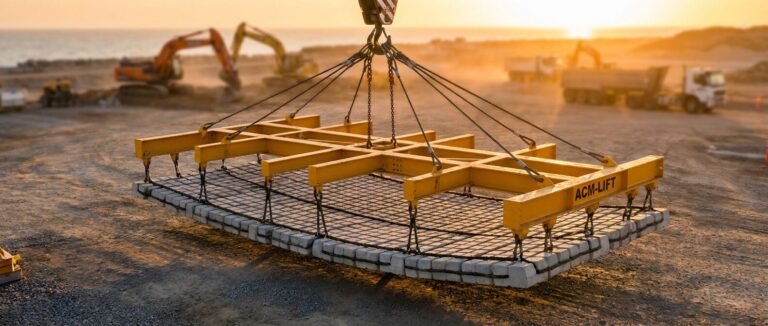
When reviewing industry guidelines for Articulating Concrete Block (ACB) Installation, engineers recognize that the system is a flexible matrix rather than a rigidly fixed slab. Lifting this dynamic matrix requires specialized spreading bars that distribute tension equally across multiple pick points. Using a standardized single-hook crane configuration will instantly warp the underlying structural grid.
Heavy individual blocks, typically ranging from 100 to 300mm in thickness, create dramatic center-of-gravity challenges. A custom overhead frame ensures the specialized geotextile formwork doesn’t rip under the sheer dead weight of C30/C35 grade concrete. If tension cables pull at an acute angle, the outward compressive force can crush the outermost blocks entirely. Keeping those lifting cables as close to vertical as possible is non-negotiable for site safety. You essentially want the rigging doing the heavy lifting straight up, eliminating lateral drag across the hinge joints.
Calibrating Concrete Mattress Installation Equipment
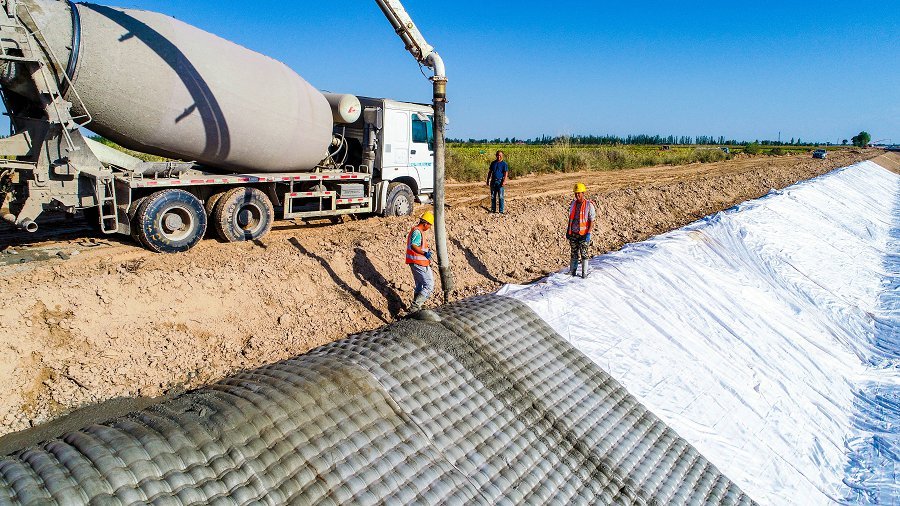
Rigging specifications directly dictate the survival of both the equipment and the installation crew working below. The specific tensile strength of the lifting slings must exceed standard margins due to the severe vacuum effect created when lifting wet units out of marshy staging areas. As the Concrete Construction Equipment Market Size pushes past $10.8Bn, modern sites are increasingly adopting high-capacity automated spreader frames to safely handle these massive, shifting loads.
The underlying geotextile fabric backing requires a minimum tensile strength of ≥50kN/m to prevent tearing during initial suspension. Slings connecting the lifting frame to the mat loops should never exceed a 45-degree angle from vertical to maintain load balance. Shackles must feature designated working load limits that account for dynamic shock factors, especially when lowering units into active river currents. Operators who ignore these math variables inevitably face snapped cables and dropped loads right in the primary work corridor.
Formulating the Safe Lifting Operations Protocol
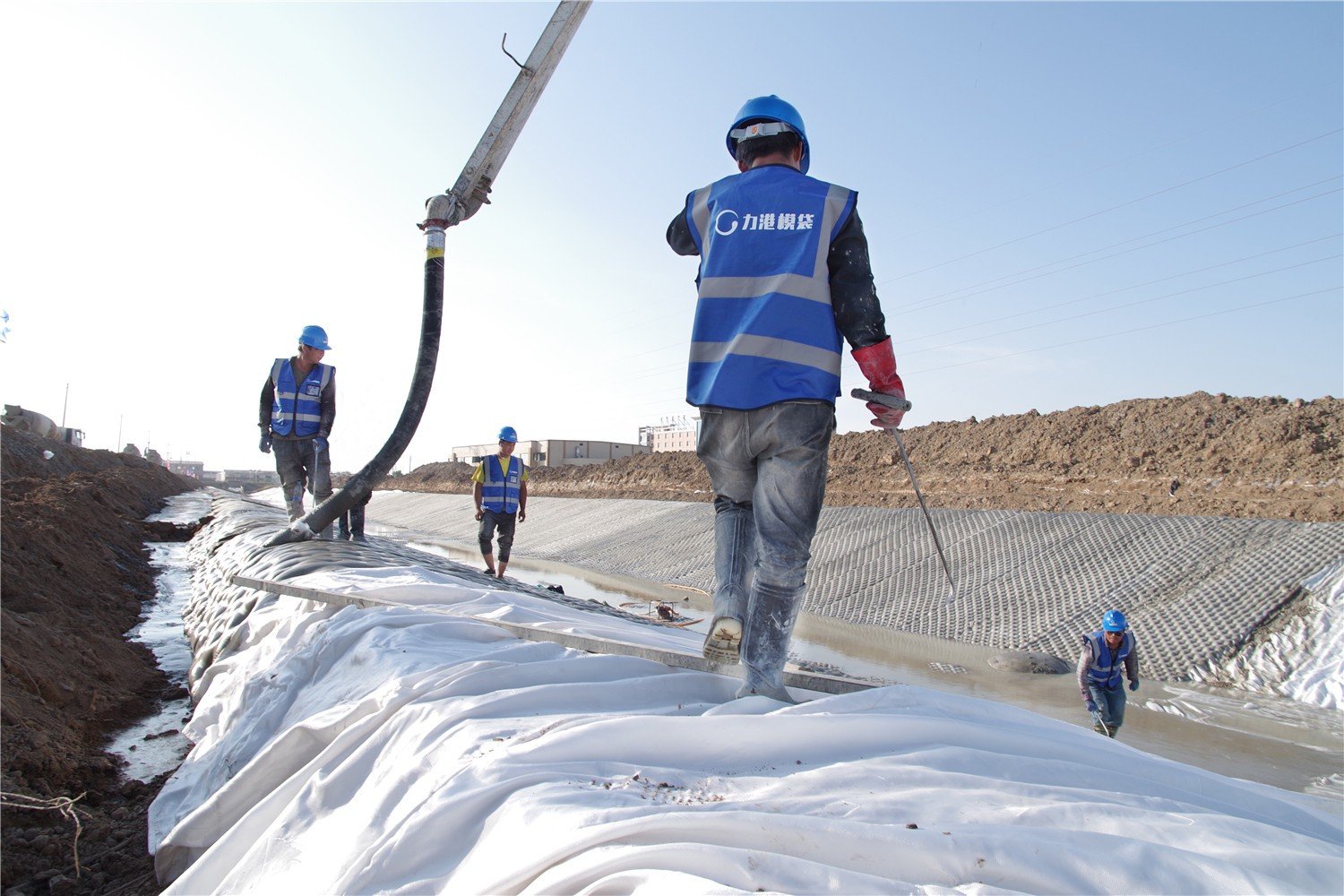
Superintendents need to actively verify environmental conditions before engaging any hoisting machinery on site. Wind speeds exceeding 12 meters per second create a highly dangerous sail effect on a suspended 6-meter by 3-meter erosion control mattress. Monitoring the soil compaction beneath the crane outriggers is equally critical, as soft riverbank mud severely reduces load-bearing capacity as the boom extends.
With the Interlocking Blocks market experiencing a transformation driven by skilled labor shortages, relying on heavily engineered, foolproof lifting protocols is practically mandatory. Inexperienced deckhands can easily misjudge center alignments during a busy shift. Establishing a clear visual communication protocol ensures that the crane operator and the ground spotters stay perfectly dialed in during the entire swing. A robust plan covers everything from morning hardware inspections to emergency swing path evacuations.
Perfecting the ACM Placement Method Statement
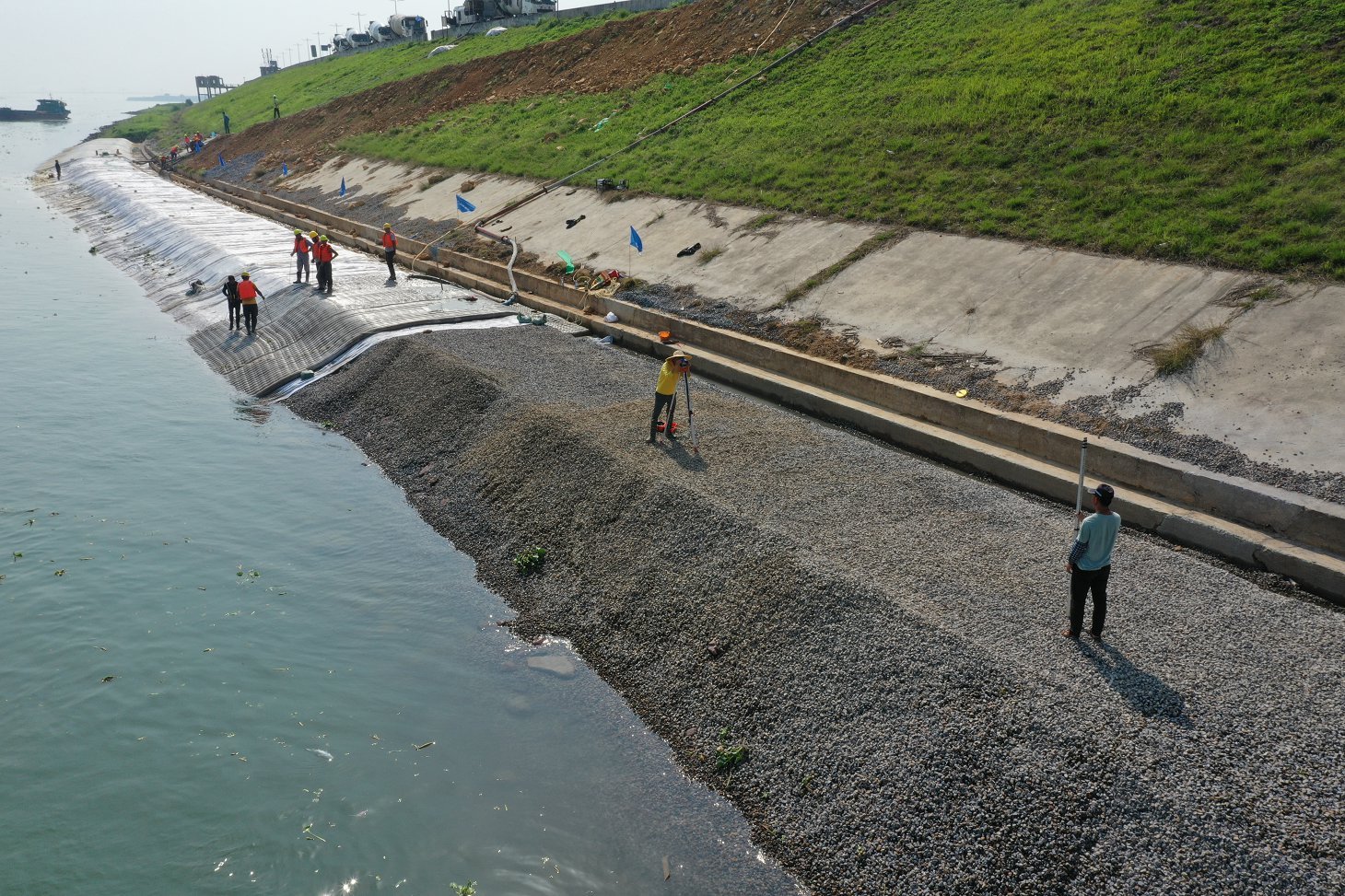
Dropping a heavy revetment unit exactly onto its designated underwater coordinates requires a tightly orchestrated method statement. Subsea deployments differ drastically from sub-aerial channel linings because water buoyancy instantly alters the load dynamics. Once the unit breaches the water surface, the crane experiences a sudden reduction in hook load, which can cause the boom to bounce aggressively.
Managing scour velocity resistance placement tolerances—designed to withstand currents >6.0 m/s—means overlapping the mattress edges flawlessly. If the articulated concrete mattress ACM lifting frames allow the unit to twist mid-air, the interlocking joints won’t align properly on the prepared slope. Subsea operations often utilize acoustic telemetry and ROV cameras to guide the spreader bar into precise position. Boots on the ground simply can’t adjust these massive elements by hand once they hit the substrate, so the initial aerial alignment has to be absolutely perfect.
Mitigating Lift Point Failures on Interlocking Mats
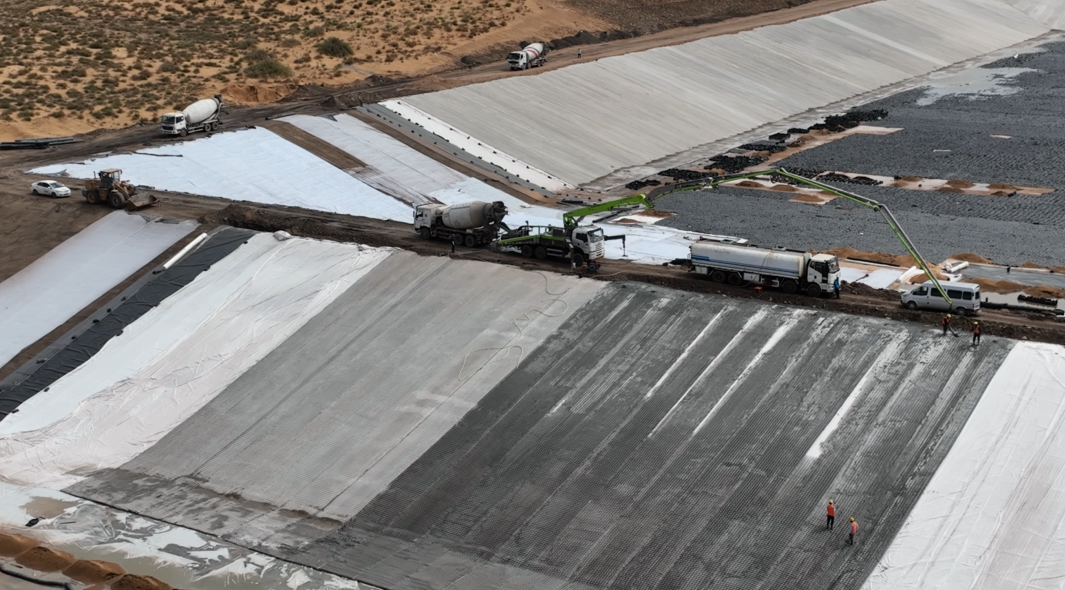
Embedded lifting cables present a unique mechanical vulnerability during rapid deployment cycles. These high-strength wire ropes loop through the protective concrete blocks, serving as the primary attachment points for the spreading bar. Continuous exposure to salt water and abrasive sand severely compromises their breaking strength over the lifespan of a long project.
To prevent sudden rigging failure, crews must meticulously inspect these structural loops for fraying or kinking prior to every single lift. Applying a protective nylon sleeve over the wire rope reduces destructive friction against the heavy hook hardware. If a loop snaps mid-swing, the sudden weight shift can unbalance the entire steel frame, leading to a catastrophic domino effect across the remaining cables. Smart site managers always sweat the small stuff when it comes to load-bearing hardware integrity.
Engineering Reliable Mat Deployment Systems

Procuring mats from one supplier while renting spreading bars from an unrelated third party often creates dangerous compatibility gaps on site. The shackle sizes might not mate smoothly with the embedded loops, or the frame dimensions may fail to match the mat footprint. For example, HydroBase designs their heavy articulated structural frames concurrently with their interlocking block molds, ensuring a flawless physical fit.
This synchronized manufacturing prevents frustrating staging delays. The load distribution points on the articulated concrete mattress align perfectly with the specialized spreader hooks right out of the box. Dealing with matched equipment significantly reduces staging time and virtually eliminates the risk of improvisational rigging errors. When suppliers take full ownership of both the protective product and the deployment hardware, site managers experience far fewer headaches during complex waterfront installations.
Standardized Pre-Lift Assessment Framework
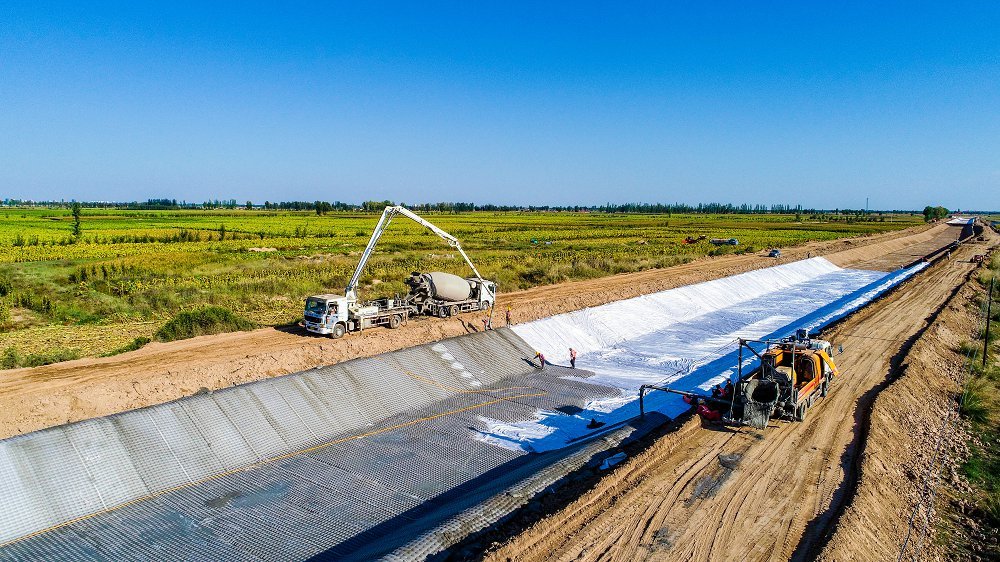
Before clearing a heavy lift over a busy channel, standardizing your team’s verification process is undeniably crucial. A simple, repeatable checklist prevents operational complacency on busy jobsites where exhausted crews might be tempted to cut corners. Using a structured matrix ensures every technical parameter is actively validated.
| Assessment Category | Technical Parameter Verification | Essential Safety Thresholds |
|---|---|---|
| Hardware Integrity | Sling tension limits & steel shackle ratings | WLL must exceed total dynamic load by 2.5x |
| Environmental Limits | Crosswind velocity & rain saturation metrics | Wind < 12m/s, clear visual sightlines confirmed |
| Load Mechanics | Crane hook capacity vs total structural dead weight | Include mandatory 15% dynamic shock factor |
| Dimensional Checks | Concrete unit dimensions vs spreader frame span | Max 50mm tolerance on vertical lift points |
Deploying this B2B verification tool at the start of every shift keeps operations safely within industry compliance. You eliminate dangerous guesswork and force strict accountability across the entire heavy rigging crew.
Logistical Planning for Rapid Site Coverage
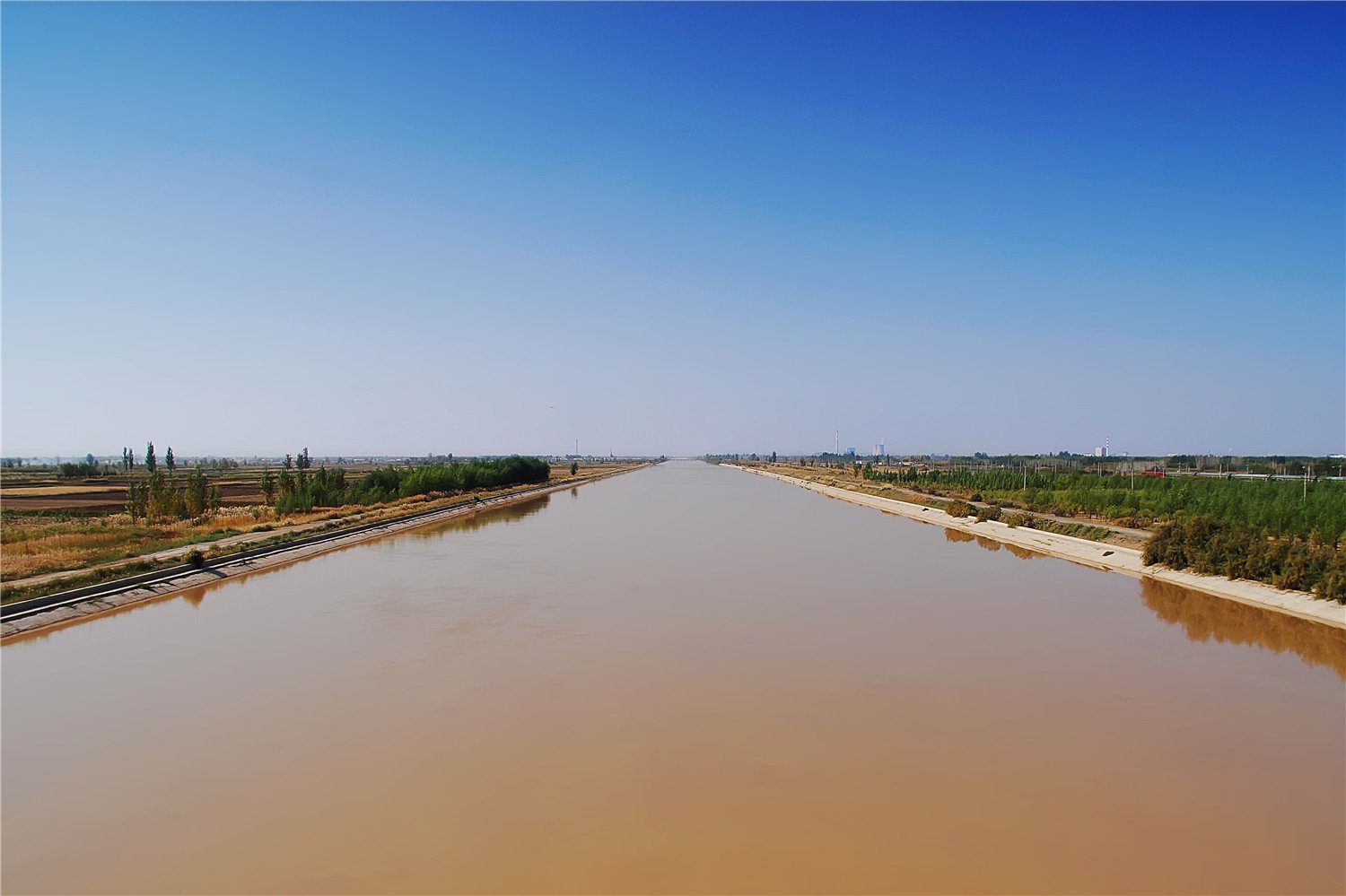
Maximizing daily installation rates depends entirely on how quickly the site crew can cycle the massive lifting frame back to the staging area. Once the mat safely rests on the riverbank, specialized quick-release shackles allow the crane boom to detach almost instantly. Waiting ten minutes to manually unhook tangled, mismatched rigging across thirty lifts destroys your project’s bottom line.
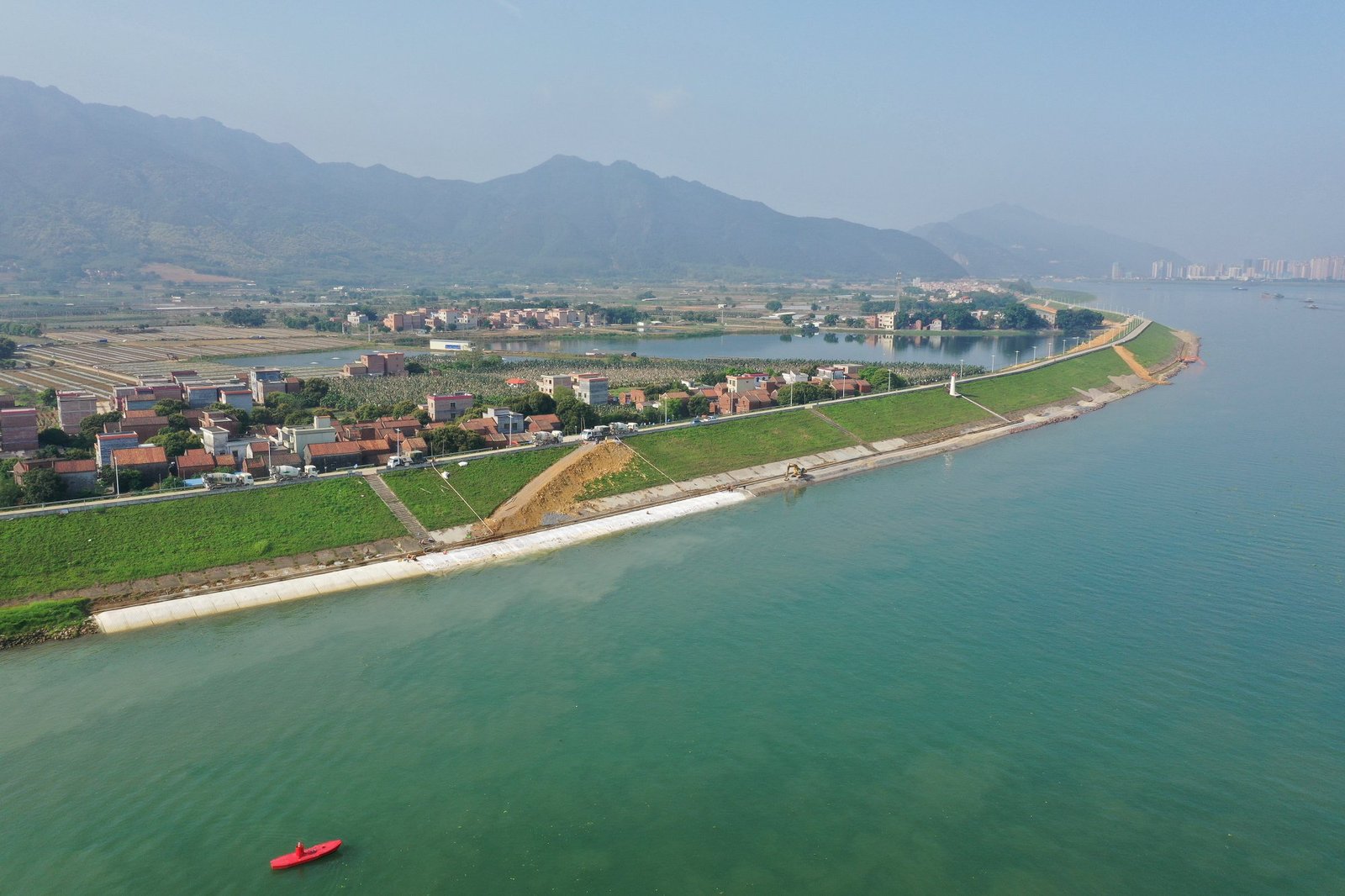
Project engineers mapping out lengthy coastal revetments frequently study complex concrete mattress projects that utilize specialized dual-crane maneuvers to fast-track coverage. Whether placing traditional interlocking units or installing a vegetated concrete mattress for eco-friendly bank stabilization, the hardware cycle time dictates profitability. Utilizing a coordinated vendor like HydroBase that supplies rapid-deployment hardware alongside the mats keeps your excavators moving efficiently.
Frequently Asked Questions
Q: How much weight can standard articulated concrete mattress acm lifting frames handle?
A custom engineered spreader bar safely manages lift capacities ranging from 5,000 kg to over 15,000 kg. These heavy-duty frames must accommodate the dense C30/C35 grade concrete mass along with the water weight retained in the integrated geotextile fabric. The total Safe Working Load (SWL) certification is permanently stamped directly onto the frame web.
Q: What is the primary operational difference between rigid slab lifting and ACM rigging?
Lifting an ACM requires multi-point tension distribution to prevent the flexible geotextile hinge joints from tearing under their own weight. Rigid slabs can often be hoisted using a simple four-point sling connection. Conversely, articulated flexible mats demand a rigid overhead spreader bar to ensure perfectly vertical cable pulls across the entire surface area.
Q: Does manufacturing lead time affect custom installation equipment availability?
Ordering custom lifting equipment securely matched to your mats typically requires a standardized 4 to 6-week factory lead time. Dedicated manufacturers like HydroBase routinely synchronize the dispatch of these essential lifting beams with the arrival of the actual revetment units to prevent bottlenecking. Always verify equipment delivery dates prior to scheduling expensive heavy rental cranes.
Q: What are the absolute maximum safe wind limits for suspending large mattresses?
Hoisting operations should immediately halt if sustained ground wind speeds exceed 12 to 15 meters per second. The large, flat surface area of a suspended ACM creates significant wind resistance, causing highly dangerous load spinning that can easily overcome even the strongest tag line operators.
Elevating Your Project Safety Strategy
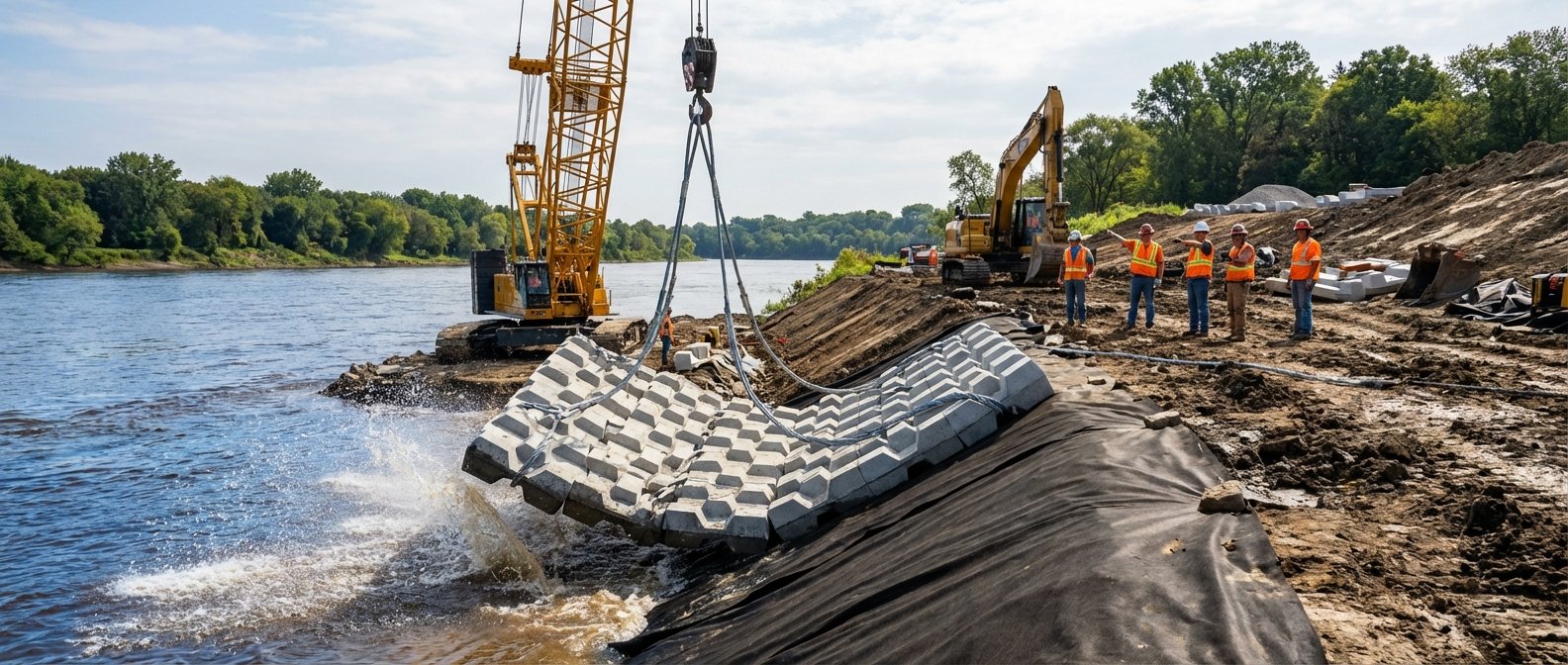
Navigating the extreme complexities of hydraulic erosion protection goes far beyond simply selecting the correct concrete grade or fabric thickness. Securing the jobsite requires flawless execution of the articulated concrete mattress ACM lifting frames and rigorous adherence to strict mechanical protocols. A dropped load over a busy navigation channel ruins project timelines, destroys costly materials, and severely endangers personnel working below. Taking the vital time to match your heavy spreader bars precisely to the mat dimensions—while rigorously training your rigging crew on the hardware—guarantees a smoother, significantly safer deployment phase.
Site superintendents who proactively demand engineered lifting solutions consistently execute faster shoreline placements with zero safety incidents. Proper logistical planning upfront pays massive dividends when the heavy cranes finally fire up. Always invest in the specialized hardware that respects the immense gravity of the task.
Download the concrete mattress specification sheet to access comprehensive technical guidelines, detailed lifting safety requirements, and precise load distribution diagrams for your next hydraulic initiative. Explore our articulated concrete mattress solutions to secure certified, fully integrated deployment hardware today.
Need a concrete mattress solution for your project?
HydroBase provides end-to-end concrete mattress engineering & installation services — from hydraulic design and factory-direct ACM supply to on-site supervision and post-project inspection. Trusted by civil engineers in 50+ countries.