
Riverbank Erosion: Causes, Consequences, and How Articulated Concrete Mattress Provides Permanent Protection
Quick Answer: Riverbank erosion is driven by four primary mechanisms — lateral flow erosion, wave action, sub-surface seepage, and freeze-thaw cycling. Riverbank erosion control with concrete, specifically articulated concrete mattress (ACM), addresses all four: interlocked blocks resist high-velocity currents, combined mass suppresses wave energy, and the geotextile filter layer prevents seepage-driven particle migration from undermining the bank.
Riverbank erosion control concrete solutions have transformed how hydraulic engineers approach long-term bank stabilisation — and understanding why requires starting with the mechanics of failure, not the product catalogue. Across 18 years in hydraulic engineering, I’ve watched otherwise sound infrastructure budgets get quietly destroyed by one consistent culprit: riverbank instability that engineers underestimated at the design stage. With ISO 9001-certified manufacturing experience in ACM systems, I can say with confidence that understanding erosion mechanics — before you specify a solution — is the single most valuable thing you can do for a long-term project.
Table of Contents
1. Why Riverbanks Erode — 4 Key Mechanisms
2. Economic Cost of Riverbank Failure
3. Why Traditional Methods Fail Over Time
4. How ACM Permanently Solves Riverbank Erosion
5. Design Considerations
6. HydroBase Riverbank Projects
7. Frequently Asked Questions
Why Riverbanks Erode — 4 Key Mechanisms
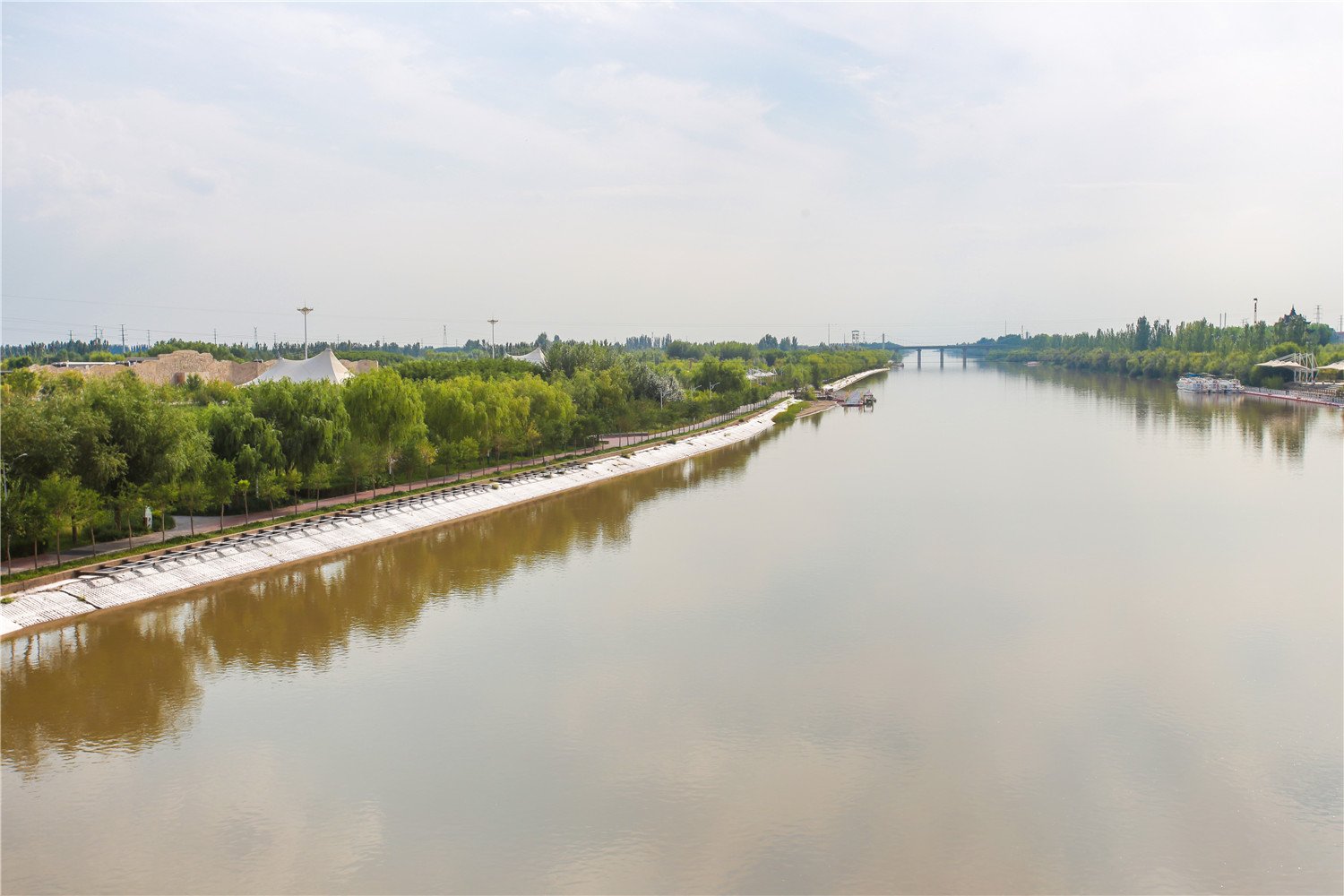
Riverbank erosion isn’t random. It follows predictable physical processes, and each one requires a different engineering response. When you understand what’s actually happening at the soil-water interface, the case for engineered riverbank erosion control becomes clear.
Mechanism 1: Lateral Flow Erosion (Hydraulic Shear)
High-velocity flow exerts a shear stress directly on exposed bank material. When that stress exceeds the critical shear stress of the soil — typically between 2–10 N/m² for cohesive clays and as low as 0.5 N/m² for sandy loams — particles detach and are transported downstream. This process accelerates dramatically around river bends, where secondary helical currents drive flow into the outer bank at velocities that can exceed 4.0–6.5 m/s during flood events.
Mechanism 2: Wave Action and Drawdown
Even in relatively low-energy rivers, boat wash and wind-generated waves create cyclic loading on bank material. The wave run-up saturates the upper bank zone; then rapid drawdown creates negative pore pressure gradients that pull fine particles toward the water surface. Over hundreds of cycles, this process destabilises the bank face even where average velocities seem manageable.
Mechanism 3: Sub-Surface Seepage and Piping
Seepage through the bank is perhaps the least visible but most structurally damaging mechanism. When the phreatic line within the bank sits above the river level — common during flood recession — outward seepage creates hydraulic gradients that mobilise fine particles from the interior. Left unchecked, internal piping creates voids that produce sudden, catastrophic slumping rather than the gradual surface erosion that’s easier to monitor.
Mechanism 4: Freeze-Thaw and Desiccation Cycling
In temperate and cold climates, repeated freeze-thaw cycles fracture clay soil aggregates, reducing their cohesion and increasing erodibility by 30–60% compared to non-frozen equivalents. Similarly, prolonged dry periods cause surface desiccation cracking — these cracks then act as preferential pathways for both wave run-up infiltration and rainfall-driven erosion.
Understanding which of these four mechanisms dominates at your site is non-negotiable before you specify any river bank erosion protection system.
Economic Cost of Riverbank Failure

The numbers attached to riverbank failure are rarely in the project file until it’s too late. Global estimates from infrastructure research consistently place annual losses from riverbank erosion in the billions of US dollars, encompassing direct structural damage, emergency remediation, agricultural land loss, and critical infrastructure compromise.
Here’s where the real cost acceleration happens:
| Failure Consequence | Typical Cost Range | Notes |
|---|---|---|
| Emergency bank revetment (post-failure) | 3–8× planned protection cost | Mobilisation premiums, urgency factors |
| Road/rail embankment repair | USD 500,000–5M per event | Bridge approaches most vulnerable |
| Agricultural land loss | USD 2,000–15,000/hectare/year | Cumulative over project life |
| Utility relocation (buried services) | USD 200,000–2M per crossing | Pipeline, cable, fibre |
| Environmental remediation (sediment) | Variable; often project-halting | Regulatory compliance exposure |
What makes these figures especially painful is that they’re almost entirely avoidable. A properly designed riverbank stabilisation system, installed before failure occurs, typically costs a fraction of the emergency remediation bill.
The secondary costs are just as insidious. When a bank fails adjacent to a road embankment, project delivery timelines collapse. When it happens near a flood-control scheme, the hydraulic performance of the entire system degrades. These knock-on effects compound the original failure cost, often by a factor of two or three.
Why Traditional Methods Fail Over Time
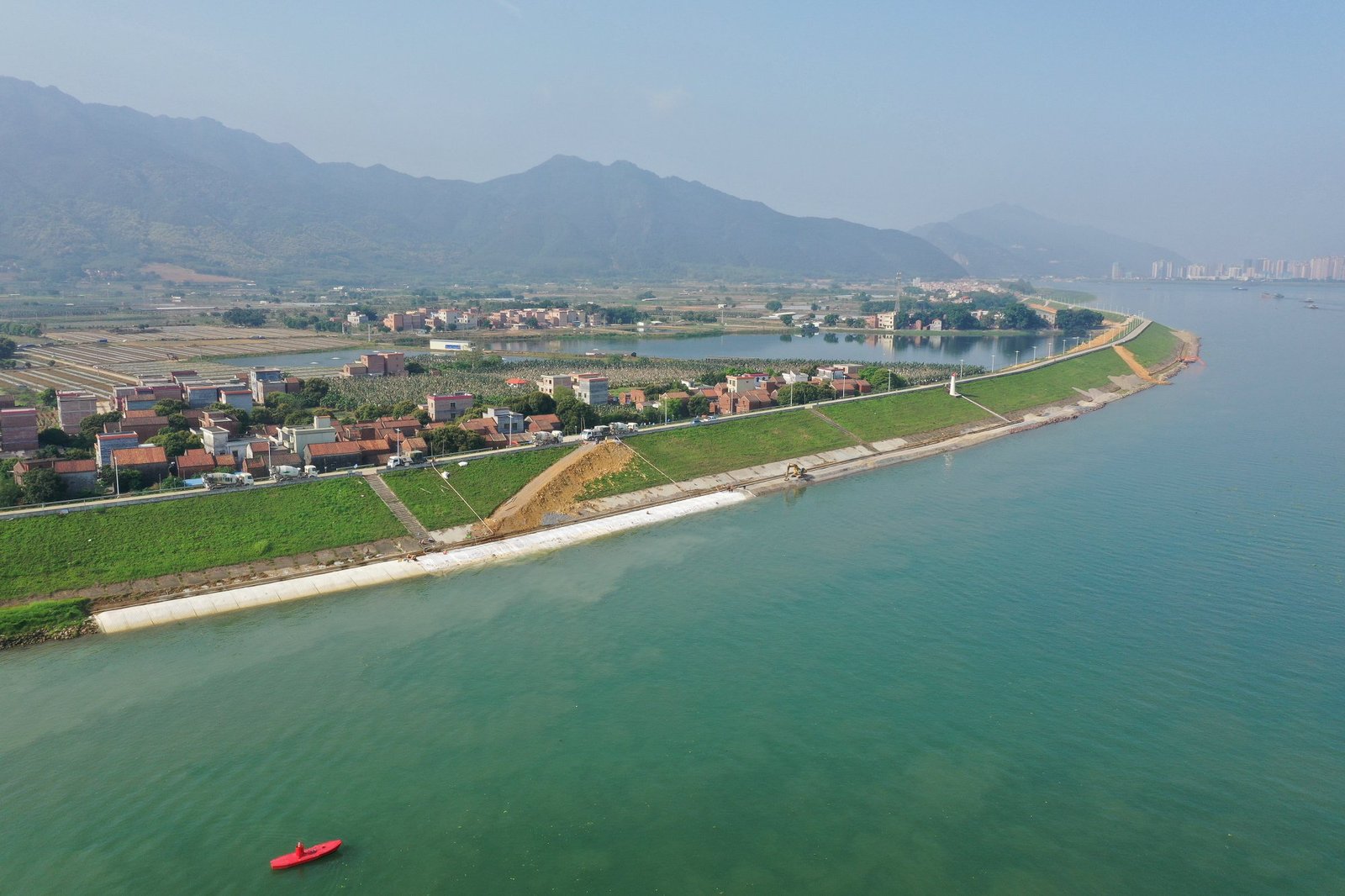
Traditional riverbank protection methods have well-documented performance limitations. Understanding where they fail helps clarify why engineered erosion control revetment systems like ACM were developed in the first place.
Riprap and Gabion Baskets
Loose riprap relies entirely on adequate sizing and stable placement. In practice, high-velocity flow events progressively displace individual stones, especially around edges and at the toe. Once a gap forms, the filter layer beneath is exposed and piping accelerates. Gabion baskets perform better but are vulnerable to wire corrosion — typical galvanised wire life in aggressive river environments is 15–25 years, after which basket integrity drops sharply, often coinciding with an unfunded maintenance cycle.
Vegetated Slopes (Bioengineering)
Vegetation alone is frequently specified as a cost-effective erosion solution, and for low-energy rivers with velocities below 1.5 m/s, it genuinely works. Above that threshold, root systems simply cannot develop fast enough to resist the hydraulic forces during the establishment period, and mature vegetation offers negligible resistance to flows exceeding 2.5 m/s. Vegetation also provides no protection against seepage or wave-induced drawdown. The vegetated concrete mattress system for ecological bank protection — which combines structural ACM with vegetation in open block cells — was specifically developed to bridge this performance gap.
Poured Concrete Slope Lining
Monolithic concrete slope lining appears robust but is inherently brittle. Differential settlement, seepage pressure build-up (particularly during rapid drawdown), and thermal cycling create cracking within 5–15 years. Once cracked, the lining acts as a funnel concentrating seepage rather than a barrier, often making piping failure worse than if no lining had been installed.
Geotextile Alone
Geotextile filter layers are essential components in any bank protection system, but they’re not erosion armour. Exposed geotextile deteriorates under UV exposure within 2–5 years depending on polymer type, and it provides essentially zero resistance to hydraulic shear above 0.3 m/s.
The pattern across all of these methods is the same: they address one erosion mechanism while ignoring the others, or they perform well initially and degrade precisely when hydraulic loading is highest.
How ACM Permanently Solves Riverbank Erosion
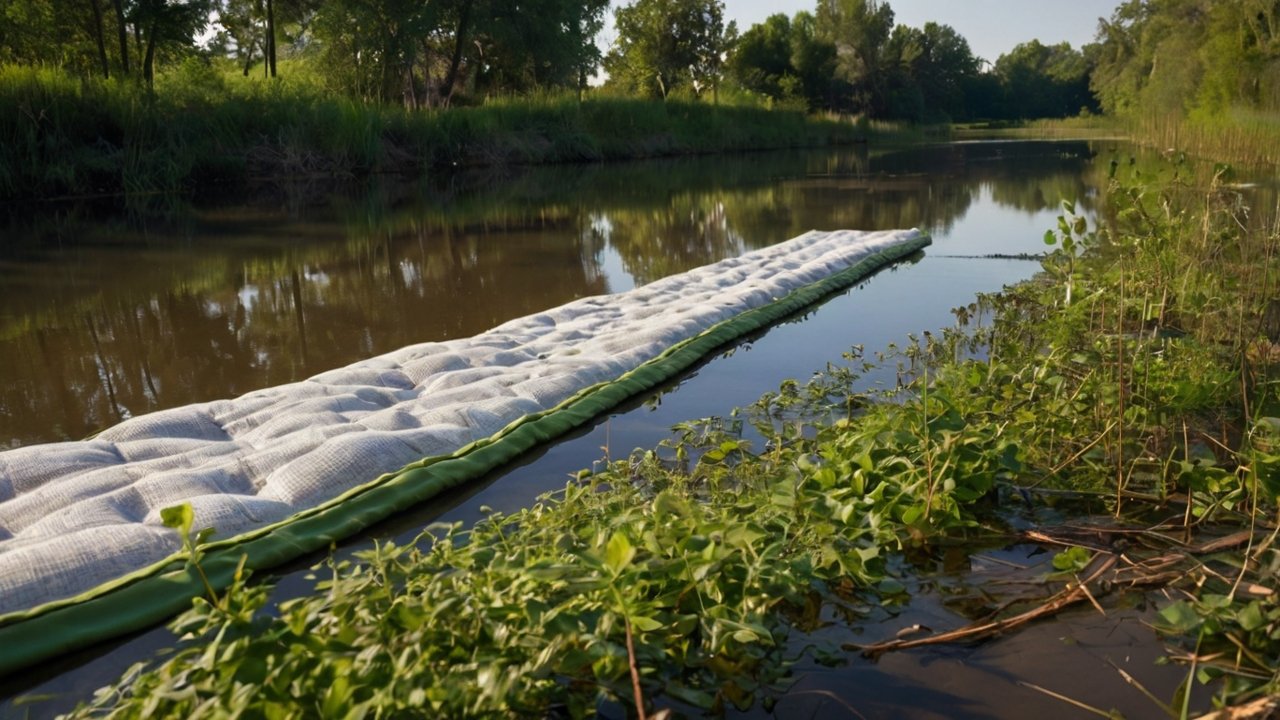
Articulated concrete mattress is engineered specifically for the multi-mechanism nature of riverbank erosion. The system works as an integrated assembly rather than a single layer, which is why its performance holds up where single-component systems fail.
Hydraulic Shear Resistance
ACM blocks — typically ranging from 300×200×100mm to 600×400×200mm in standard configurations — are designed to resist specific velocity thresholds. A 150mm thick ACM system with closed block pattern achieves velocity ratings up to 6.0 m/s, which covers the vast majority of flood-event flows encountered in riverbank protection applications. The interlocked geometry means that as velocity increases, blocks lock together rather than displacing, unlike loose riprap.
For a practical overview of how these velocity ratings translate to real-world hydraulic loading, the ACM technical design guide for civil and hydraulic engineers sets out the calculation methodology in detail.
Seepage and Piping Control
The geotextile filter layer beneath the ACM is not an optional accessory — it’s a structural component. When properly specified (typically non-woven needle-punched geotextile, 300–450 g/m²), it prevents fine particle migration under hydraulic gradients while allowing pressure equalisation. This directly neutralises the seepage piping mechanism. The filter fabric specification must match the soil particle size distribution of the bank material; engineers should reference the FHWA Geotextile Design & Construction Guide for filter criteria selection.
Wave Action Suppression
ACM mattress weights range from 50 to 400 kg/m² depending on block size and pattern. This mass — combined with the mattress’s ability to conform to irregular slope geometry through articulation — provides sustained resistance to cyclic wave loading without the progressive displacement seen in riprap. The mattress moves with the bank surface rather than against it.
Geomorphic Flexibility
Unlike poured concrete, ACM accommodates differential settlement and minor bank movement without cracking or losing hydraulic function. Individual cables can be inspected and replaced in the field, which makes long-term maintenance genuinely practical rather than theoretical. If you want to compare ACM to concrete slab alternatives, the articulated concrete slab versus block mattress specification guide covers when each geometry is most appropriate.
Design Considerations
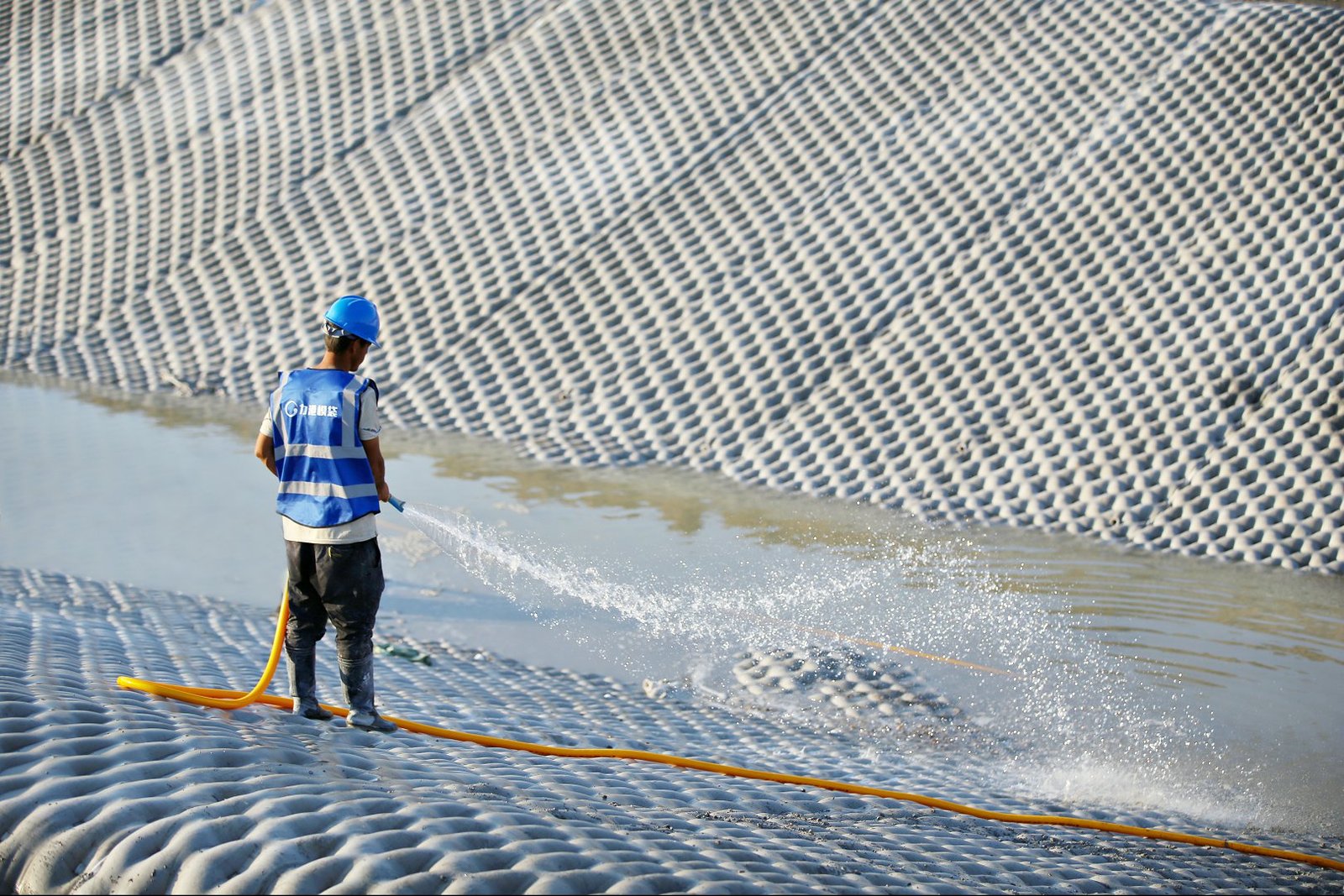
Specifying ACM for riverbank erosion control involves several engineering decisions that determine whether the system performs for 30+ years or develops problems within the first decade.
Velocity and Shear Stress Analysis
Start with hydraulic modelling of the design flood event — typically the 1-in-100-year return period for critical infrastructure, 1-in-50 for standard revetments. Calculate bed shear stress using Manning’s equation or HEC-RAS output. Select ACM block thickness to provide a Safety Factor ≥ 1.5 against the calculated shear stress. The HEC-23 design guidelines published by FHWA remain the standard reference for this calculation in infrastructure design.
Toe Protection
The mattress toe is the single most critical detail in riverbank protection design. A mattress that terminates without adequate toe burial will progressively undermine as the river scours the bed at the toe. Standard practice requires burying the toe in a trench — minimum 500mm below the anticipated scour depth — or launching the mattress into the channel bed with a sacrificial apron. For detailed scour interaction principles, the article on concrete mattress riverbed scour protection mechanisms covers the mechanism in full.
Filter Layer Specification
Match the geotextile opening size (O95) to the D85 of the bank soil. For sandy soils (D50 = 0.2–0.5mm), a 150–200μm opening size geotextile is appropriate. For cohesive clays with low fines susceptibility, an 300–400μm opening size may be acceptable. Document this calculation in the design file — it’s the evidence that the seepage mechanism has been properly addressed.
Slope Geometry and Block Pattern
For slopes steeper than 1:2 (V:H), specify closed block pattern ACM (typically 300×200×100mm blocks with 20% open area). Open block patterns work well on 1:3 and shallower slopes where vegetation establishment within open cells is desired. Slopes steeper than 1:1.5 require special analysis and are typically outside standard ACM application ranges. If the project has an ecological mandate, the filter point concrete mattress for vegetated bank protection is worth evaluating — its open cell design supports vegetation while maintaining hydraulic armour performance.
B2B Specification Checklist — ACM Riverbank Protection
| Parameter | Decision Required | Design Input Needed |
|---|---|---|
| Design velocity (m/s) | Select block thickness | HEC-RAS / Manning output |
| Bed shear stress (N/m²) | Safety Factor ≥ 1.5 | Hydraulic model |
| Soil classification | Geotextile O95 selection | Grain size analysis |
| Slope angle (V:H) | Open vs. closed block pattern | Survey data |
| Toe scour depth (m) | Toe burial depth / apron length | Scour calculation |
| Project life (years) | Cable material: HDPE vs. stainless | Client brief |
| Ecological requirements | Vegetation cell specification | Environmental assessment |
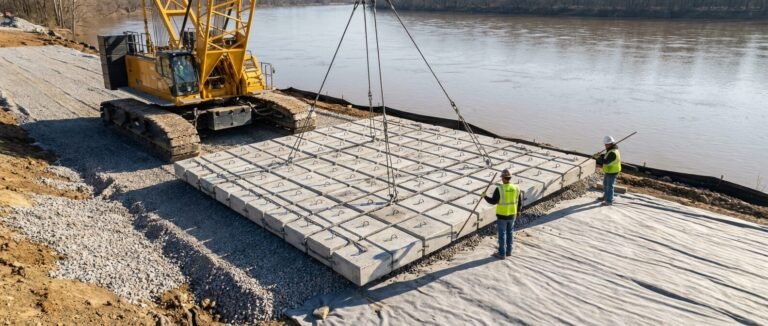
| Installation method | Crane barge vs. land-based equipment | Site access survey |
HydroBase Riverbank Projects
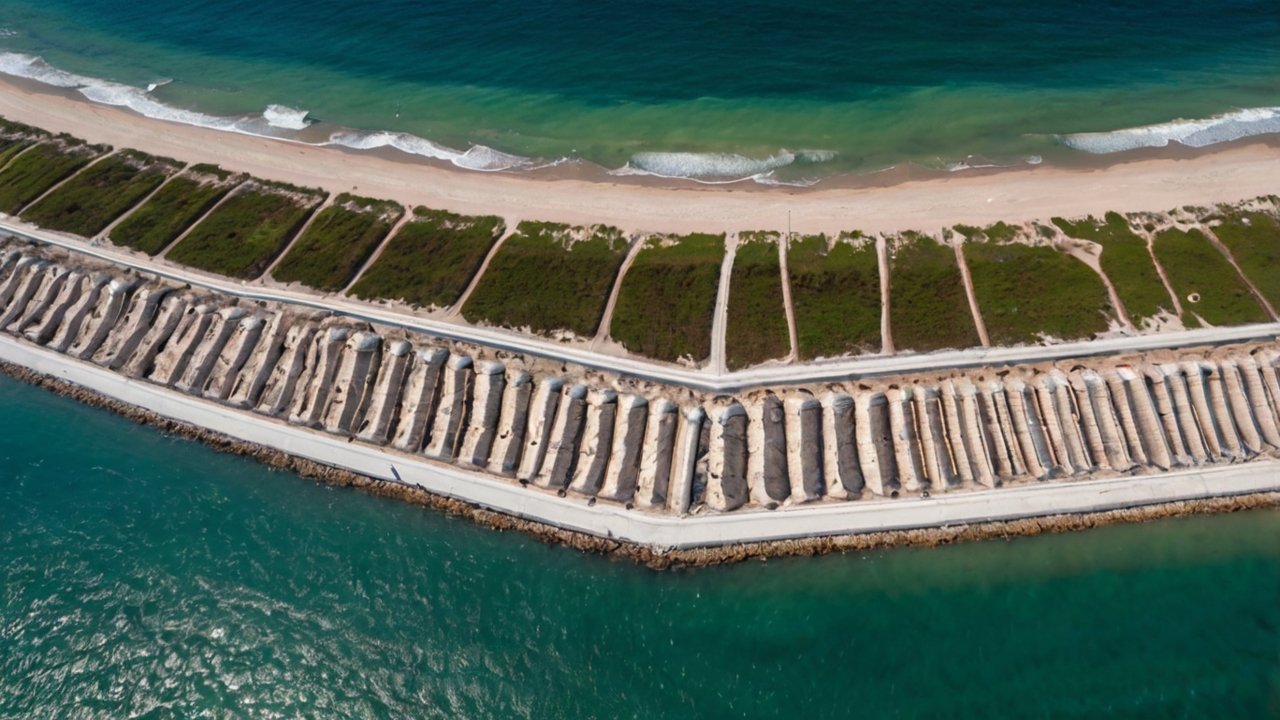
For engineers and procurement teams researching ACM supply, HydroBase is one manufacturer worth evaluating seriously. Based in China with production specifically focused on articulated concrete mattress systems, HydroBase supplies to infrastructure projects across multiple continents — and the manufacturing quality is where the long-term performance case gets made.
What’s worth noting from a technical standpoint is that HydroBase’s ACM range covers the full specification envelope described in the design section above: block sizes from 300×200×100mm through 600×400×200mm, velocity ratings to 6.0 m/s, both open and closed block patterns, and HDPE or stainless steel cable options depending on project life and chemical environment. The riverbank erosion control concrete mattress product specifications include specification tables that map directly to the design inputs in the checklist above — which makes it easier to use in a procurement process without needing to chase down data sheets separately.
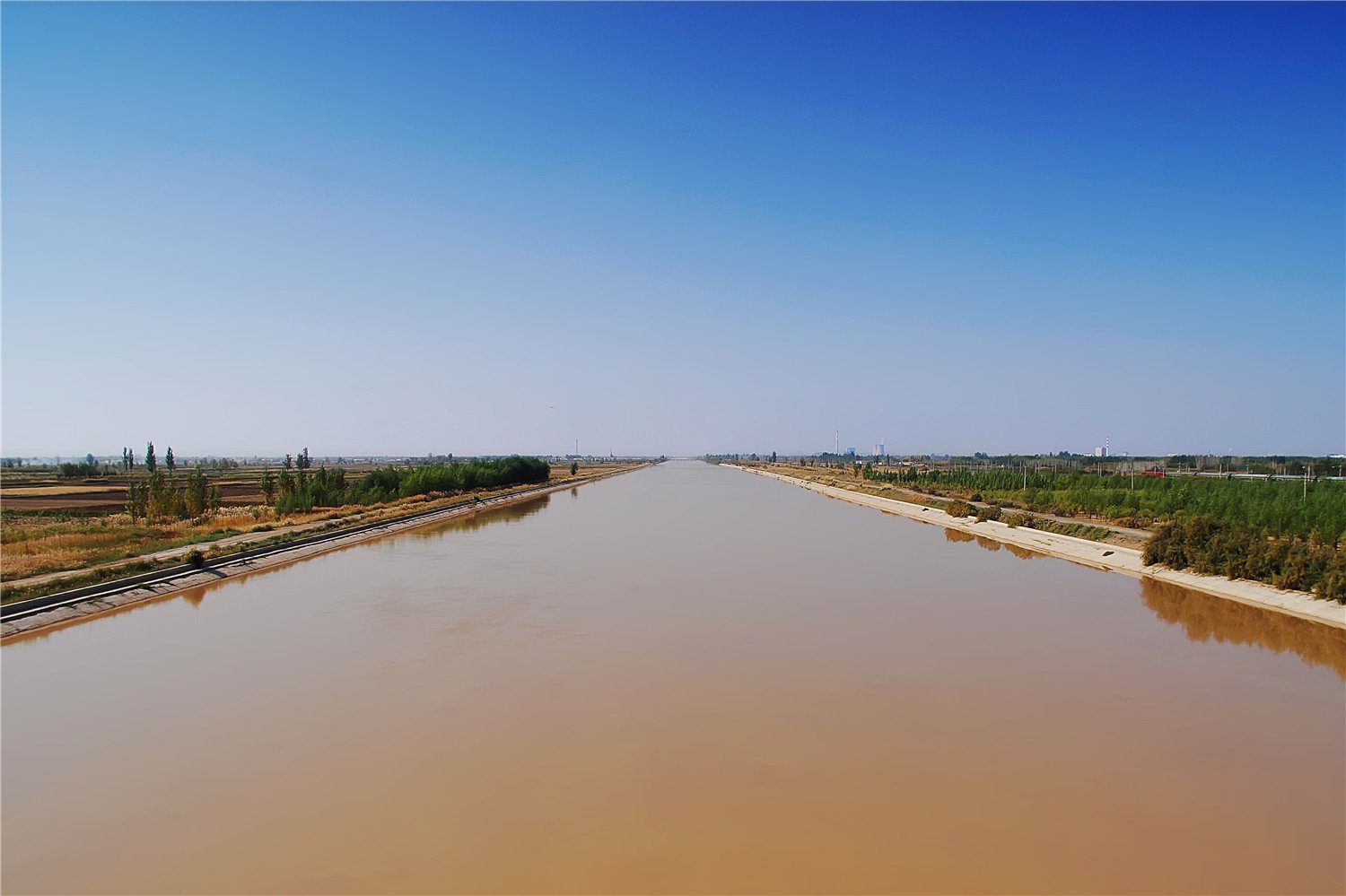
For projects with ecological sensitivity, HydroBase also manufactures filter point variants that allow vegetation colonisation while maintaining hydraulic performance — relevant where environmental permits require natural habitat integration alongside structural erosion control.
The most practical way to evaluate whether a manufacturer’s ACM system suits your project is to compare their technical data sheet against the eight-parameter checklist above. If a supplier can’t provide complete data against each of those parameters, that’s a red flag regardless of price. You can review project applications across different site conditions in the concrete mattress project case studies and site applications.

Frequently Asked Questions
Q: What thickness of articulated concrete mattress is needed for riverbank erosion protection?
ACM thickness for riverbank protection typically ranges from 100mm to 200mm depending on design velocity. A 100mm block thickness suits velocities up to approximately 3.5 m/s; 150mm provides protection to 5.0 m/s; and 200mm handles flows up to 6.0 m/s. Always calculate bed shear stress from hydraulic modelling and apply a minimum Safety Factor of 1.5 when selecting thickness.
Q: What is the difference between articulated concrete mattress and riprap for riverbank stabilisation?
ACM outperforms riprap in three key areas: it maintains coverage integrity under high velocity flows because blocks interlock rather than displace; it provides a consistent filter layer interface preventing seepage-driven piping; and it offers predictable long-term performance because the system is engineered to defined velocity ratings. Riprap is cheaper upfront but more vulnerable to progressive displacement and harder to inspect post-installation.
Q: How much does articulated concrete mattress cost per square metre for riverbank protection?
ACM supply cost typically ranges from USD 25–85/m² ex-works depending on block size, quantity, and cable specification. Installation adds USD 15–40/m² depending on site conditions and equipment access. While this exceeds initial riprap cost, the lifecycle cost analysis over a 30-year project period generally favours ACM, especially when avoided emergency remediation costs are factored in. MOQs vary by manufacturer; volume orders above 500 m² typically achieve the best pricing.
Q: Can articulated concrete mattress be installed on slopes steeper than 1:2?
Slopes steeper than 1:2 (V:H) require engineering analysis beyond standard ACM design tables. Closed block pattern ACM can function on slopes approaching 1:1.5 in specific applications, but additional stability calculations for block-on-slope and cable tension must be completed. For slopes steeper than 1:1.5, alternative systems or supplementary anchoring are generally required. Consult a hydraulic engineer and reference HEC-23 design criteria for steep slope applications.
Q: Does articulated concrete mattress require a geotextile filter layer?
Yes — a geotextile filter layer is mandatory for any ACM riverbank installation. The geotextile prevents fine soil particles from migrating through the joints between blocks under seepage pressure, which is one of the primary failure mechanisms in riverbank protection. Specifying ACM without an appropriately designed filter layer dramatically increases the risk of sub-surface piping and eventual slope failure.
Download the ACM Specification Sheet for Your Project
If your project is at the design or procurement stage, download the riverbank erosion control concrete mattress technical specification sheet — it maps directly to the eight design parameters in the checklist above and gives you the data you need to complete your HEC-23 compliance documentation.
For projects with specific velocity or slope requirements that fall outside standard ranges, a technical consultation with the HydroBase engineering team will give you a faster path to a compliant specification than working through data sheets in isolation.
Conclusion
Riverbank erosion is a multi-mechanism problem — and that’s precisely why single-component solutions keep disappointing project teams. The four mechanisms covered in this article (hydraulic shear, wave action, seepage piping, and freeze-thaw cycling) don’t operate in isolation; they compound each other, especially during and after major flood events.
Articulated concrete mattress, when properly specified with geotextile filter layer, adequate toe burial, and velocity-matched block thickness, addresses all four mechanisms simultaneously. That’s not a marketing claim — it’s the engineering logic that explains why ACM systems consistently outlast riprap and poured concrete alternatives in service.
The industry is also moving toward hybrid systems that combine structural ACM performance with ecological integration — vegetated open-cell variants are already standard on many riparian habitat projects in Europe and Southeast Asia. As environmental permitting requirements tighten globally, this approach will become the default rather than the exception.
Specifying the right system starts with understanding the mechanisms you’re actually defending against. Get that analysis right, and the rest of the design process becomes substantially more straightforward.
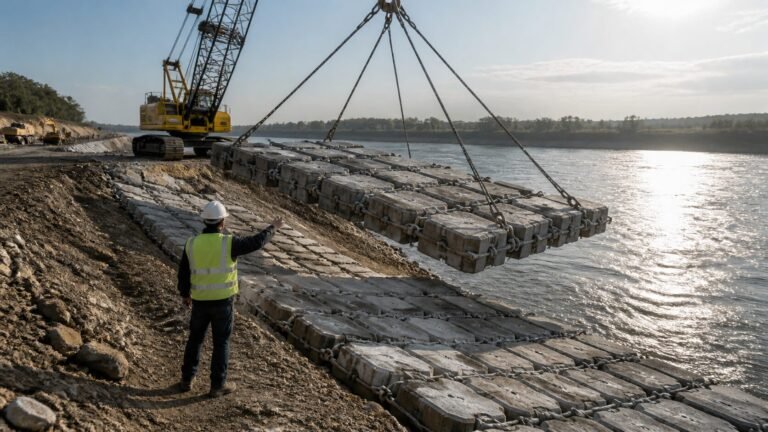
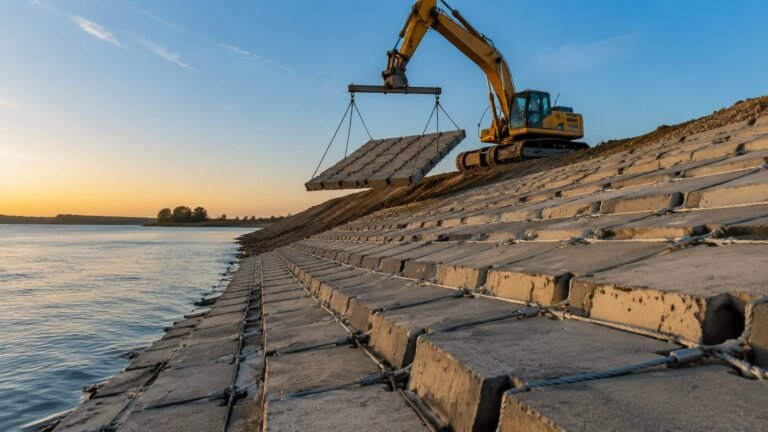
Images: Articulated Concrete Mattress Riverbank Erosion Control, Installation, Canal Bank Revetment, and Shoreline Protection — HydroBase ACM systems.
Need a concrete mattress solution for your project?
HydroBase provides end-to-end concrete mattress engineering & installation services — from hydraulic design and factory-direct ACM supply to on-site supervision and post-project inspection. Trusted by civil engineers in 50+ countries.