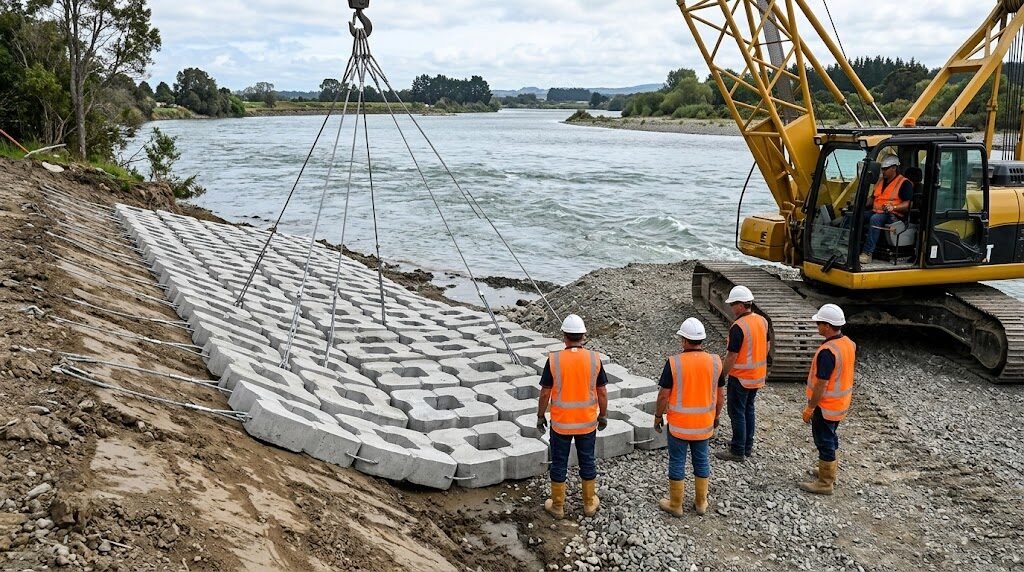
What Is an Articulated Concrete Mattress? Complete Guide for Civil & Hydraulic Engineers
Quick Answer: An articulated concrete mattress (ACM) is a flexible revetment system consisting of precast concrete blocks interconnected by galvanised steel cables or polypropylene rope. It protects riverbeds, slopes, and marine substrates from hydraulic scour by conforming to uneven surfaces while sustaining flow velocities up to 6.0 m/s without structural failure.
Hydraulic engineers have been fighting erosion for as long as rivers have been running near infrastructure. Over my 18 years working on revetment projects across Southeast Asia, the Middle East, and Sub-Saharan Africa, the articulated concrete mattress has consistently proven itself as the most versatile tool in the scour protection toolkit — not because it’s the cheapest option, but because it reliably performs where other systems fail.
This guide is written for civil and hydraulic engineers who need a rigorous, technically complete reference for specifying, selecting, or sourcing ACM systems. We’ll cover how the block-and-cable mechanism actually works under hydraulic load, the four main ACM configurations and their performance trade-offs, the applications where ACMs genuinely outperform alternatives, and a B2B specification checklist you can adapt for your next tender document.
Table of Contents
- What Is an Articulated Concrete Mattress?
- How the Block and Cable System Works
- 4 Main ACM Types
- Key Applications
- ACM vs Alternative Scour Protection Methods
- ACM Specification Checklist for Project Engineers
- Frequently Asked Questions
What Is an Articulated Concrete Mattress?
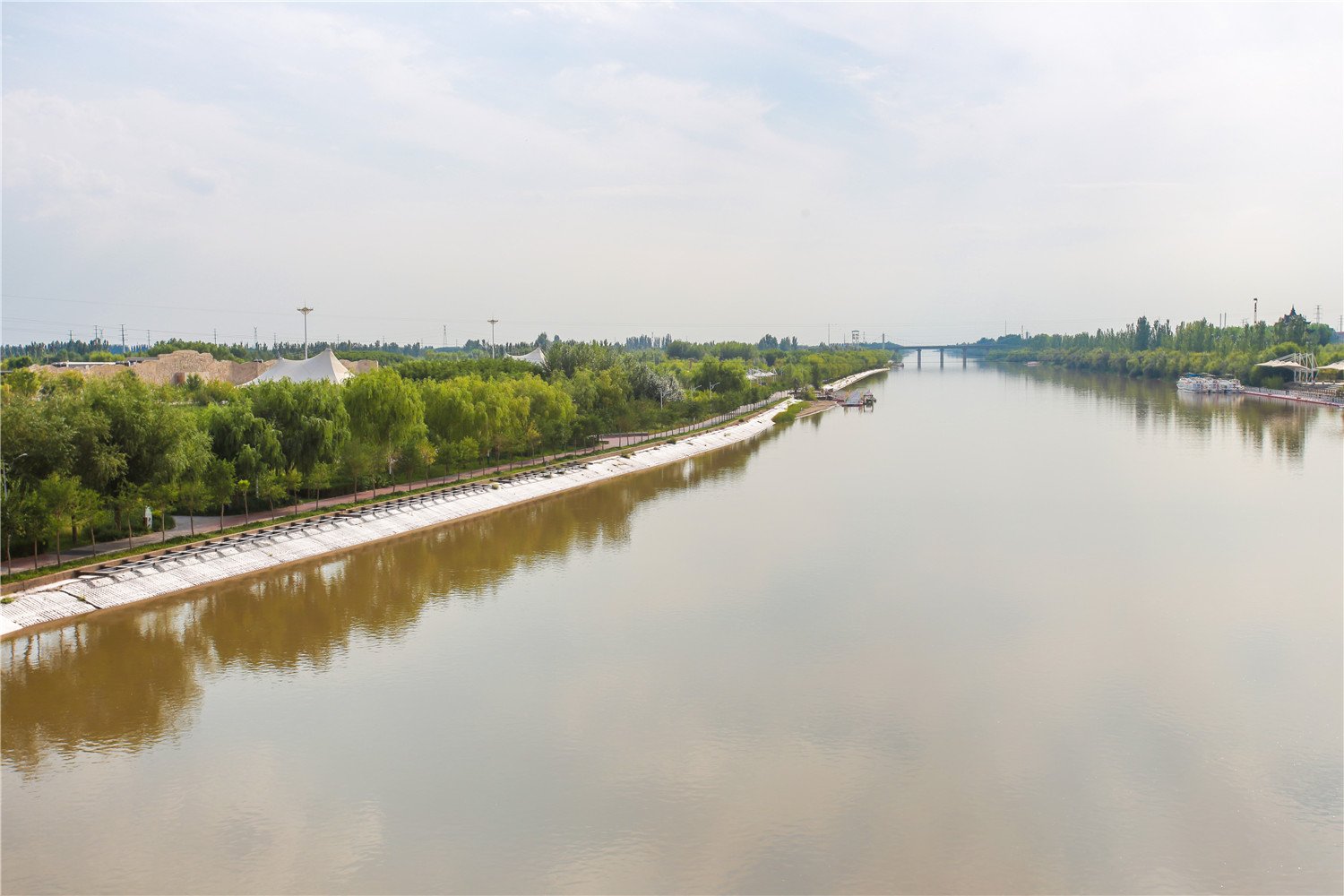
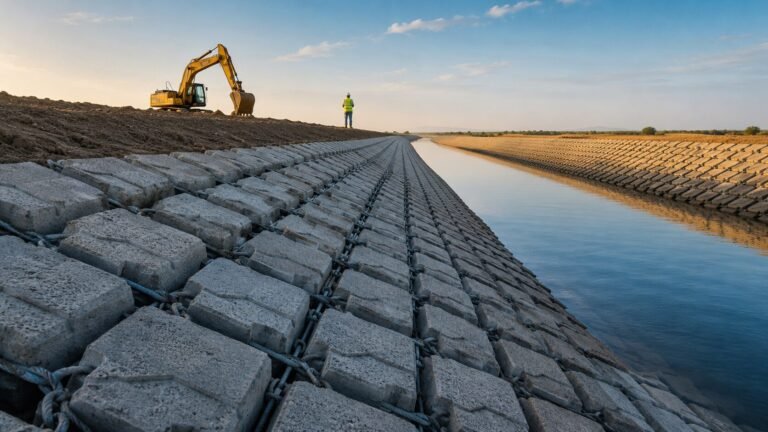
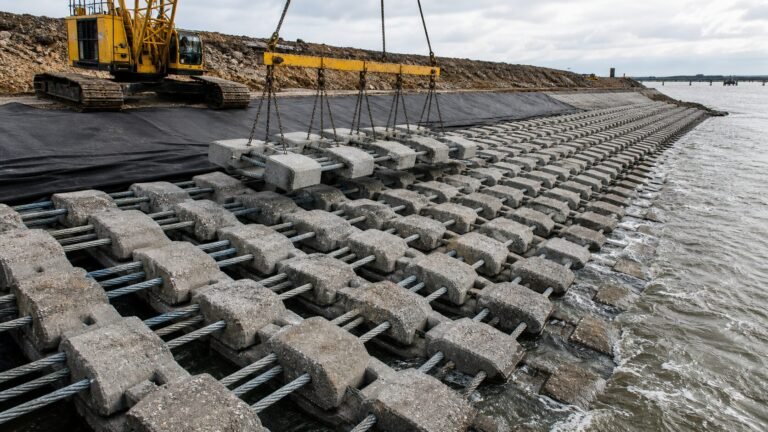
At its simplest, an articulated concrete mattress is a prefabricated panel of individual precast concrete blocks held together by a network of tensioned steel cables or high-tenacity rope. The word “articulated” is the key: each block can rotate slightly relative to its neighbours, which lets the entire mattress bend and conform to irregular substrate profiles — curved riverbanks, sloping embankments, or uneven seabed terrain — without cracking or losing structural integrity.
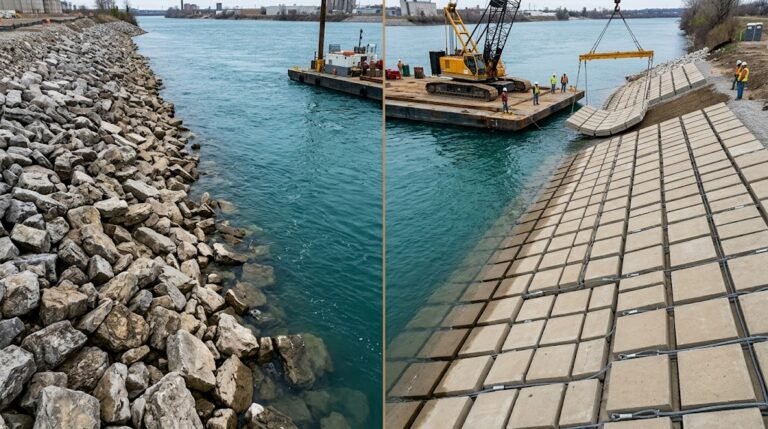
That flexibility is what separates ACM revetment from older rigid concrete lining approaches. A cast-in-place concrete lining is monolithic; when the substrate settles or scours locally, the slab cracks and then fails catastrophically. An ACM accommodates differential movement. Blocks can drop individually into shallow voids, and the cable network redistributes the loading so the mattress maintains coverage.
The hydraulic performance mechanism is also worth understanding clearly. Each block acts as an individual armor unit, and the cable tension creates a pre-stressed matrix that resists uplift forces generated by high-velocity flow. Block-to-block contact transfers lateral loads across the mat, preventing progressive displacement. This is fundamentally different from loose riprap, where individual stone movement is the primary failure mode.
Standard block dimensions across the industry typically range from 300 × 200 × 100 mm for lightweight channel applications up to 600 × 400 × 200 mm for high-velocity or deep-water installations. Block concrete compressive strength generally targets 40–50 MPa (C40/50), with water absorption limits below 5% for submersed applications. Cable systems use 316-grade stainless or hot-dip galvanised wire rope, typically 6 mm to 12 mm diameter, with a minimum breaking load of 50 kN per cable run.
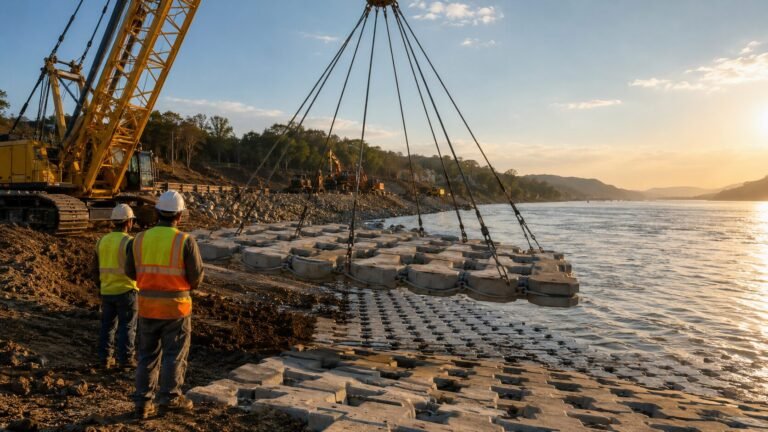
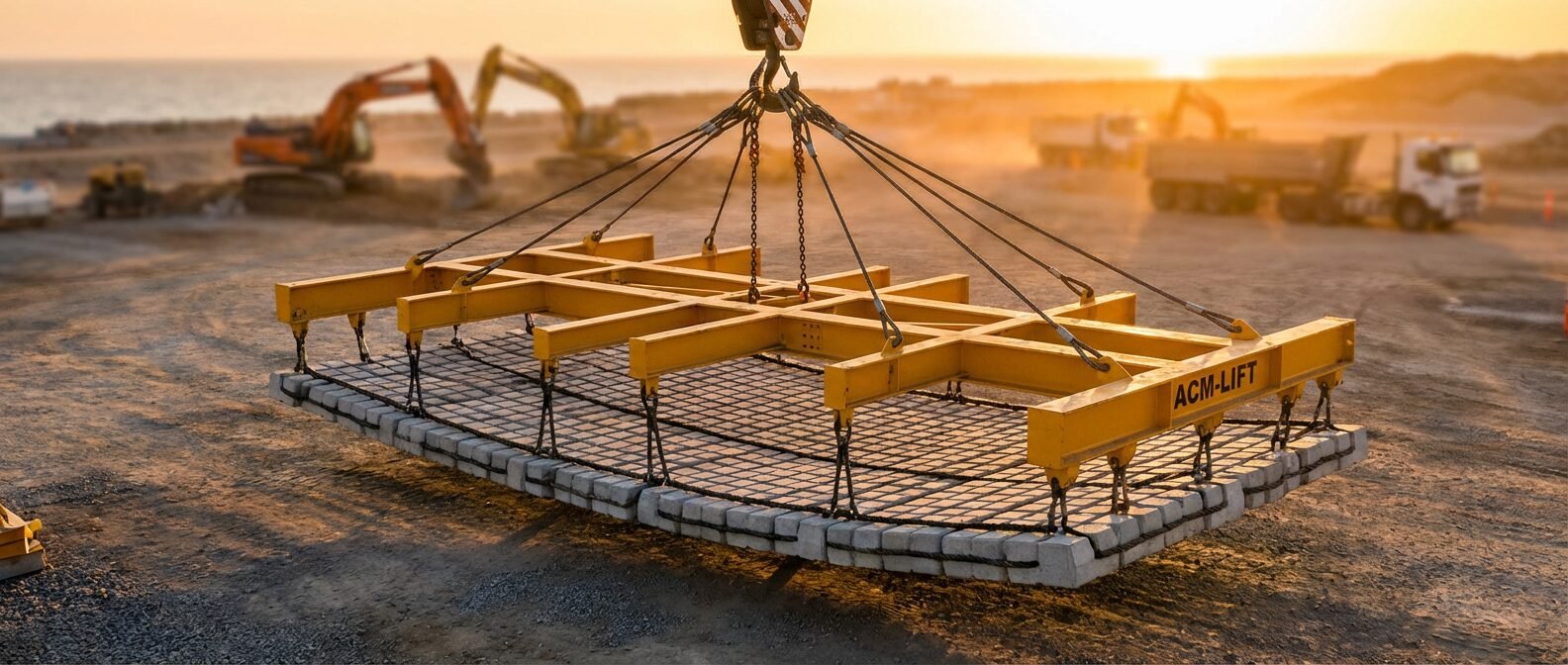
Mattress panels are typically manufactured in standard widths of 2.0 m to 4.0 m and lengths of 4.0 m to 20.0 m, with unit weights ranging from 50 kg/m² for thin channel liners up to 400 kg/m² for offshore pipeline protection covers. These parameters directly govern the installation method — lighter mats can be placed by excavator with a spreader bar, while heavier offshore panels require crane barge deployment.
How the Block and Cable System Works
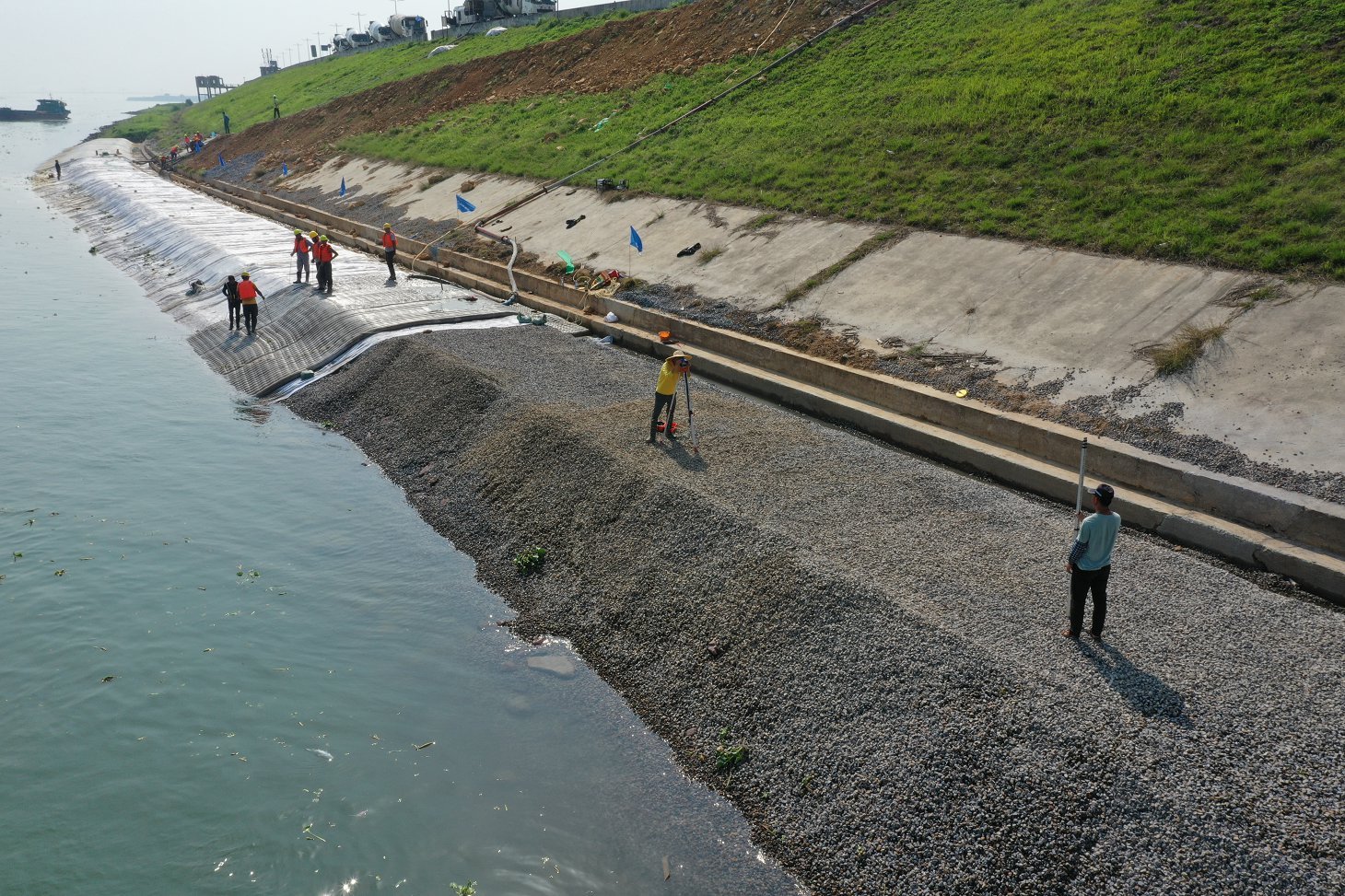
Understanding the structural mechanics of the cable system is critical when evaluating manufacturer specifications or preparing hydraulic design calculations.
Each block is cast with one or more cable-routing channels — either a continuous through-hole or a pre-formed groove at the block perimeter. Cables run in two perpendicular directions (longitudinal and transverse) to create a grid, with individual blocks threaded onto the cable before crimping or swaging the end terminations. The cable spacing — typically 300 mm to 500 mm centre-to-centre — determines both the mattress flexibility and its resistance to individual block loss.
Hydraulic uplift resistance is the governing limit state for most applications. As flow velocity increases, the Bernoulli pressure differential between the top and bottom surfaces of each block generates an upward force. The cable tension must be sufficient to hold blocks against this uplift before friction and block weight take over. Manufacturers typically rate their systems using a critical velocity parameter derived from physical flume testing — most certified ACM revetment systems in the 100 mm to 150 mm block thickness range achieve critical velocities between 3.5 m/s and 5.5 m/s.
The Unified Facilities Guide Specifications for concrete and rehabilitation works provide one benchmark framework that engineers can cross-reference when assessing ACM structural specifications against project-specific loading scenarios. Similarly, federal bridge infrastructure guidelines — including the Alaska Bridges and Structures Manual — reference scour protection design procedures that directly apply to ACM selection for bridge pier and abutment applications.
Filter layer interaction is the other critical mechanical consideration. ACMs do not function in isolation — they rely on a correctly specified geotextile or granular filter to prevent substrate particle migration through the inter-block gaps. If the filter is under-designed, the substrate pipes (erodes through the gaps), the blocks lose support, and the mat sags locally. The standard design approach follows the Terzaghi filter criteria or geotextile filter design per AASHTO M 288, matching the O95 opening size of the geotextile to the D85 of the substrate material.
The cable termination system also warrants scrutiny during procurement. Swaged cable ferrules are the industry standard for permanent installations; crimped systems are acceptable for temporary or recoverable deployments. End-termination hardware should be inspected for corrosion protection — galvanising or stainless steel — to match the expected design life. Most permanent ACM installations are designed for a 25–50 year service life, which demands robust termination corrosion resistance particularly in marine or brackish environments.
4 Main ACM Types
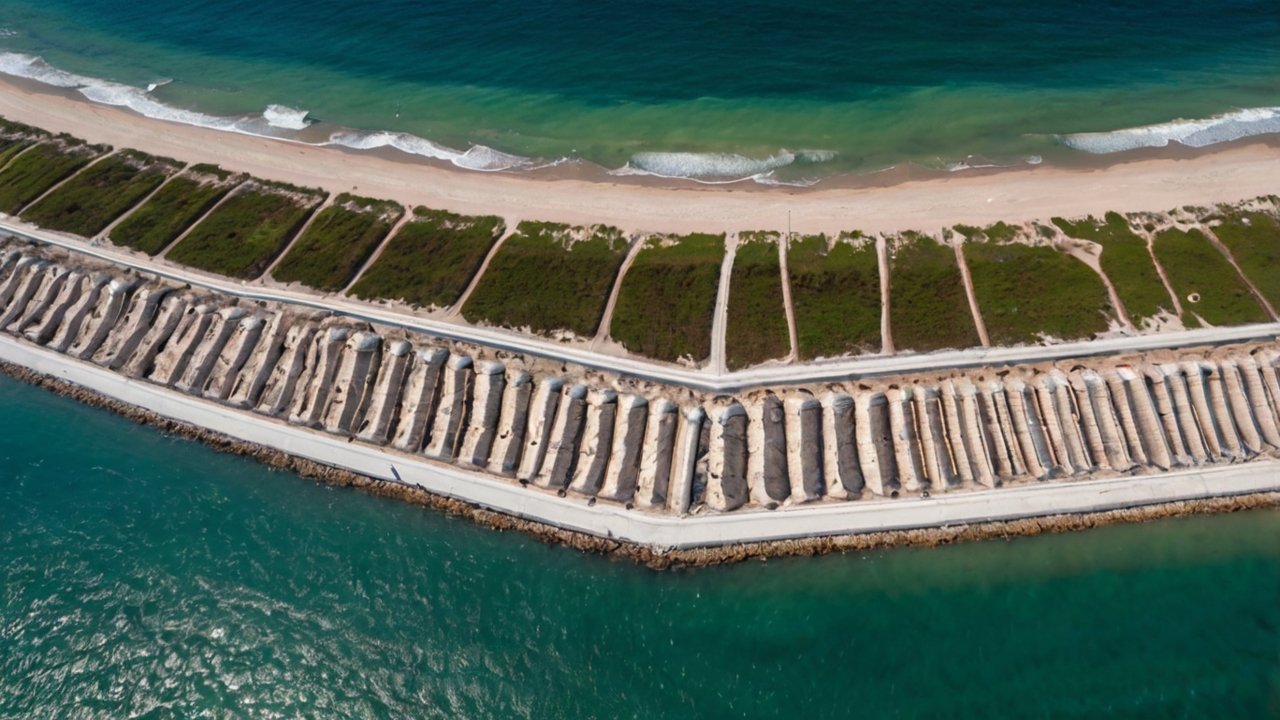
Not all articulated concrete mattresses are the same. The four primary system types each have distinct performance profiles, and specifying the wrong type for your hydraulic conditions is a genuine engineering risk.
Open-Block ACM
Open-block systems leave gaps between adjacent blocks — typically 10–20% of the mattress plan area. These openings allow vegetation to establish over time, improving ecological integration and providing additional resistance through root reinforcement. Open-block ACMs are well-suited to lower-velocity environments (up to approximately 3.5 m/s), flood embankments, and green infrastructure applications where regulatory requirements demand vegetated slope treatments.
For applications where long-term ecological value matters, a vegetated concrete mattress system combines the hydraulic durability of concrete block revetment with engineered inter-block void geometry that supports root penetration and surface revegetation.
Closed-Block ACM
Closed-block systems have minimal inter-block gaps — typically less than 5 mm at the design cable tension. These systems maximise hydraulic resistance and are the specification choice for high-velocity channels, scour-critical bridge piers, and tidal environments. Critical velocities of 5.0–6.0 m/s are achievable with 150 mm block thickness in closed-block configuration.
Filter Point ACM
Filter point systems incorporate a geotextile filter fabric bonded directly to the underside of the concrete block matrix. This eliminates the separate filter layer installation step, reduces on-site operations, and ensures filter continuity across the mat. They’re particularly valuable in subaqueous installations where placing and securing a separate geotextile in flowing water is operationally difficult. For detailed installation procedures, the filter point concrete mattress pumping guide provides step-by-step field operations guidance.
Uniform Section / Articulated Slab Mattress
Rather than individual blocks, these systems use a series of precast concrete slabs connected by cables at the slab edges. Slab dimensions are typically larger (600 mm × 400 mm and above) and provide a smoother surface profile, making them preferred for pipeline spanning support and propeller wash protection in port environments. For a side-by-side comparison of when to specify slab versus block systems, the articulated concrete slab mattress specification guide covers the key decision criteria.
Key Applications
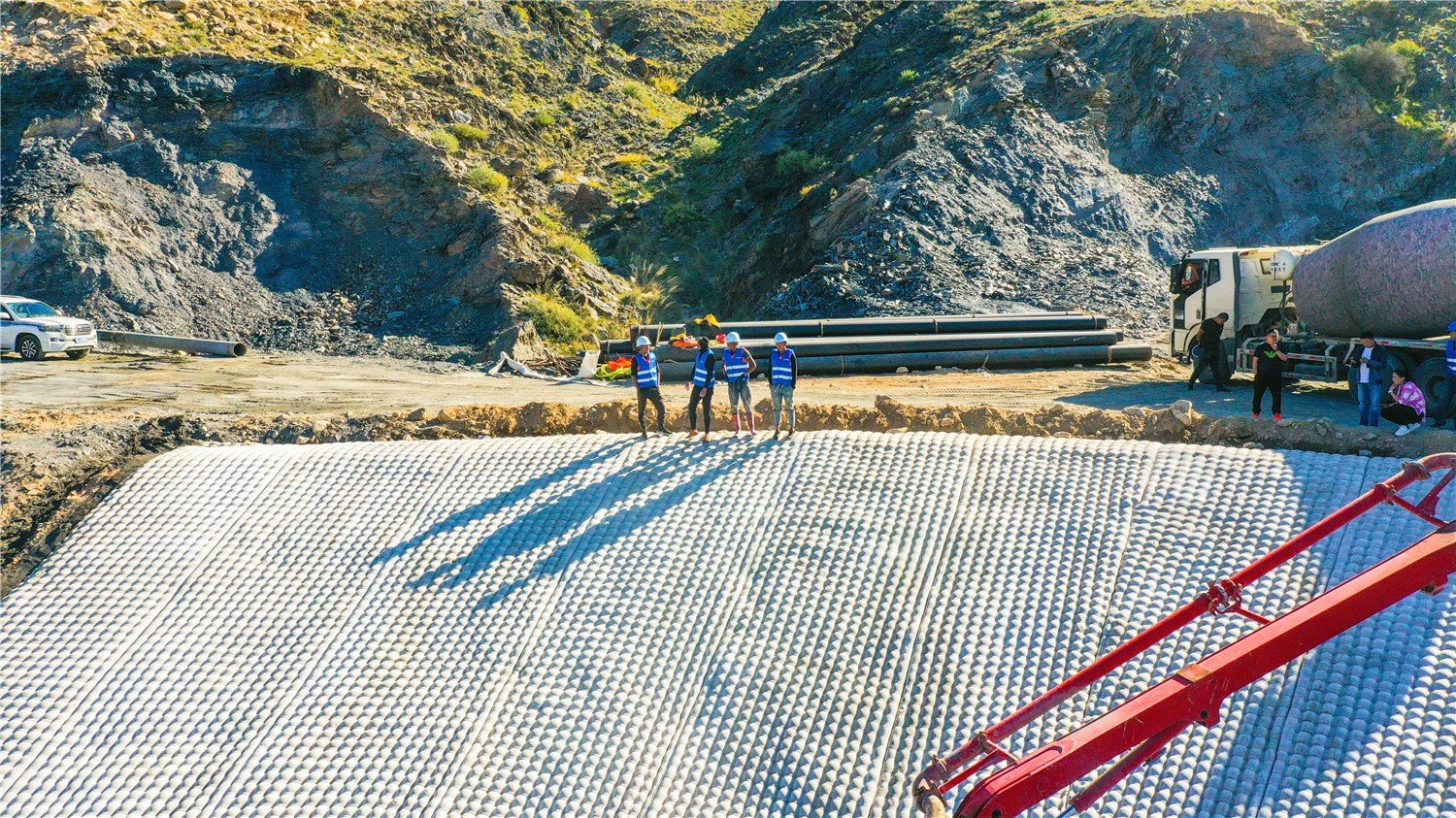
ACM systems are genuinely versatile, but there are application categories where they deliver a clear performance and lifecycle cost advantage over alternatives.
Riverbank and Embankment Revetment
This remains the core application. ACM revetment systems protect eroding riverbanks where flow velocities exceed the capacity of grass, bioengineering, or riprap approaches. Typical design conditions involve sustained velocities of 2.5–5.0 m/s with cyclical wet-dry exposure. The mattress is installed from the low-water line up the bank face, with the toe anchored into a cut-off trench or pinned to the bed.
Bridge Pier and Abutment Scour
Scour around bridge foundations is the leading cause of bridge failures globally — a pattern well-documented in federal and state bridge engineering guidance. ACMs placed around pier footings suppress the turbulent horseshoe vortex mechanism that drives local scour. Per HEC-18 guidance, the mattress must extend a minimum of 2× the pier width laterally and be weighted sufficiently to resist the accelerated velocities in the contraction zone.
Culvert Outfall Scour
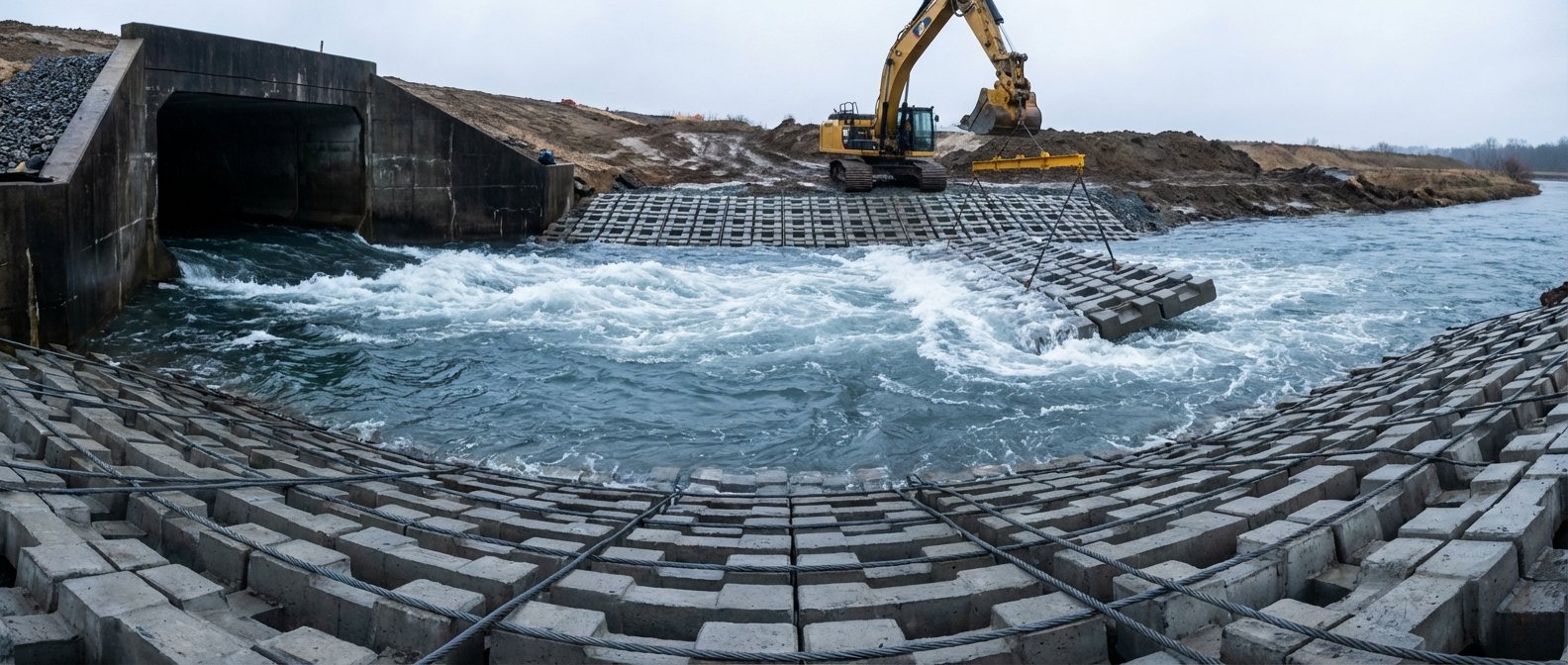
The concentrated discharge at culvert outlets creates severe localised scour. ACM aprons are one of the most cost-effective protection strategies, designed in accordance with HEC-14 energy dissipation principles. The culvert outfall scour protection ACM guide covers apron sizing methodology and mattress specification for common culvert configurations.
Canal Lining
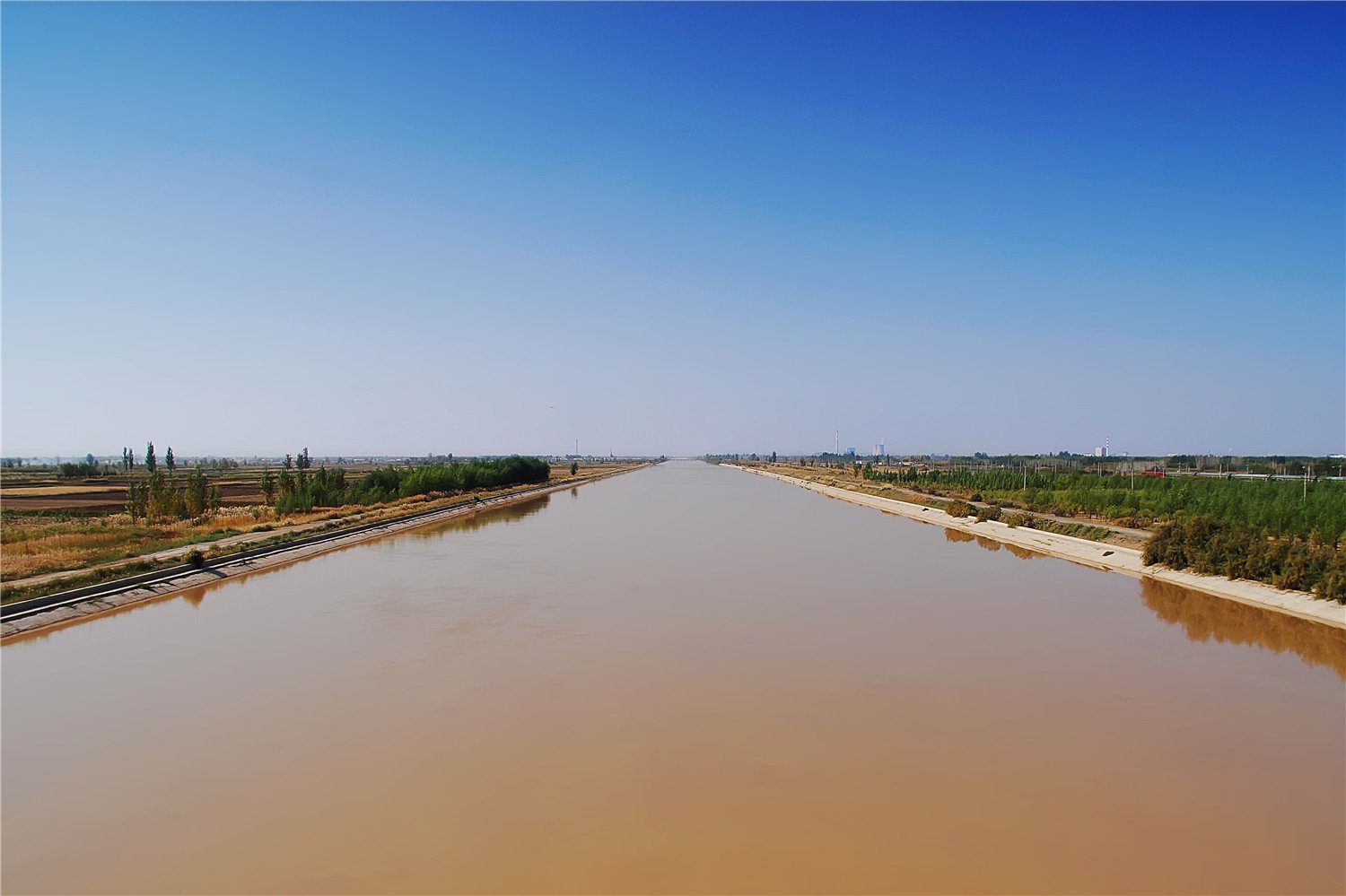
Irrigation and drainage canals benefit from ACM lining where flow velocities exceed soil stability thresholds. The flexibility of the mattress accommodates the slight differential settlement that occurs in expansive or saturated canal embankments — a failure mode that rigid concrete lining handles poorly.
Offshore Pipeline and Cable Protection
In marine environments, ACMs protect subsea pipelines from hydrodynamic loading, trawl gear interaction, and anchor drag. Panel weights in the 200–400 kg/m² range are typical for these applications, with installation by remotely operated crane barge or diver-assisted placement.
ACM vs Alternative Scour Protection Methods
Engineers evaluating scour protection options need an honest comparison — not a sales pitch. Here’s how ACM stacks up against the primary alternatives across the parameters that matter for specification decisions.
| Parameter | Articulated Concrete Mattress | Riprap / Rock Armour | Gabion Mattress | Geobag / Sandbag System |
|---|---|---|---|---|
| Max design velocity | 6.0 m/s | 4.5 m/s (D50 = 300 mm) | 3.5 m/s | 2.5 m/s |
| Conformability to substrate | Excellent | Good (self-adjusting) | Moderate | Poor |
| Installation on slopes >1:1.5 | Yes (cable retention) | Limited | Limited | No |
| Recoverable / reusable | Yes | No | Partial | No |
| Filter layer required | Integral option available | Always | Always | Yes |
| Vegetation potential | Yes (open-block) | Partial | Limited | No |
| Maintenance frequency | Low (25–50 yr design life) | Moderate (stone loss) | High (wire corrosion) | High |
| Subaqueous installation | Yes (crane barge) | Yes | Difficult | Very difficult |
| Relative installed cost | Moderate-High | Low-Moderate | Moderate | Low |
The comparison table makes one thing clear: ACM systems carry a higher unit cost than riprap but outperform it on slope stability, velocity rating, and long-term maintenance. For projects where access for ongoing maintenance is constrained — remote river crossings, subsea installations, or bridge piers with high consequence of failure — that lifecycle economics argument is compelling.
Gabion systems corrode. Wire baskets in saline or acidic environments typically reach the end of useful service life in 15–25 years, well below the design life of the infrastructure they protect. Riprap is cost-effective on gentle slopes with moderate velocities but simply cannot achieve the hydraulic performance of a properly specified ACM at velocities above 4 m/s without impractically large stone sizes.
Transportation infrastructure designers in particular should note that infrastructure design documentation for multi-modal systems increasingly reflects longer design lives and reduced maintenance budgets — both trends that favour durable, low-maintenance solutions like ACM over traditional riprap.
ACM Specification Checklist for Project Engineers
Use this checklist when preparing tender specifications or evaluating manufacturer submittals. It’s designed to catch the gaps that show up most frequently in procurement disputes.
Hydraulic Design Parameters
– [ ] Design flow velocity (m/s) — sustained, not peak
– [ ] Flow depth and channel geometry
– [ ] Froude number at design condition
– [ ] Duration of peak hydraulic loading (temporary vs permanent)
Block and Mattress Specifications
– [ ] Block dimensions (L × W × H in mm)
– [ ] Concrete compressive strength (MPa, minimum C40)
– [ ] Water absorption limit (% by mass, max 5% for submerged)
– [ ] Block weight tolerance (±3% typical)
– [ ] Cable diameter and grade (6 mm–12 mm, galvanised or stainless)
– [ ] Minimum cable breaking load (kN per run)
– [ ] Cable spacing (longitudinal and transverse, mm)
– [ ] Mattress panel dimensions and weight (kg/m²)
Testing and Certification Requirements
– [ ] Hydraulic flume test report (velocity and flow conditions tested)
– [ ] Concrete block compression and absorption test results
– [ ] Cable tensile test certificates
– [ ] Third-party certification (DNV-GL, or equivalent)
For a full breakdown of the relevant test standards, see the ACM hydrodynamic testing and ASTM standards guide, which covers the specific flume test protocols and documentation requirements.
Filter Layer Specifications
– [ ] Geotextile type (woven/nonwoven) and grade
– [ ] O95 opening size relative to substrate D85
– [ ] Tensile strength and puncture resistance
– [ ] Integration method (bonded integral vs separate layer)
Installation and Handling
– [ ] Lifting frame or spreader bar specification
– [ ] Maximum mattress weight per panel (crane lift plan)
– [ ] Anchor trench depth and backfill specification
– [ ] Overlap requirements at panel joints (minimum 300 mm typical)
Manufacturer Qualification
– [ ] Production capacity and lead time confirmation
– [ ] Quality management certification (ISO 9001)
– [ ] Reference project list with comparable applications
– [ ] Sample panel provision for pre-qualification inspection
One manufacturer worth including in your long-list evaluation is HydroBase, which produces a comprehensive range of ACM systems from its China facility. Their articulated concrete mattress product range covers standard closed-block, open-block, and filter point configurations, and their technical team can provide hydraulic calculation support and product submittals formatted for international tender documentation. For projects with complex hydraulic loading, their flume-tested velocity rating documentation aligns with HEC-23 and DNV-GL requirements.
What distinguishes capable ACM manufacturers from commodity suppliers isn’t block geometry alone — it’s cable termination quality, concrete mix consistency across production batches, and the ability to provide genuine third-party test data rather than specification sheets that self-reference. Ask any prospective supplier to provide actual flume test reports, not just stated velocity ratings, and watch how they respond.
Frequently Asked Questions
Q: What is the standard block size for an articulated concrete mattress?
Standard ACM block sizes range from 300 × 200 × 100 mm for low-to-medium velocity channel lining applications up to 600 × 400 × 200 mm for high-velocity or offshore protection systems. Block thickness is the primary parameter governing velocity rating — thicker blocks provide greater submerged weight and uplift resistance. Engineers should specify block dimensions based on hydraulic flume test data, not manufacturer velocity claims alone.
Q: What is the difference between articulated concrete mattress and riprap for scour protection?
ACMs are prefabricated flexible panels with a predictable, tested velocity rating up to 6.0 m/s; riprap is loose stone with a velocity rating that depends entirely on stone size and gradation, typically capped around 4.5 m/s for practical stone sizes. ACMs perform better on steep slopes (steeper than 1:1.5), are recoverable and reusable, and can integrate filter fabric. Riprap has lower upfront material cost but higher long-term maintenance needs.
Q: How long does an articulated concrete mattress last in service?
A correctly specified and installed ACM system has a design service life of 25–50 years in most applications. Longevity depends primarily on cable corrosion resistance (316 stainless or hot-dip galvanised wire rope for marine environments), concrete quality (C40 minimum, water absorption below 5%), and the absence of UV degradation for exposed polypropylene rope systems. Galvanised steel cable in submerged freshwater environments routinely achieves the full 50-year service life with no maintenance intervention.
Q: What is the typical MOQ and lead time for ACM procurement?
Minimum order quantities vary by manufacturer, but for custom-specified ACM panels, a typical MOQ is 500 m² to 1,000 m² of mattress. Standard production panels may be available in smaller quantities. Lead times from a well-equipped manufacturer with in-house precast facilities typically run 4–8 weeks from drawing approval to despatch, depending on panel size, block configuration, and current production load. For projects on critical programmes, confirm production slot availability before finalising programme.
Q: Do articulated concrete mattresses require a geotextile filter layer?
Yes — in almost all applications. Without a correctly sized filter layer beneath the mattress, substrate particles migrate through inter-block gaps under hydraulic gradient, progressively undermining the blocks and causing mat subsidence. The exception is filter point ACM systems, which incorporate a geotextile bonded to the underside of the panel, eliminating the need for a separate filter placement operation. This is particularly advantageous for subaqueous installation where separate geotextile placement in flowing water is difficult to execute and inspect.
Download the ACM Specification Package
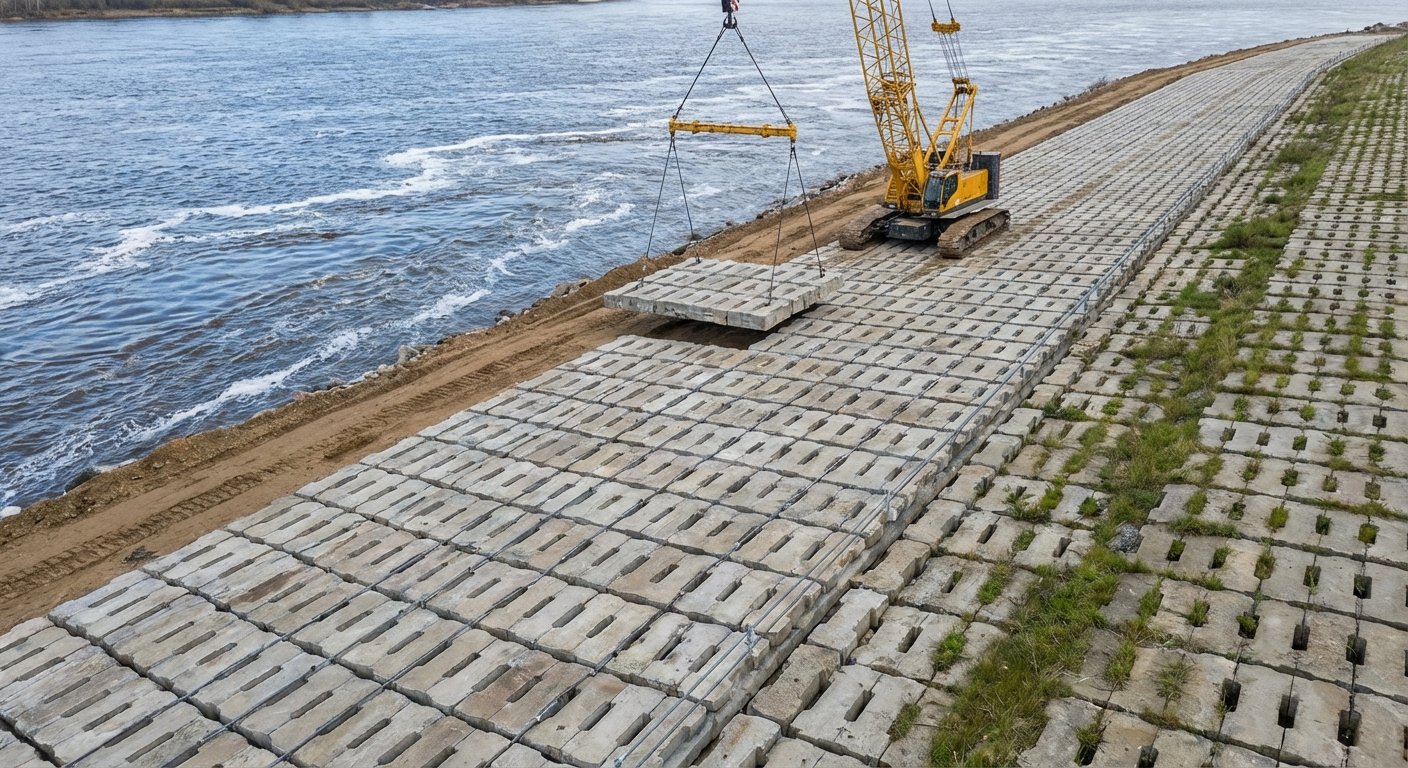
If you’re at the specification or procurement stage, the next practical step is getting manufacturer-level technical data into your hands before the tender deadline. HydroBase offers a complete ACM specification package — including block geometry drawings, cable schedule, flume test velocity certification, and geotextile filter recommendation — formatted for direct inclusion in contract document submittals.
Request the ACM technical specification package via the articulated concrete mattress product page — include your design velocity, site geometry, and project timeline, and the technical team will return a product recommendation with supporting calculations within 24 hours.
Conclusion
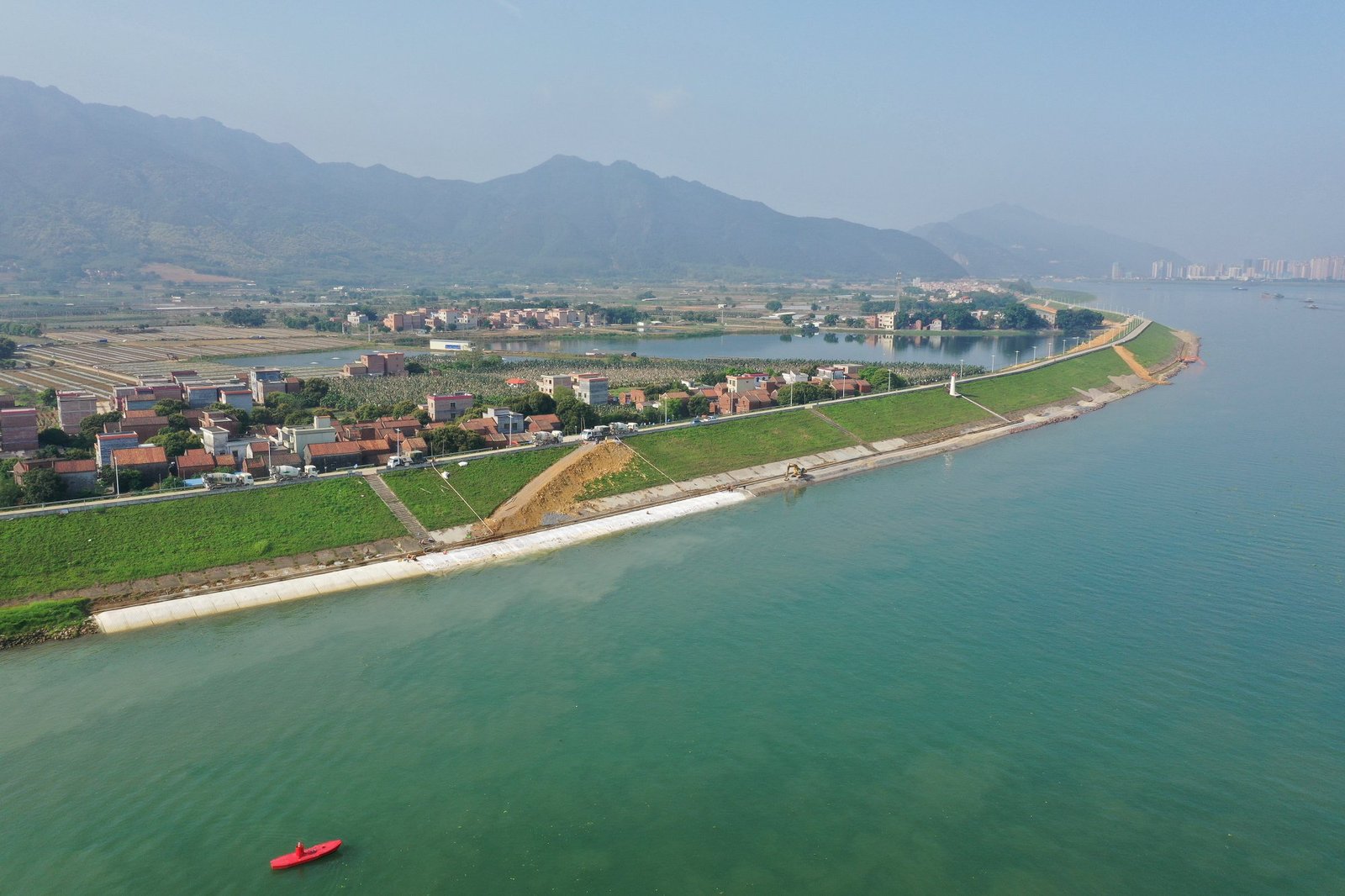
Articulated concrete mattresses occupy a well-defined niche in the scour protection toolkit — flexible enough to conform to complex substrate geometry, heavy enough to resist high-velocity hydraulic loading, and durable enough to justify their installed cost over a 25–50 year service life.
Need a concrete mattress solution for your project?
HydroBase provides end-to-end concrete mattress engineering & installation services — from hydraulic design and factory-direct ACM supply to on-site supervision and post-project inspection. Trusted by civil engineers in 50+ countries.