China ACM Manufacturers vs Global Suppliers: Quality, Certification, and Cost Compared
Quick Answer: Chinese concrete mattress manufacturers typically offer 30–50% cost savings over European equivalents with comparable performance when ISO 9001 certified and third-party inspected. The real differentiators aren’t geography — they’re concrete compressive strength (≥35 MPa), cable specification, geotextile grade, and factory QC protocols. Evaluate these parameters, not the country of origin.
—
Procurement managers evaluating ACM supply chains face a genuinely difficult question: does sourcing from a concrete mattress manufacturer in China introduce unacceptable quality risk, or is the cost differential too significant to ignore? With 18 years working in articulated concrete mattress manufacturing, I’ve watched this debate evolve from skepticism toward pragmatic evaluation — and the data increasingly favors informed sourcing over reflexive preference for Western suppliers – you can actually hear when the temperature is perfect.
This article gives procurement teams and project engineers a structured framework to compare Chinese and global ACM suppliers on the metrics that actually matter: material specifications, certification standards, traceable QC, and landed cost.
—
Table of Contents
1. What Chinese Manufacturers Offer
2. What European and Global Suppliers Offer
3. Cost Comparison (Per m² Ex-Works and CIF)
4. Quality Indicators to Look For
5. Certifications That Matter
6. How to Verify a Chinese ACM Factory
7. Frequently Asked Questions
—
What Chinese Manufacturers Offer
China’s ACM manufacturing sector has matured considerably over the past fifteen years. What started as largely domestic infrastructure-focused production has expanded into a sophisticated export market serving civil engineers across Southeast Asia, the Middle East, Africa, and increasingly Europe. Several factors drive this.
Scale and Vertical Integration
Chinese factories typically operate at volumes that justify in-house raw material processing — aggregate crushing, cement blending, cable wire drawing, and geotextile weaving often occur within the same industrial park or supply cluster. That vertical integration compresses lead times and reduces per-unit cost without sacrificing specification control.
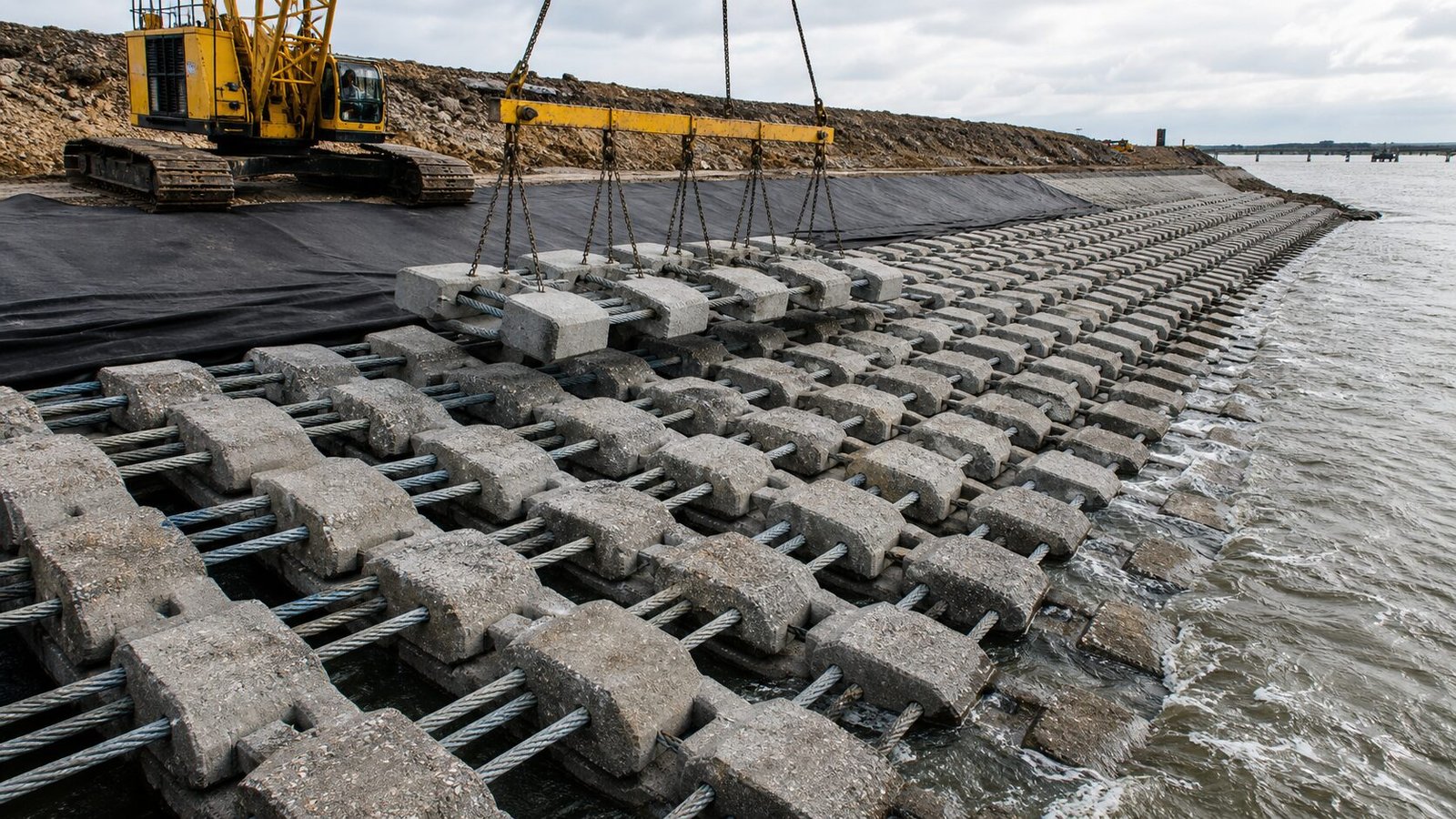
Standard block offerings from major Chinese producers cover the full range: 300×200×100mm through 600×400×200mm, with concrete compressive strengths routinely hitting C35 (35 MPa) to C40 (40 MPa) — adequate for most HEC-23 compliant designs. Mattress panel weights range from 50 to 400 kg/m², and velocity ratings up to 6.0 m/s are achievable with appropriate block thickness and cable configuration.
Cable and Connection Systems
The two dominant connection methods — galvanised steel cable and UV-stabilised polypropylene rope — are both available from Chinese manufacturers. Cable diameter typically runs 6mm to 12mm, with galvanised wire rope meeting GB/T 9944 or equivalent international standards. For marine or aggressive chemical environments, 316L stainless steel cable is offered at a premium.
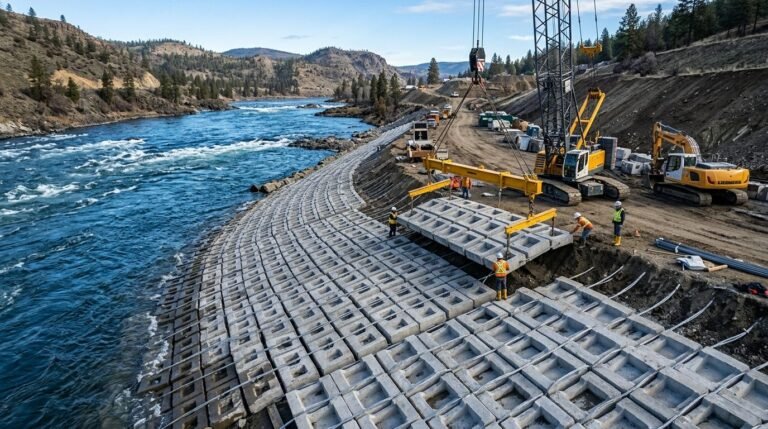
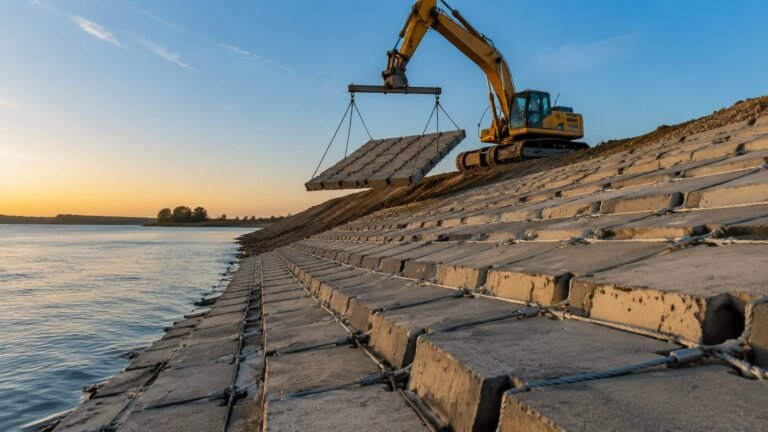
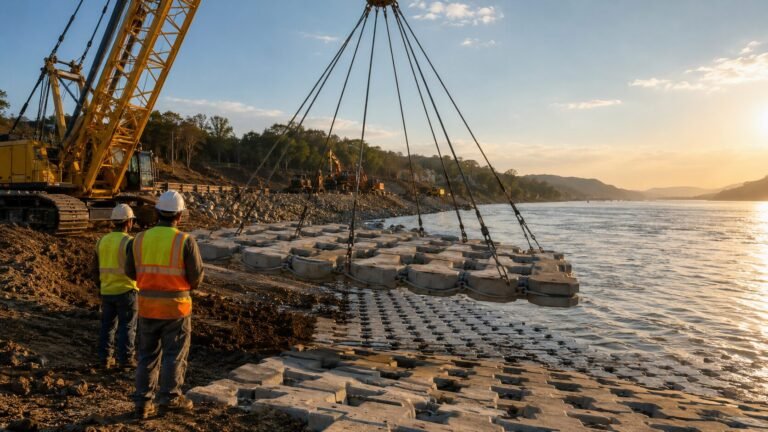
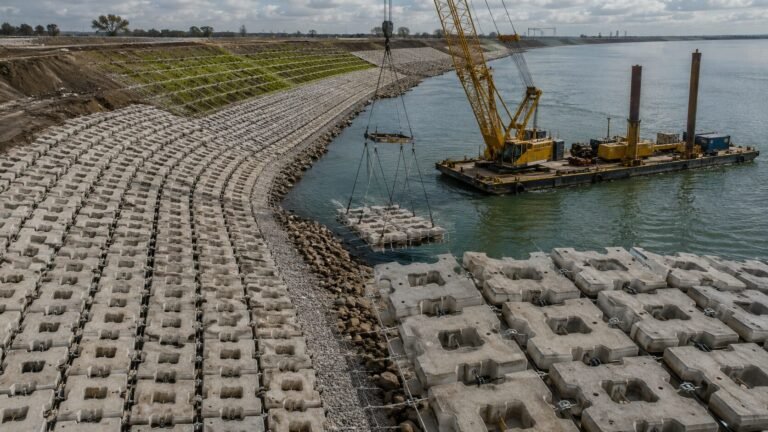
Block spacing matters for hydraulic performance: Chinese producers offer open-pattern (30–40% void ratio) and closed-pattern configurations depending on whether vegetation establishment or pure erosion control is prioritised. Engineers specifying articulated concrete mattress systems for riverbank and canal lining projects should confirm the void ratio is matched to their flow velocity and substrate conditions.
Customisation Capability
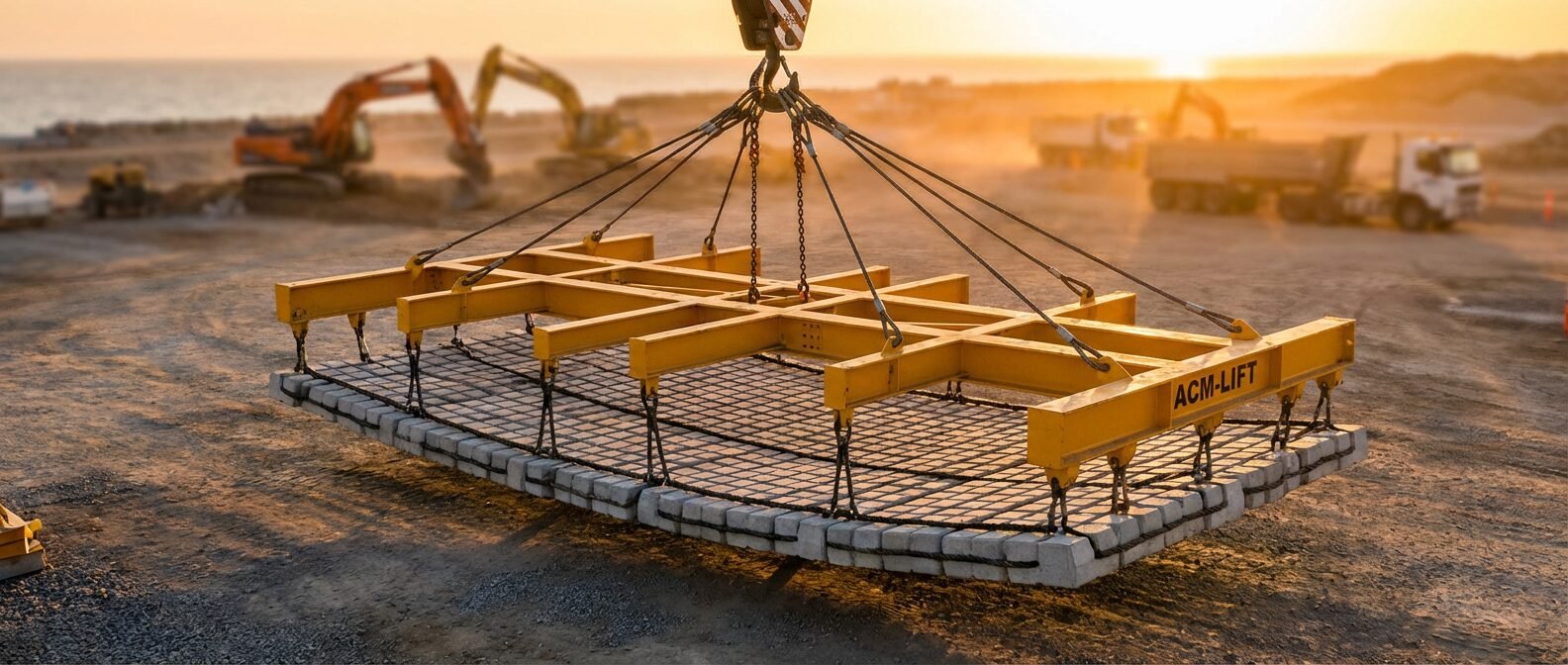
Flexible mould capacity is genuinely a Chinese manufacturing strength. Bespoke block profiles, tapered mattress panels for curved revetments, and non-standard mattress widths (up to 6m) can be accommodated with tooling lead times of four to eight weeks — something most European manufacturers charge significant premiums for.
—
What European and Global Suppliers Offer
European and North American ACM suppliers — primarily based in the UK, Netherlands, Germany, and the US — built their reputations on rigorous independent certification, long track records in demanding hydraulic environments, and proximity to major infrastructure clients.
Established Standards Pedigree
Global suppliers have operated under CE marking frameworks, BS EN standards, and ASTM specifications for decades. Their design manuals, velocity rating methodologies, and installation procedures are extensively documented and cross-referenced with regulatory bodies. For projects in regulated EU jurisdictions or federally funded US infrastructure, this documentation trail has genuine procurement value.
Technical Support Infrastructure
Most established global suppliers maintain in-house hydraulic engineering teams capable of providing site-specific design support, Froude number calculations, and scour depth assessments. For complex bridge pier scour protection or offshore pipeline spanning applications, that consultancy capacity can reduce the burden on a project’s own engineering team.
Lead Time Realities
Here’s where the picture gets complicated. European suppliers often operate on 12–20 week lead times for large orders, and bespoke configurations can push that further. For projects with tight programme constraints, that’s a real risk. Chinese manufacturers regularly deliver standard mattress panels within 6–10 weeks ex-works, with CIF delivery to major ports adding two to four weeks depending on destination.
After-Sales and Technical Response
Time zone differences and language barriers are practical realities when working with Chinese factories — though these have improved substantially. Most serious Chinese exporters now maintain English-speaking technical sales teams and offer 24-hour quote response. European suppliers, naturally, have stronger proximity advantages for European project teams.
—
Cost Comparison (Per m² Ex-Works and CIF)
Cost comparisons in ACM procurement are frequently oversimplified. Headline price-per-m² comparisons miss freight, port handling, import duties, and inspection costs. The table below presents a realistic landed cost framework for a 500 m² order of 100mm-thick standard articulated concrete mattress panels.
| Cost Component | Chinese Manufacturer | European Supplier |
|---|---|---|
| Ex-works price (per m²) | USD 28–42 | USD 65–95 |
| Sea freight (CIF basis) | USD 8–14 | USD 4–8 (shorter routes) |
| Port handling + customs | USD 3–5 | USD 2–4 |
| Third-party inspection | USD 2–4 | Usually included |
| Total landed (per m²) | USD 41–65 | USD 71–107 |
| Indicative saving | ~35–45% | — |
Note: Figures are indicative market ranges based on 2024–2025 procurement data. Actual pricing varies with specification, order volume, concrete grade, and cable type. Spot freight rates fluctuate significantly.
Several factors tighten or widen this gap. Orders below 200 m² reduce the Chinese cost advantage due to minimum ocean freight charges. Conversely, orders above 2,000 m² see the Chinese cost advantage deepen, as larger production runs allow batch pricing on raw materials.
Import duty rates vary considerably by destination country — some markets impose 8–15% duties on precast concrete products from China, which procurement teams must factor into the total cost of ownership calculation.
—
Quality Indicators to Look For
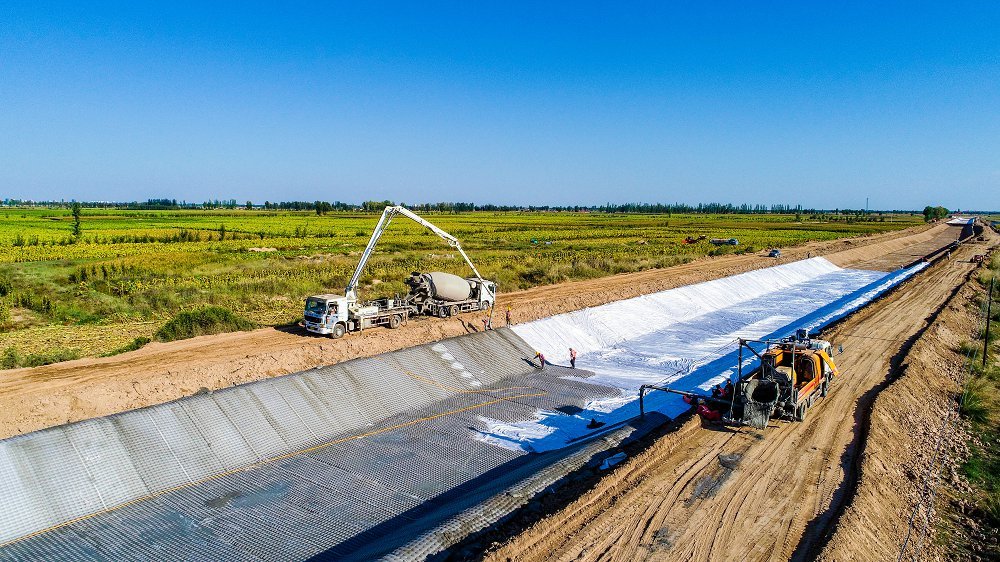
Country of manufacture is a weak proxy for quality. The genuinely predictive indicators are specification compliance and process control — and these can be verified regardless of where the factory sits.
Concrete Compressive Strength
Minimum acceptable compressive strength for hydraulic applications is C30 (30 MPa at 28 days). For high-velocity or abrasive environments, C40 is the appropriate floor. Ask for batch-level cube test certificates — not factory averages. Reputable manufacturers issue individual pour records with date, mix reference, and tested strength values.
Cable Specification and Termination
Cable integrity is the failure point most commonly overlooked in ACM quality assessments. Evaluate: wire diameter (6–12mm), core construction (6×7, 6×19, or 7×7 strand), zinc coating weight (Class A or B per ASTM A603), and termination method (swaged ferrule vs. mechanical clamp). Swaged ferrules provide superior tensile performance — reject any mattress using simple clamp terminations for structural applications.
Geotextile Underlayer Specification
Where a geotextile filter layer is integrated, minimum acceptable parameters for most riverbed scour applications are: tensile strength ≥18 kN/m, CBR puncture resistance ≥2.5 kN, and apparent opening size (AOS/O90) matched to the D85 of the underlying soil. Non-woven needle-punched geotextile in 200–400 g/m² is standard for most ACM underlayer applications. You can read more about concrete mattress scour protection design principles including geotextile filter compatibility.
Block Dimensional Tolerance
Cast tolerances tighter than ±3mm in block height and ±5mm in plan dimensions are achievable and should be specified. Excessive dimensional variation creates stress concentrations in the cable system and reduces the mattress’s ability to conform to irregular substrates.
Void Ratio Consistency
Open-pattern ACM used for vegetated revetment applications should maintain void ratios within ±2% of the design value across a panel. Closed-pattern ACM should achieve full surface coverage with consistent joint width (typically 8–15mm). Inconsistency here points to mould wear or poor process control.
For projects where block profile selection between slab and block configurations affects design, the guidance on selecting articulated concrete slab mattress vs. block formats covers the hydraulic and structural considerations in detail.
—
Certifications That Matter
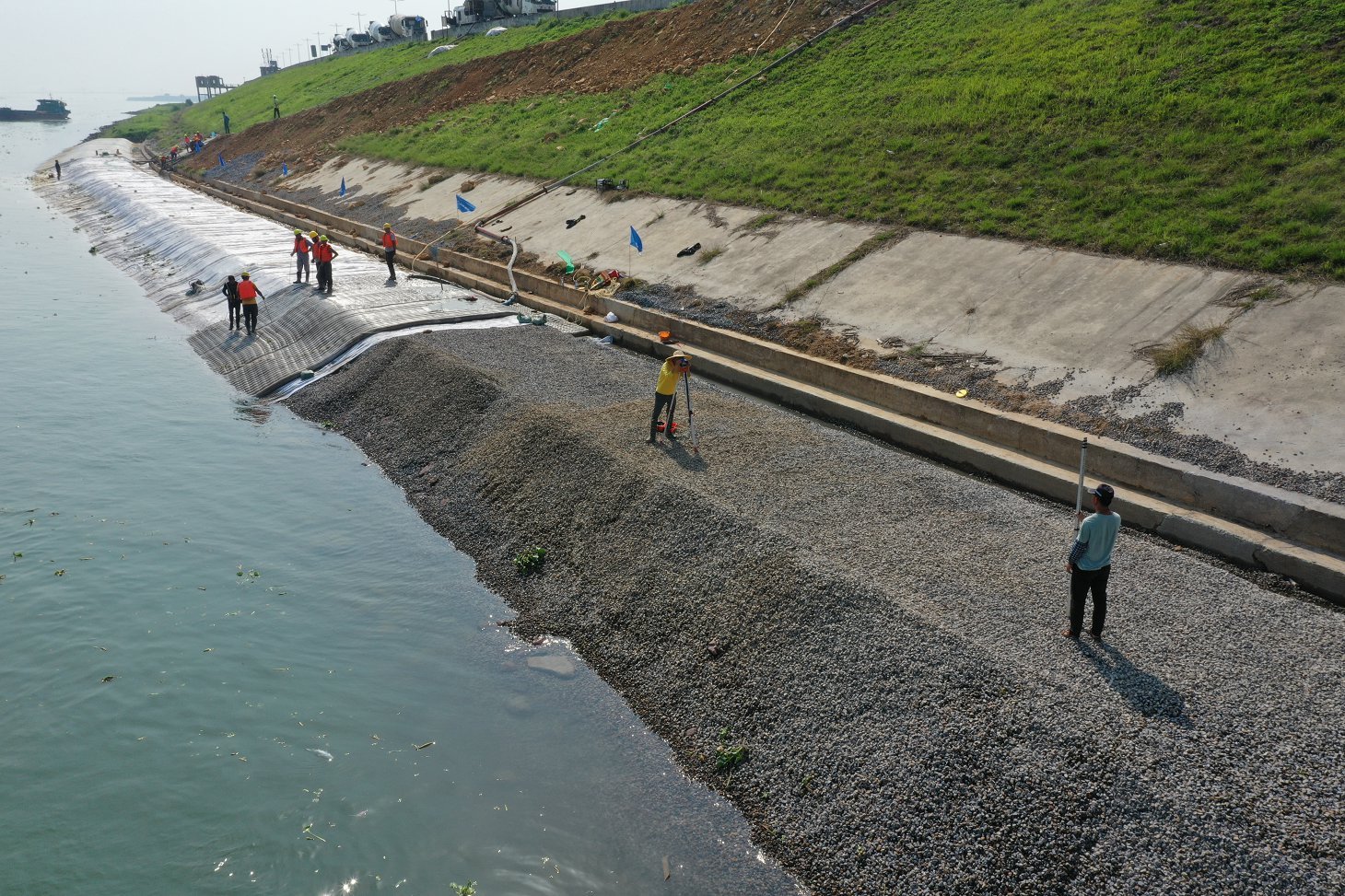
Not all certifications carry equal weight. Here’s a frank assessment of what’s genuinely meaningful versus what’s primarily marketing.
ISO 9001:2015 — Baseline Requirement
ISO 9001 certification means the factory has documented quality management processes subject to external audit. It does not guarantee product performance, but it does indicate that non-conformances are recorded, investigated, and corrected. Treat it as a necessary but insufficient condition for supplier qualification.
CE Marking (EN 13252 / EN 13249)
For products specified under EU construction regulations, CE marking to the relevant geosynthetics standards provides documented performance data on tensile strength, durability, and filtration characteristics. This matters most when geotextile components are integrated into the ACM system.
DNV-GL / Bureau Veritas Product Certification
For offshore pipeline protection and marine applications, third-party product certification from DNV-GL or Bureau Veritas provides independent verification that cable, concrete, and assembly meet specified performance parameters. This goes significantly beyond ISO 9001 and directly validates the product against design values.
ASTM Standards Compliance
For North American projects, ASTM A603 (zinc-coated wire rope) and ASTM C39 (concrete compressive strength testing) compliance should be confirmed and supported by test certificates traceable to individual production batches.
What to Be Cautious About
Generic “quality certificates” or factory-issued conformity declarations without an accredited third-party audit body are not equivalent to the above. Verify the certification body’s accreditation status independently — most national accreditation bodies publish searchable online registers of certified organisations.
—
How to Verify a Chinese ACM Factory
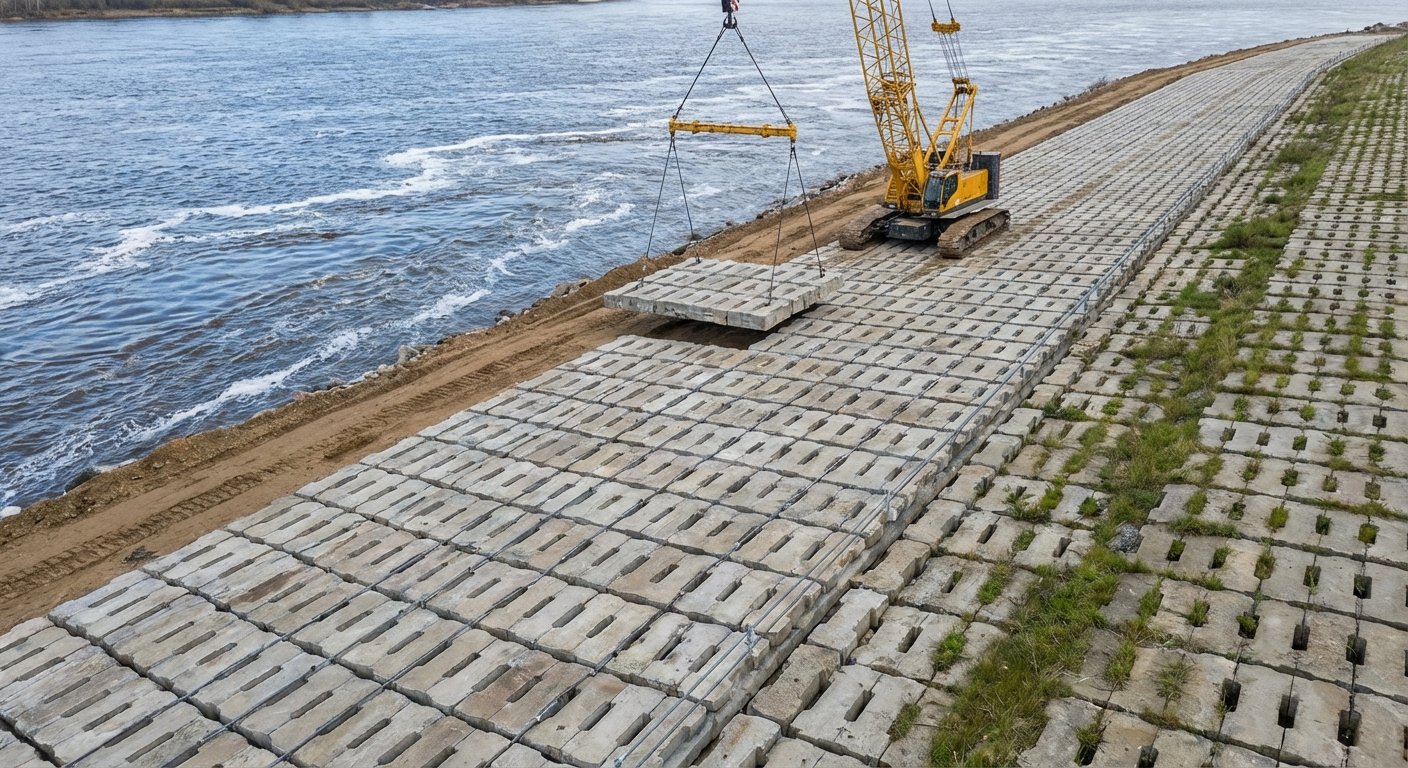
Factory verification is where most procurement processes either add genuine value or skip steps that matter. Here’s a practical framework — drawn from real sourcing due diligence — for qualifying a Chinese articulated concrete mattress factory before placing an order.
Step 1: Document Request Checklist
Before any factory visit or sample request, obtain:
– ISO 9001 certificate (verify issuing body’s accreditation status)
– Last 12 months of concrete compressive strength batch records
– Cable material test certificates (tensile strength, zinc coating weight)
– Geotextile test reports (tensile, CBR, AOS)
– Export history references (project names, countries, volumes)
– Business licence and export licence copies
Step 2: Sample Order Protocol
Order a minimum of 10 panels at full specification before committing to a project quantity. Test concrete cores for compressive strength (min. 3 cores per 10 panels), pull-test cable terminations to 150% of specified working load, and verify geotextile AOS against the supplier’s stated specification.
Step 3: Pre-Shipment Inspection
For orders above USD 50,000 CIF value, third-party pre-shipment inspection is cost-effective risk management. SGS, Bureau Veritas, and Intertek all operate Chinese factory inspection services. A standard ACM inspection protocol covers dimensional checks, concrete cube tests, cable pull tests, and packaging adequacy.
Step 4: Factory Audit (for Strategic Suppliers)
If you’re establishing an ongoing supply relationship, a factory audit — either in-person or via a third-party audit service — covers production capacity, raw material storage, QC lab capability, and workforce competency. Budget approximately USD 1,500–3,000 for a qualified third-party audit.
—
Supplier Evaluation Scorecard
Use this framework to score Chinese and global ACM suppliers on criteria weighted for hydraulic infrastructure procurement.
| Evaluation Criteria | Weight | Minimum Score to Qualify | What to Check |
|---|---|---|---|
| Concrete grade (C35+) | 20% | Batch test certs required | 28-day cube tests, pour records |
| Cable specification | 18% | ASTM A603 or equivalent | Diameter, strand, coating, termination |
| ISO 9001:2015 certification | 15% | Accredited body only | Verify issuing body online |
| Third-party test reports | 15% | SGS / BV / Intertek | Last 6 months minimum |
| Geotextile spec compliance | 12% | AOS + tensile confirmed | EN / ASTM test reports |
| Export references | 10% | ≥3 hydraulic projects | Verify project names + volumes |
| Lead time reliability | 10% | Confirmed in writing | Penalty clause recommended |
For projects where ACM thickness and weight selection drives structural design, the concrete mattress thickness design guide with worked examples provides the underlying calculation methodology.
—
Frequently Asked Questions
Q: Is concrete mattress quality from China comparable to European manufacturers?
Quality from Chinese ACM factories is directly comparable to European production when the same concrete grade (C35–C40), cable specification, and geotextile parameters are specified and verified through third-party testing. Country of origin is not a reliable quality predictor. ISO 9001 certification combined with batch-level test certificates and pre-shipment inspection provides equivalent quality assurance regardless of manufacturing location.
Q: What is the typical minimum order quantity for ACM from a Chinese factory?
Most Chinese ACM manufacturers set MOQ at 100–200 m² for standard panel configurations, though sample orders of 10–20 panels are typically available at a price premium of 15–25% over volume pricing. For bespoke block profiles or non-standard mattress dimensions, MOQ rises to 300–500 m² to cover tooling costs. Orders above 1,000 m² unlock batch pricing on raw materials and typically reduce ex-works cost by 8–15%.
Q: What lead times should procurement teams plan for when sourcing ACM from China?
Production lead time for standard articulated concrete mattress panels from Chinese factories runs 5–8 weeks for orders under 500 m², extending to 10–14 weeks for large project volumes. Add 18–25 days sea freight to European ports, 20–30 days to Middle Eastern ports, and 28–35 days to East African or South American ports. Build a minimum 3-week buffer into programme planning to absorb port congestion or customs delays.
Q: How do I verify that a Chinese ACM supplier’s certifications are genuine?
Verify ISO 9001 certificates by checking the issuing body’s accreditation status through the International Accreditation Forum (IAF) member database. DNV-GL and Bureau Veritas certifications can be verified directly through each organisation’s online certificate lookup tools. For concrete and cable test reports, check that the testing laboratory holds CNAS (China National Accreditation Service) accreditation — CNAS is a signatory to the ILAC Mutual Recognition Arrangement, making its results internationally recognised.
Q: What is the difference between articulated concrete mattress and grouted concrete mattress for pipeline protection?
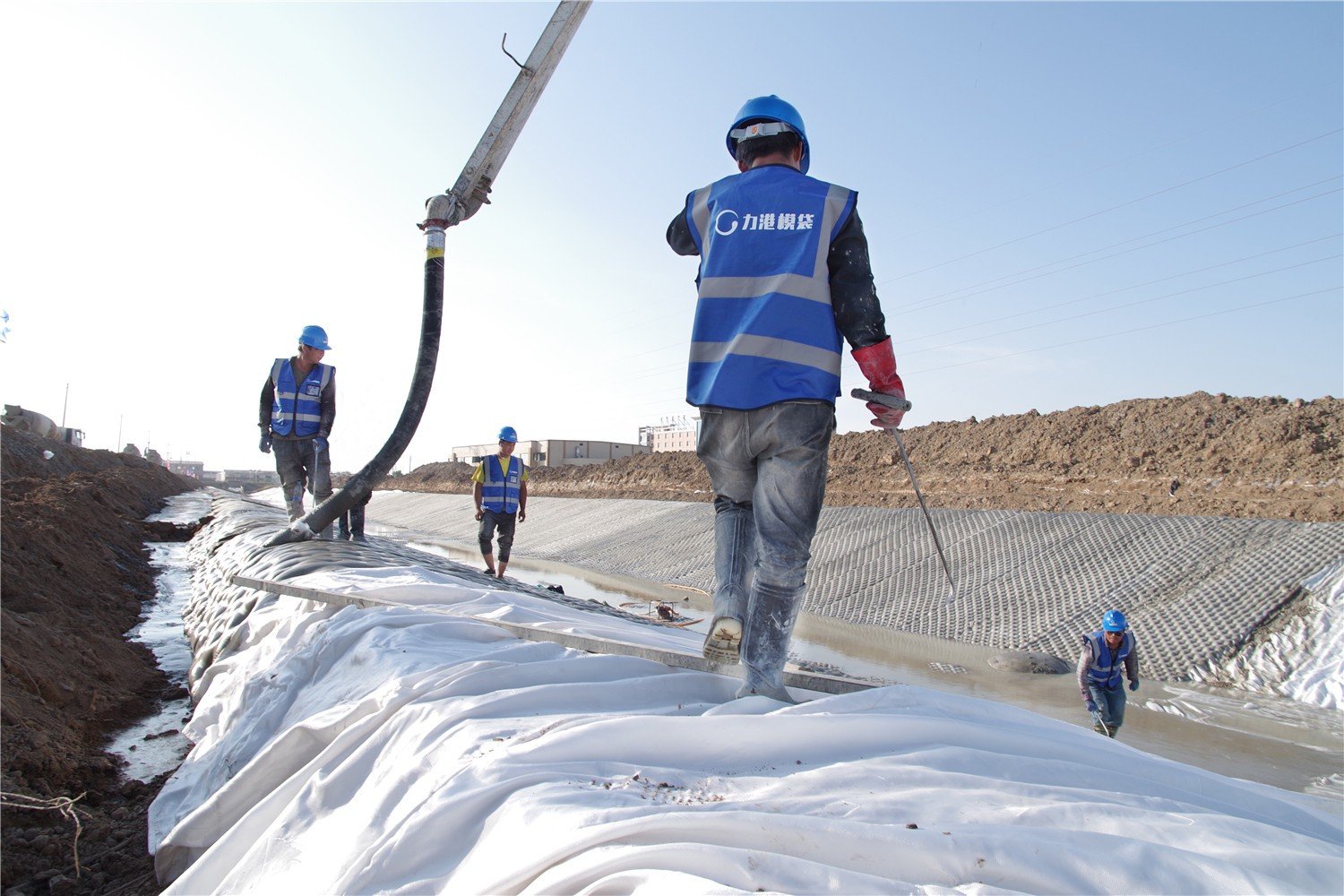
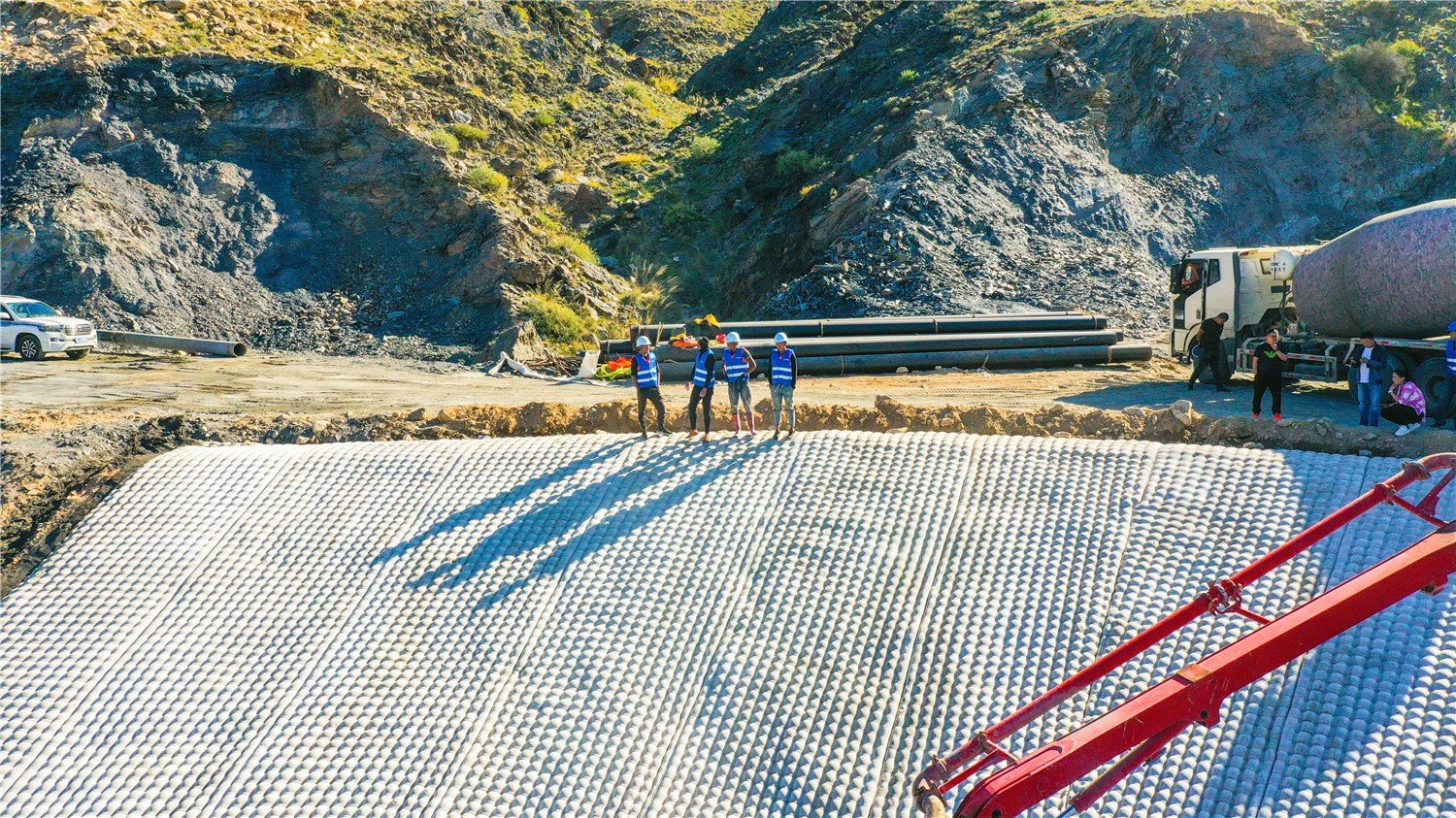
Articulated concrete mattress uses individual precast concrete blocks connected by cable or rope, providing flexibility to conform to irregular substrates and absorb differential settlement — suitable for both riverbed and shallow marine applications. Grouted concrete mattress uses geotextile-encased grout-filled panels, offering higher mass per m² (up to 500mm thickness) and continuous surface coverage preferred for offshore pipeline spanning and seabed stability applications where articulation is less critical than mass.
—
Ready to Benchmark Your ACM Sourcing?
If your next project requires articulated concrete mattress supply and you’re weighing Chinese versus global sourcing options, the evaluation criteria in this article give you a practical starting point — but supplier-specific data is what actually moves a decision forward.
HydroBase manufactures articulated concrete mattress panels to C35–C40 specification with full ISO 9001 QC documentation, batch-level test certificates, and pre-shipment inspection support. Our articulated concrete mattress product range covers standard and bespoke configurations from 100mm to 200mm block thickness, cable-tied and rope-tied options, and open or closed block patterns.
Request a specification-matched quote — provide your flow velocity, substrate type, and project quantity, and we’ll return a technical proposal with pricing within 4 hours during business hours.
—
Conclusion
The China-vs-global ACM sourcing question has a straightforward answer: specification compliance and verified QC matter far more than geography. Chinese manufacturers demonstrably produce ACM meeting international hydraulic engineering standards — the cost savings of 35–45% on landed price are achievable without compromising performance, provided procurement teams apply rigorous evaluation criteria rather than relying on country-of-origin assumptions.
The supplier evaluation scorecard above gives procurement managers and project engineers a defensible, criteria-based framework for qualifying any ACM supplier — Chinese or otherwise. Prioritise concrete compressive strength documentation, cable specification and termination method, third-party inspection, and export references from comparable hydraulic applications.
As infrastructure investment scales across Southeast Asia, Africa, and the Middle East, the volume and technical capability of Chinese ACM production will continue to grow. Procurement teams who build structured evaluation processes now — rather than defaulting to familiar but expensive Western suppliers — will have a meaningful advantage on project economics without sacrificing the engineering performance their designs require.
Need a concrete mattress solution for your project?
HydroBase provides end-to-end concrete mattress engineering & installation services — from hydraulic design and factory-direct ACM supply to on-site supervision and post-project inspection. Trusted by civil engineers in 50+ countries.