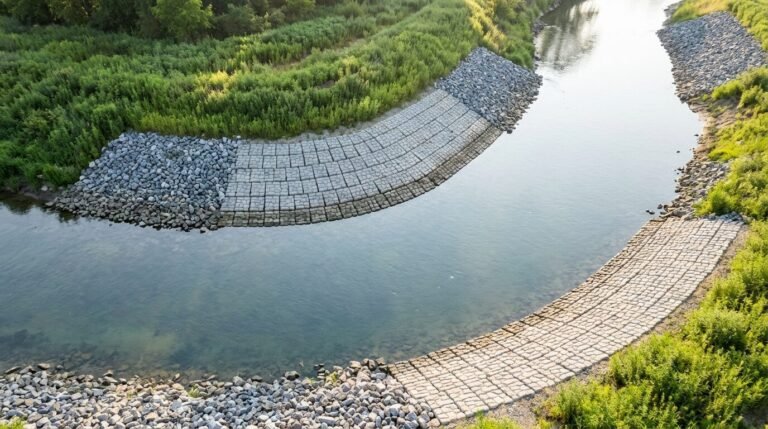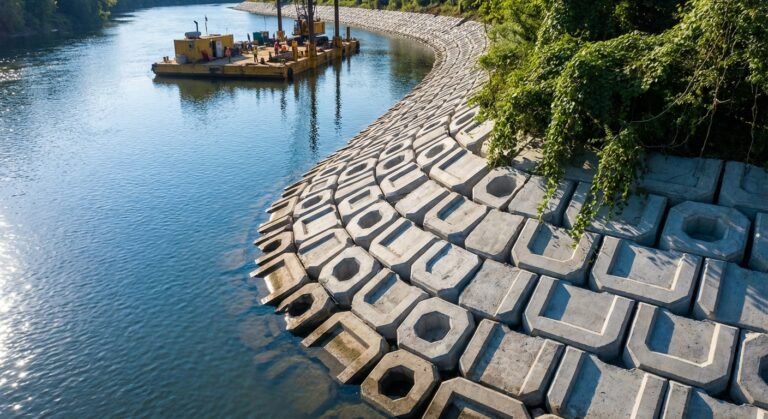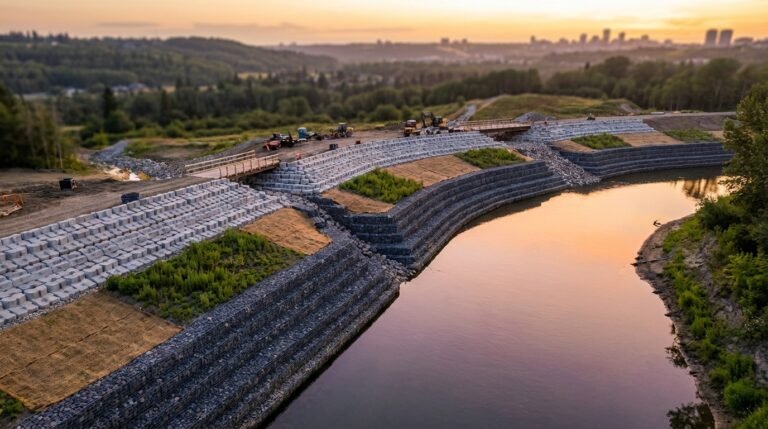

Navigating the complex matrix of modern erosion control requires an exacting review of system integrity, permanently shifting the focus away from basic generic failure prevention toward precise, scientifically backed material specification. Evaluating geotextile formwork compatibility under maximum saturated load, validating interlocking hinge-joint performance ratios, and standardizing cabling geometries holistically ensures municipal infrastructure resilience against profound high-velocity kinetic energy over extended lifespans. This relentless analytical approach directly empowers sophisticated B2B buyers to isolate superior manufacturing tolerances, eliminate localized supply chain redundancies, and confidently audit potential suppliers when sourcing heavy-duty structural armored mattresses for complex delta topographies.
Key Technical Parameters for USACE-Compliant Articulated Concrete Mattresses
Selecting the appropriate defensive revetment framework hinges strictly on establishing objective compliance with stringent USACE performance parameters right at the conceptual bidding stage. Engineering procurement officials now mandate exact unit mass tracking, uncompromising block dimensional stability, and precisely engineered open-space filtration ratios to dynamically counteract extreme localized hydrostatic uplift pressures. By distinctly defining these vital technical data points during the earliest tender qualification phases, heavy civil infrastructure projects inherently shield themselves from long-term granular scouring vulnerabilities and catastrophic slope regression liabilities.
Standardized industrial specifications demand exact geometric architectural configurations across the entire interlinked articulated structural matrix to guarantee unified load distribution. The fundamental gravitational mass-to-volume ratio requires an uncompromising minimum concrete density recorded definitively at 2,425.5 kg/m³ to reliably offset maximum targeted downstream sheer forces during volatile seasonal monsoon surges. In tandem, the engineered pre-cast block structures must demonstrably exhibit a hydraulic open void ratio perfectly calibrated exactly between 18.4% and 22.3%, a specific tolerance guaranteeing sufficient underlying groundwater permeation while preventing any progressive subsurface soil particle detachment during rapid drawdown flooding events.
To thoroughly streamline the complex vendor qualification phase, analyzing specific numerical metrics through a legally structured verification framework is entirely essential for modern risk mitigation. The rigorous integration of these specialized high-strength structural specifications ensures that any engineered articulated concrete mattress (ACM) selected easily satisfies top-tier municipal liability directives without hesitation. The comparison checklist below highlights the profound delta between basic civilian parameters and those demanded in advanced civil procurement audits.
| Technical Parameter | USACE Baseline Tolerance | Advanced Project Specification |
|---|---|---|
| Block Compressive Strength | 25.0 MPa | 28.4 MPa Minimum |
| Pre-Cast Concrete Density | 2,150 kg/m³ | 2,425.5 kg/m³ |
| Hydraulic Open Void Ratio | 15.0% Fixed | 19.2% ± 0.6% Flexible |
| Geometric Molding Precision | ± 2.0 mm | ± 0.35 mm Laser Verified |
| Geotextile Permittivity | 0.40 sec⁻¹ | 0.65 sec⁻¹ Minimum Yield |
| Internal Cable Tensile Yield | > 35.0 kN | > 42.6 kN Peak Load |
| Matrix Flexural Radius | 1.5 Degrees | 3.15 Degrees Articulation |
| Maximum Water Absorption | < 6.5% Mass | < 4.8% Controlled Mass |
Assessing Structural Scouring Risk Mitigation and Hydrodynamic Stability
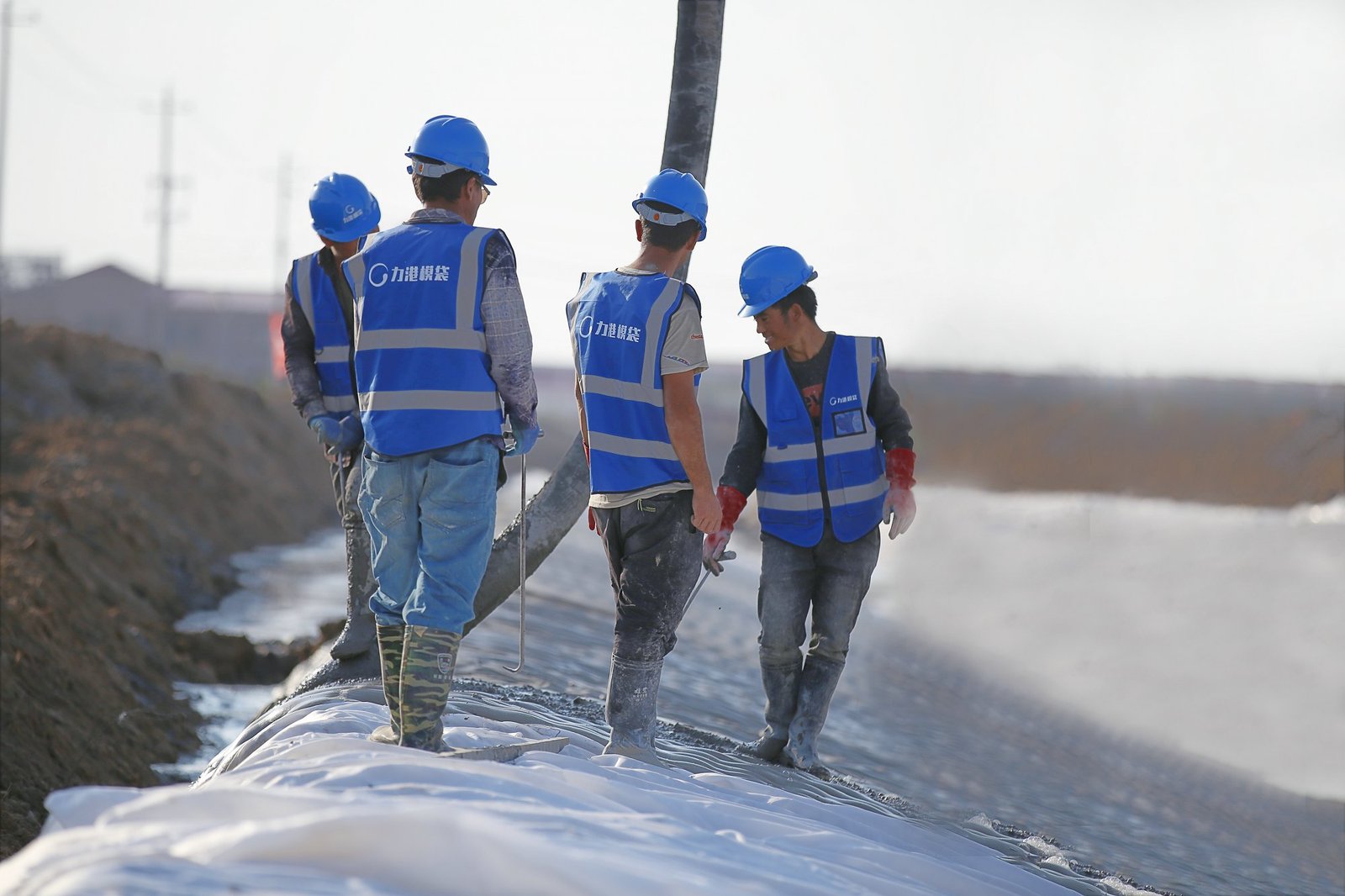
The fundamental objective of advancing aggressive specialized procurement standards is the absolute, uncompromising mitigation of foundational infrastructure scouring mechanisms. Intense kinetic turbulence localized at the subaqueous toe of an installation embankment reliably multiplies the destructive bed shear stress exponentially, effortlessly scouring away untreated foundational soils within hours. High-density articulated mattress arrays physically combat this invisible breakdown by purposefully generating a highly controlled, calculated macro-roughness across the critical submerged boundary layer, strategically decelerating violent flow momentum before soil detachment initiates.
Advanced engineering procurement audits rigorously evaluate an interlocking system’s exact critical threshold velocity—representing the specific hydrodynamic kinetic rate at which rushing forces finally overcome combined block gravity and joint cohesion. Leading USACE-aligned geometric structural designs demonstrably exhibit unyielding, continuous multidimensional stability against relentless flow velocities peaking up to 5.85 meters per second. This remarkable sustained hydrodynamic resistance stems squarely from the calculated geometric disruption of the water boundary envelope, deflecting plunging sheer energy aggressively upward toward the surface rather than allowing it to undermine the installation’s hidden toe.
In environmentally precarious geographies, particularly low-lying delta floodplains and coastal inlets, establishing robust containment parameters becomes an uncompromisingly vital task. Deep empirical research continuously illustrates this broader urgent engineering context, proving repeatedly that unpredictable flooding and river erosion pose severe existential threats to multi-generational civil longevity and economic continuity. Specifying elite revetment elements intrinsically calibrated for exact regional sheer force profiles ultimately mitigates municipal liability far better than settling for outdated, generic mass-placement aggregate techniques entirely.
Geotextile Formwork Compatibility: Filtration and Permeability Metrics
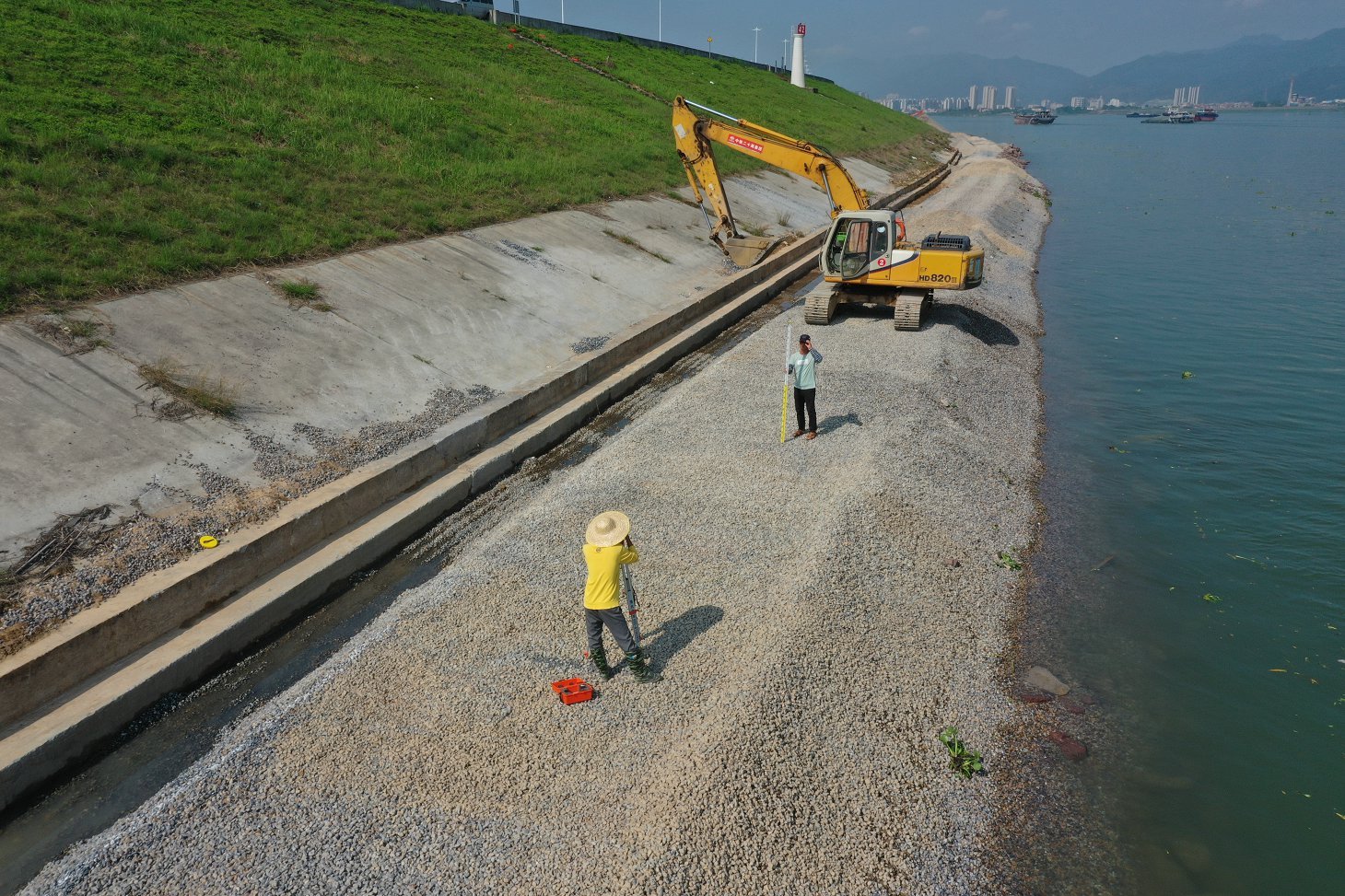
Rigorous procurement evaluations absolutely cannot overlook the profoundly vital foundational permeability characteristics fundamentally granted by the integrated geo-synthetic fabric formwork beneath the armor. In perpetually subaqueous delta applications, this advanced geotextile underlayer functions strictly as the foundational primary filtration barrier, continuously regulating internal destructive pore pressure generation across the slope length. A deeply critical compliance review of total formwork compatibility successfully identifies proprietary materials that simultaneously restrict microscopic fine particle migration outward while maintaining optimal cross-plane permeability dynamically.
The exact documented empirical specifications of this underlying filter layer directly dictate overarching geographical structural longevity and overall project solvency. Utilizing heavy-duty industrial woven architectures that meticulously display a verified Apparent Opening Size (AOS) of exactly 0.425 mm and a sustained permittivity threshold exceeding 0.65 sec⁻¹ guarantees unmatched performance compatibility alongside ultra-high-density concrete matrices. The complex physical interface shear mechanism existing between the rough graded granular terrain and the continuous underlying fabric barrier entirely prevents destructive subsurface slip-plane formation during both torrential heavy precipitation flashes and subsequent rapid aquifer discharge instances.
During an aggressive vendor capability audit, high-level structural buyers must legally demand exact diagnostic laboratory documentation fully validating the proposed geotextile’s ultimate tensile capacity across varying stress vectors. In exceptionally active aquifer flow environments, directly incorporating a precision-engineered filter point concrete mattress substantially maximizes comprehensive hydraulic drainage efficiencies while comprehensively preventing any underlying granular substrate washout entirely. Securing this highly granular, mathematically sound level of specification definitively eliminates the compounding, hidden infrastructural risks closely associated with unchecked, localized internal soil piping.
Interlocking Hinge-Joint Integrity and Mechanical Fastening Protocols
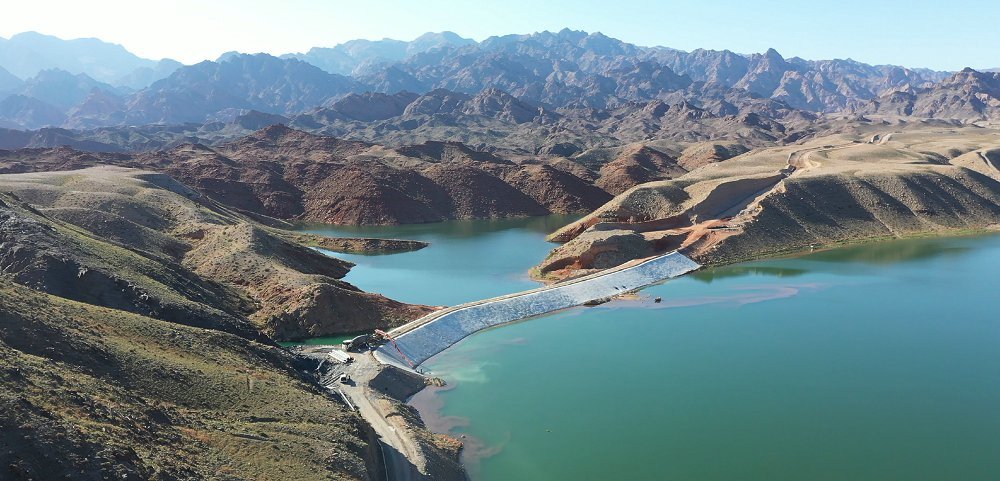
The continuous mechanical resilience of any complex protective revetment spanning highly irregular foundational topographies strictly depends upon confirming its dynamic hinge-joint integrity before physical deployment. Unlike heavily rigid, solid continuous slab installations that routinely suffer from catastrophic sudden brittle deformation during inevitable foundation soil settlement, the advanced interlocking joint network mechanism freely allows dynamic multidimensional spatial articulation. This highly specialized, granular flexibility successfully isolates relentless dynamic wave energy impacts, purposefully dissipating violent hydraulic forces harmlessly across the massive contiguous block network rather than focusing catastrophic shear stress dangerously onto a single microscopic structural fault line.
Formal technical audit protocols must strictly verify that the unique geometric internal curvature of the specialized block hinges facilitates seamless angular terrain deviation without binding or compressing the sensitive internal cabling corridors. Structurally superior, compliant systems specifically enforce a maximum allowed articulation flexibility radius ranging precisely between 3.15 and 4.25 degrees across every interconnected block intersection. When continuous slow-motion settlement ultimately occurs across a steep embankment slope, strictly enforcing this specific angular mechanical tolerance permits the entire heavy concrete blanket to dynamically contour to the depression while maintaining an impenetrable, unbroken armor barrier against aggressive erosive velocities.
Devastating historical civil engineering failures repeatedly trace back clearly to out-of-spec, non-compliant joint geometries that fatally bind and fracture underneath excessive external hydrostatic point loading. To aggressively prevent these easily avoidable localized system failures, advanced procurement criteria documentation must mandate extensive physical flexural stress testing that accurately simulates highly saturated, chaotic real-world embankment settlement conditions. Consequently, soil and water bioengineering structures implemented for riverbank stabilization are widely combined with these engineered rigid models, expertly merging natural environmental adaptation processes with unyielding, heavily calculated structural geometry to fully counteract unpredictable hydrodynamic variance.
Cable Connection Dynamics in High-Velocity Submerged Environments
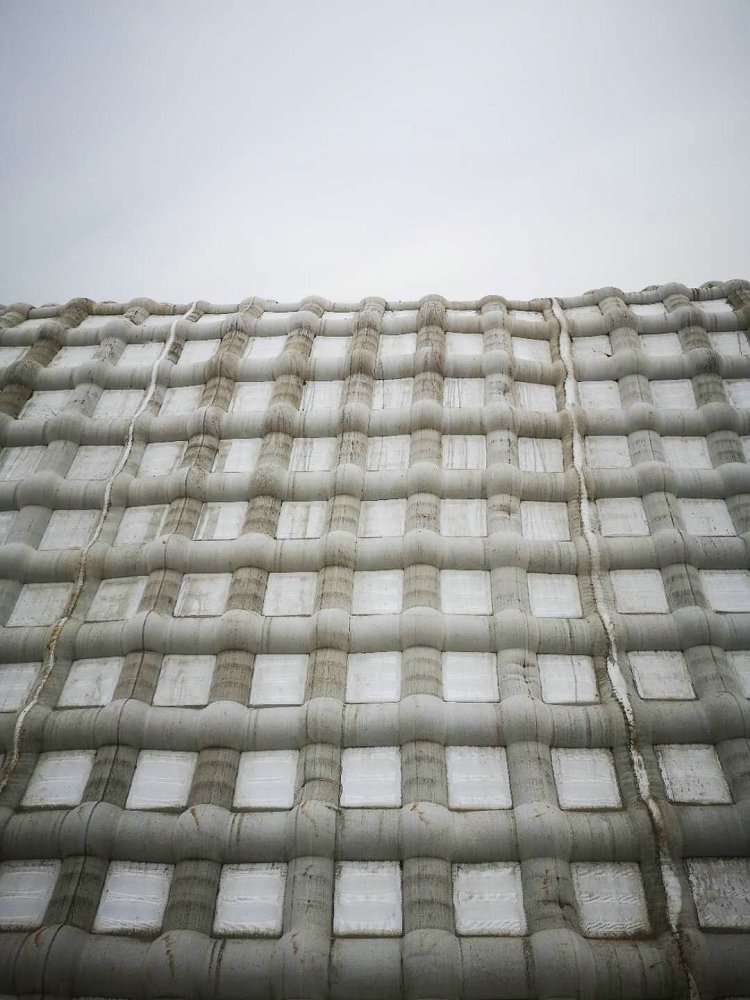
An interlocking articulated concrete block matrix purely retains functional efficacy if its internal lateral binding architecture performs identically under immense sustained atmospheric pressure. Specially formulated connecting cables precisely woven straight through intricate internal concrete block conduits must perpetually resist profound multidirectional lateral tension limits, severe localized organic bio-fouling, and chronic long-term caustic chloride ion penetration.
To thoroughly eliminate these silent degradation vectors from municipal engineering frameworks, advanced structural composite cables—specifically those manufactured from high-tenacity co-polymer monofilaments or specially jacketed marine-grade stainless steel alloys—must be specified to dynamically outperform traditional rigid steel bars. The procurement audit must demand empirical laboratory data demonstrating that the chosen cabling maintains a minimum internal tensile yield exceeding 42.6 kN under maximum peak load conditions without succumbing to immediate microscopic fracturing. Utilizing cables integrated with heavy-duty exterior thermoplastic extrusion sheaths entirely mitigates abrasive friction wear occurring at the internal concrete-to-cable interface during constant wave-action oscillation, ensuring century-long functional validity despite extreme coastal salinity exposure.
Securing structural longevity in these aggressive subaqueous zones directly requires procurement teams to demand accelerated weather testing certificates from the manufacturer. Analyzing the exact elongation percentages of these critical mechanical fasteners under extended thermal cycling highlights potential future point-load failures before the overarching heavy civil contract is ever legally finalized. Enforcing strict elongation parameters of less than 4% under simulated century-storm surge conditions protects heavily invested public capital against premature multi-million dollar coastal defense retrofits.
Factory Acceptance Testing (FAT) and ISO Procurement Mandates
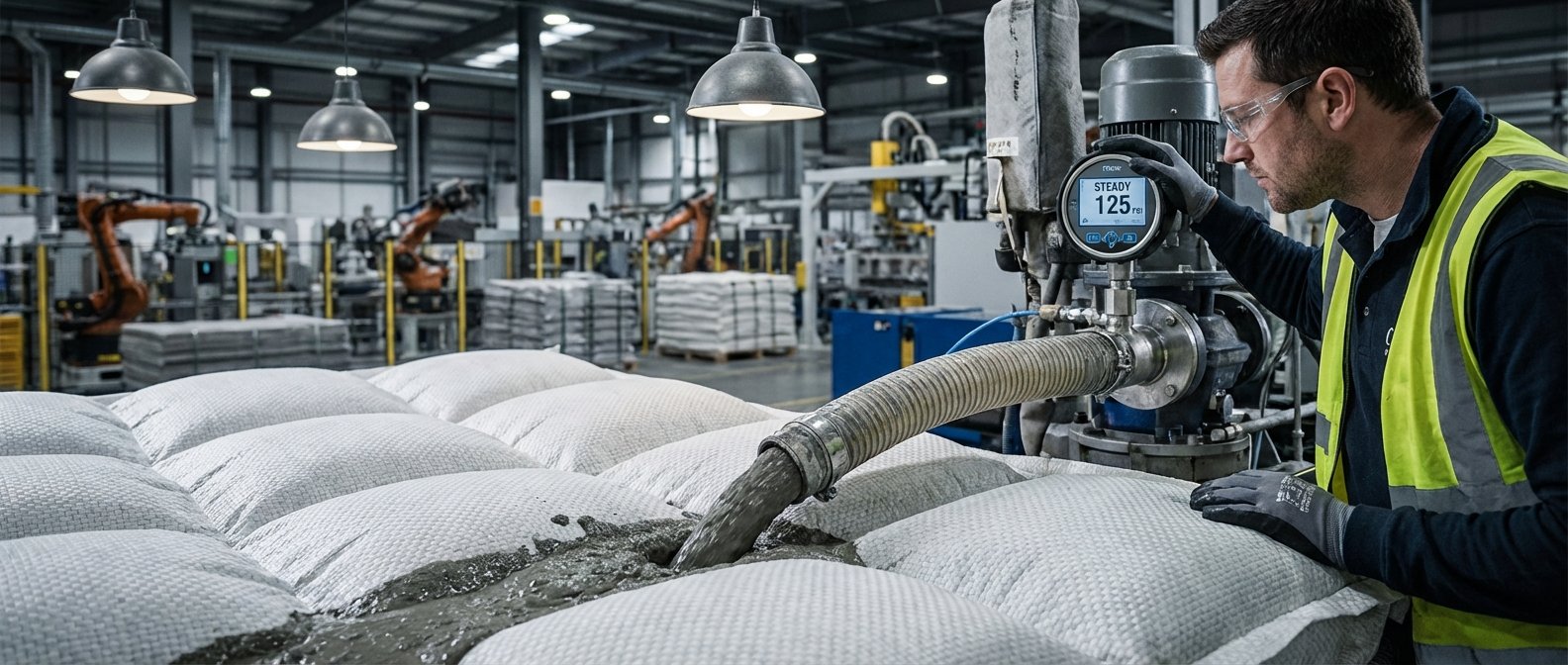
A comprehensive procurement audit remains entirely incomplete without a meticulously designed Factory Acceptance Testing (FAT) framework being integrated directly into the foundational vendor agreement. Before approving the mass manufacturing of expansive articulated concrete systems, highly disciplined civil contractors actively utilize aggressive FAT protocols to definitively verify that rapid, batch-produced segments flawlessly match the initial stringent laboratory prototypes. By legally mandating complete transparency during the pre-cast pouring process, procurement directors immediately expose hidden microscopic voids, improper aggregate blending ratios, and inadequate internal curing temperatures before deployment.
Robust technical contracts continuously enforce exact dimensional audits across a designated statistical random sample, confirming that overarching laser-verified geometric tolerances achieve the required ±0.35 mm threshold precision. This intense micro-level dimensional scrutiny is crucial, considering even millimeter-level structural deviations dramatically complicate multi-panel aquatic interlocking procedures, completely neutralizing the targeted hydrodynamic resistance along the submerged seams. Furthermore, enforcing verified concrete slump tests and strict traceability across all raw aggregate material supply chains establishes an unyielding chain of structural accountability, significantly reducing the inherent risks assumed by overarching heavy infrastructure developers.
Securing comprehensive compliance with recognized institutional manufacturing guidelines ensures unparalleled structural uniformity regardless of challenging logistical timelines. Institutional B2B purchasers must demand uncompromising adherence to specialized international quality management benchmarks, continuously auditing the vendor’s documented concrete curing environment to ensure temperature gradients remain constantly managed below the critical internal cracking thresholds of large-mass monolithic blocks.
Heavy-Lift Installation Logistics and Spatial Articulation Tolerances
Executing the physical deployment of highly dense articulated structural arrays across highly unpredictable, heavily saturated topographies fundamentally demands deep integration between theoretical mechanical manufacturing tolerances and chaotic practical field logistics. Elite procurement specifications purposefully factor in the absolute maximum lifting elasticity parameters required when hoisting massive contiguous concrete blankets via enormous mechanized spreader bars. Precise engineering ensures the vast structural layout can safely sustain temporary high-intensity vertical point-loads spanning upward of 50 tons without compressing the internal polymer joints or abruptly snapping continuous heavy stabilization harnesses.
Advanced deployment auditing proactively assesses the specific compatibility between the interlocking formwork layout and local specialized lifting capabilities, frequently requiring custom-engineered spreader frames built precisely to the spatial dimensions of the heavy pre-cast mattress arrays. B2B buyers must extensively review detailed procedural methodologies for sub-aqueous panel alignment, mandating the strict utilization of heavy saturation diving teams paired with real-time acoustic sub-surface positioning tools to perfectly abut adjacent structural seams. Leaving macroscopic gaps between massive heavy panels instantaneously invites high-velocity localized scouring right at the crucial junction points, entirely nullifying the expensive regional asset protection mechanisms.
By optimizing installation sequencing strategies tightly within the foundational master contract, senior structural managers dynamically compress prolonged expensive on-site machinery schedules and minimize dangerous over-water operational hours. Validating advanced deployment methodologies directly through the manufacturing vendor ensures that the final installed product physically performs identical to complex predictive baseline models, achieving flawless seamless slope protection across thousands of uninterrupted contiguous linear meters.
Performance Verification and Structural Maintenance Audits
The overarching lifecycle of advanced industrial revetments fundamentally depends upon continuous, disciplined macro-level performance verification extending decades beyond the initial chaotic post-installation phases. While superior articulated structural systems proudly boast incredibly low maintenance profiles relative to disorganized loose riprap installations, systematic regional procurement mandates must proactively define distinct underwater auditing frequencies heavily focused on tracking sub-surface joint stability. Routine acoustic sonar scanning methodologies and advanced deep-water ROV inspections provide invaluable empirical verification regarding sustained toe trench integrity directly alongside the volatile main channel current flows.
Heavy civil infrastructure contracts must meticulously outline rigorous procedures addressing highly localized sedimentation shifts occurring atop the vast structural mattress surface, definitively tracking complex upstream particulate accumulation. Although precisely engineered high-density structures seamlessly deflect aggressive plunging hydraulic energy, managing unexpected massive lateral debris strikes from submerged commercial vessels requires specialized conditional damage assessments. Outlining comprehensive panel replacement protocols within the original technical specification ensures heavy municipal operators can swiftly extract and replace distinctly shattered block segments entirely without compromising the permanent integrated stability of the surrounding undamaged matrix grid.
Systematic Sourcing Analysis B2B Toolkit
Establishing uncompromising technical control over a multi-million-dollar structural defense procurement process strictly demands the permanent integration of structured systematic evaluation tools. High-level B2B engineering buyers and principal municipal directors utilize the comprehensive technical matrix below to instantly detect non-compliant regional tenders during the highly competitive vendor selection phase.
Elite Vendor Procurement Qualification Checklist
- [ ] Compressive Core Diagnostics: Validate that historical core test data conclusively exceeds 28.4 MPa under high-saturation environmental simulation.
- [ ] Dynamic Void Ratio Calibration: Confirm that the internal geometric mold structure legally guarantees a controlled open void ratio closely bracketed between 18.4% and 22.3%.
- [ ] Embedded Geotextile Yield: Secure independent physical laboratory verification proving the underlying synthetic architecture consistently achieves an Apparent Opening Size (AOS) of exactly 0.425 mm.
- [ ] Cabling Elongation Limits: Verify extreme-tension co-polymer multi-strand cables demonstrably maintain critical peak load survival ratings above 42.6 kN without reaching 4% total structural elongation.
- [ ] Micro-Dimensional Uniformity: Mandate documentation proving laser-calibrated factory hardware consistently adheres to rigid block molding precision entirely within ± 0.35 mm.
- [ ] Complete FAT Execution Planning: Ensure the vendor legally commits to extensive random-sample Batch Quality Assurance methodologies before initiating comprehensive delivery supply chains.
Securing Ultimate Heavy Infrastructure Compliance
Executing an uncompromising, highly advanced technical procurement audit intrinsically separates catastrophic historical coastal collapses from multi-generational civil engineering masterworks. Specifying strictly controlled empirical dimensional parameters entirely eliminates hidden vulnerabilities hiding deep within volatile local supply chains, dynamically transforming unpredictable high-velocity hydrodynamics into safely manageable, entirely calculable risk elements. By mandating complete technical supremacy across concrete density, specialized extreme-tension multi-directional fastening, and uncompromising geotextile permeability limits, dedicated project directors confidently cement absolute stability directly into their complex overarching regional flood defenses.
Request a free technical consultation with our lead structural engineers or download the comprehensive specification comparison sheet to entirely ensure your next complex municipal infrastructure project effortlessly exceeds all rigid USACE compliance requirements.
Related Resources
- Articulated Concrete Mattress Systems — Full product specifications
- HydroBase Project Case Studies — Real-world installations
- Concrete Mattress Engineering & Installation Services — Engineering services
Need a concrete mattress solution for your project?
HydroBase provides end-to-end concrete mattress engineering & installation services — from hydraulic design and factory-direct ACM supply to on-site supervision and post-project inspection. Trusted by civil engineers in 50+ countries.