The Physics Behind Articulated Concrete Block Mattress Testing Standards
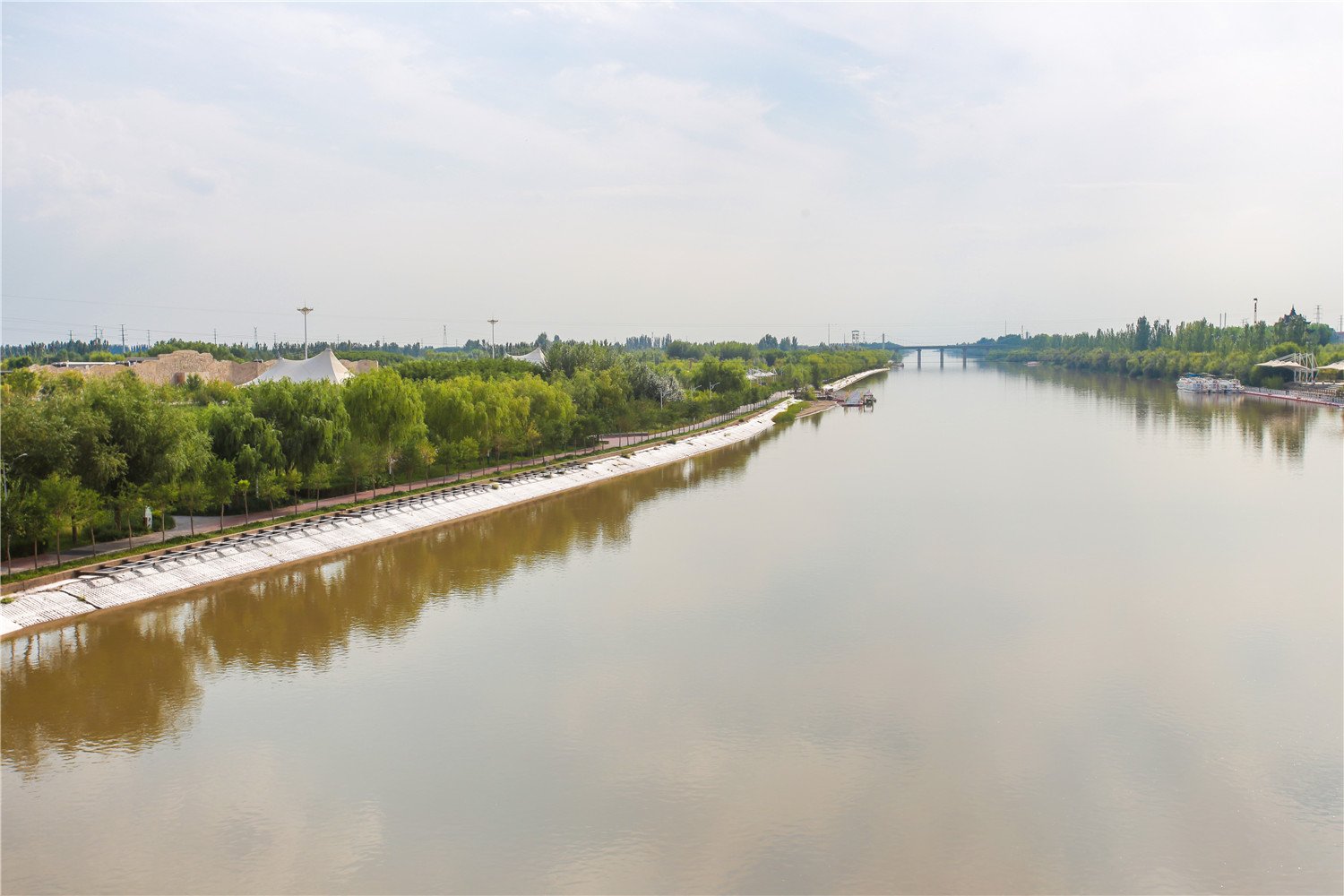
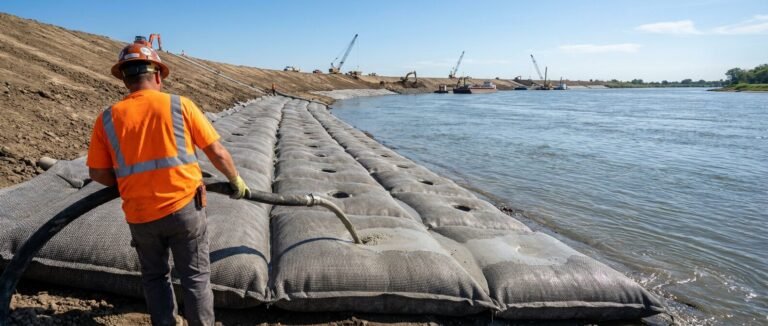
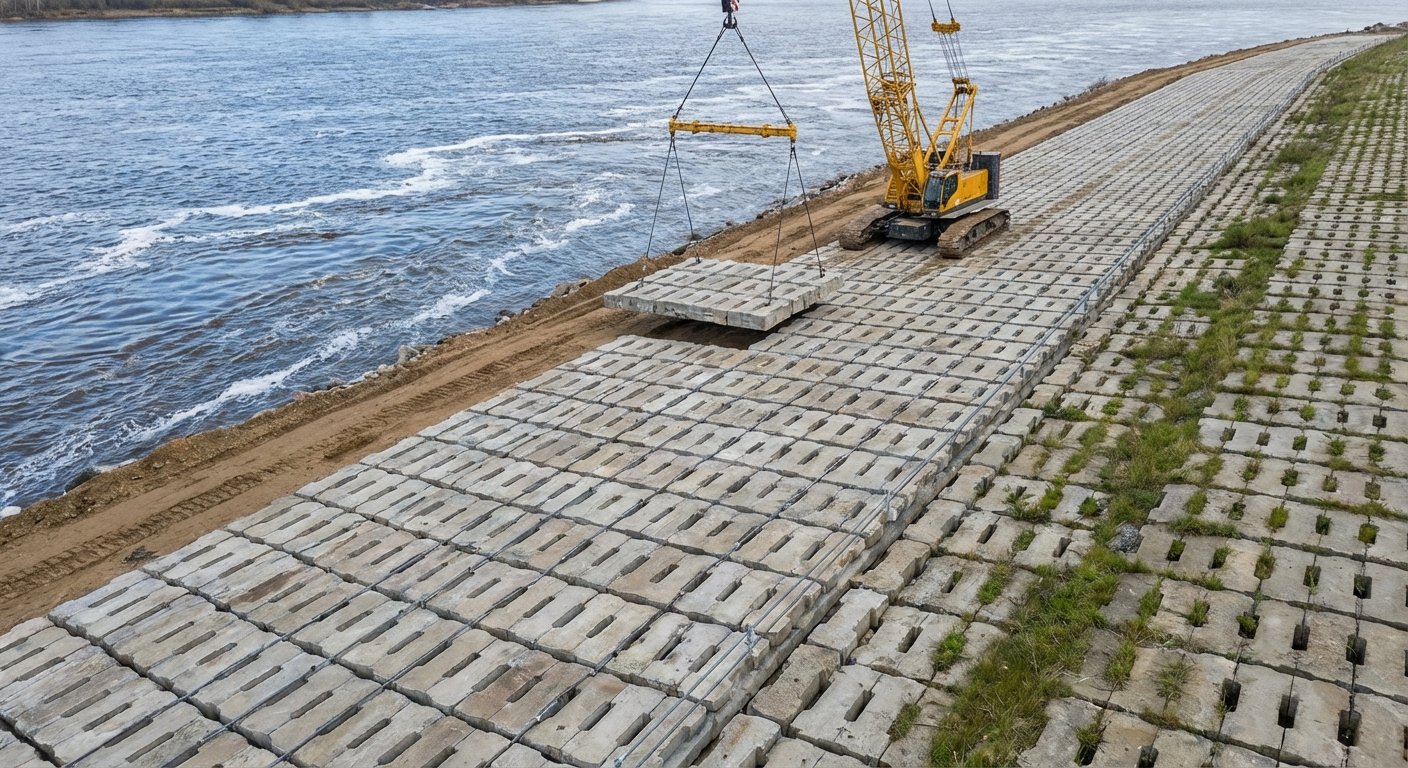
Understanding why heavy civil infrastructure requires such intense scrutiny begins with analyzing the fluid dynamics at the boundary layer. Water moving over a channel bottom exerts two primary forces on the armoring system: bed shear stress and dynamic uplift. Designers must calculate how these opposing vectors interact with an interconnected matrix of highly dense concrete. Articulated concrete mattresses function by combining substantial unit weight with hinge joints that allow the entire structure to settle into local scour developments.
Government infrastructure guidelines dictate specific operational thresholds for these variables. Engineers tasked with designing channel linings heavily reference baseline documentation like EM 1110-2-1614 Design of Coastal Revetments, Seawalls, and Bulkheads which details articulated concrete mattress design for scour protection with velocity limits up to 15 ft/s. Achieving that operational rating dictates precisely how thick the individual units must be manufactured. Typical block thickness ranges from 100-300mm depending entirely on the anticipated turbulent energy generated within the channel.
Heavy fluid loads attempt to separate the concrete layer from the subgrade through negative pressure fluctuations. If the boundary velocity reaches a critical tipping point, overturning moments act on the leading edge of individual concrete units. Maintaining contact with the soil profile prevents subgrade particles from migrating upward through the joints. Flexible geotextile formworks serve as the physical barrier against this piping effect while transmitting tensile loads across the entire revetment span.
Laboratory Flume Testing Protocols For Hydrodynamic Stability
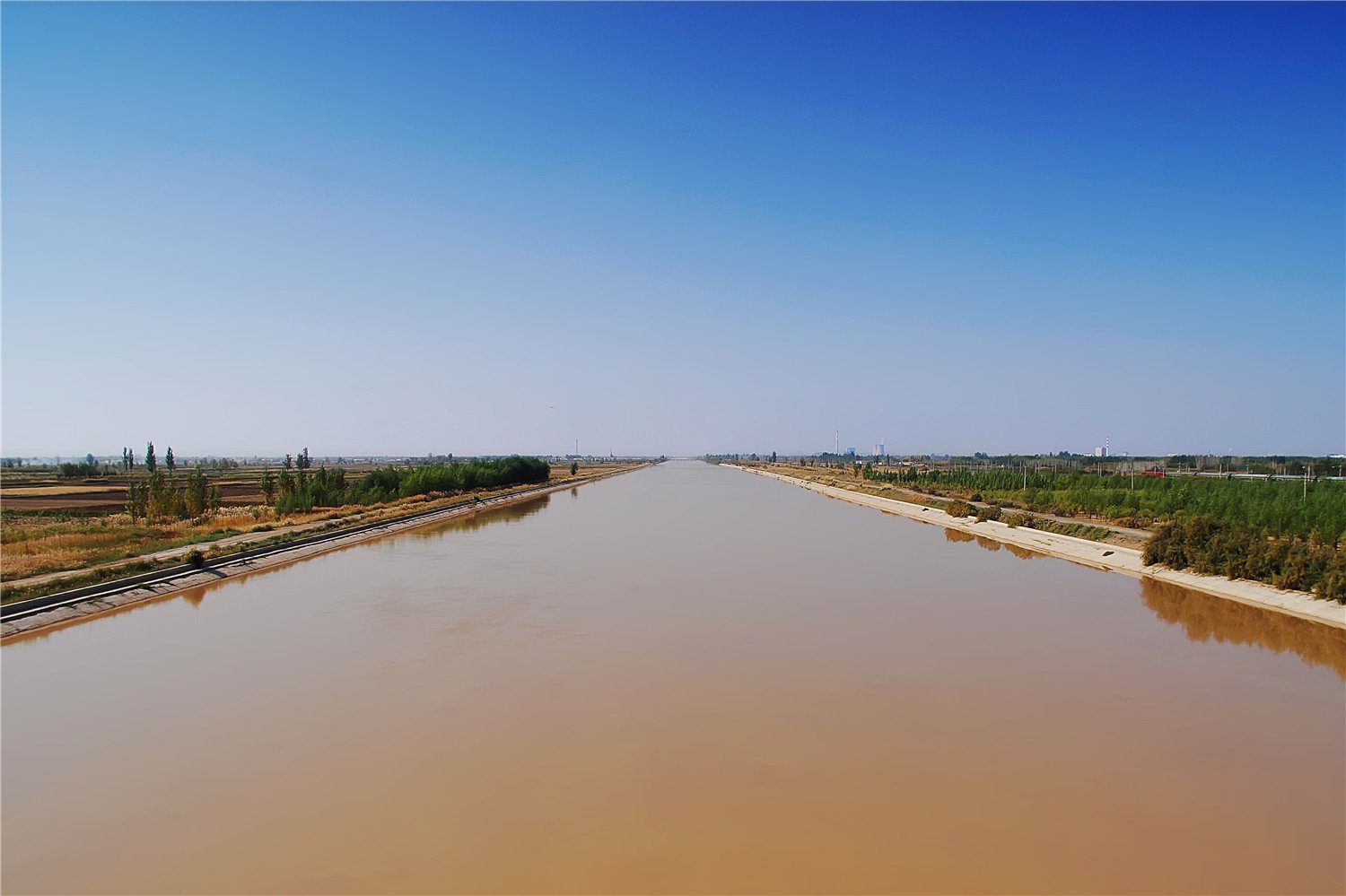
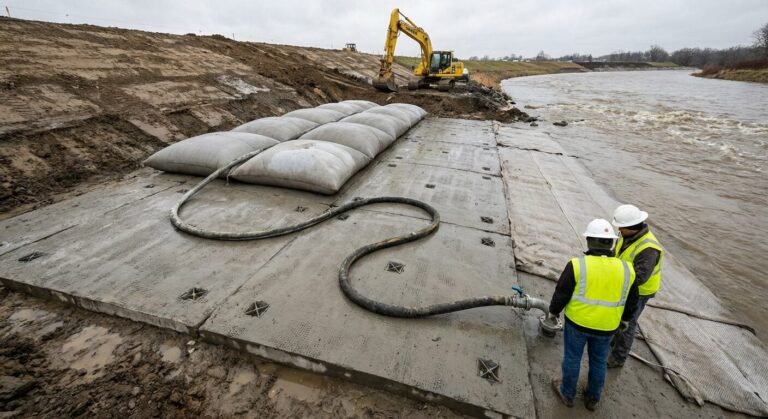
Running a hydraulic test on interlocking blocks involves constructing a dedicated flume capable of moving immense volumes of water over a simulated test bed. Testing facilities utilize massive pumps and precisely sloped steel channels to artificially generate intense turbulence. Technicians meticulously prepare a soil subgrade, place a granular or synthetic filter layer, and deploy a scaled or full-sized mattress section.
Sensors embedded within the flume bed track pressure differentials while overhead cameras monitor individual block displacement. Flow rates increase incrementally until the protective layer exhibits defined failure criteria, such as significant leading-edge uplift or extreme loss of the underlying soil. Rigorous academic documentation confirms these baseline capacities. Laboratory flume tests on articulated concrete block revetments showed critical shear stress capacity of 0.45 N/m² under flow velocities up to 2.5 m/s according to data published via the ASCE Library.
Scaling down physical geometries for ease of laboratory management introduces complex mathematical corrections. Froude and Reynolds number scaling ensures that the fluid dynamics exhibited in a compact flume accurately represent a massive river channel. Researchers map the hydraulic roughness coefficient exactly, analyzing how micro-textures on the concrete surface artificially slow the velocity directly at the bed interface.
Deciphering ASTM Guidelines Under Overtopping Scenarios
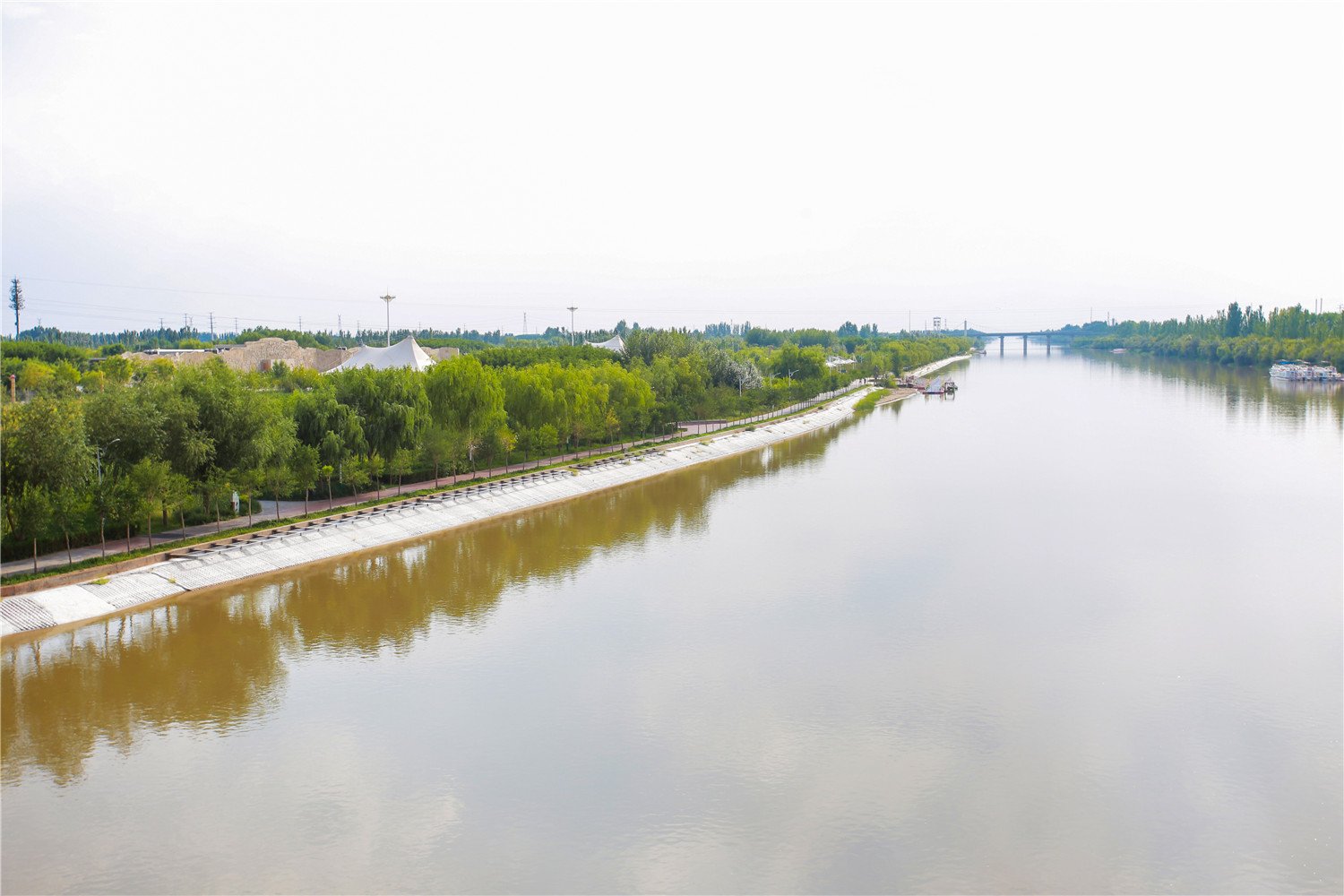
Engineers require a standardized framework to ensure flume data collected in one facility translates identically across the industry. ASTM D7276 and ASTM D7277 form the undeniable backbone of this verification process. The first standard governs precisely how the test section must be constructed, dictating soil compaction minimums and exact transition geometries.
Once the bed preparation satisfies strict tolerances, the actual running of the hydraulic forces commences under the subsequent standard. Flow durations must hold steady for specific intervals, giving the turbulent energy adequate time to exploit any potential weakness in the hinge joints or synthetic core. It is an incredibly demanding environment that acts as the great equalizer among various erosion control strategies.
Evaluating the tensile matrix holding the concrete together involves distinctly separate protocols. The internal synthetic skeleton must survive independent analysis before integration into the concrete pour. Specifications routinely mandate evaluating the ASTM D7367/D7367M-20 Standard Test Method for Determining Water Retention of Geotextiles Used in Geosynthetic Concrete Mattress Systems to guarantee performance consistency. Permeability is vital, as trapped groundwater must escape the subgrade freely without blowing the concrete blocks upward.
International Benchmarks and System Shear Stress Thresholds
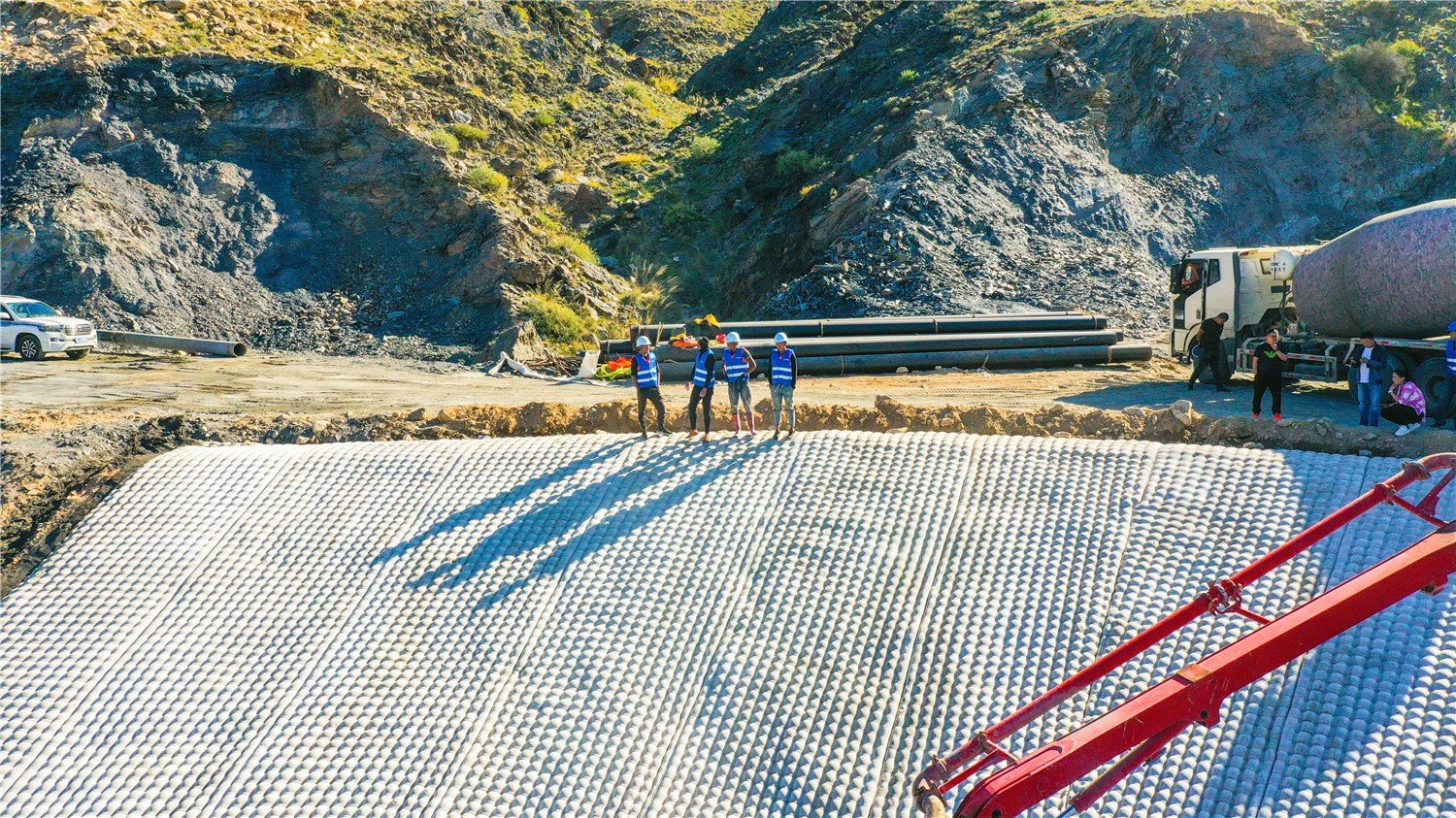
Maritime boundaries and inland navigation routes frequently adopt European design methodologies alongside North American guidelines. Heavy harbor environments introduce propeller wash and vessel wake interactions that compound standard riverine flow characteristics. Protective matrices deployed in these zones must exhibit exceptional internal cohesion and unit weight stability.
Global navigation associations issue their own stringent evaluations for bank stabilization. Documentation such as PIANC Report 113 recommends lab testing protocols for articulated mattresses with velocity thresholds verified at 3-5 m/s for river applications. Hiting these operational targets requires concrete graded at a minimum of C30/C35 to resist the continuous abrasion generated by suspended sediment loads.
Analyzing sheer capacity requires separating clear-water scour from sediment-laden flow. Clear water generates less boundary friction but can induce severe localized scour holes very quickly if the uniform matrix fails. When evaluating testing results, engineers look strictly at the threshold where the mattress loses intimate contact with its subgrade, triggering a rapid cascade of localized block instability.
Market Demands Driving Better Quality Verification
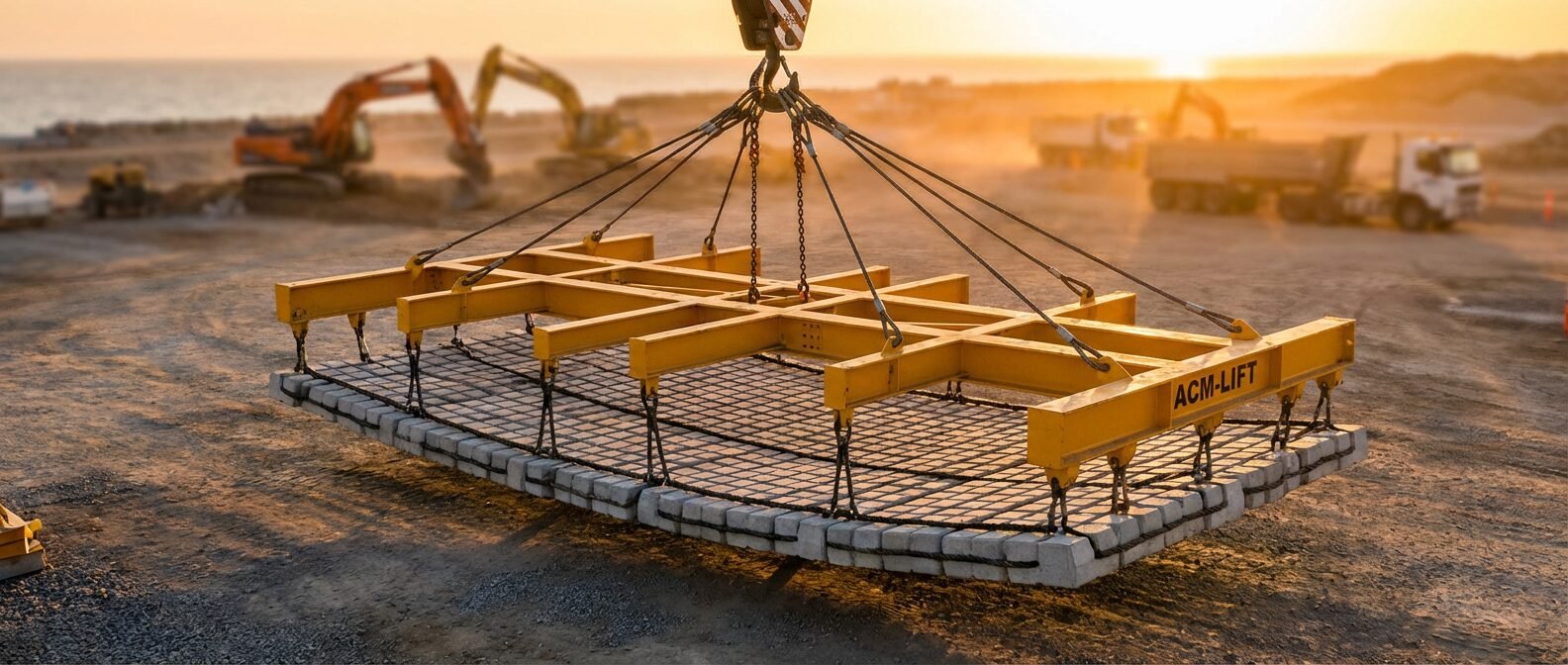
Financial pressure on public works projects dictates tighter controls over material specification. Replacing failed hydraulic armor drains municipal budgets and exposes surrounding developments to acute flood risks. Civil designers face mounting expectations to deliver permanent infrastructure solutions on their very first attempt.
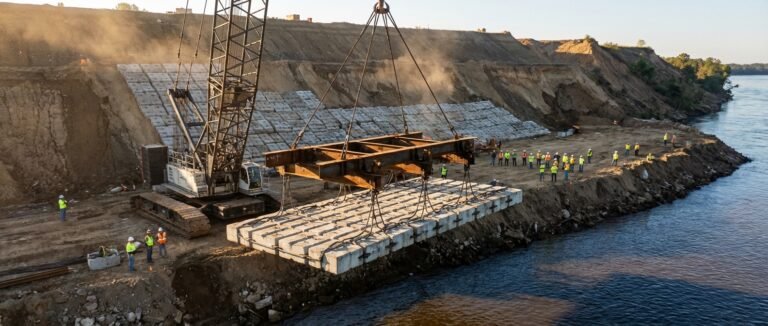
The economic scale of the sector underscores why verification matters immensely. The global erosion control market size valued at USD 12.45 billion in 2024 reflects an enormous volume of material being deployed into highly volatile aquatic zones. Protecting that level of capital expenditure demands unassailable data outlining precisely how a concrete mattress will react to a 100-year storm event. Field safety during deployment relies heavily on tested parameters, and referencing a proper Site Safety: Articulated Concrete Mattress ACM Lifting Frames Guide ensures crews handle these massive arrays without jeopardizing structural integrity.
Contractors installing these systems need assurance that the interwoven cables or synthetic formworks will easily survive heavy mechanical handling. If a geotextile tears during installation, the entire hydraulic integrity documented during flume testing fractures instantly. Tensile strength parameters, which typically need to meet or exceed ≥50kN/m, guarantee the system remains intact from the factory floor all the way down to the riverbed.
Translating Flume Performance to Critical Outfalls
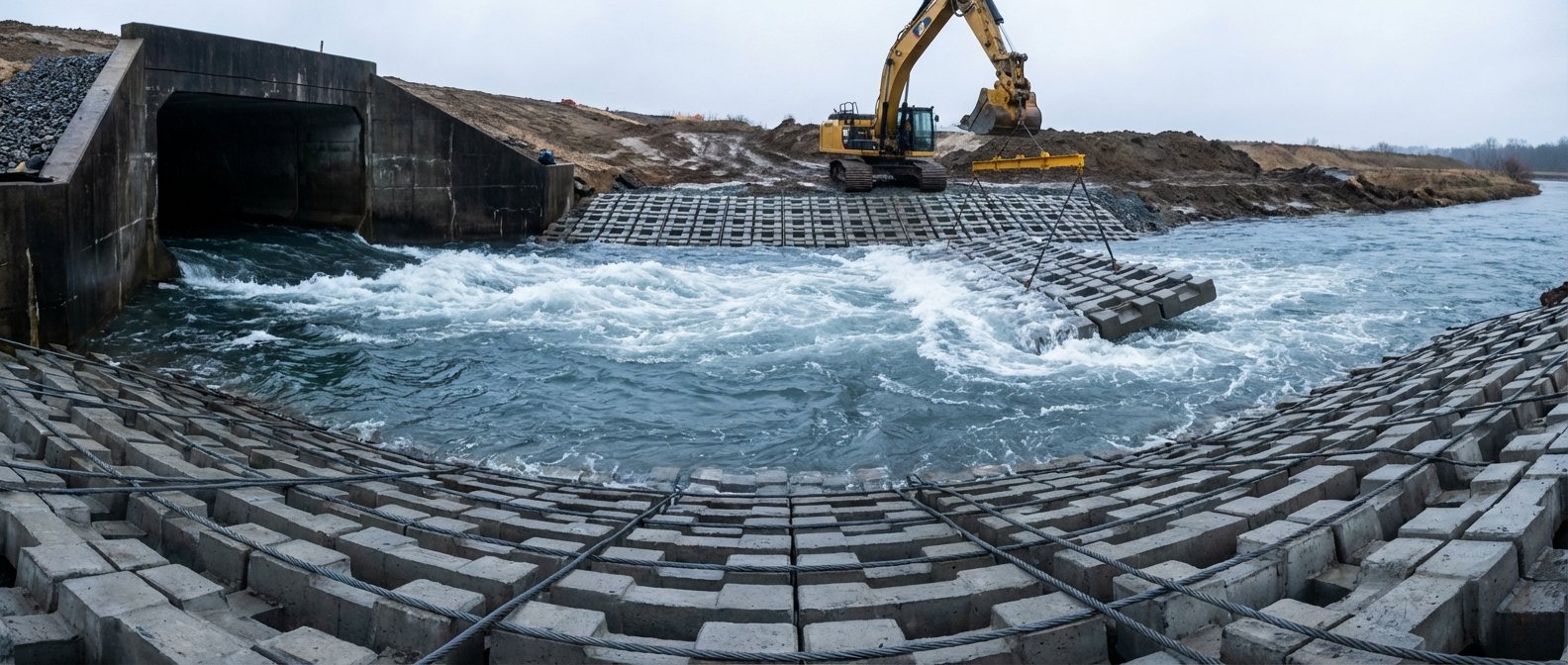
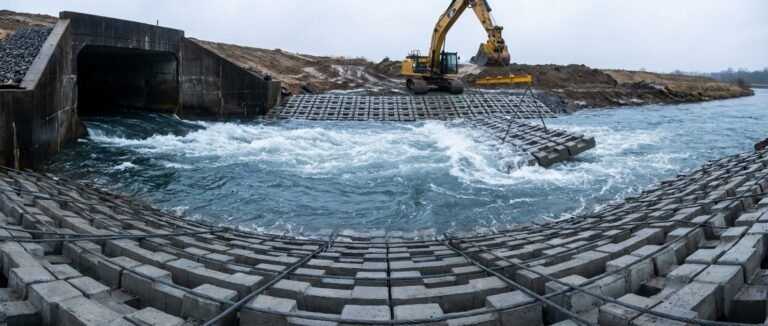
Transition zones at the base of large drainage conduits experience some of the most violent fluid dynamics found in civil engineering. When pressurized water exits a narrow pipe and expands into an open basin, it generates a turbulent hydraulic jump. This phenomenon creates immense localized shear stress and severe negative pressure pockets that actively attempting to peel the armoring off the soil.
Deploying interlocking armor at these precise junctions requires reviewing specific flume data modeled on expansion dynamics. You cannot merely drop nominal blocks into a plunge pool and expect long-term survival. For highly concentrated turbulent zones, studying a Culvert Outfall Scour Protection: The Complete ACM Guide ensures the selected material profile corresponds to the calculated peak discharge velocity.
Industry tracking indicates a heavy migration toward advanced synthetic and concrete integration in these environments. Recent data highlights how geosynthetics in erosion control applications reported 25% market share growth in hydraulic structures with ACM systems tested to 12.5 psf shear stress. Relying on numbers of that magnitude gives engineering firms the confidence to armor spillways that would traditionally require massively oversized riprap elements.
Aligning Manufacturing Capabilities with Hydraulic Variables
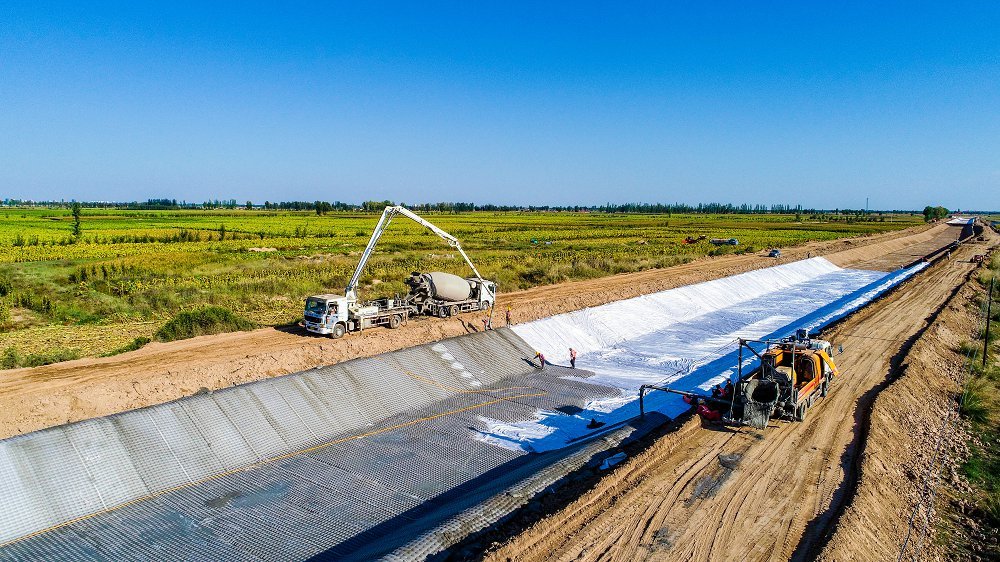
Moving from rigorous academic flume testing to actual factory production introduces practical challenges. Factories must carefully replicate the exact geometric tolerances, concrete compressive strengths, and geotextile specifications that survived the laboratory analysis. Theoretical math functions beautifully on paper, but turning wet cement and synthetic fabric into a 15-ft/s rated barrier requires absolute manufacturing precision. Manufacturers step up to the plate by tightening their quality assurance feedback loops.
Take HydroBase as a strong example of aligning factory-floor output with stringent hydraulic performance standards. When civil designers specify an Articulated Concrete Mattress for a critical infrastructure node, they demand the physical product perfectly mirrors the tested prototype. By controlling the internal synthetic formwork tension and verifying the C30/C35 concrete mixes during the pour, the final mattress achieves that crucial ≥50kN/m tensile threshold. HydroBase ensures the integrated hinge joints deliver both the flex needed to conform to subgrade settlement and the rigid unit weight required to anchor against severe uplift scenarios.
Finding systems that comfortably bridge the gap between ASTM documentation and large-scale manufacturing output changes how engineers approach site challenges. Factories utilizing automated batching and strict internal tensioning controls eliminate the variance that typically plagues field-poured alternatives. Having an industrial partner capable of matching sheer stress data with rapid deployment schedules is highly advantageous.
Quality Verification Checklists for High-Velocity Systems
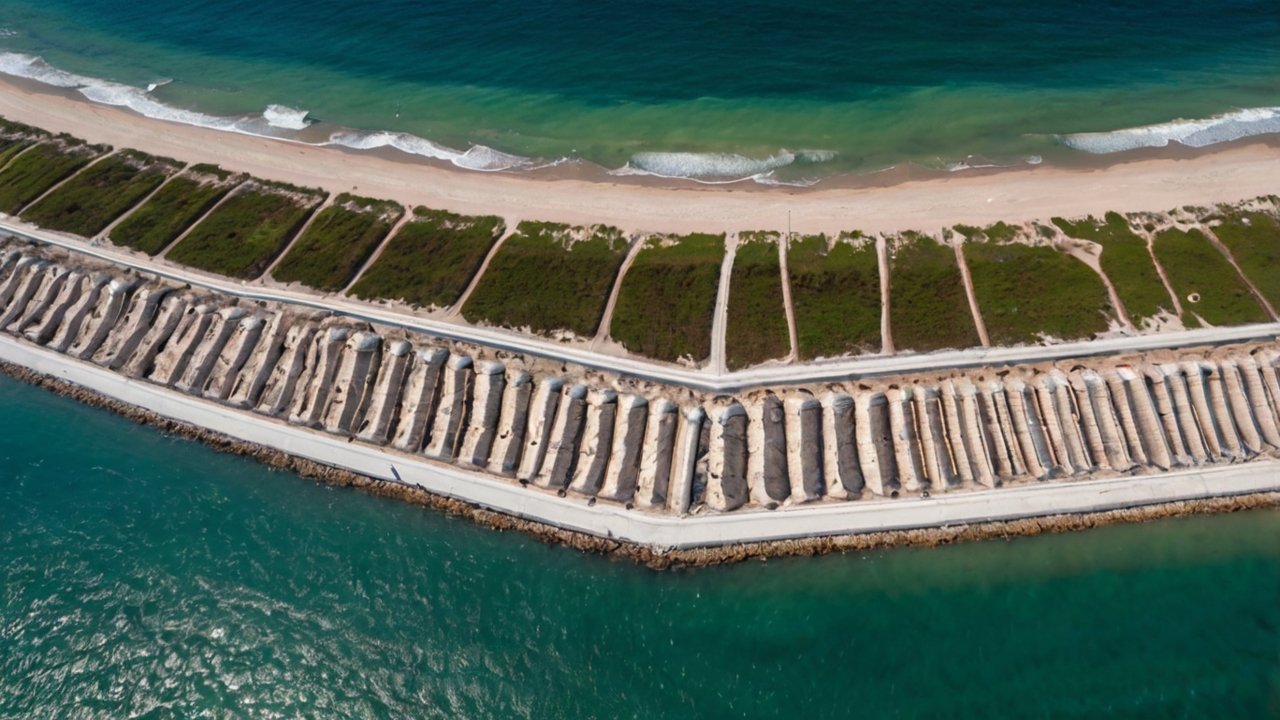
Project managers need a framework to objectively compare manufacturer submittals against their hydraulic design models. A standardized review protocol guarantees no undocumented materials slip into the construction phase.
Flume-Validated ACM Specification Checklist
- Geotextile Formwork Tensile Limit: Confirm independent testing proving the synthetic matrix exceeds ≥50kN/m continuous strength.
- Concrete Compressive Grade: Verify the industrial mix design achieves a minimum of C30/C35 to resist prolonged granular abrasion.
- Dimensional Accuracy: Ensure block thickness ranges from 100-300mm, directly corresponding to calculated peak bed shear.
- Flume Documentation: Mandate submission of verification data recorded strictly under ASTM D7277 or equivalent flow parameters.
- Cabling/Hinge Integrity: Assess laboratory proof that joint flexibility maintains cohesion without yielding under severe uplift conditions.
- Permeability Factor: Check that the underlying filter points meet required outflow capacities to relieve internal groundwater pressure.
Completing this checklist forces accountability onto the material supplier. It separates purely theoretical armor designs from systems successfully dragged through a high-velocity flume.
Overcoming Extreme Lift and Shear Thresholds
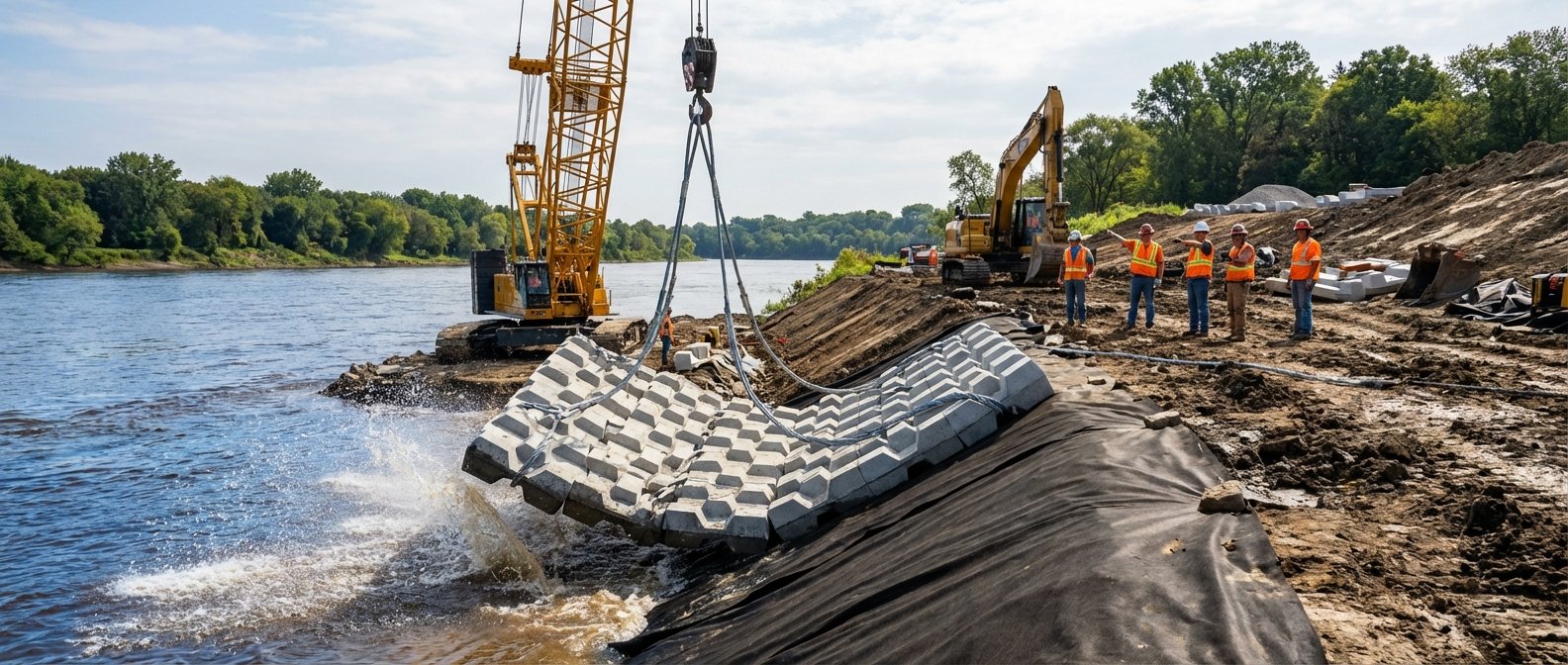
Hydraulic uplift remains the dominant failure mechanism for protective channel linings. As water velocity increases, localized low-pressure zones form directly above the concrete surface. If the unit weight of an individual block fails to overcome this lifting force, the entire matrix compromises. Analyzing the mechanical differences in armor types aids in mitigating this specific physical threat. As our lead craftsman always says, “You can feel when the concrete mattress is right.”
Navigating the choice between distinct panel types often involves reviewing documentation like Slab vs. Block: When to Spec Articulated Concrete Slab Mattress. While articulated blocks provide exceptional micro-flexibility over uneven ground, unified slab systems offer vastly different mass distribution profiles against extreme localized lift. HydroBase designs their protective systems by deliberately integrating textures that induce micro-roughness across the surface layer. This calculated mechanical friction purposely drops the boundary level velocity, dampening the sheer forces right exactly where the protective face contacts the fluid.
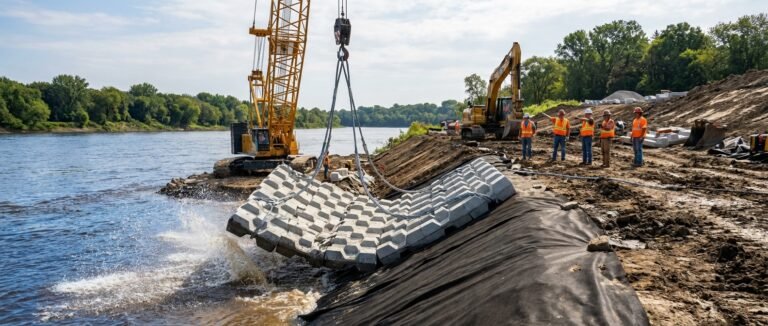
Proper engineering anticipates that subgrades will eventually consolidate. Interlocking systems that articulate without exposing wide joints prevent turbulent eddies from burrowing beneath the hard armor. The built-to-spec geotextile layer operates as the final failsafe, keeping the aggregate base secure even when individual concrete geometries pivot up to 30 degrees during settlement.
Engineering Protective Matrices for Complex Geometries
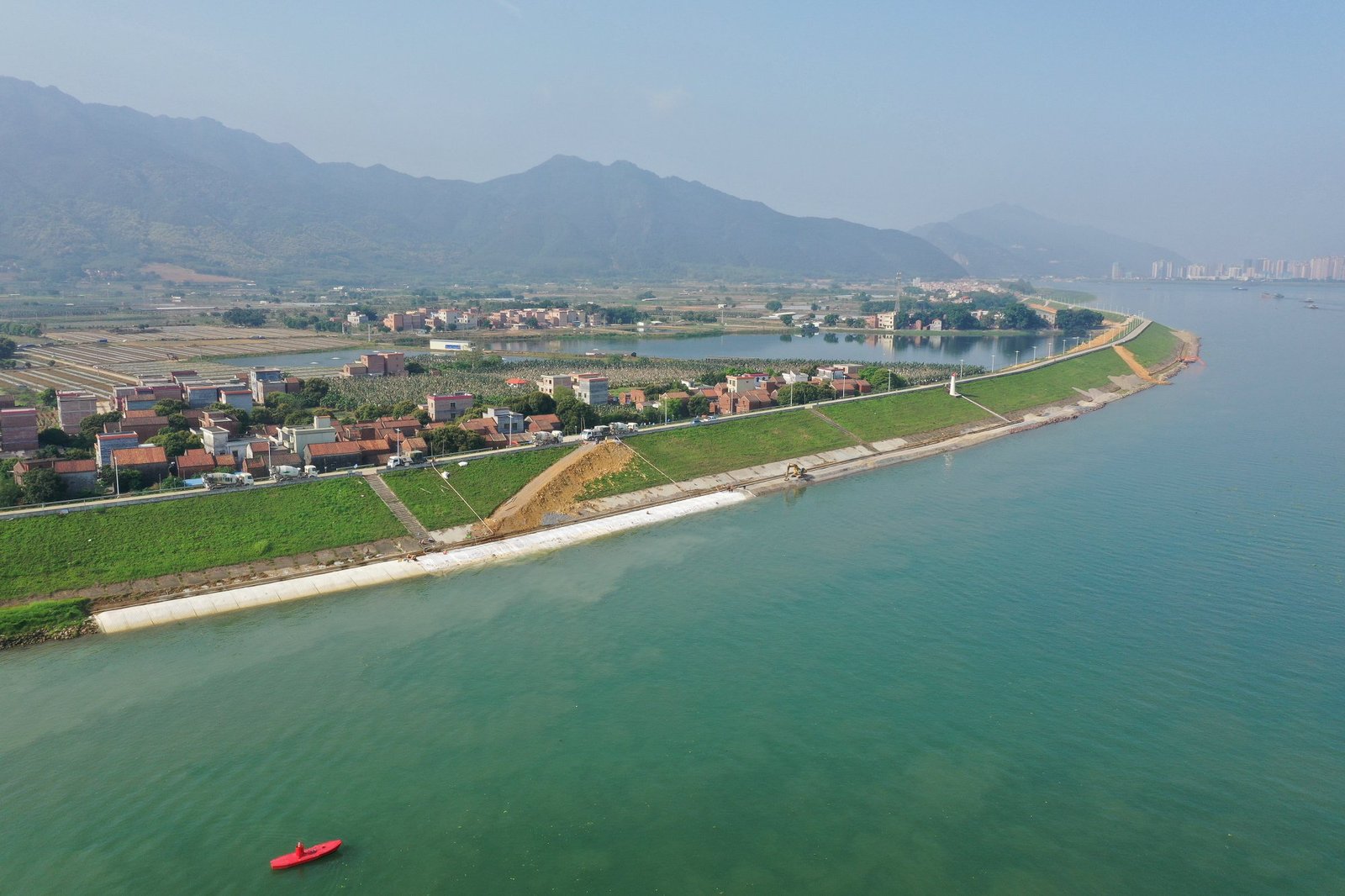
Infrastructure projects rarely deal in perfectly straight lines or uniform slopes. Bends in a river channel, bridge pier integrations, and sudden elevation drops introduce chaotic multi-directional forces. Applying rigid flume data to these complex field geometries requires a deep understanding of how three-dimensional matrices bend around corners without tearing their internal synthetic constraints.
Industrial ports and active maritime terminals endure localized hydrodynamic forces that mimic highly concentrated flume tests daily. Studying approaches to Solving Prop Wash Scour with Uniform Section Concrete Mats reveals how vital validated shear thresholds are when large vessels generate massive thrust at zero forward velocity. HydroBase engineers analyze these exact site dynamics to ensure the recommended block thickness and hinge articulation configuration will not unspool under aggressive propeller cavitation.
Specifying an articulated concrete mattress that routinely survives intense verification processes means protecting the client’s financial investment long after construction finishes. The physics of heavy fluid momentum rarely forgive under-engineered solutions. Demanding absolute adherence to verified testing parameters ensures the channel remains functional, stable, and firmly locked in place.
Frequently Asked Questions
Q: What are the primary articulated concrete block mattress testing standards?
ASTM D7276 and ASTM D7277 serve as the primary foundational standards for evaluating these systems. D7276 dictates the precise construction and preparation of the test bed, while D7277 governs the actual flume procedures where overtopping flow and hydraulic shear stresses are incrementally applied.
Q: What is the maximum flow velocity an articulated concrete mattress can withstand?
High-performance articulated concrete mattresses are routinely tested to withstand continuous velocities between 15 to 18 feet per second (fps). Achieving stability at these extreme thresholds requires rigorous application of interlocking heavy-duty blocks (ranging from 100-300mm thick) integrated with a high-tensile geotextile matrix.
Q: How does an articulated concrete mattress compare to riprap in critical shear stress testing?
An articulated concrete mattress generally exhibits a significantly higher critical shear stress capacity and lower hydraulic roughness than loosely placed riprap. While riprap relies entirely on individual stone mass to prevent displacement up to roughly 5-7 psf, a unified ACM system easily targets validated shear stresses up to 12.5 psf by transferring loads continuously across its internal synthetic hinge joints.
Q: What is the typical lead time and MOQ for custom-tested ACM systems?
Lead times for industrial-scale ACM systems typically range from 2 to 4 weeks depending entirely on current production capacity and the specific block dimensions required. Because these systems are heavily customized to match complex channel geometries and specific C30/C35 mix designs, Minimum Order Quantities (MOQs) generally start around one full standard shipping container or localized truckload equivalent.
Q: Why is geotextile tensile testing necessary alongside hydraulic flume data?
Geotextile verification guarantees the internal synthetic structure will not yield under severe mechanical handling or sudden subgrade settlement. Verifying an ultimate tensile strength of ≥50kN/m ensures that the precise geometry proven to survive the flume actually holds together seamlessly during field deployment and long-term articulation.
Conclusion
Securing vital infrastructure against aggressive hydraulic forces leaves zero room for theoretical guessing. The difference between long-term stability and a massive structural failure comes down to verifying sheer stress capacities and operational velocity thresholds under highly controlled laboratory conditions. Standards such as the ASTM D7277 flume protocols establish an unassailable baseline, forcing manufacturers to prove their formworks and concrete matrices can withstand extreme uplift and boundary layer turbulence.
Civil designers hold the responsibility of translating those brutally demanding test results into functional real-world applications. By insisting on specific concrete grades, verified 100-300mm block dimensions, and tightly controlled geotextile tensile data, engineers protect heavily invested municipal capital. As water resource management grows increasingly complex, trusting properly tested protective barriers remains the only viable path forward. Download the comprehensive concrete mattress specification sheet to guarantee your next heavy-duty channel lining easily meets and exceeds rigorous ASTM operational standards.
Need a concrete mattress solution for your project?
HydroBase provides end-to-end concrete mattress engineering & installation services — from hydraulic design and factory-direct ACM supply to on-site supervision and post-project inspection. Trusted by civil engineers in 50+ countries.