Concrete Mattress Standards: ASTM, BS, EN and International Specifications Explained for Procurement
Quick Answer: The key international concrete mattress standard specification frameworks are ASTM C1782 (articulating concrete block revetment units), BS 6349-1 (maritime works design), EN 13251 (geotextile filter layer requirements), and FHWA HEC-23 (bridge scour countermeasures). Together, these four standards define block geometry, hydraulic performance, filter compatibility, and installation requirements for ACM procurement.
Procurement managers writing ACM tender specifications face a real problem: four major standards frameworks apply to articulated concrete mattress systems, and each covers different aspects of performance. With 18 years in hydraulic erosion control manufacturing, I’ve seen projects stall at the specification stage simply because engineers weren’t sure which standard governed which performance parameter. This guide maps each framework to what it actually requires — so you can write a defensible, compliant specification without hunting through four separate standards documents.
Table of Contents
- ASTM C1782 — What It Requires
- BS 6349 Maritime Works
- EN 13251 Geotextile Filter Requirements
- HEC-23 Bridge Scour Countermeasures
- How to Verify Supplier Compliance
- HydroBase Standards Summary
- Frequently Asked Questions
ASTM C1782 — What It Requires
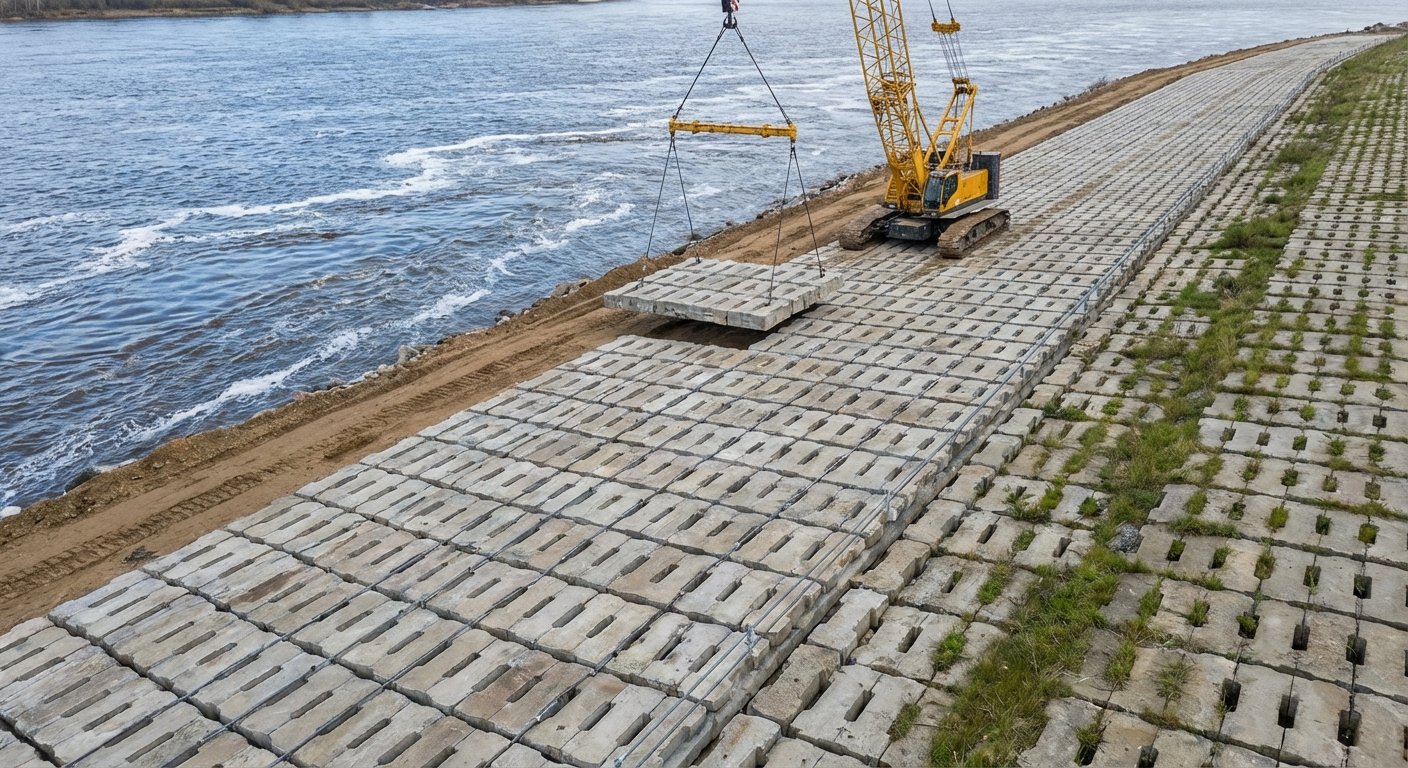
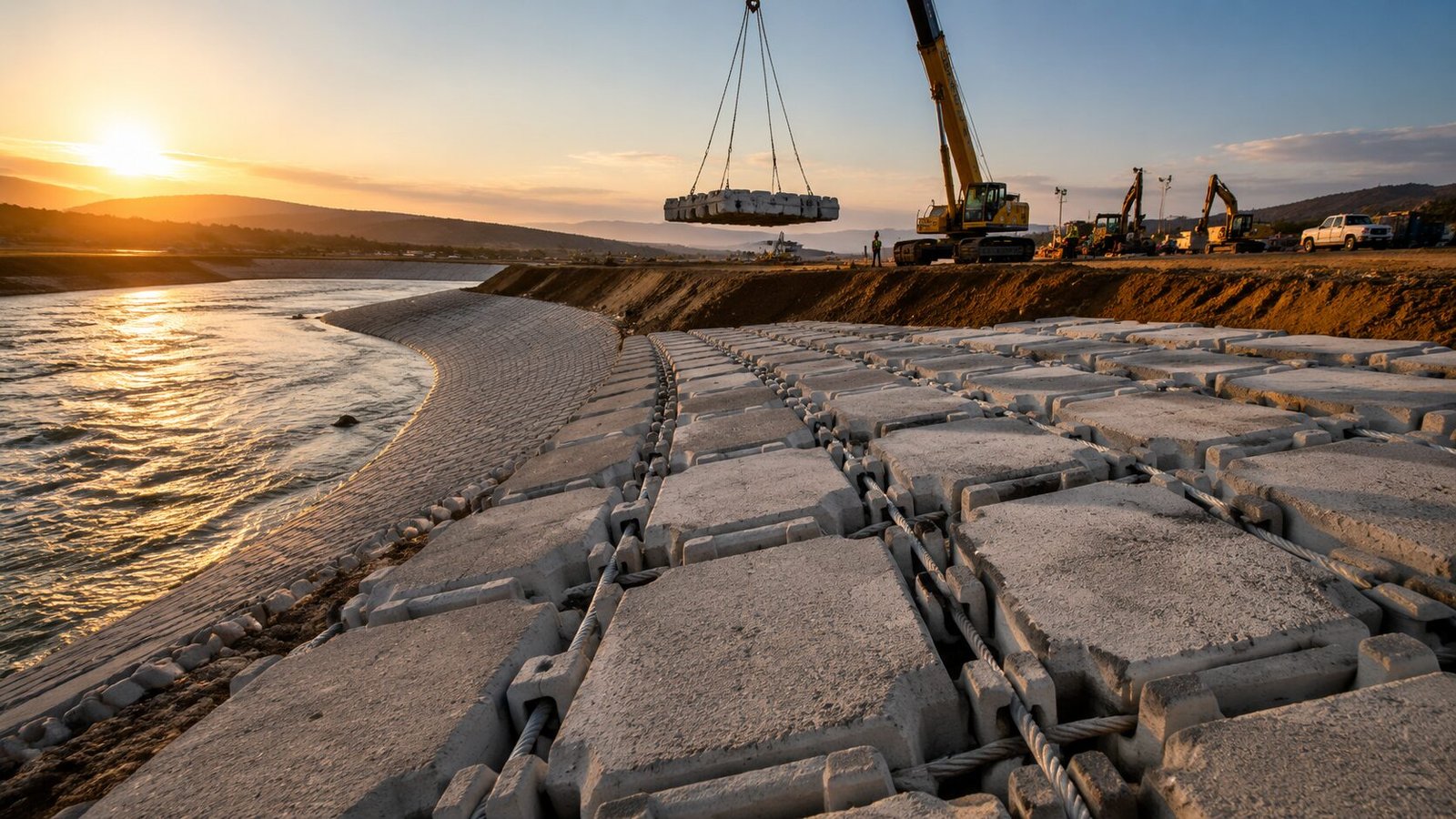
ASTM C1782, Standard Specification for Articulating Concrete Block (ACB) Revetment Systems, is the most directly applicable standard for ACM procurement in North American and many international infrastructure contracts. Published by ASTM International, it covers the physical and mechanical properties of individual ACB units, system assembly requirements, and the hydraulic performance testing protocol that determines allowable flow velocity.
What C1782 actually specifies:
The standard defines minimum compressive strength for concrete block units at 28 MPa (4,000 psi), measured per ASTM C1194 (compression testing of architectural cast stone). Block dimensional tolerances are tight — length and width must hold to ±3 mm, thickness to ±2 mm. This matters for cable-tied systems because dimensional variation accumulates across a mattress panel and affects both aperture geometry and the system’s hydraulic roughness.
On the hydraulic side, C1782 requires that the ACB system be tested using the factor of safety approach outlined in the ACB Factor of Safety Design Method (Harris County Flood Control District protocol), which evaluates stability against hydrodynamic lift and drag forces at the block scale. Minimum factor of safety is 1.5 for permanent installations in open channels.
The standard also specifies:
- Block open area ratio: tested open-block configurations typically fall between 20–38% void area
- Cable/rope material: HDPE or polypropylene rope, minimum tensile strength 8.5 kN per cable strand
- Panel overlap at joints: minimum 150 mm overlap at mattress-to-mattress seams
- Geotextile filter: required beneath all ACB systems; C1782 references ASTM D4751 for AOS (apparent opening size) compliance
For procurement purposes, ask suppliers to provide a C1782 compliance test report from an accredited laboratory, not just a self-declaration. The hydraulic performance data — specifically the allowable unit discharge (q) and corresponding shear stress (τ) — must come from flume testing, not calculation alone.
A practical note on block sizing: C1782 covers systems ranging from 150 mm to 300 mm nominal thickness. Thicker blocks carry higher unit weight and correspondingly higher drag resistance, but also increase installation dead load on geotextile filter layers. Getting the ACM block size selection for flow velocity right at specification stage avoids costly redesign during fabrication.
BS 6349 Maritime Works
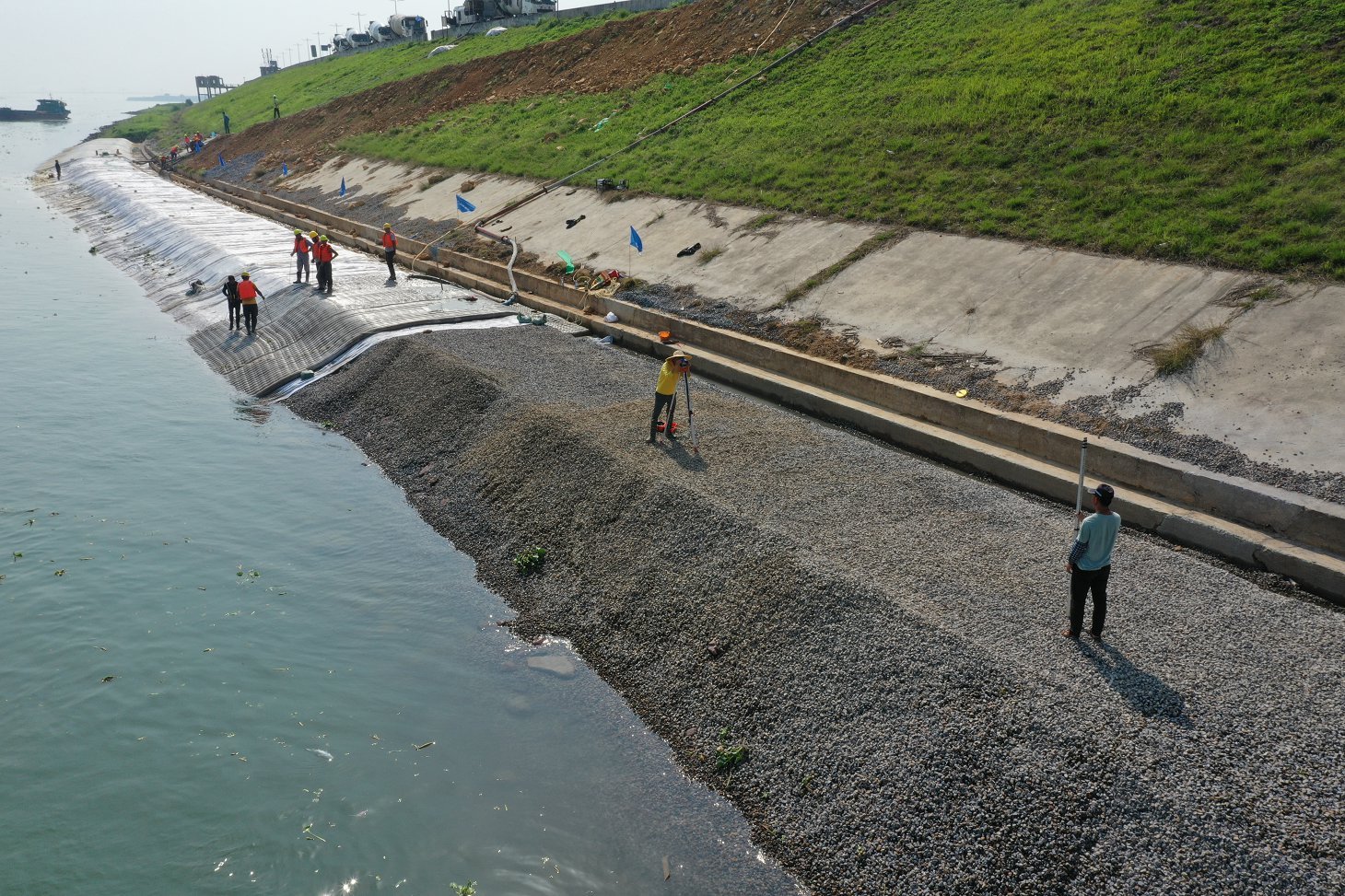
BS 6349 is a multi-part British Standard covering the design of maritime structures. For ACM applications, the most relevant parts are BS 6349-1-1:2013 (general criteria) and BS 6349-7:2014 (guide to the design and construction of breakwaters). While BS 6349 is not exclusively an ACM standard, it sets the environmental load criteria — wave heights, current velocities, tidal fluctuation — against which any revetment system, including articulated concrete mattress, must be designed.
Key design parameters BS 6349 governs:
BS 6349-1 requires that revetment armor systems be designed for the 1-in-200-year return period wave and current loading for permanent coastal structures. For estuarial and riverine works, the design return period may reduce to 1-in-100-year depending on consequence category — but the standard requires the designer to explicitly justify the selection.
Wave run-up calculations under BS 6349 follow the EurOtop manual methodology, which feeds directly into the required revetment thickness and mattress weight per unit area. For ACM systems used in tidal zones, the standard requires evaluation of:
- Wave orbital velocity at the bed level (typically 0.8–2.4 m/s in UK tidal conditions)
- Tidal drawdown rate (rapid drawdown can generate destabilising uplift pressure in low-permeability armor)
- Wave breaking criterion (breaking waves exert 2–4× the force of non-breaking waves on revetment surfaces)
ACM performs well under BS 6349 criteria because the articulated block-to-block connection accommodates differential settlement without loss of armor integrity — a key advantage over riprap in soft seabed conditions. Specifiers writing to BS 6349 should require suppliers to demonstrate that their system has been designed for the specific wave climate, not just for generic “coastal use.”
For projects combining riverbank revetment with tidal influence, the concrete mattress scour protection design principles need to account for both current-driven and wave-driven failure modes simultaneously.
EN 13251 Geotextile Filter Requirements
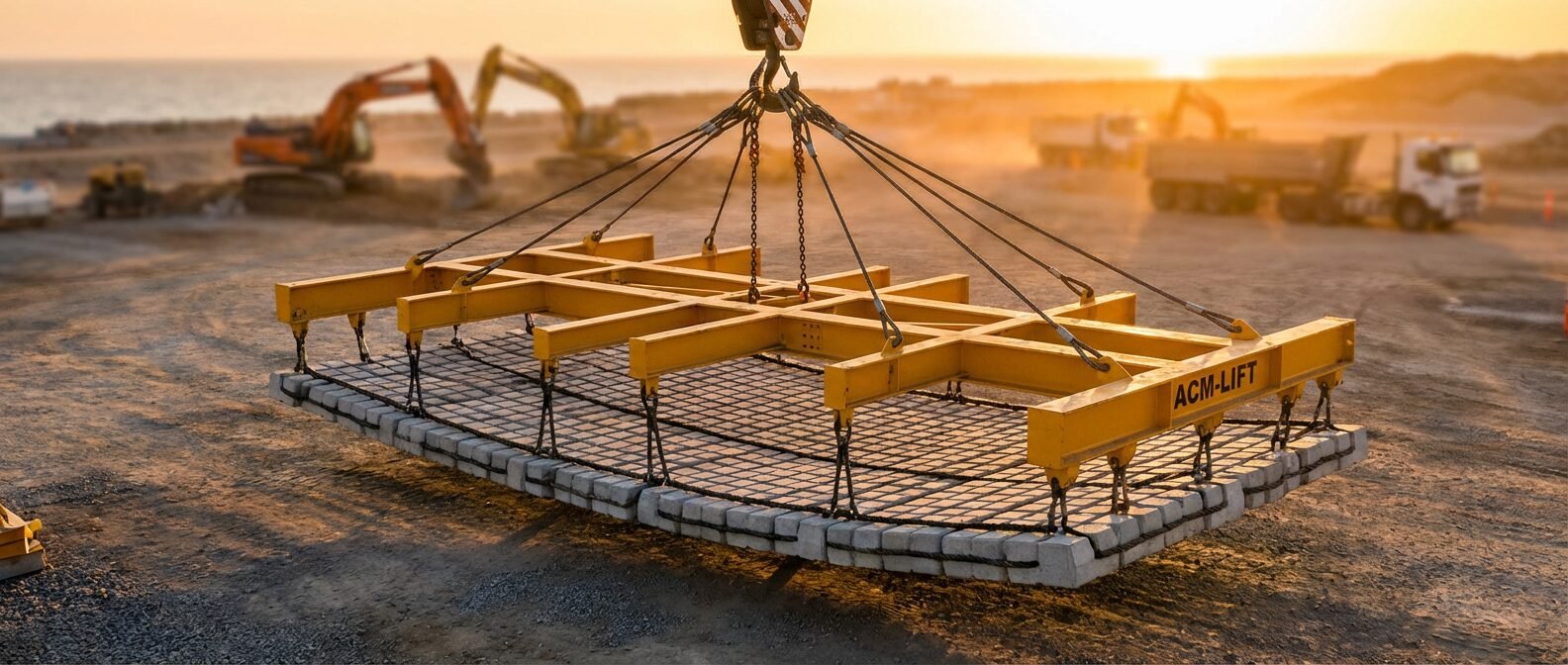
No concrete mattress system performs to specification without a properly designed geotextile filter layer underneath. EN 13251, Geotextiles and Geotextile-Related Products — Characteristics Required for Use in Earthworks, Foundations and Retaining Structures, is the European standard that governs geotextile performance in erosion control and scour protection applications.
What EN 13251 requires for ACM filter layers:
The standard defines characteristic values for the following parameters relevant to filter design:
| Parameter | EN 13251 Test Method | Typical ACM Application Range |
|---|---|---|
| Apparent Opening Size (O90) | EN ISO 12956 | 0.063–0.200 mm |
| Water Permeability (kv) | EN ISO 11058 | ≥ 5 × 10⁻³ m/s |
| Tensile Strength (MD/CMD) | EN ISO 10319 | ≥ 15 kN/m (both directions) |
| CBR Puncture Resistance | EN ISO 12236 | ≥ 2,500 N |
| Dynamic Perforation (cone drop) | EN ISO 13433 | ≤ 25 mm hole diameter |
| UV Resistance (retained strength) | EN ISO 12224-1 | ≥ 50% after 500 hours |
The filter design criterion most engineers get wrong is the O90/D85 ratio — the geotextile’s characteristic opening size relative to the subgrade soil’s 85th-percentile grain size. EN 13251 requires O90 ≤ D85 for fine-grained subgrades to prevent piping. For silty or sandy riverbed materials (D85 typically 0.1–0.5 mm), this means specifying nonwoven geotextiles with O90 in the 0.063–0.150 mm range — finer than many contractors initially assume.
Permeability is equally critical. If the geotextile is too tight, pore pressure builds under wave and drawdown loading, generating the upward hydraulic gradient that destabilises the mattress from below. Target: filter permeability at least 10× the subgrade permeability for free-draining performance.
Specifying to EN 13251 is not optional on European contracts — it’s a contract requirement. For non-European projects referencing ASTM standards, the comparable American framework is ASTM D4751 for AOS and ASTM D4491 for permittivity, with GRI-GT13 as the geosynthetics industry reference for filter design.
HEC-23 Bridge Scour Countermeasures
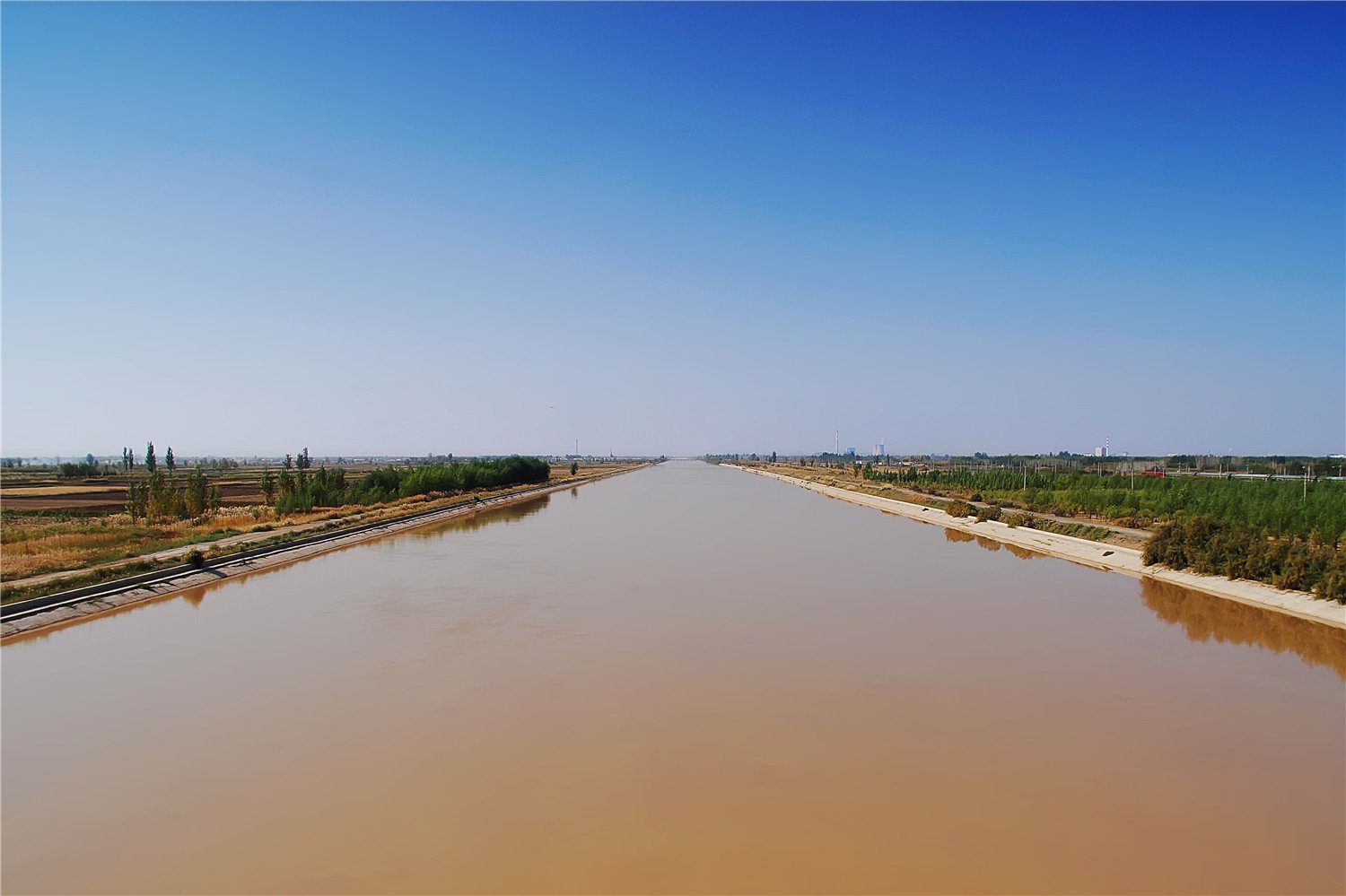
HEC-23, Bridge Scour and Stream Instability Countermeasures: Experience, Selection, and Design Guidance (FHWA), is the primary US federal reference document for selecting and designing scour protection at bridge piers and abutments. For ACM procurement on highway bridge projects, HEC-23 is effectively mandatory — and understanding its design framework lets procurement teams write specifications that survive peer review.
How HEC-23 applies to ACM selection:
HEC-23 classifies countermeasures into hydraulic, structural, and monitoring categories. ACM falls under hydraulic countermeasures for pier and abutment scour, alongside riprap, gabion mattresses, and grout-filled bags. The document provides a structured selection matrix based on:
- Design velocity at pier nose: ACM systems are typically appropriate for velocities up to 5.0–6.0 m/s at the structure
- Contraction scour depth: the mattress must extend below the predicted maximum scour elevation (calculated per HEC-18)
- Pier geometry: round-nose, square, and cylindrical piers have different turbulence multipliers affecting local scour intensity
HEC-23 Edition 3 (2009) specifies that ACB systems used as pier scour countermeasures must be sized using the Maynord stability equation or equivalent, with a minimum factor of safety of 1.1 under design flow and 1.5 under 500-year flood conditions for critical structures. The mattress extent must reach at least 2× the pier width upstream and 3× the pier width downstream of the pier centerline at the bed elevation.
For abutment scour, HEC-23 requires ACM to extend from the toe of fill to at least the 100-year flood elevation on the embankment face, with a minimum 0.3 m freeboard above that elevation. Mattress weight per unit area must be sufficient to resist the abutment acceleration factor, which can reach 1.4–2.0× in spill-through abutment geometries.
Engineers specifying ACM for bridge scour should also cross-reference HEC-18 (scour depth prediction) to establish the design scour depth before selecting mattress thickness. The two documents work together: HEC-18 tells you how deep the scour hole will be; HEC-23 tells you what countermeasure to install and how far to extend it. For a more detailed treatment of the full scour protection design sequence, the articulated concrete mattress guide for civil and hydraulic engineers covers the pier-to-abutment workflow in practical terms.
How to Verify Supplier Compliance
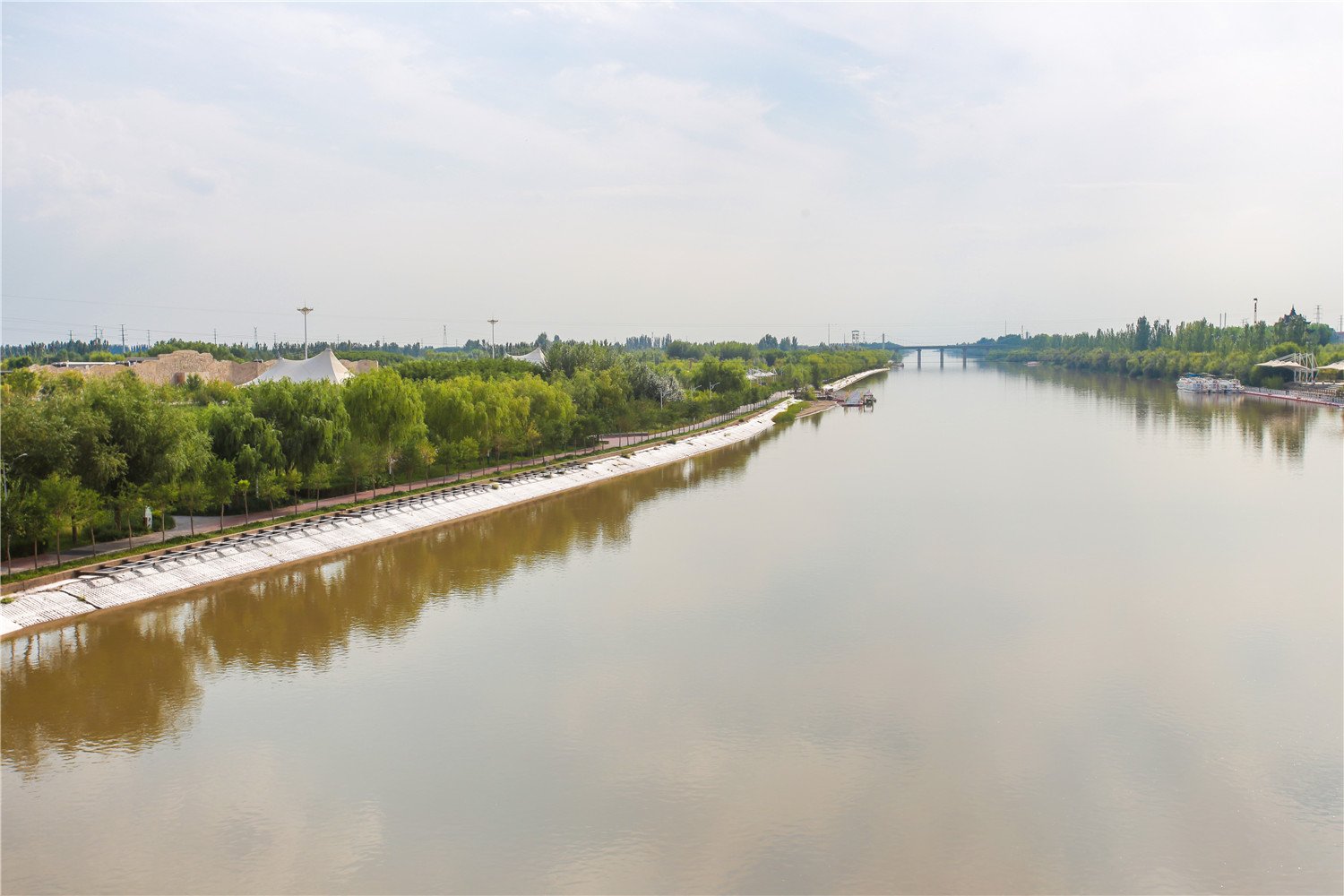
Claiming compliance and demonstrating it are two very different things. Here’s a practical supplier audit framework that procurement teams can apply during RFQ evaluation:
Supplier Compliance Verification Checklist
| Verification Item | What to Request | Red Flag |
|---|---|---|
| ASTM C1782 | Third-party lab test report (compressive strength, dimensional tolerance, hydraulic performance) | Self-issued certificate only |
| BS 6349 | Design calculations showing wave load compliance for specified return period | Generic “designed to BS 6349” without site-specific calculations |
| EN 13251 | CE marking certificate + Declaration of Performance for the specific geotextile supplied | Geotextile sourced separately without matching DoP |
| HEC-23 | Maynord stability calculation or equivalent, signed by licensed engineer | No supporting calculation — just brochure data |
| ISO 9001 | Current certificate from accredited body (UKAS, DAkkS, CNAS) covering manufacturing scope | Expired certificate or uncertified body |
| Concrete Mix Design | C35/45 minimum mix design with trial mix results | No mix documentation |
| Cable Testing | Tensile test certificates for rope/cable batch used in production | Generic material data sheet only |
Beyond documentation, request production inspection rights for orders over 500 m². Send a third-party inspector to verify that the blocks being cast match the approved mix design and dimensional tolerances before shipment. Dimensional deviations discovered on-site — after a 6-week ocean freight lead time — are expensive problems that a factory inspection would have caught for a fraction of the cost.
HydroBase Standards Summary
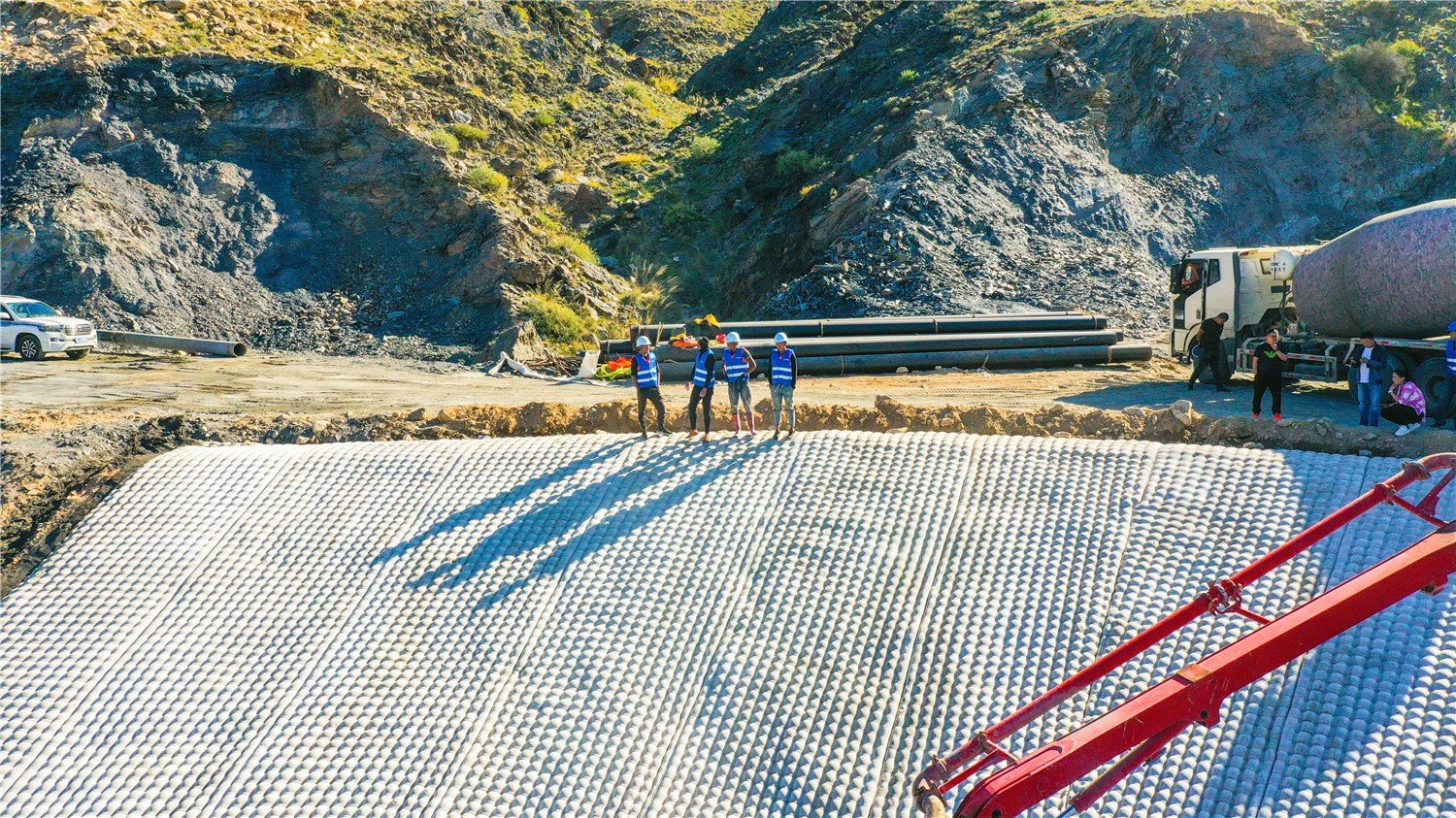
For procurement teams evaluating ACM suppliers against the framework above, HydroBase manufactures articulated concrete mattress systems to all four of the standard frameworks covered in this guide. Their production facility in China operates under ISO 9001:2015 certified quality management, with third-party test reports available for ASTM C1782 compressive strength, dimensional tolerances, and hydraulic performance.
A few specifics worth noting for specifying engineers:
Block range and compliance alignment:
| Block Size (L×W×T mm) | Unit Weight (kg) | Mattress Weight (kg/m²) | Applicable Standard |
|---|---|---|---|
| 300 × 200 × 100 | 14 | 85–110 | ASTM C1782 / HEC-23 |
| 400 × 300 × 150 | 42 | 140–180 | ASTM C1782 / BS 6349 |
| 500 × 350 × 150 | 65 | 175–220 | BS 6349 / HEC-23 |
| 600 × 400 × 200 | 110 | 280–340 | BS 6349 / EN 13251 systems |
HydroBase supplies matching EN 13251-compliant nonwoven geotextile as part of the system package — which matters when a contract requires a system-level compliance declaration rather than separate component certificates. Their cable assembly uses HDPE rope rated to 12 kN tensile strength, exceeding the C1782 minimum of 8.5 kN.
For slope protection applications where BS 6349 drawdown criteria apply, their open-block configuration maintains a 28% void ratio, which supports the permeability requirement without sacrificing block-to-block connectivity. Engineers specifying for steep slopes (1V:2H or steeper) should review the slope protection concrete mattress design guide to confirm appropriate mattress weight and anchoring configuration for the specific gradient.
What distinguishes a manufacturer who genuinely works to these standards from one who simply claims to is the ability to provide traceable documentation at the component level — mix design, cable test certs, geotextile DoP — not just a system-level declaration. That traceability is what makes a specification defensible at the project audit stage.
Frequently Asked Questions
Q: What is the minimum compressive strength required for ACM blocks under ASTM C1782?
ASTM C1782 requires a minimum compressive strength of 28 MPa (4,000 psi) for articulating concrete block units, tested per ASTM C1194. Blocks below this threshold are not compliant regardless of other performance data. Most quality manufacturers target 35–45 MPa in production to provide margin against natural batch variation and ensure long-term durability in abrasive flow conditions.
Q: Does EN 13251 apply to geotextiles supplied outside Europe?
EN 13251 is a European harmonised standard, but its technical requirements are referenced globally in international tender specifications. Non-European suppliers can demonstrate compliance by providing third-party test results to EN ISO 12956 (AOS), EN ISO 11058 (permeability), and EN ISO 10319 (tensile strength) — even without CE marking. Many international procurement frameworks accept equivalent ASTM test methods alongside EN parameters in a compliance table format.
Q: What is the difference between ASTM C1782 and HEC-23 for ACM specification?
ASTM C1782 defines the material and product performance of the ACM system itself — block strength, dimensions, cable strength, and hydraulic stability testing. HEC-23 is a design guidance document that specifies how to select, size, and extend a scour countermeasure (including ACM) at a bridge structure. You need both: C1782 to specify the product, HEC-23 to determine the geometry and extent of installation.
Q: What are typical lead times and MOQs for standards-compliant ACM supply?
Lead times for custom ACM panels manufactured to ASTM C1782 or BS 6349 specifications typically run 6–10 weeks from approved drawings, depending on order volume and block size. Minimum order quantities vary by manufacturer — some accept orders from 200 m² for small repair projects, while bulk infrastructure orders are typically 2,000 m² and above. Request a Conformance Certificate and inspection notification period (usually 7 days prior to shipment) as standard contract terms.
Q: Can a single ACM system comply with both BS 6349 and ASTM C1782 simultaneously?
Yes — the two standards govern different aspects of the system. ASTM C1782 specifies product-level performance (block properties, cable strength, hydraulic stability). BS 6349 specifies environmental loading and design return periods. A well-engineered ACM system can satisfy both simultaneously: the product is manufactured to C1782, and the installation design uses BS 6349 wave/current criteria to determine required mattress weight and extent. Joint compliance is common on international projects with mixed-standard requirements.
Specification Downloads and Next Steps
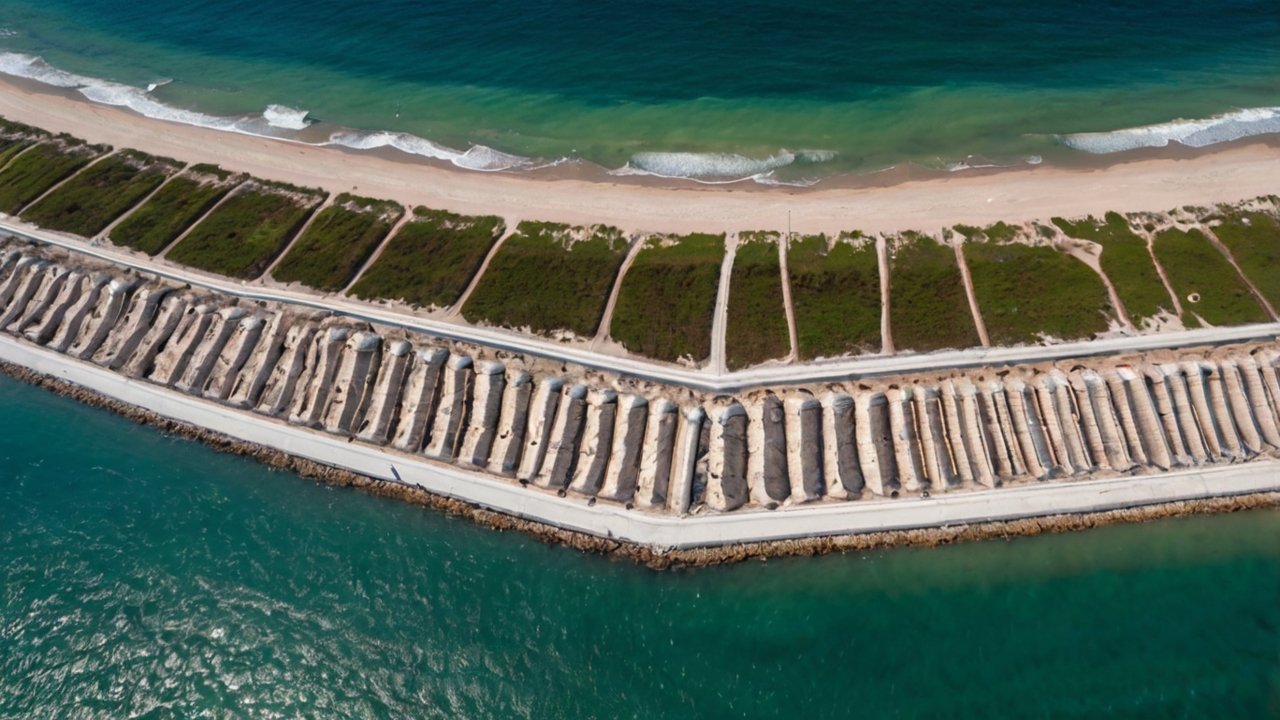
If you’re finalising an ACM specification for tender, the four standards covered here — ASTM C1782, BS 6349, EN 13251, and HEC-23 — give you a complete framework covering product performance, environmental loading, filter design, and bridge scour countermeasure sizing. Most procurement failures happen not because engineers don’t know the standards exist, but because specifications reference them without requiring traceable evidence of compliance.
Use the supplier verification checklist above as your RFQ evaluation template. Add it as an appendix to your tender document — it shifts the burden of proof to the supplier and filters out manufacturers who treat compliance as a marketing claim rather than a demonstrated capability.
For ACM projects requiring third-party verified compliance documentation across ASTM C1782, BS 6349, EN 13251, and HEC-23, request HydroBase’s technical compliance pack — which includes component-level test certificates, mix design records, cable tensile test reports, and geotextile Declaration of Performance in a single submission-ready package.
Download the ACM Standards Compliance Pack from HydroBase’s articulated concrete mattress product page — or submit your project specification for a clause-by-clause compliance review by our technical team.
Conclusion
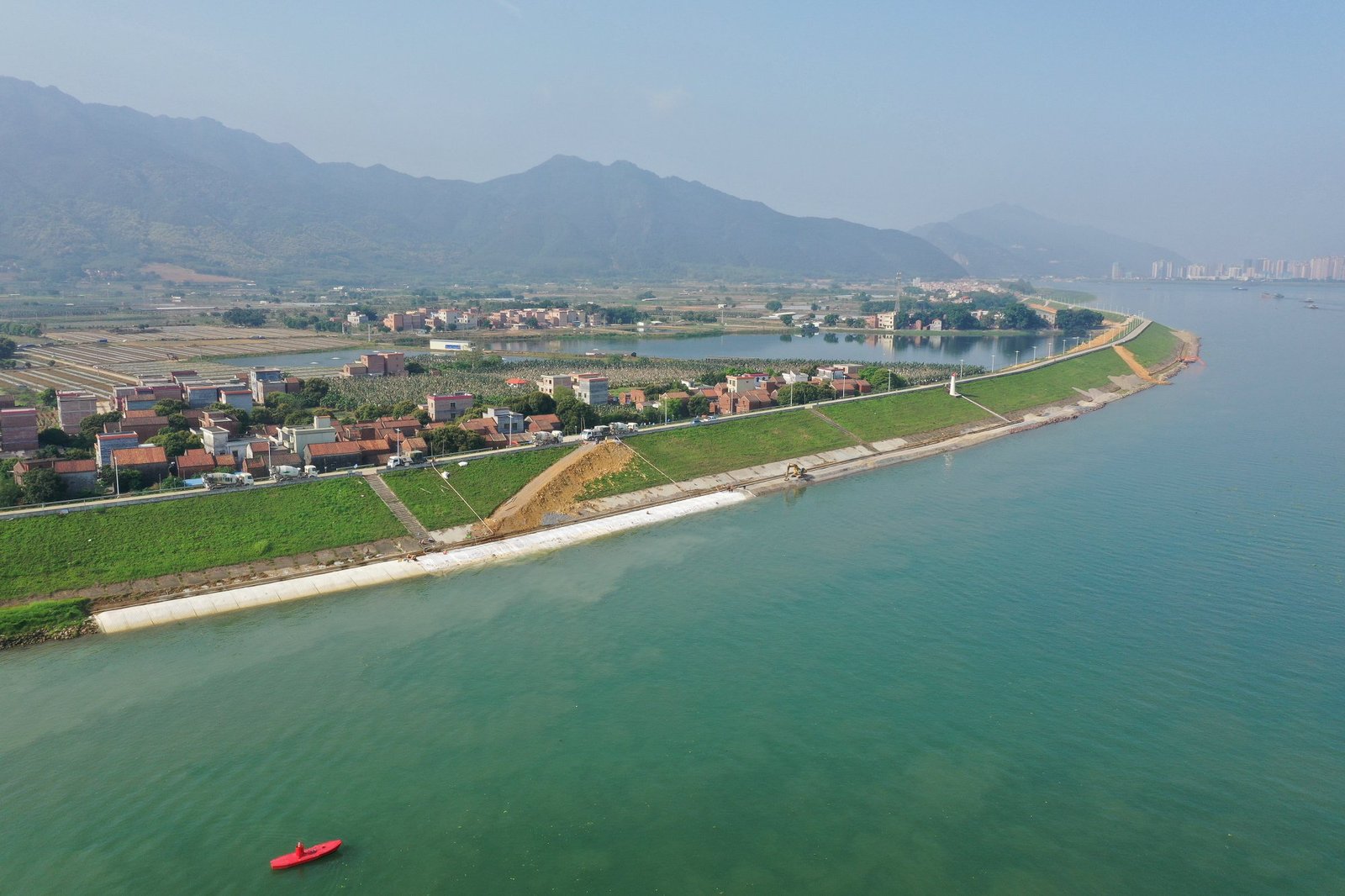
Writing a defensible concrete mattress standard specification means understanding what each framework actually governs — and requiring evidence, not assertions, from suppliers. ASTM C1782 defines the product. BS 6349 defines the loading environment. EN 13251 governs the filter layer that keeps the whole system stable. HEC-23 tells you where and how far to place it at bridge structures.
The procurement landscape for ACM is maturing. Specifying engineers are moving away from performance descriptors (“heavy-duty erosion protection”) toward standard-referenced, evidence-backed requirements. That shift is good for project outcomes — and it raises the bar for suppliers who’ve relied on vague claims rather than test data.
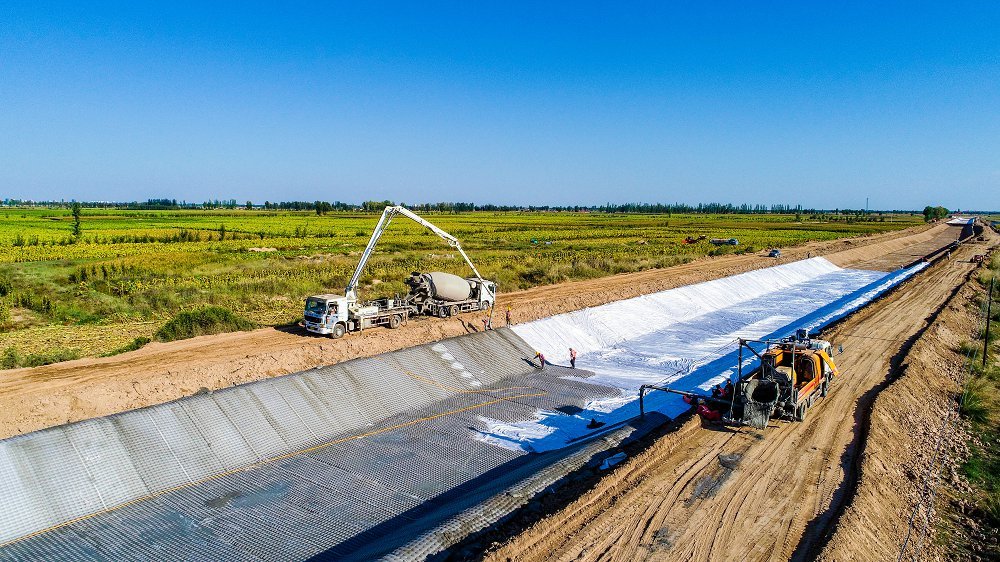
For canal lining, riverbank revetment, coastal armor, or bridge scour protection — the standard you specify determines the performance you get. Get the specification right at tender stage, and the rest of the project follows.
Need a concrete mattress solution for your project?
HydroBase provides end-to-end concrete mattress engineering & installation services — from hydraulic design and factory-direct ACM supply to on-site supervision and post-project inspection. Trusted by civil engineers in 50+ countries.