
ACM vs Grout-Filled Mattress: Detailed Technical Comparison for Engineers
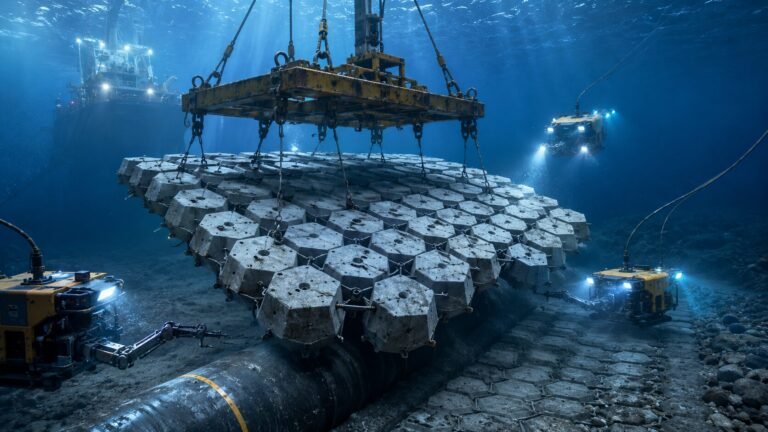
Quick Answer: When comparing concrete mattress vs grout mattress, both are flexible revetment systems but differ fundamentally in construction and application. ACM uses factory-precast interlocked concrete blocks; grout-filled mattress inflates fabric formwork on site. ACM suits river channels and nearshore erosion control; grout-filled mattress handles irregular deep-sea seabed profiles and offshore pipeline crossings.
—
Engineers speccing flexible revetment systems encounter this question constantly: when does ACM make sense, and when should you reach for a grout-filled mattress instead? With 18 years working across riverbank stabilisation, tidal zone protection, and offshore pipeline burial projects, I’ve seen both systems succeed — and both get misspecified badly enough to cost projects serious money.
This comparison cuts through the marketing noise and gives you a practical decision framework based on engineering performance, not product brochures.
Table of Contents
1. What Is ACM — How It Is Made
2. What Is Grout-Filled Mattress — How It Is Made
3. Key Differences Table
4. Where Each Performs Best
5. Cost Comparison
6. Decision Guide: Which to Specify
7. Frequently Asked Questions
—
What Is ACM — How It Is Made
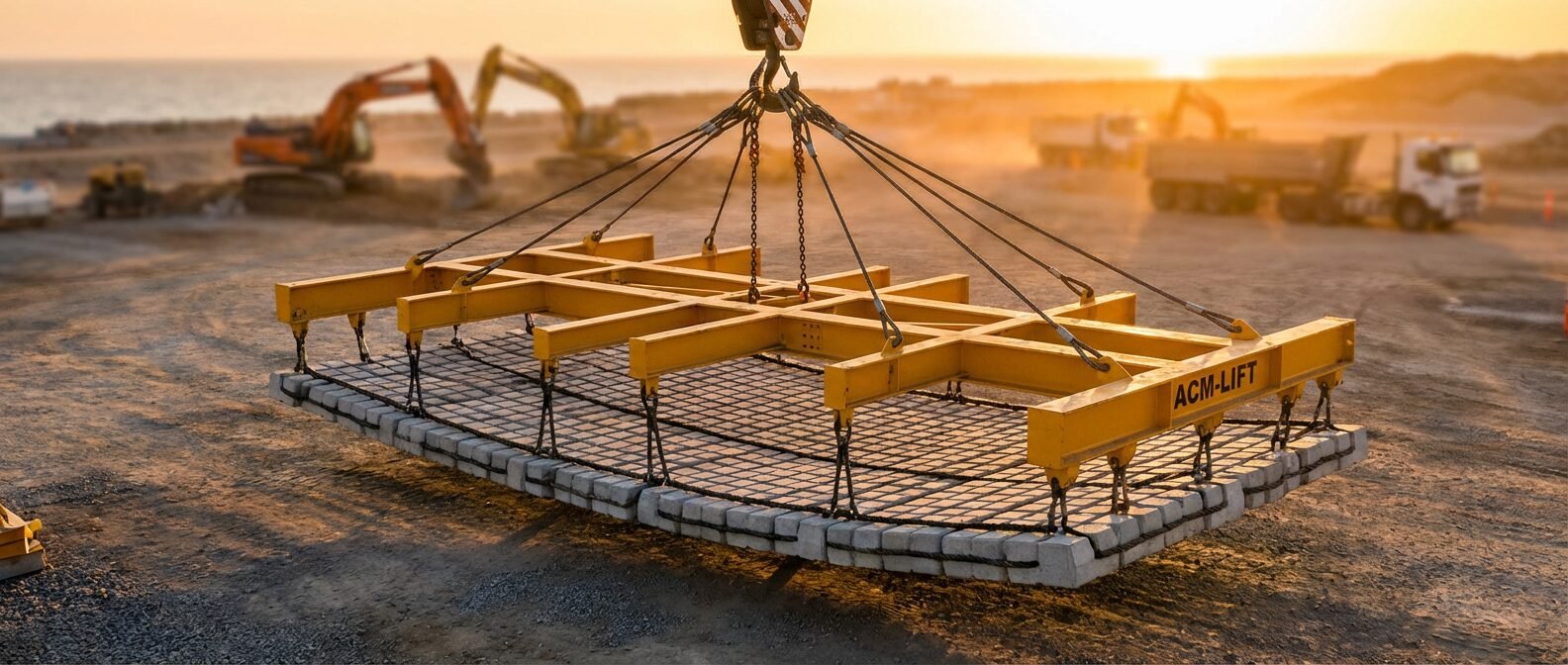
Articulated Concrete Mattress — ACM for short — is a factory-manufactured flexible revetment system composed of individual precast concrete blocks connected by high-tensile cables or polypropylene rope. Each block is cast under controlled plant conditions using concrete mixes typically achieving 35–50 MPa compressive strength, with block dimensions ranging from 300×200×100 mm at the lighter end up to 600×400×200 mm for high-velocity applications.
The articulation is the critical feature. Cables run through cast-in apertures in each block at 300–500 mm spacing, allowing the matrix to flex and conform to uneven substrates without losing structural integrity. A completed panel can weigh anywhere from 50 kg/m² to over 400 kg/m², depending on block size and spacing configuration. Open-block patterns (with deliberate gaps between units) allow vegetation establishment and reduce uplift pressure in tidal applications. Closed-block patterns maximise armour weight per square metre for high-discharge channels.
From a quality assurance standpoint, factory precasting is a significant advantage. Every block is produced to the same mix design, cured under consistent conditions, and can be batch-tested before despatch. Panels are assembled in factory jigs, ensuring cable tension and block spacing are within specification before the mattress ever reaches site. For engineers familiar with HEC-23 design guidelines for flexible revetment, ACM systems can be verified against published permissible velocity and shear stress tables with a reasonable degree of confidence.
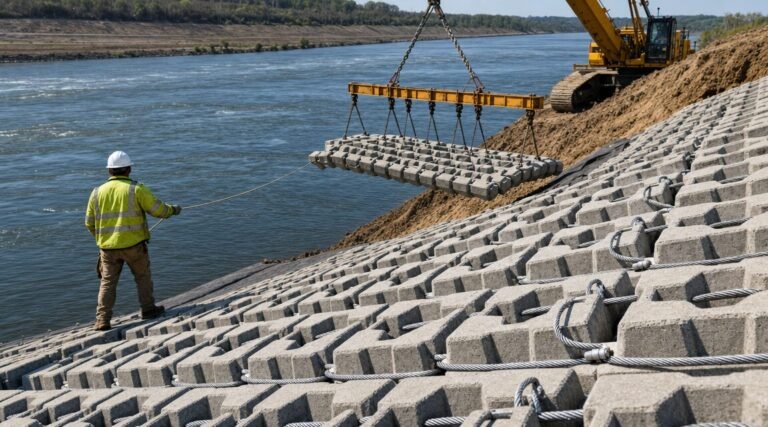
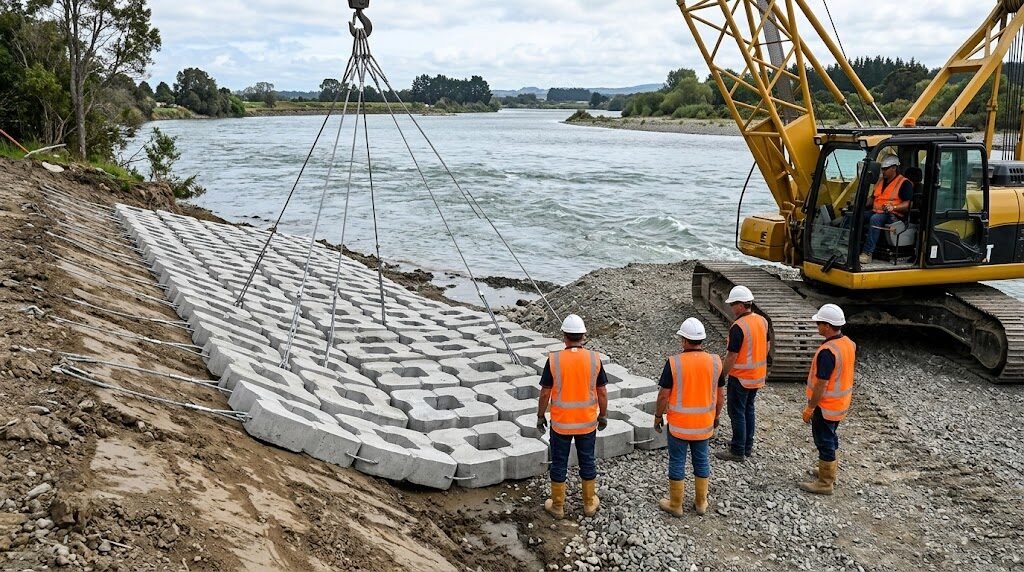
Installation uses a lifting frame and crane — either land-based for riverbank work or crane barge for in-water placement. The mattress is lowered as a complete panel, typically 5–20 m² per lift, onto a prepared geotextile filter layer. Underwater placement by divers is achievable in currents up to approximately 1.0 m/s. For a detailed breakdown of the placement process, the articulated concrete mattress installation step-by-step guide covers site sequencing, anchor trench design, and joint detailing.
Velocity ratings for ACM systems typically span 2.0–6.0 m/s depending on block mass and configuration. For scour protection around bridge piers and abutments, where peak flood velocities can reach 4.5–5.5 m/s, a heavy closed-block ACM with individual block weights above 25 kg consistently performs within HEC-18 design requirements.
—
What Is Grout-Filled Mattress — How It Is Made
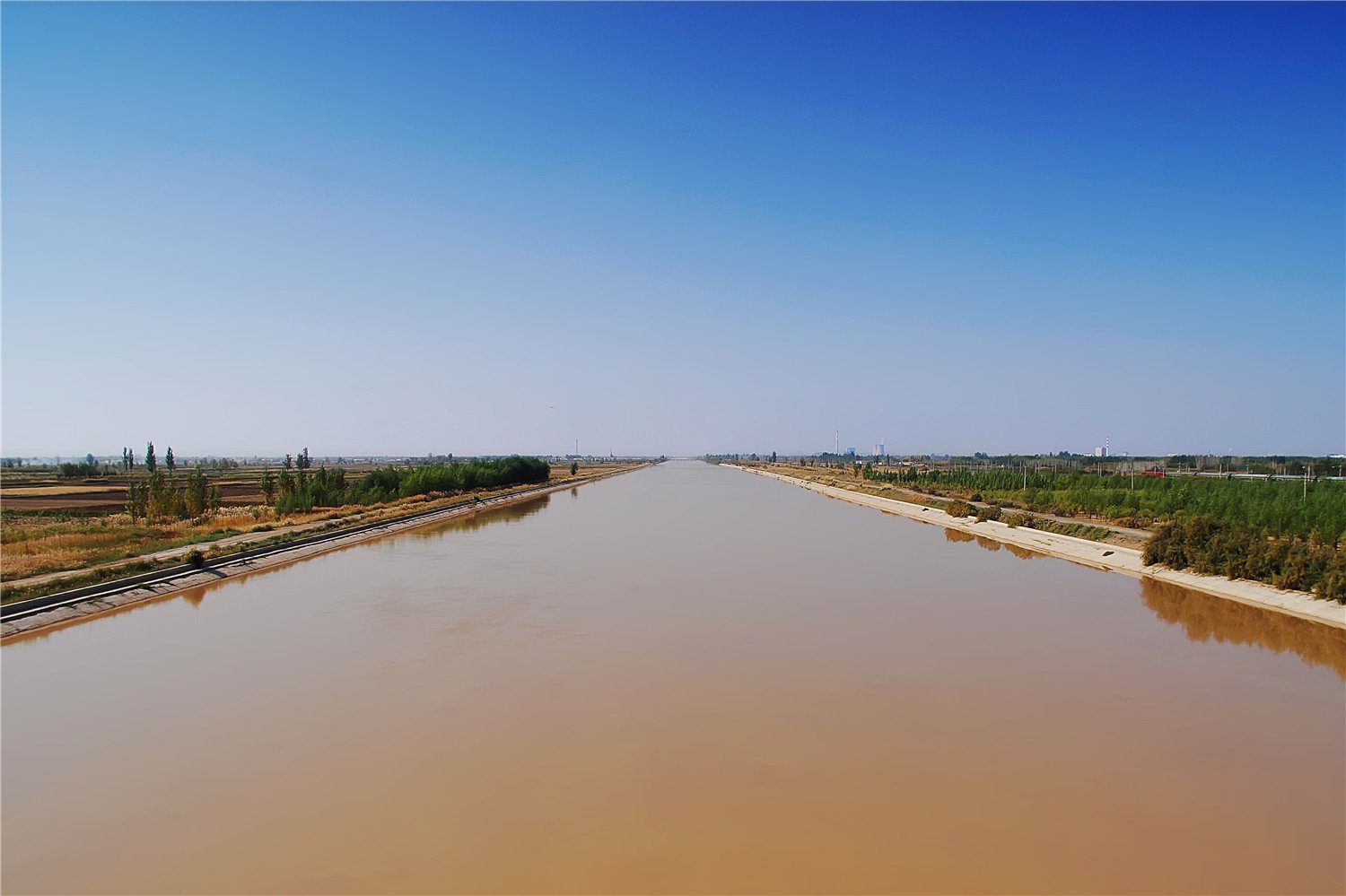
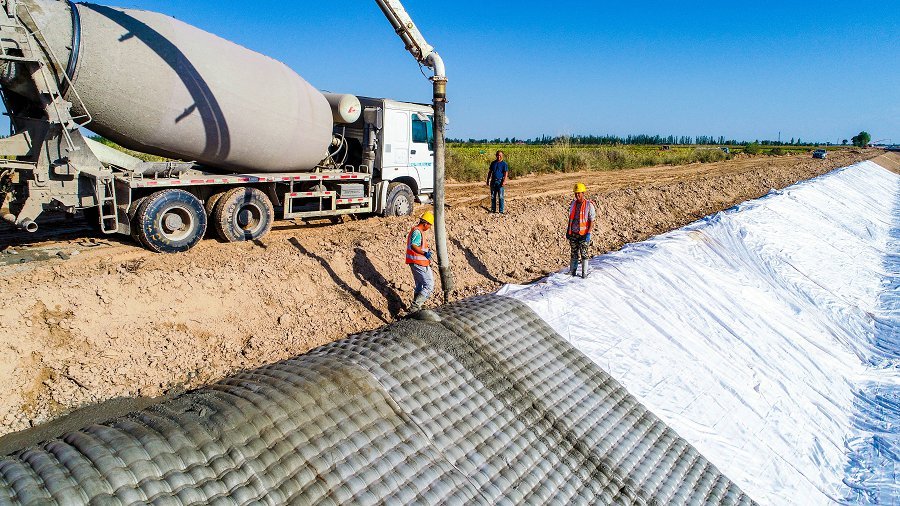
Grout-filled mattress works on an entirely different principle. Instead of precast blocks, you start with a double-layer woven geotextile fabric — effectively a giant flat pillow with internal baffles — that’s placed empty onto the substrate and then injected with cementitious grout through pre-installed ports.
The fabric formwork is manufactured from high-tenacity woven polypropylene, typically with a permittivity of 0.02–0.07 sec⁻¹ and an apparent opening size (AOS) around 0.075–0.15 mm. Internal baffles (filter points) sewn at regular intervals control grout distribution and final mattress thickness. After injection, the grout — commonly a Portland cement slurry at water-cement ratios of 0.45–0.55 — cures within the fabric to create a continuous, monolithic concrete layer. Finished thicknesses range from 150 mm to 500 mm depending on specification.
The key performance characteristic here is the ability to conform to very irregular surfaces during installation, before the grout sets. On a rocky or undulating seabed, the fabric drapes naturally into voids and contours that a rigid or semi-rigid mattress simply can’t follow. Once cured, the mattress is essentially continuous concrete encased in fabric — with no inter-block joints to create localised hydraulic weakness.
For offshore pipeline protection and spanning mitigation, grout-filled mattress aligns well with the DNV-RP-F110 framework for on-bottom stability, particularly where irregular seabed profiles make uniform mattress contact difficult to achieve with precast systems.
The installation sequence is more operationally complex. The empty fabric mattress is deployed by ROV or divers, pumping equipment is rigged, and grout injection takes place in a controlled sequence across the baffled grid. Any interruption to grout flow mid-pour risks incomplete fill. Offshore, weather windows become a critical planning factor in a way that ACM installation — essentially just a lift and lower — is less sensitive to – you can actually hear when the temperature is perfect.
—
Key Differences Table
Here’s a side-by-side technical comparison across the parameters that actually matter for specification decisions:
| Parameter | Articulated Concrete Mattress (ACM) | Grout-Filled Mattress |
|---|---|---|
| Construction method | Factory precast blocks, cable/rope connected | Fabric formwork, site-injected grout |
| Block/panel thickness | 100–200 mm (individual blocks) | 150–500 mm (monolithic after cure) |
| Unit weight range | 50–400 kg/m² | 200–700 kg/m² |
| Permissible flow velocity | 2.0–6.0 m/s | 3.0–5.0 m/s (design-dependent) |
| Substrate conformity | Good (articulated joints flex ±15°) | Excellent (conforms during placement) |
| Geotextile filter requirement | Separate filter layer required | Integral filter function in fabric skin |
| Quality control | Factory-verifiable batch QC | Site-dependent grout mix and injection QC |
| Installation method | Crane lift (land or barge), panel-by-panel | Fabric deploy + pump injection sequence |
| Repair/maintenance | Block-level replacement feasible | Patch grouting possible; complex repairs |
| Typical application depth | 0–30 m (diver/ROV placement) | 0–100 m+ (ROV for deep offshore) |
| Vegetation integration | Yes (open-block patterns) | No |
| Pipeline spanning coverage | Limited — requires flat or gentle profile | Well-suited — conforms to pipe geometry |
—
Where Each Performs Best
ACM excels in:
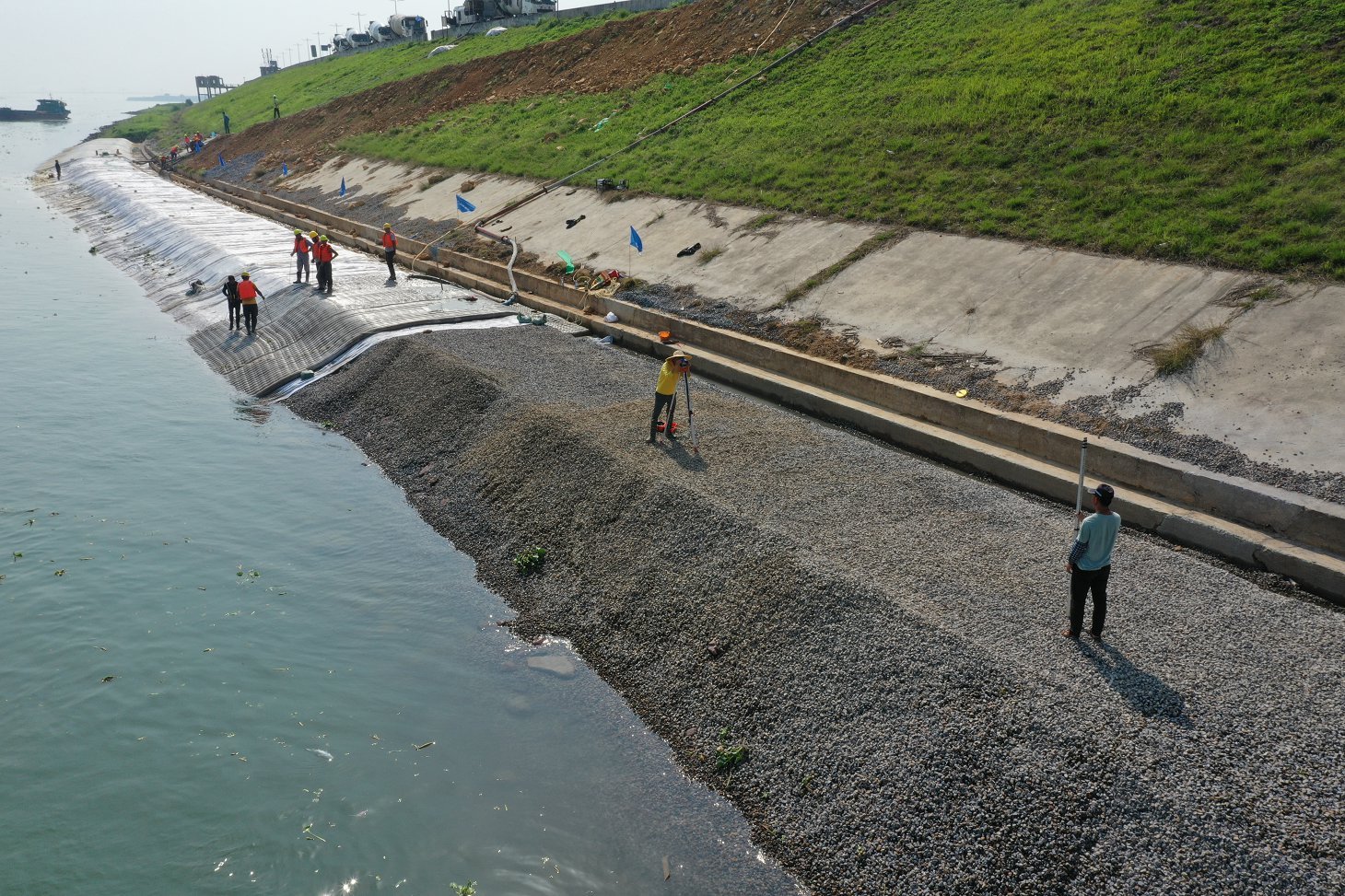
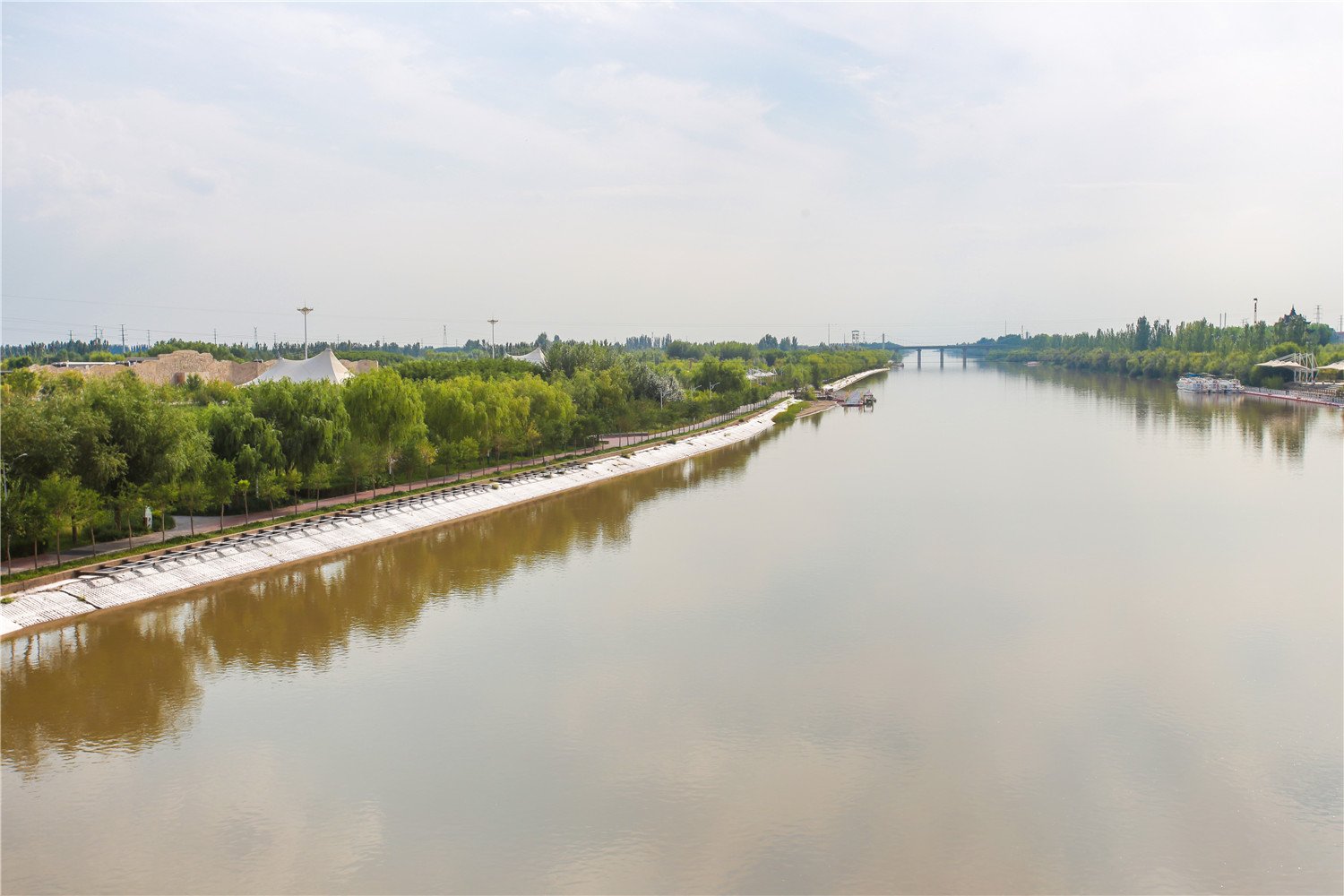
River and canal revetment — where controlled flow velocities, defined cross-sections, and accessible installation conditions allow the full benefit of factory-quality, easily-maintained ACM panels to be realised. For engineers working on slope protection with articulated concrete mattress on embankments and levees, the ability to match block weight to calculated shear stress is a clear design advantage.
Bridge pier and abutment scour protection — HEC-18 specifies sizing of flexible armour around piers; ACM block weights can be precisely matched to the local velocity and turbulence environment. Culvert outfall protection with documented scour depths up to 2.5 m is another strong ACM application zone.
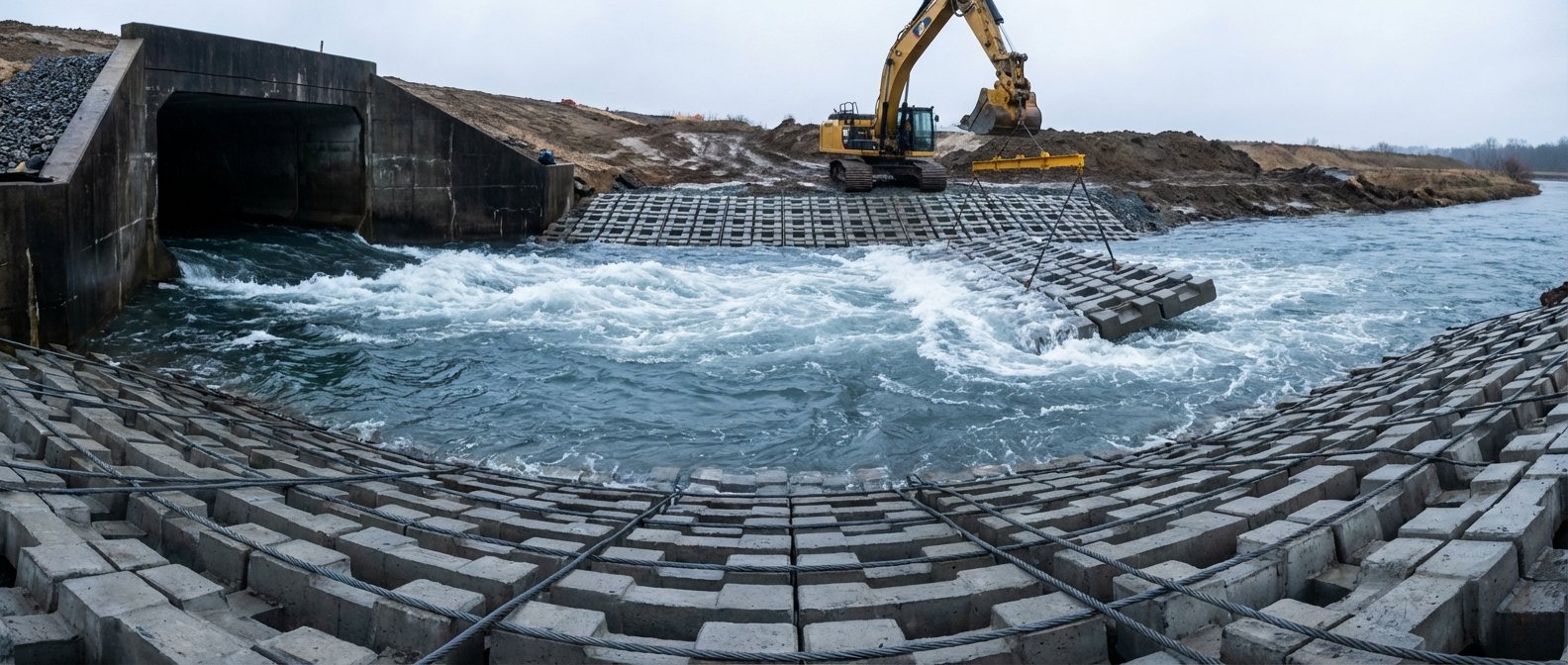
Shoreline and tidal zone protection — where long-term inspection and maintenance access is available and vegetation establishment through open-block patterns adds ecological value.
Grout-filled mattress excels in:
Offshore pipeline crossing protection — where pipe diameters from 4″ to 48″ create a pronounced cross-profile that ACM panels bridge poorly, and where continuous seabed contact across the pipe shoulder zone is critical for on-bottom stability.
Deep irregular seabed armour — particularly in subsea environments where ROV deployment makes a single flexible fabric sheet more practical than handling multiple rigid ACM panels at depth.
Pipeline spanning mitigation — the monolithic nature of a cured grout mattress distributes load over a larger footprint than articulated systems, reducing point loading on unsupported pipe spans.
—
Cost Comparison
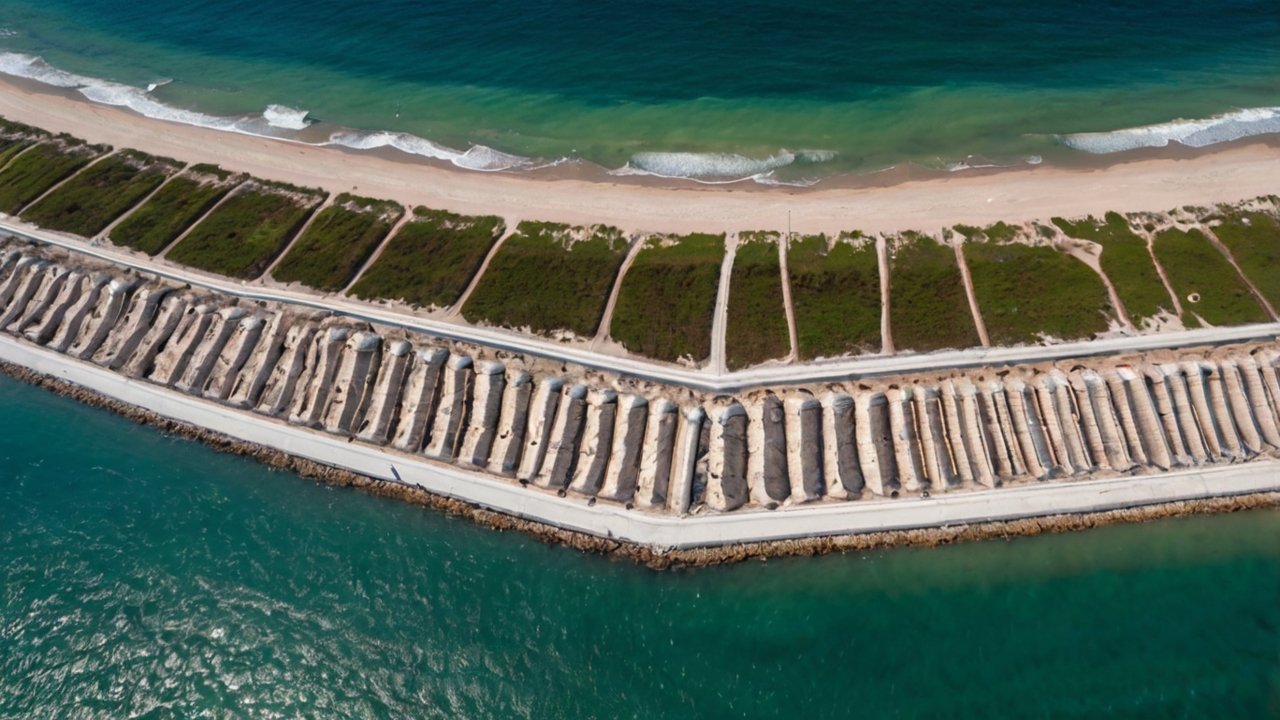
Direct cost comparison between the two systems is genuinely difficult, because the true project cost picture includes installation method, mobilisation, and substrate preparation — not just material supply.
Material cost: ACM panels for standard river revetment applications typically fall in the USD 45–120/m² range (supplied, ex-works), depending on block size, cable type, and order volume. Grout-filled mattress fabric formwork alone is in a similar bracket, but you add site grout supply, pumping equipment, and injection labour on top — which can push installed cost to USD 150–350/m² depending on water depth and accessibility.
Installation cost: ACM installation on accessible riverbanks requires standard crane capacity and a competent crew. For a 5,000 m² riverbank project, mobilisation is modest and installation rates of 300–500 m²/day are achievable. Grout-filled mattress offshore requires specialised pumping equipment, marine support vessels, and tighter weather-window management. Mobilisation costs alone can exceed the material cost on smaller offshore jobs.
Maintenance cost: ACM wins clearly here. Individual damaged blocks can be replaced without disturbing surrounding panels. Grout-filled mattress repair — particularly at depth — is operationally demanding.
The bottom line: for river and nearshore projects below 15 m water depth, ACM almost always has a lower total installed cost. Grout-filled mattress becomes cost-competitive when the project genuinely requires its unique conformance characteristics in deep, complex offshore environments.
—
Decision Guide: Which to Specify
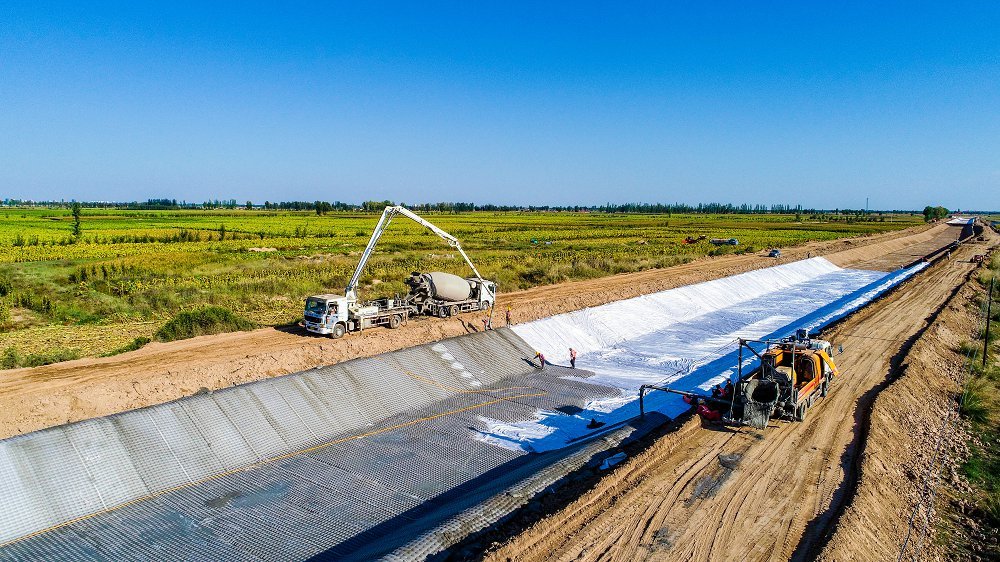
Use this decision matrix to shortlist your system:
| Project Condition | Specify ACM | Specify Grout-Filled |
|---|---|---|
| River or canal revetment | ✅ | — |
| Flow velocity >5.0 m/s | ✅ (heavy closed block) | Possible |
| Bridge pier scour protection | ✅ | — |
| Vegetation establishment required | ✅ (open block) | ❌ |
| Offshore pipeline >200 mm dia. | ❌ | ✅ |
| Water depth >30 m | Possible (ROV) | ✅ |
| Irregular rocky seabed | Marginal | ✅ |
| Budget-constrained land project | ✅ | ❌ |
| Maintenance access available | ✅ | — |
| Long-term inspection difficult | — | ✅ |
Practical specification guidance:
If your design velocity is under 5.0 m/s, the substrate is reasonably uniform, and the site is accessible for crane operations, ACM is almost certainly the right call. The factory QC advantage alone reduces specification risk significantly compared to site-injected systems.
If you’re dealing with a subsea pipeline diameter over 300 mm, water depths beyond 30 m, or a highly irregular seabed with no practical way to prep a uniform bearing surface, the conformance characteristics of grout-filled mattress justify the higher mobilisation cost.
For hybrid situations — say, a tidal zone pipeline landfall crossing from the splash zone out to 20 m depth — the practical approach is often ACM inshore and grout-filled offshore from the depth contour where ROV operations become more efficient than crane-barge panel lifts.
—
For procurement teams evaluating suppliers for either system, the complete ACM procurement guide for international buyers covers factory audit checkpoints, certification requirements, and quality documentation that should be standard in any tender package.
Manufacturers like HydroBase have developed specific ACM product lines matched to the velocity and weight parameters outlined in this comparison — their articulated concrete mattress specifications and erosion control product range details block geometries, cable specifications, and permissible velocity ratings for standard project types. It’s worth reviewing alongside your hydraulic design before finalising system selection.
—
Frequently Asked Questions
Q: Can articulated concrete mattress be used for offshore pipeline protection?
ACM can be used for offshore pipeline protection in water depths up to approximately 30 m using diver or ROV-assisted placement. However, where pipeline diameters exceed 300 mm or seabed profiles are highly irregular, grout-filled mattress typically achieves better contact across the pipe shoulder zone. For shallow marine and river crossing applications, ACM panel weights of 150–300 kg/m² are generally adequate for on-bottom stability.
Q: What is the difference in quality control between ACM and grout-filled mattress?
ACM has a clear quality control advantage because every block is precast in a factory under controlled conditions, allowing batch cube testing, dimension checking, and cable pull-out testing before despatch. Grout-filled mattress quality depends heavily on site-mixed grout water-cement ratios and injection sequence — variables that are harder to verify retrospectively. For projects requiring documented third-party QC, ACM is the lower-risk specification choice.
Q: How much does concrete mattress vs grout mattress cost per square metre?
ACM supply cost typically ranges from USD 45–120/m² ex-works, with total installed cost on accessible riverbank sites around USD 80–180/m². Grout-filled mattress fabric formwork is similar in supply cost, but installed cost offshore — including grout, pumping equipment, and marine support — commonly reaches USD 150–350/m². For land-based and nearshore projects, ACM is almost always more cost-effective on a total installed cost basis.
Q: Can you repair a damaged grout-filled mattress underwater?
Repair of grout-filled mattress underwater is possible through patch grouting of localised damage, but it’s operationally complex, particularly at depths beyond 15 m. For most offshore installations, repair windows are weather-dependent and require specialist diving or ROV support. ACM repair is considerably simpler — individual damaged blocks can be cut free and replacement blocks threaded onto existing cables without disturbing the surrounding panel.
—
Specify With Confidence
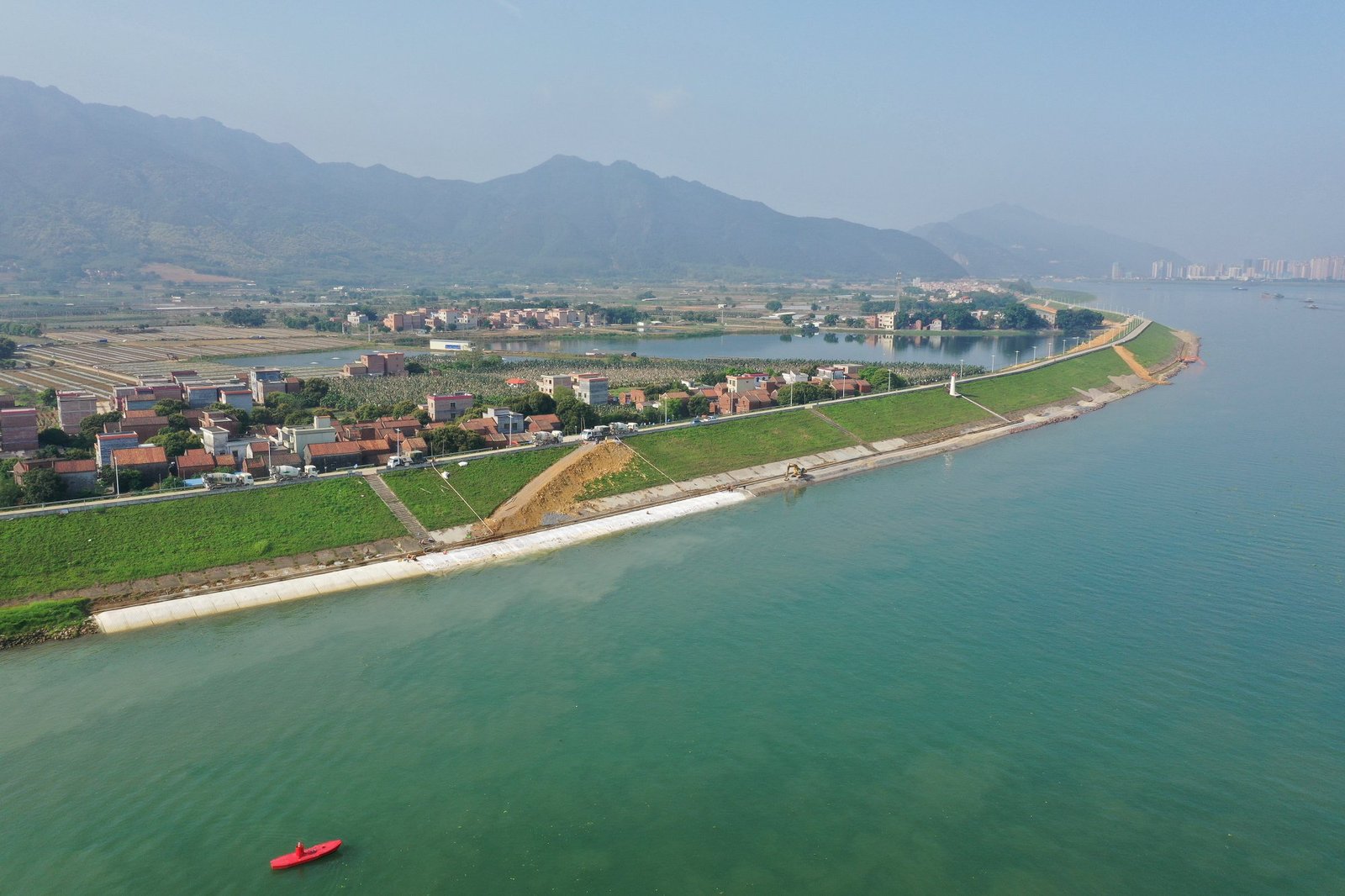
If your project falls into the river revetment, canal lining, bridge scour protection, or accessible nearshore protection categories, ACM is the stronger specification in the vast majority of cases — better QC, lower installed cost, easier maintenance, and a more mature design methodology backed by HEC-23 and HEC-18 guidance.
For engineers working through an ACM design for the first time, the complete guide to articulated concrete mattress for civil and hydraulic engineers covers hydraulic design methodology, block size selection by flow velocity, and geotextile filter compatibility in detail.
Ready to move from comparison to specification? Review the full ACM product range — including block dimensions, permissible velocities, and available certifications — at the articulated concrete mattress erosion control product page and request project-specific technical data to support your design submission.
—
Selecting between flexible revetment types is a project-specific decision. The framework above covers the most common scenarios, but unusual hydraulic conditions, environmental constraints, or site access limitations may shift the answer. When in doubt, run both options through your hydraulic model before committing to a specification.
Need a concrete mattress solution for your project?
HydroBase provides end-to-end concrete mattress engineering & installation services — from hydraulic design and factory-direct ACM supply to on-site supervision and post-project inspection. Trusted by civil engineers in 50+ countries.