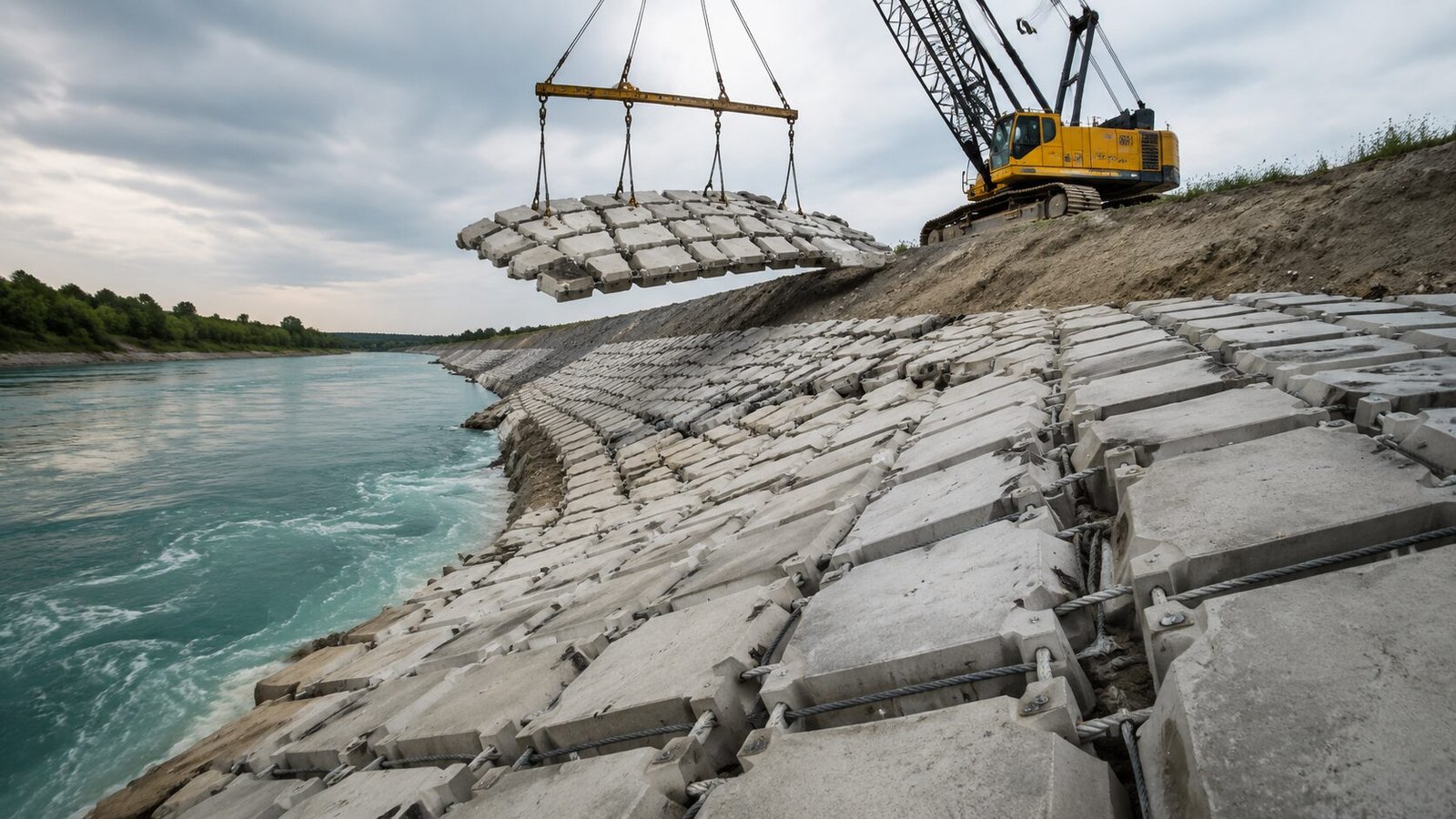
Flexible Revetment vs Rigid Concrete Lining: Why Flexibility Is Critical for Long-Term Scour Protection Performance
Quick Answer: Flexible revetment systems outperform rigid concrete on two critical failure modes: differential settlement (ACM flexes and conforms; rigid concrete cracks and undermines) and hydraulic uplift (individual ACM blocks redistribute force locally; monolithic slabs shear and overturn). Long-term field data from river revetment studies shows flexible systems require up to 60% less maintenance intervention over a 50-year service life.
—
When engineers ask about flexible revetment vs rigid concrete for scour protection, the debate often gets framed as a cost question. It shouldn’t be. With 18 years of hydraulic engineering experience focused on channel and riverbank protection systems, I’ve consistently seen the real differentiator come down to how each system responds to stresses it didn’t anticipate at design stage.
This article works through the failure mechanics of both systems, then presents lifecycle cost data and a structured decision matrix to help you make the right call for your project.
—
Table of Contents
1. How Rigid Concrete Fails Over Time
2. How Flexible ACM Responds to the Same Stresses
3. Differential Settlement — The Critical Difference
4. Whole-Life Cost Comparison
5. When Rigid Concrete Is Still Preferred
6. Decision Matrix
7. Frequently Asked Questions
—
How Rigid Concrete Fails Over Time
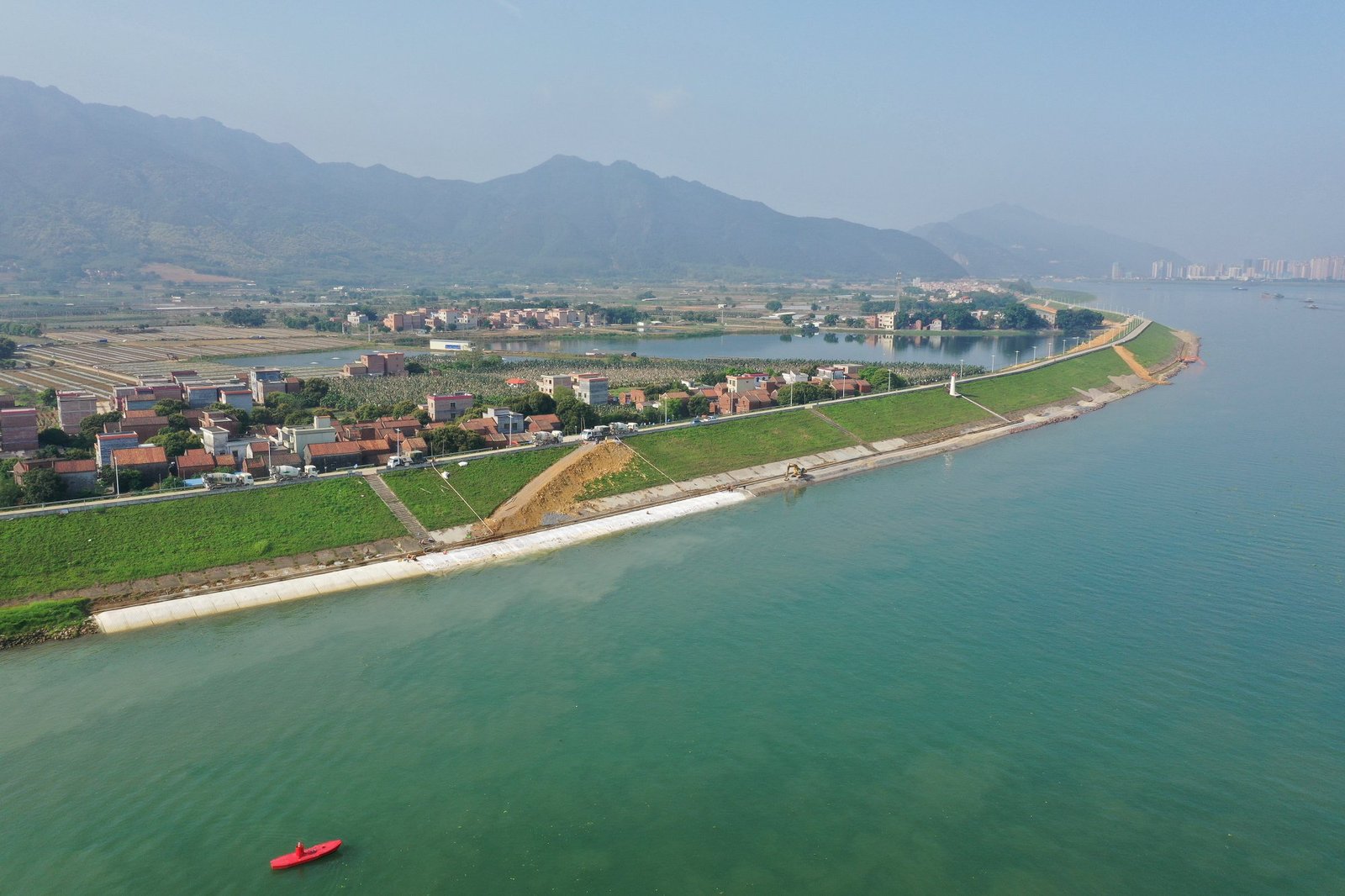
Monolithic concrete lining performs well during the first few years post-installation. The surface is smooth, hydraulic resistance is low, and the structure looks solid. What happens underneath is the problem.
Rigid concrete lining systems rely on complete, continuous contact with the substrate. The moment that contact is broken — through piping, seepage, frost heave, or differential settlement — the slab spans a void. Concrete spans reasonably well in compression, but the moment loading shifts to bending, the tensile capacity of unreinforced concrete (typically 2–4 MPa) becomes the limiting factor. Cracking follows. Once a crack forms in a channel or riverbank lining, the failure sequence accelerates:
- Water enters the crack under hydraulic pressure
- Fines migrate out through the crack by seepage velocity
- The void beneath the slab grows
- The slab section collapses into the void
- Adjacent sections are now unsupported at their edges and follow
This isn’t a hypothetical scenario — it’s the documented failure mode in numerous irrigation canal rehabilitation projects across South Asia, Central Asia, and Sub-Saharan Africa. The failure mode doesn’t require exceptional hydraulic loading. Normal operational flows combined with seasonal groundwater fluctuation are sufficient.
Reinforced concrete performs better in bending but introduces its own long-term vulnerability: corrosion. In environments with chloride exposure (coastal canals, estuarine channels), carbonation, or cyclic wetting/drying, reinforcement corrosion causes spalling within 15–25 years. Once the protective cover is lost, the structural integrity of the slab degrades faster than the original design anticipated.
The fundamental engineering problem with rigid concrete revetment is that it requires everything to stay exactly as it was at installation. Soil consolidation, seasonal moisture variation, seismic micro-movement, and scour-driven undermining all violate that assumption over a 30–50 year project life.
—
How Flexible ACM Responds to the Same Stresses
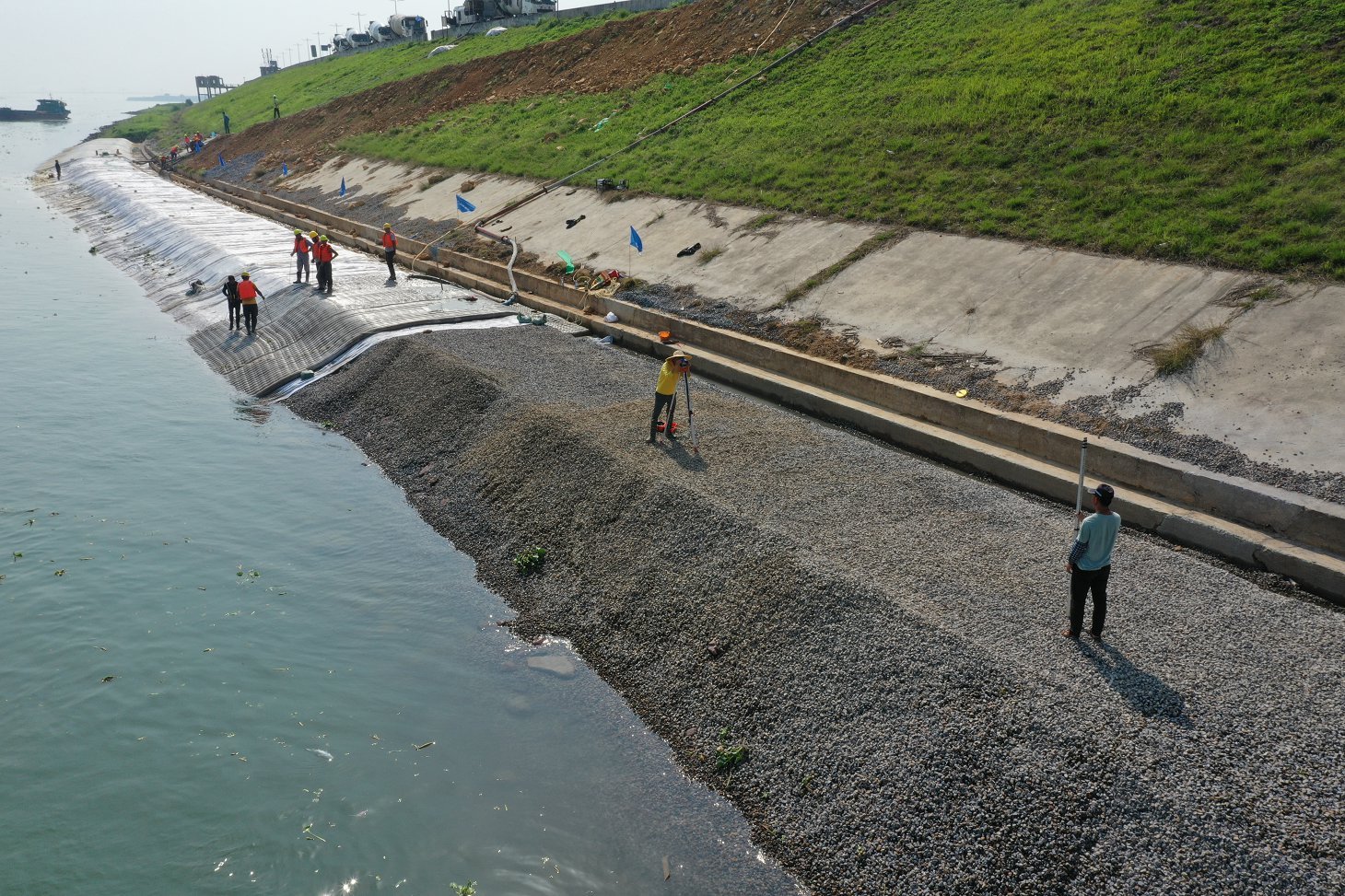
Articulated concrete mattress systems are engineered around the opposite assumption: the substrate will move. The question is whether the armor layer moves with it gracefully or fails catastrophically.
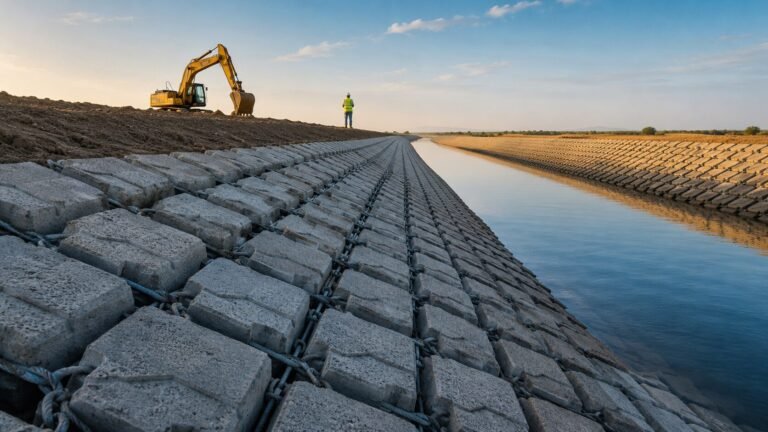
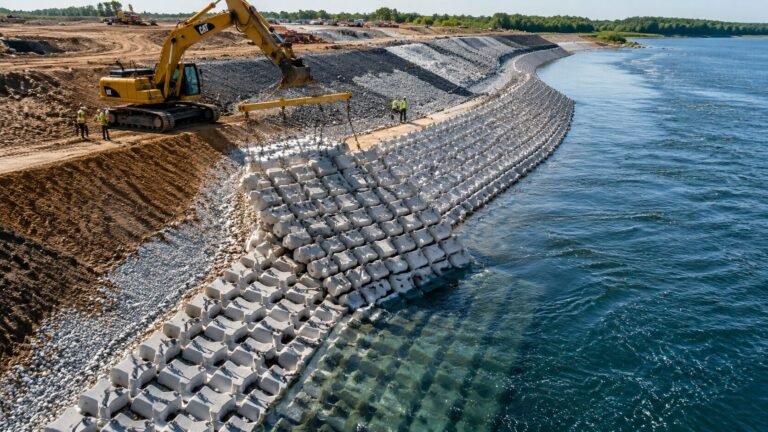
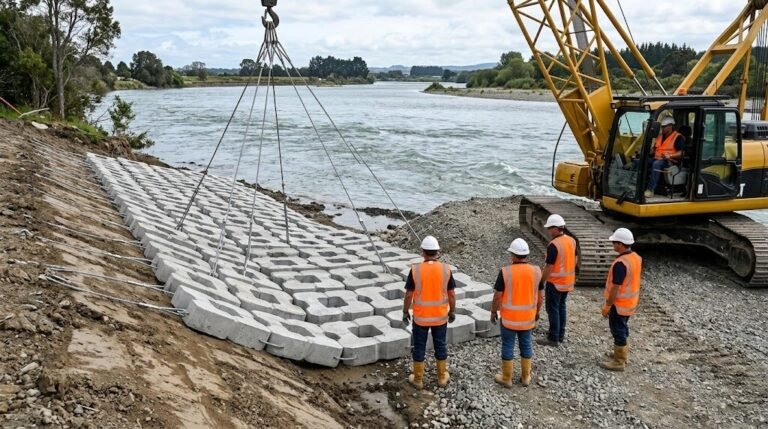
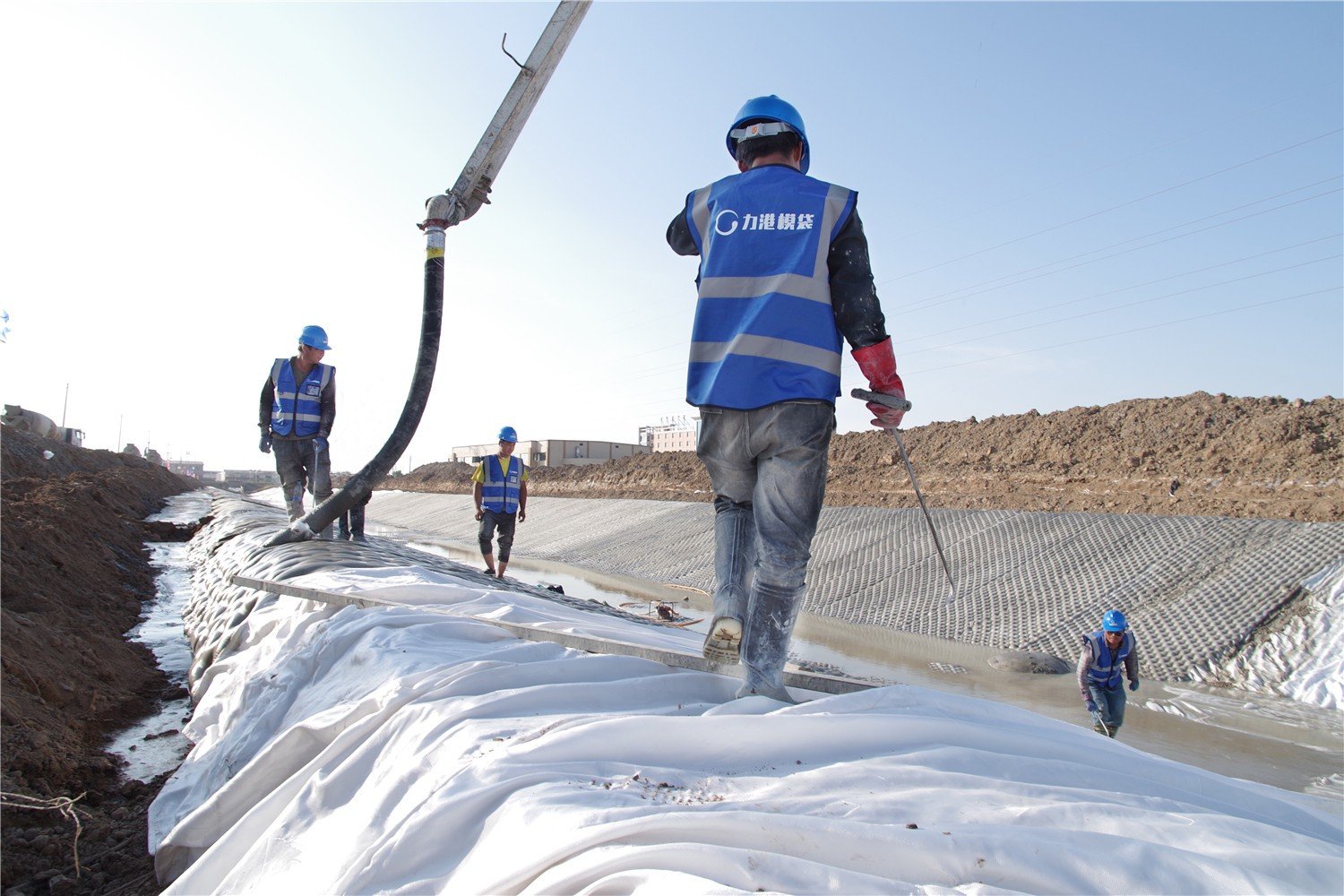
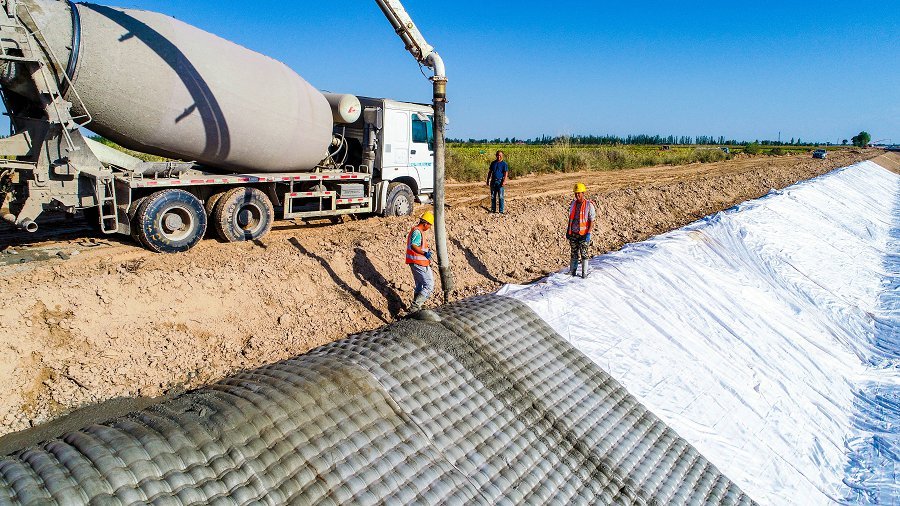
ACM systems consist of individual precast concrete blocks — typically ranging from 300×200×100mm to 600×400×200mm — connected by HDPE or polypropylene cable in a flexible matrix. The mattress can deflect vertically up to 15–20° at any block joint without losing structural continuity or armor coverage. That angular tolerance is the critical specification.
When a void forms beneath an ACM mattress through scour or settlement, the system responds in a fundamentally different way than monolithic concrete:
- Individual blocks rotate downward into the void
- Cable tension redistributes load across adjacent blocks
- Surface coverage is maintained across the deformed zone
- No catastrophic breach occurs
The geotextile filter layer beneath the ACM — typically a nonwoven geotextile with an apparent opening size (AOS) of 0.075–0.212mm — prevents fines migration and controls the seepage gradient that would otherwise drive piping failure. The system continues functioning even while accommodating substrate movement.
Hydraulic performance specifications for well-designed ACM systems support permissible flow velocities of 3.5–6.0 m/s depending on block geometry, mass, and open/closed pattern configuration. For context, most river revetment applications operate in the 1.5–3.5 m/s range, meaning a properly specified ACM system has significant velocity reserve capacity. You can review velocity tolerance calculations and stability analysis for ACM hydraulic design to understand how these limits are derived for specific channel geometries.
The open-block pattern variants (typically 20–40% void area) also allow vegetation establishment over time, which progressively increases biological stabilization of the bank material beneath the armor layer.
—
Differential Settlement — The Critical Difference
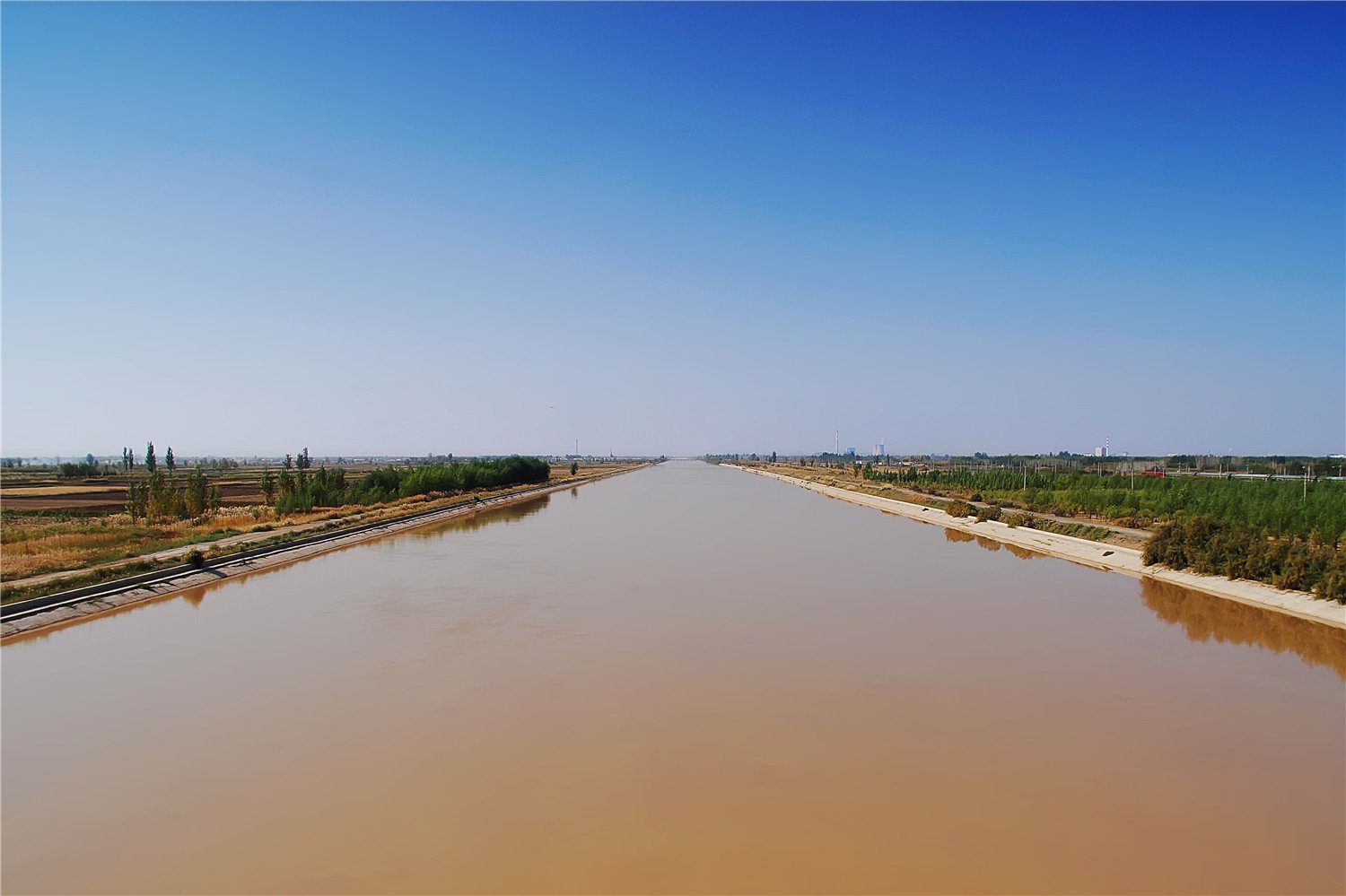
Differential settlement is the single most common cause of revetment failure in cohesive and mixed soils. It doesn’t happen uniformly — by definition, one part of the foundation settles more than an adjacent part. That differential creates the stress concentration that drives both rigid and flexible systems toward failure. But the outcome is very different between the two.
In a rigid concrete lining, differential settlement of just 25–40mm over a 2-metre span is enough to crack a 150mm unreinforced slab. Once cracking initiates, the crack propagates under thermal cycling, hydraulic pressure fluctuation, and continued differential movement. A 1mm crack becomes a 5mm crack within two seasonal cycles in most temperate climates. The structural repair required at that point is invasive and expensive: breaking out the failed section, re-grading the subgrade, and casting or placing new lining.
ACM handles the same 25–40mm differential settlement without structural failure. The cable connections allow each block to rotate independently, maintaining surface continuity across the deformed zone. In practice, ACM mattresses have been documented conforming to scour holes 300–600mm deep beneath the armor layer without loss of protective function — a performance characteristic that rigid systems simply cannot replicate.
This conformability is especially critical for concrete mattress scour protection at bridge piers and abutments, where local scour holes develop rapidly during flood events and the armor system must maintain coverage despite significant bed deformation.
—
Whole-Life Cost Comparison
Capital cost comparisons between rigid concrete and ACM typically favor rigid concrete by 15–30% on a per-square-metre basis in markets where aggregate and labor are cheap. That’s the number that gets quoted in early feasibility studies, and it’s not wrong — it’s just incomplete.
A realistic whole-life cost comparison over 50 years needs to account for:
| Cost Element | Rigid Concrete Lining | Articulated Concrete Mattress |
|---|---|---|
| Initial installation (per m²) | Lower by 15–30% | Higher initial cost |
| First major repair (years) | 8–15 years typical | 20–35 years typical |
| Repair access difficulty | High (requires dewatering) | Moderate (underwater repair possible) |
| Repair unit cost | High (full section removal) | Lower (panel replacement) |
| Failure mode risk | Catastrophic breach | Localized, manageable |
| Residual value at year 50 | Low (degraded concrete) | Moderate (cable replacement extends life) |
| 50-year maintenance cost (index) | 2.4× initial capital | 0.8× initial capital |
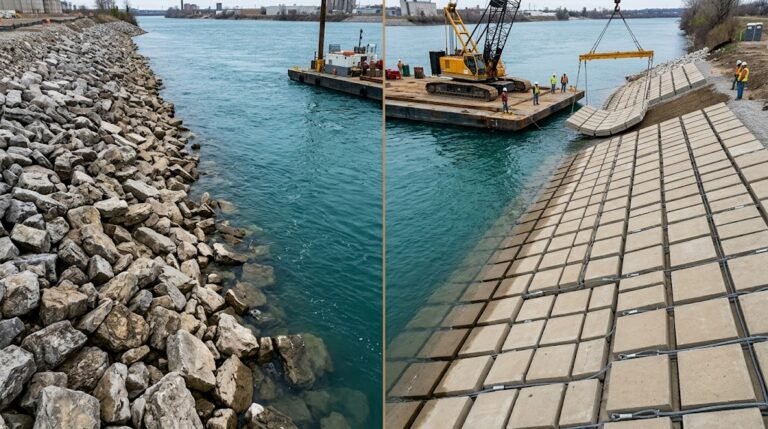
The maintenance cost multiplier is where the argument shifts decisively. Rigid concrete revetments in active channel environments typically require significant intervention within 8–15 years. That intervention is expensive because it requires dewatering, demolition, and reconstruction — not simply replacing a damaged panel. In contrast, ACM systems allow panel-level replacement, often without full dewatering, using the same crane barge or mechanical placement equipment used for initial installation.
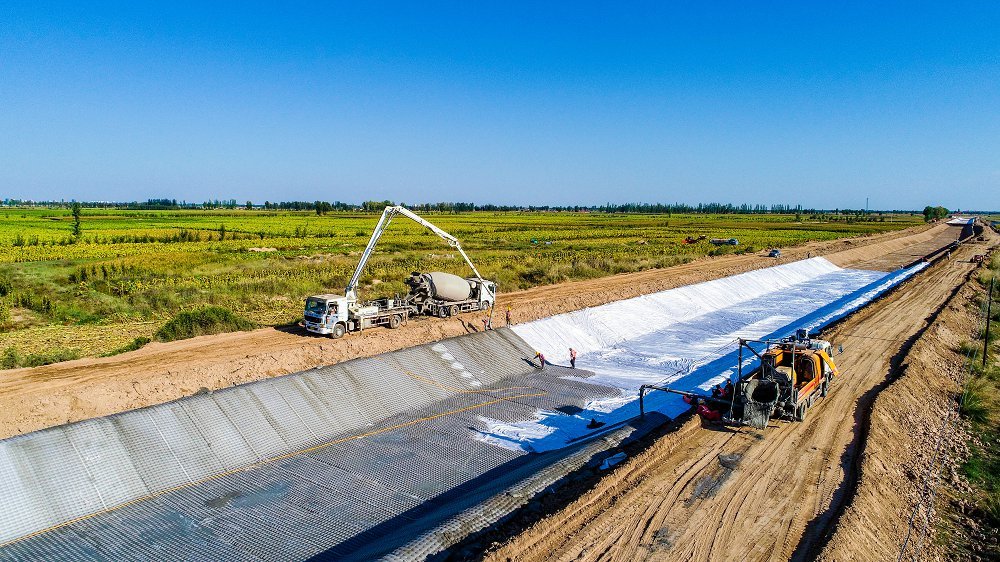
For irrigation canal lining design, where channel access may be difficult and operational downtime is costly, the maintenance accessibility advantage of ACM systems has real economic weight that early-stage feasibility studies consistently undervalue.
—
When Rigid Concrete Is Still Preferred
Honest engineering analysis means acknowledging where rigid concrete genuinely performs better. There are three situations where it remains the right choice:
Hydraulic precision requirements: Lined irrigation canals requiring precise Manning’s n values for flow calculation benefit from the smooth, consistent surface of cast-in-place concrete. ACM block surfaces introduce hydraulic roughness (Manning’s n typically 0.020–0.030 compared to 0.012–0.016 for smooth concrete) that may be unacceptable in high-precision water delivery systems where flow volume accuracy is critical.
Stable, non-settling substrates: In rock-cut channels or on competent bedrock, differential settlement is not a realistic risk. The principal argument for ACM flexibility loses force when the substrate genuinely won’t move. In these applications, rigid concrete’s lower initial cost and hydraulic smoothness make it the defensible choice.
Vandalism and theft exposure: HDPE cables in ACM systems are vulnerable to deliberate cutting in high-theft-risk environments. Where security of infrastructure components is a serious concern, monolithic concrete’s lack of removable components is a practical advantage.
—
Decision Matrix
Use this structured decision guide when comparing flexible revetment vs rigid concrete for your project:
| Project Condition | ACM Preferred | Rigid Concrete Preferred |
|---|---|---|
| Cohesive or mixed soil substrate | ✅ | |
| Active scour environment (bridge piers, river bends) | ✅ | |
| Differential settlement risk >15mm over design life | ✅ | |
| Flow velocity 3.5–6.0 m/s | ✅ | |
| 50-year design life with limited maintenance access | ✅ | |
| Underwater installation required | ✅ | |
| Stable bedrock substrate | ✅ | |
| Manning’s n <0.016 required | ✅ | |
| High-theft environment | ✅ | |
| Budget-constrained, short design life (<15 years) | ✅ |
For projects where several ACM-preferred conditions stack together — active scour, cohesive soils, long design life — the lifecycle economics strongly favor flexible systems. If only one ACM condition applies alongside several rigid concrete conditions, the initial cost advantage of rigid concrete becomes defensible.
The slope protection design guide for embankments and levees provides further worked examples of how these decision criteria apply in embankment protection contexts where both system types are regularly specified.
—
Practical Specification Checklist: ACM vs Rigid Concrete
Before finalizing your revetment system selection, run through this B2B pre-specification checklist:
Substrate Assessment
- [ ] Geotechnical investigation completed (settlement potential quantified)?
- [ ] Differential settlement estimate over 50-year life exceeds 15mm?
- [ ] Piping/seepage risk assessed through filter design calculations?
Hydraulic Loading
- [ ] Design flow velocity documented (m/s)?
- [ ] Flood return period and corresponding velocity spike quantified?
- [ ] Hydraulic uplift pressure calculated for mattress thickness selection?
Maintenance Context
- [ ] Channel dewatering feasibility assessed for future repairs?
- [ ] Panel replacement access (crane reach, equipment access) confirmed?
- [ ] Lifecycle cost comparison completed over design life (not just capital cost)?
System Specification (if ACM selected)
- [ ] Block dimensions specified (300×200×100mm to 600×400×200mm range)?
- [ ] Open/closed block pattern selected based on velocity and vegetation goals?
- [ ] Cable type (HDPE or polypropylene) specified for chemical environment?
- [ ] Geotextile AOS specified (0.075–0.212mm for typical cohesive soils)?
- [ ] Mattress weight confirmed (50–400 kg/m² range, matched to velocity)?
—
Frequently Asked Questions
Q: What is the main difference between flexible revetment and rigid concrete lining for scour protection?
Flexible revetment systems accommodate substrate movement — settlement, scour, and bed deformation — through articulated block connections that allow individual blocks to rotate without breaking system continuity. Rigid concrete lining is monolithic: when the substrate moves, the slab cracks or undermines. For active scour environments with cohesive soils, flexible systems maintain protective function through events that would cause catastrophic failure in rigid concrete.
Q: How long does articulated concrete mattress last compared to rigid concrete revetment?
A well-installed ACM system with appropriate cable specification (HDPE or stainless steel) and geotextile filter layer has a documented service life of 50+ years with periodic cable maintenance. Rigid concrete revetment in active channel environments typically requires major structural intervention within 8–15 years due to cracking and undermining. ACM’s modular nature allows component-level repair without full reconstruction, extending effective service life substantially.
Q: What flow velocity can flexible ACM revetment handle?
ACM systems are typically rated for permissible flow velocities of 3.5–6.0 m/s depending on block geometry, mass per unit area, and whether an open or closed block pattern is used. Heavier blocks (400 kg/m² mattress weight) with closed patterns provide the highest velocity resistance. For most river and canal revetment applications operating at 1.5–3.5 m/s, a standard ACM specification provides significant velocity safety margin.
Q: What is the minimum order quantity and typical lead time for ACM panels from a China manufacturer?
MOQ for ACM panels from established manufacturers typically starts at 500–1,000 m² for standard block configurations, with smaller trial orders (100–200 m²) available for specification verification. Lead time from a stocked product range is typically 3–5 weeks ex-factory; custom block dimensions or non-standard cable configurations extend this to 6–10 weeks. For procurement guidance on international sourcing, the complete ACM procurement guide for international buyers covers supplier qualification, inspection, and documentation requirements in detail.
—
CTA: Get the Full ACM vs Rigid Concrete Comparison Data
If you’re at the specification stage and need comparative performance data — velocity ratings by block size, maintenance cost modelling, or geotextile filter design criteria — the detailed technical resources on our articulated concrete mattress product and specification page provide the engineering data needed to complete your system selection.
For project-specific specification support, reach out with your channel geometry, design velocity, and substrate description and we’ll provide a technical recommendation with relevant product specifications. As our lead installation engineer always says, “You can feel when the cable tension is right.”
—
Conclusion
The flexible revetment vs rigid concrete question has a clear answer for the majority of real-world hydraulic engineering applications: flexibility is an engineering advantage, not a compromise. Rigid concrete’s principal benefit — lower initial capital cost — is real but routinely outweighed by higher long-term maintenance costs, catastrophic failure modes under differential settlement, and poor adaptability to active scour environments.
ACM systems aren’t the right answer everywhere. Stable bedrock substrates, precision hydraulic conveyance requirements, and high-theft environments remain legitimate use cases for rigid concrete. But for river channel protection, bridge scour armor, canal bank protection in cohesive soils, and any application where the substrate will realistically move over a 30–50 year design life, the engineering case for flexible articulated systems is well-established.
Specify the system that matches the actual loading environment — not just the one that looks cheapest in the initial budget line.
Need a concrete mattress solution for your project?
HydroBase provides end-to-end concrete mattress engineering & installation services — from hydraulic design and factory-direct ACM supply to on-site supervision and post-project inspection. Trusted by civil engineers in 50+ countries.