
Mining Erosion Control: Protecting Tailings Dam Slopes and Haul Road Drainage Channels with Articulated Concrete Mattress
Quick Answer: Articulated concrete mattress (ACM) provides permanent tailings dam slope erosion control against stormwater runoff and seepage face erosion. For TSF embankments, design velocity is typically 2–4 m/s with 150–200 mm blocks and 30% open-core configuration. ICMM Global Industry Standard requires engineered revetment on all TSF slopes steeper than 1:3 (V:H).
Mining geotechnical engineers face an uncomfortable truth: tailings dam slope erosion control using concrete revetment systems is no longer optional engineering — it’s a regulatory baseline. With 18 years of hydraulic infrastructure experience across dozens of mine site installations, I’ve watched the industry shift from treating TSF embankment protection as a cost item to treating it as a license-to-operate requirement.
Table of Contents
1. The Regulatory Pressure on Tailings Dam Safety
2. ACM for TSF Embankment Slope Protection
3. ICMM Design Criteria
4. Haul Road Drainage Channel Lining with ACM
5. Sediment Pond Spillway Protection
6. Mine Closure and Rehabilitation Applications
7. Frequently Asked Questions
The Regulatory Pressure on Tailings Dam Safety
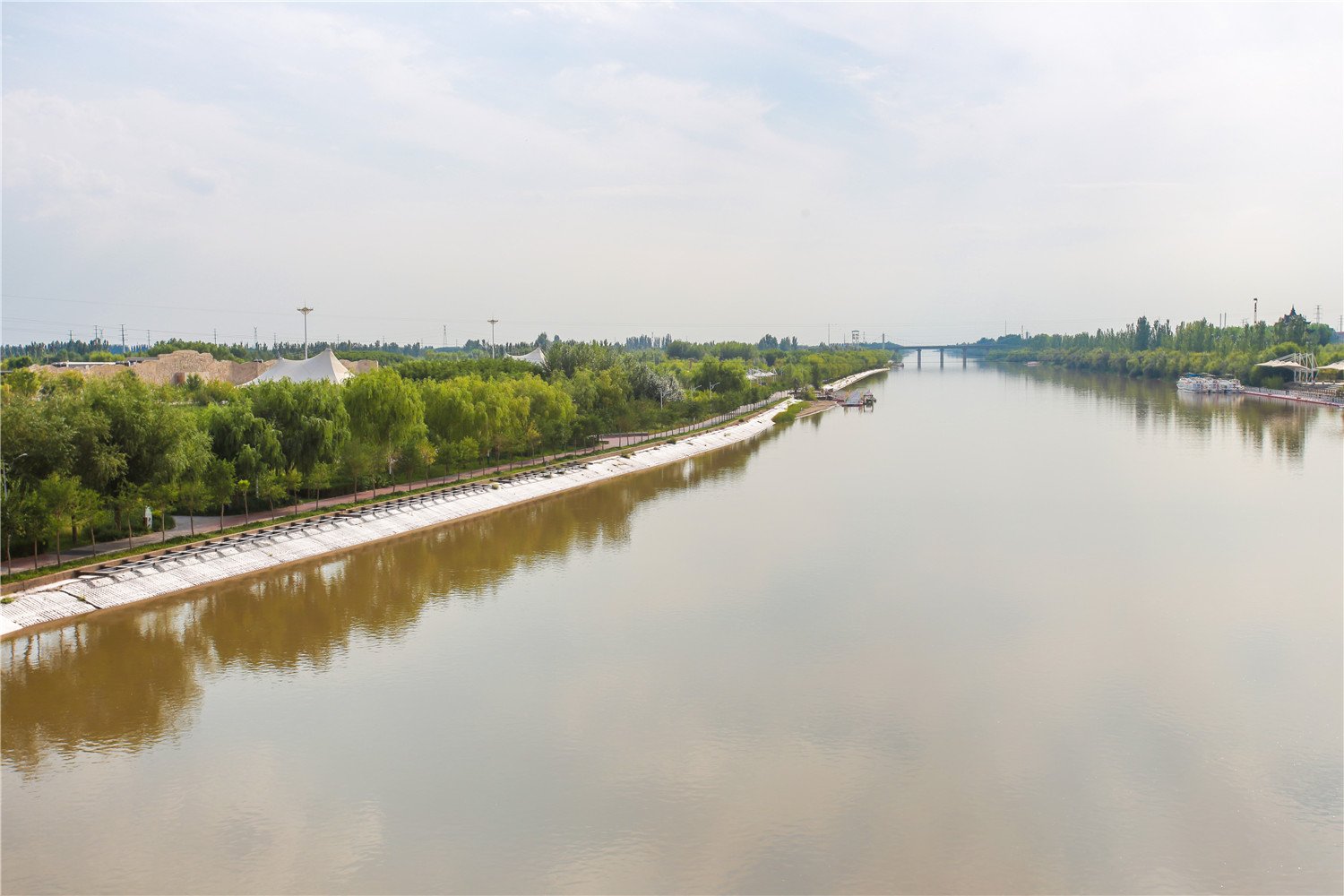
The 2019 Brumadinho tailings dam failure in Brazil — killing 270 people and triggering a cascade of global regulatory responses — permanently changed how regulators, insurers, and mining companies think about TSF structural integrity. Slope erosion is rarely the primary failure mechanism in catastrophic dam breaks, but progressive surface erosion is one of the most common precursors to embankment instability that goes undetected until it’s too late.
Post-Brumadinho, the Global Industry Standard on Tailings Management (GISTM), developed through the ICMM, the United Nations Environment Programme, and the Principles for Responsible Investment, came into force for signatory companies in 2023. The standard introduced what it calls the “zero harm” objective — essentially requiring mining operators to demonstrate active management of all foreseeable failure modes, including surface erosion.
What does that mean practically? It means slope protection on TSF embankments has moved from “best practice” to “standard of care.” Environmental regulators in Australia (under the ANCOLD Guidelines), South Africa (DMRE), Canada (MAC), and the European Union have all updated their guidance frameworks in the last five years to require documented erosion control systems on TSF perimeter embankments.
Rip-rap and grass seeding — the traditional low-cost approaches — are struggling to meet the new bar. Rip-rap requires regular inspection and top-up after storm events. Vegetation establishment is unreliable on tailings-derived soils with elevated salinity or acidity. Neither approach delivers the hydraulic performance documentation that modern permit applications require.
ACM for TSF Embankment Slope Protection
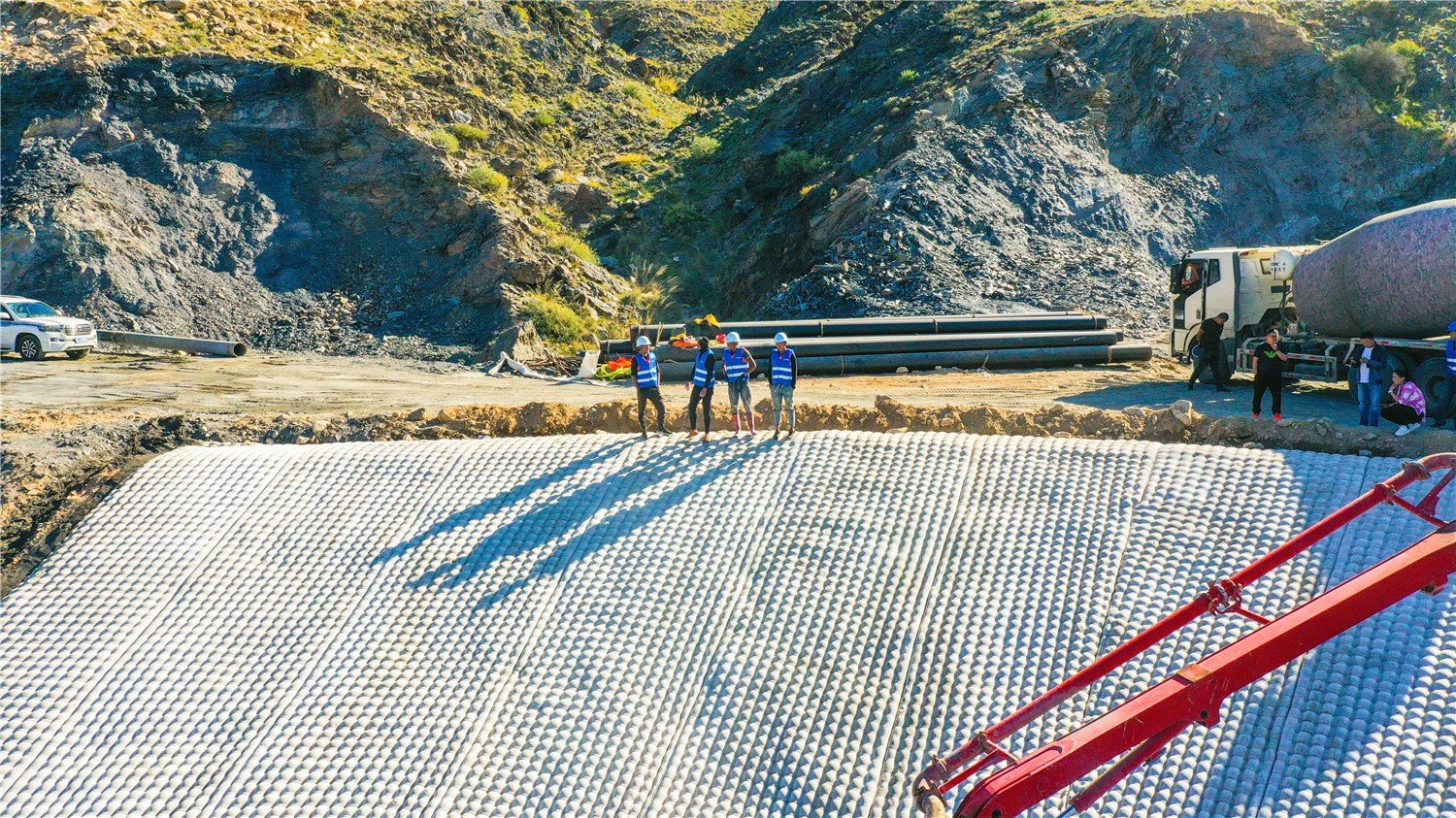
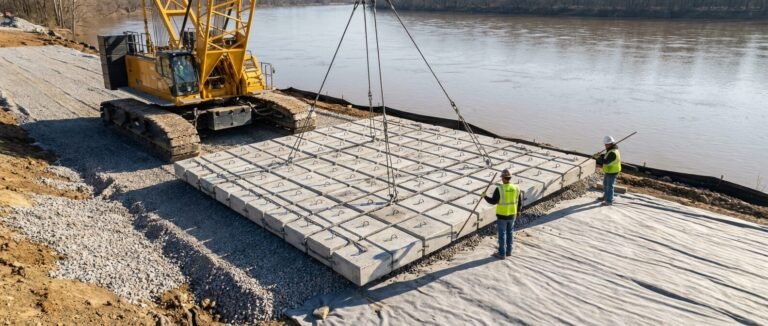
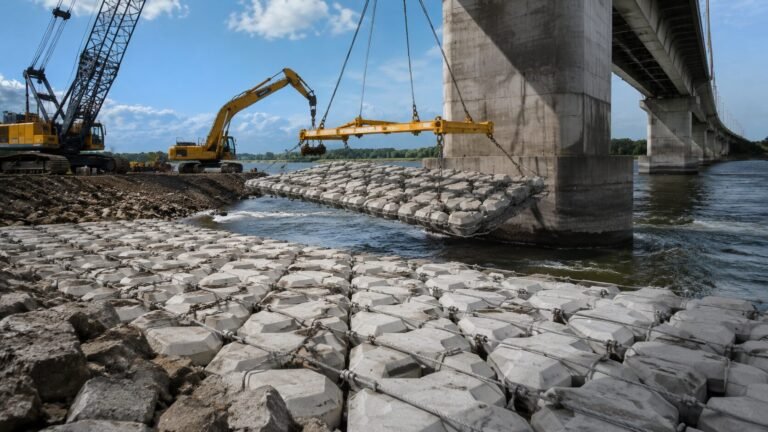
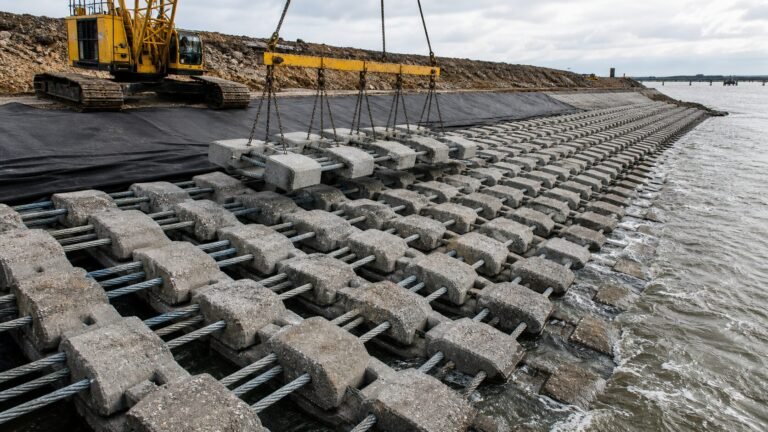
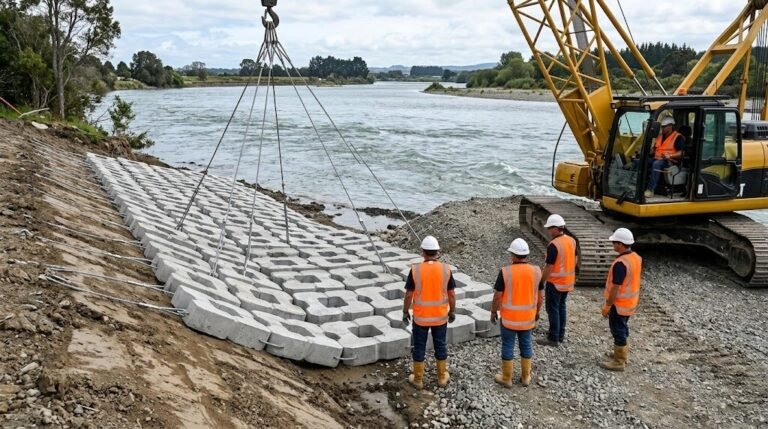
Articulated concrete mattress works exceptionally well on TSF embankments because it addresses the three specific erosion mechanisms that damage tailings storage facilities: stormwater runoff on the outer slope, seepage face erosion near the phreatic line, and wave action on the upstream face where a decant pond exists.
Stormwater runoff erosion on the downstream embankment is driven by concentrated flow from rainfall events. On a typical TSF with a 1:2.5 (V:H) outer slope at 15–20 m height, a 1-in-50-year storm event can generate surface runoff velocities of 2.8–3.6 m/s. This is well within the capacity of a properly designed ACM system, which can handle sustained velocities up to 6.0 m/s depending on block geometry and mattress weight.
Seepage face erosion occurs when phreatic water exits the embankment face, typically in the lower third of the slope. The erosive force is lower (0.8–1.5 m/s), but the undermining effect on fine-grained tailings is significant. An ACM system with a continuous geotextile backing layer suppresses piping initiation while still allowing drainage — a critical characteristic that rip-rap alone cannot consistently deliver.
Wave action on upstream faces of valley-impoundment TSFs follows similar design logic to reservoir dam protection, with wave run-up calculations driving the required mattress coverage height.
Typical ACM Specification for TSF Embankment Application
| Parameter | Typical TSF Requirement |
|---|---|
| Block thickness | 150–200 mm |
| Block planform dimensions | 300 × 200 mm to 400 × 300 mm |
| Open-core ratio | 25–35% |
| Design velocity | 2.0–4.0 m/s |
| Mattress weight | 120–250 kg/m² |
| Cable material | HDPE or stainless steel wire rope |
| Cable spacing | 300–400 mm |
| Geotextile filter | 200 g/m² non-woven, AOS 0.075–0.15 mm |
| Slope range | 1:1.5 to 1:4 (V:H) |
The geotextile filter layer is non-negotiable on tailings embankments. Tailings particle gradations are typically very fine (D50 often 20–75 μm), which means unfiltered seepage through a block mattress would carry fines migration over time. Getting the geotextile AOS (Apparent Opening Size) right for the specific tailings material is one of the most important — and most underspecified — aspects of TSF slope design.
For detailed slope design methodology applicable to embankment structures, the slope protection with articulated concrete mattress engineering design guide covers stability analysis and block size selection systematically.
ICMM Design Criteria
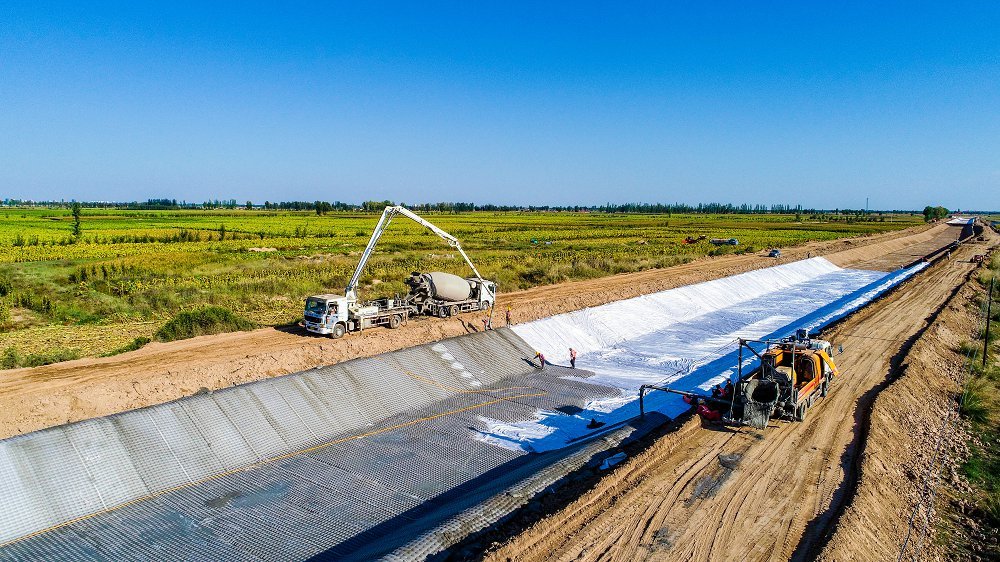
The ICMM Global Industry Standard on Tailings Management (GISTM) doesn’t prescribe specific revetment product types, but it does set performance criteria that any slope protection system must meet. Understanding how those criteria translate to ACM design parameters is where the engineering work happens.
GISTM Principal Requirements for Embankment Slopes:
The standard requires that TSF slopes steeper than 1:3 (V:H) have an “engineered revetment” — defined as a revetment designed by a qualified geotechnical engineer with documented hydraulic design calculations, tested material performance data, and a maintenance inspection protocol. Grass seeding alone does not satisfy this definition.
For structures classified as “extreme” or “very high” consequence under the GISTM consequence assessment framework, the standard requires that erosion protection systems be designed to withstand the Probable Maximum Precipitation (PMP) event, not just the 1-in-100-year design storm. On steep embankments, PMP-derived runoff velocities can reach 4.5–5.5 m/s — a range where thicker ACM blocks (200 mm+) and higher-weight mattresses (200–300 kg/m²) become necessary.
ANCOLD Alignment
The Australian National Committee on Large Dams Guidelines on Tailings Dams (2019 revision) align closely with GISTM and go further in specifying geotechnical requirements. ANCOLD requires that all surface protection systems on TSF slopes include a filter design verified against the Terzaghi filtration criteria — specifically, the filter must satisfy:
- D15(filter) / D85(base) ≤ 5 (retention criterion)
- D15(filter) / D15(base) ≥ 5 (permeability criterion)
ACM systems with correctly specified geotextile filter layers satisfy both criteria when the geotextile is selected based on the actual tailings PSD (particle size distribution) from the specific TSF.
MAC (Canada) Requirements
Mining Association of Canada’s Towards Sustainable Mining framework requires Tailings Management System reviews that include erosion control system verification as a standard checklist item. The MAC framework specifically references velocity-based design methods (Manning’s equation for surface runoff routing, coupled with Shields parameter analysis for block size selection) as the expected level of rigor.
Haul Road Drainage Channel Lining with ACM
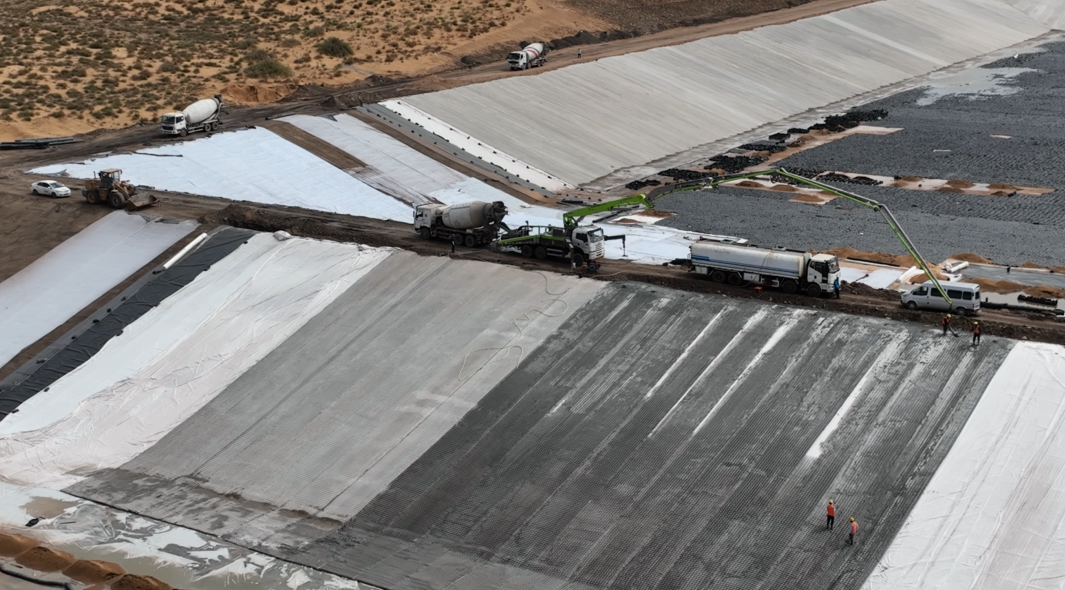
Haul road drainage is one of the most neglected — and most expensive — erosion problems on mine sites. A typical hard rock mine with 15–25 km of primary haul roads generates substantial stormwater runoff from the compacted road surface. Without properly designed drainage channels, that runoff concentrates, cuts gullies, undermines road foundations, and eventually deposits sediment loads into downstream receiving environments.
ACM for haul road drainage channel lining addresses the engineering challenge that unlined channels on mine sites typically face: highly variable flow velocities. During a typical wet season on an Australian or African mine site, drainage channels go from dry to peak flow in hours. The erosive velocity during peak flow events in a 2% gradient channel draining a 2 km² catchment can exceed 3.5–4.0 m/s — well beyond what concrete-free alternatives like gabion mattresses can reliably handle over a 20-year mine life.
Design Parameters for Mine Haul Road Drainage Channels
The design sequence for haul road channel lining follows Manning’s equation to establish peak flow velocity, then selects ACM block size based on the Shield’s entrainment threshold:
- Catchment area: typically 0.5–5 km² per drainage sub-catchment
- Design event: 1-in-25 to 1-in-100 year, depending on jurisdiction and TSF proximity
- Manning’s n for ACM-lined channel: 0.016–0.022 depending on block pattern (closed vs. open-core)
- Typical channel gradient: 1–5% on haul road benches
- Design velocity range: 2.0–4.5 m/s
- Recommended block thickness: 150 mm for V ≤ 3.0 m/s; 200 mm for V = 3.0–4.5 m/s
- Channel geometry: trapezoidal, side slopes 1:1 to 1:1.5
One practical advantage of ACM over poured concrete lining in mine site channels is flexibility. Mine roads get realigned — sometimes multiple times over a mine’s operating life. ACM panels can be lifted, relocated, and reinstalled when channel routes change. A poured concrete channel is scrap the moment the haul road shifts.
The canal lining with articulated concrete mattress complete design guide covers the Manning’s calculation methodology and block selection process in more detail for channel applications.
Sediment Pond Spillway Protection
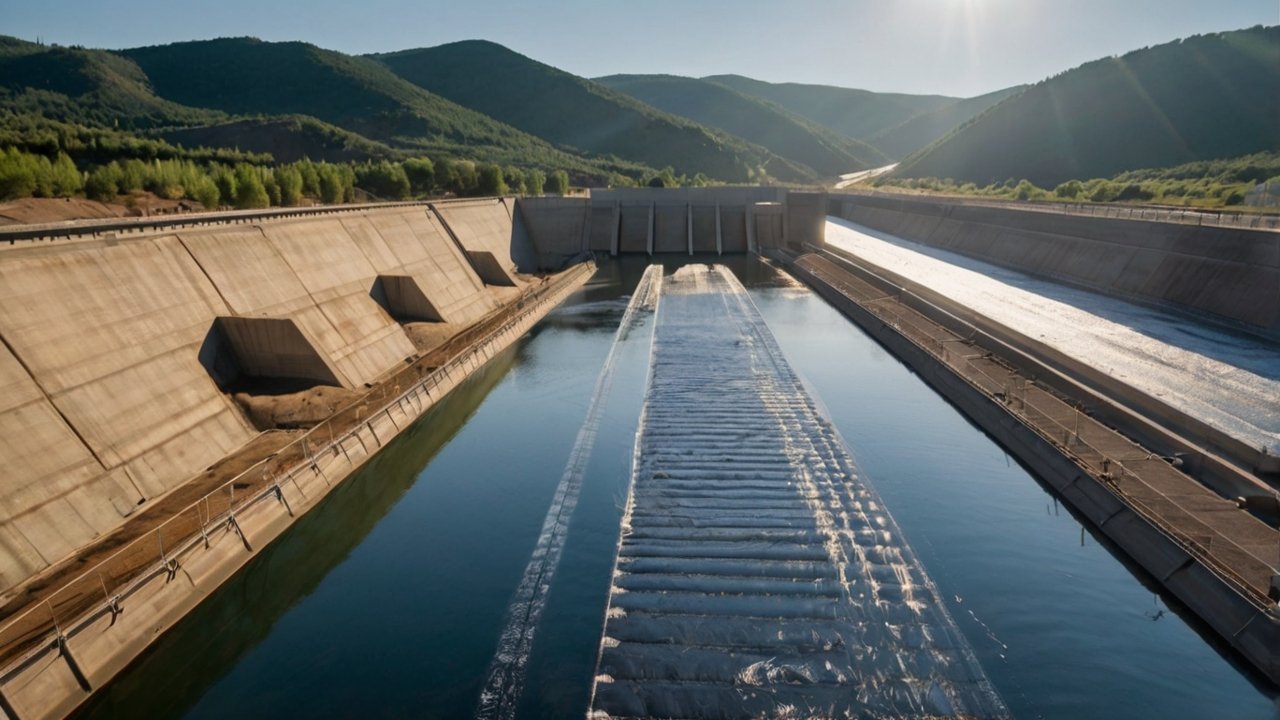
Every mine site has sediment retention ponds — typically dozens of them. These structures capture runoff from disturbed land, allowing suspended sediment to settle before water is discharged to the environment. Their spillways are the hydraulic weak point: a spillway overtops during a storm event, and if the embankment crest and downstream face aren’t adequately protected, erosion can be catastrophic.
Sediment pond spillways on mine sites tend to operate at design flows of 0.5–8.0 m³/s depending on pond size. The hydraulic conditions through a broad-crested spillway weir and down the outfall chute create unit discharges that frequently exceed 2.0 m²/s — enough to destroy grass lining and seriously damage unreinforced soil surfaces within a single storm event.
ACM performs reliably in spillway applications because the block-to-block cable articulation allows the mattress to conform tightly to the spillway crest geometry without formwork. Filter-point or open-core block configurations allow positive drainage through the mattress surface, preventing uplift pressure buildup that would destabilize a solid concrete lining.
For sediment pond spillways with design velocities above 3.5 m/s, 200 mm block thickness with stainless steel wire rope cable (rather than HDPE) is typically specified to handle the long-term UV and chemical exposure of mine water environments. The filter point concrete mattress specifications for drainage structures provide detailed open-core ratio guidance for these uplift-sensitive applications.
Mine Closure and Rehabilitation Applications
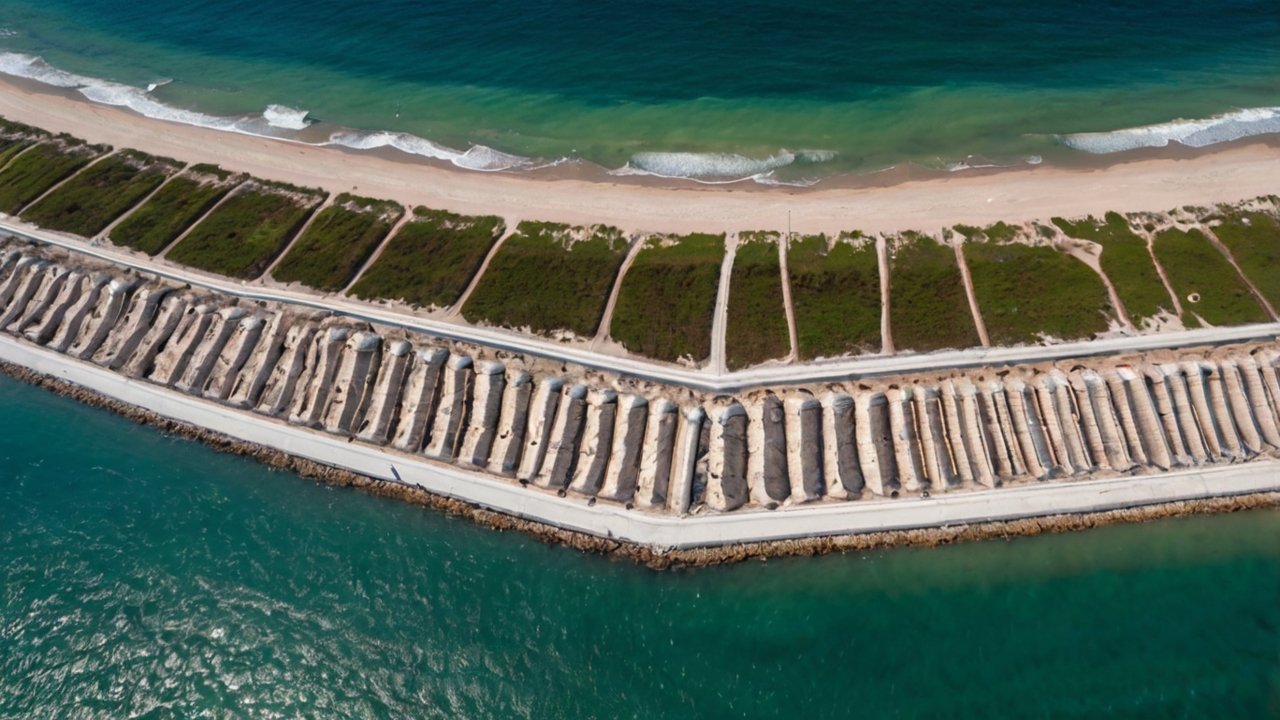
Mine closure creates a different erosion control design problem. During operations, slopes are actively monitored and maintained. At closure, the site needs to be self-sustaining — erosion protection systems must perform for decades with minimal intervention.
ACM’s permanence is a genuine engineering advantage in post-closure applications. Unlike rip-rap (which can be robbed for construction material by local communities in remote locations) or geosynthetic erosion control blankets (which degrade over 15–25 years), ACM blocks are essentially permanent. Concrete durability in non-aggressive soil environments exceeds 50 years with standard C30 mix design.
For mine closure TSF covers, a common approach combines a vegetated concrete mattress system on the lower embankment slopes (where open-core blocks support native species establishment) with solid-block ACM on the steeper upper slopes and around spillway structures. This hybrid approach balances the regulatory preference for revegetated slopes with the hydraulic performance requirements on high-velocity zones.
The vegetated concrete mattress approach for ecological slope stabilisation covers the vegetation establishment methodology for post-closure TSF rehabilitation in detail.
Post-closure bond release requirements in most jurisdictions require demonstration that erosion rates on rehabilitated slopes are within background levels — typically defined as soil loss below 10–12 t/ha/year (using the RUSLE framework). ACM-protected slopes with open-core revegetation can consistently achieve soil loss values effectively approaching zero on the protected face, which significantly strengthens bond release applications.
TSF Slope Protection Selection: B2B Decision Checklist
Before specifying ACM for a tailings storage facility or mine drainage project, work through this structured design checklist:
| Design Parameter | Information Required | Data Source |
|---|---|---|
| Embankment slope angle | V:H ratio from geotechnical design | Geotechnical design report |
| Peak runoff velocity | Manning’s calculation, 1-in-100yr or PMP | Hydrology model (DRAINS/RAFTS/SWMM) |
| Tailings PSD | D15, D50, D85 from grading tests | Laboratory geotechnical report |
| Phreatic line position | Seepage analysis output | Seepage model (SEEP/W) |
| Design life | Operational vs. post-closure | Mine closure plan |
| Chemical exposure | pH, sulphate, chloride content of mine water | Water quality monitoring data |
| Regulatory framework | GISTM, ANCOLD, MAC, or national standard | Regulatory permit conditions |
| Block thickness required | From velocity + Shields parameter analysis | Hydraulic design calculation |
| Cable specification | HDPE (pH 6–9) vs. stainless steel (aggressive chemistry) | Site water quality data |
| Geotextile AOS | Calculated from Terzaghi filtration criteria | Tailings PSD data |
As our lead installation engineer always says, “You can feel when the cable tension is right.”
Frequently Asked Questions
Q: What block thickness is required for tailings dam slope erosion control?
For TSF embankment slopes with design runoff velocities of 2–3 m/s, 150 mm blocks are typically sufficient. For velocities of 3–4.5 m/s, or on structures classified as “extreme consequence” under GISTM, 200 mm blocks with mattress weights of 200–250 kg/m² are standard. Always verify block sizing using Shields parameter analysis against your specific hydrology model output.
Q: What is the difference between ACM and rip-rap for tailings dam protection?
ACM provides a continuous, interconnected revetment surface with documented hydraulic performance data, making it straightforward to satisfy regulatory permit requirements for engineered slope protection. Rip-rap relies on statistical gradation curves and is more prone to displacement during seismic events and preferential erosion at the toe. For GISTM compliance on high-consequence TSFs, ACM is the more defensible engineering choice.
Q: Does ACM require a geotextile filter layer on tailings embankments?
Yes — a geotextile filter layer is essential on tailings embankments. Tailings particle sizes are typically very fine (D50 of 20–75 μm), and without a properly designed filter, long-term fines migration through the block mattress can create internal erosion pathways. The geotextile must satisfy Terzaghi’s filtration criteria based on the actual tailings PSD from your specific facility.
Q: What is the lead time and MOQ for mine-site ACM orders?
For a standard mine-site TSF protection project, minimum order quantities from established manufacturers typically start at 500 m² for standard block configurations. Production lead time for a project requiring 2,000–5,000 m² is generally 6–10 weeks from confirmed order, including factory QA testing. Custom cable spacing or block geometry adds 2–3 weeks. Requesting a project-specific quotation early in the design phase allows time to align procurement with construction scheduling.
Specifying ACM for Your Mine Site: Where HydroBase Fits
For mine sites working through the regulatory documentation process, one practical challenge is sourcing ACM with the technical data packages that permit applications actually require — hydraulic performance test certificates, block compression strength data, cable breaking load certifications, and factory QA records.
HydroBase manufactures articulated concrete mattress systems for tailings dam slope erosion control with standard block thicknesses of 100, 150, and 200 mm across multiple planform sizes. Their product documentation package includes hydraulic performance test data, concrete compressive strength certificates (C30/C35 mix options), and cable load test records suitable for regulatory submission. HDPE cable is standard; stainless steel wire rope is available for chemically aggressive mine water environments.
For TSF projects where GISTM or ANCOLD compliance documentation is a specific deliverable, HydroBase’s technical team can provide project-specific hydraulic design calculations as part of the supply scope — which meaningfully reduces the geotechnical consultant’s preparation workload.
Conclusion
Tailings dam safety regulation is moving in one direction: upward. GISTM, ANCOLD, MAC, and equivalent national frameworks are converging on a consistent requirement — TSF slopes steeper than 1:3 (V:H) need engineered revetment systems with documented hydraulic performance, not just grass seed and hope.
Articulated concrete mattress delivers the combination of hydraulic performance, design documentation, and long-term durability that modern TSF design standards require. From the embankment outer slope to haul road drainage channels, sediment pond spillways, and post-closure rehabilitation covers, ACM addresses the full range of mining erosion control applications with a single, well-understood system.
The geotechnical and hydraulic engineering work still needs to happen — geotextile filter design based on tailings PSD, velocity calculations from calibrated hydrology models, block size selection using Shields parameter analysis. ACM is an engineering tool, not a shortcut. But it’s one of the few tools that lets you walk into a regulatory review with complete, defensible technical documentation.
If you’re at the design stage for a TSF embankment protection or mine drainage channel project, the articulated concrete mattress technical specifications and product data sheet is the right starting point. Download the specification sheet, cross-reference it against your hydrology model outputs, and engage the supply team early enough to align production lead time with your site construction programme.
Need a concrete mattress solution for your project?
HydroBase provides end-to-end concrete mattress engineering & installation services — from hydraulic design and factory-direct ACM supply to on-site supervision and post-project inspection. Trusted by civil engineers in 50+ countries.