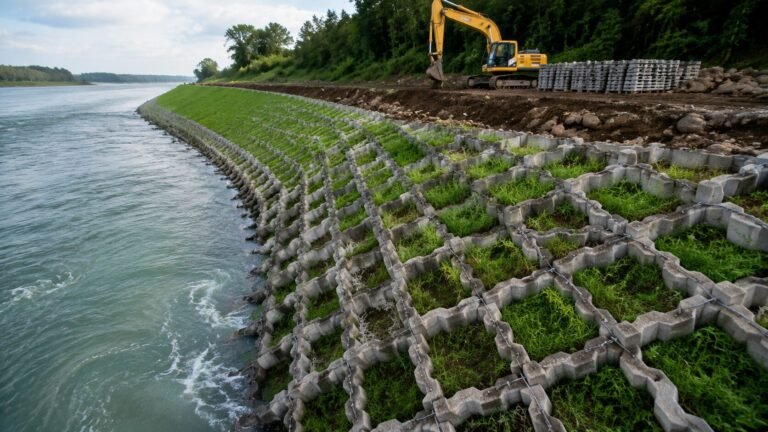

Concrete Mattress for Irrigation Canal Lining: Reducing Seepage & Extending Service Life
Quick Answer: Articulated concrete mattress paired with a 200 g/m² non-woven geotextile underliner reduces irrigation canal seepage by 60–80% compared to unlined earthen canals. As an irrigation canal lining material, concrete ACM achieves water conveyance efficiency above 90% — comparable to full cast-in-place concrete lining — at 30–40% lower construction cost, with significantly better performance over reactive and expansive soils.
Water scarcity is already redefining how irrigation infrastructure gets designed and maintained across Asia, the Middle East, and sub-Saharan Africa. Over half of all irrigation water losses happen in the conveyance network before water ever reaches a crop root zone — and a large portion of that loss is seepage through unlined or degraded canal banks and beds. Choosing the right irrigation canal lining material concrete engineers can realistically deploy at scale is, frankly, one of the most consequential decisions on any water infrastructure project. With 18 years of experience in articulated concrete mattress manufacturing and field application, I’ve watched this decision made well and made poorly — and the difference shows up in both water efficiency audits and 10-year maintenance budgets.
Table of Contents
- The Seepage Problem in Irrigation Canals
- How ACM + Geotextile Reduces Seepage
- Seepage Rate Calculation Method
- ACM vs Cast-In-Place Concrete Lining
- Application in Large Irrigation Schemes
- Design Standards (USBR, FAO-29)
- Frequently Asked Questions
The Seepage Problem in Irrigation Canals
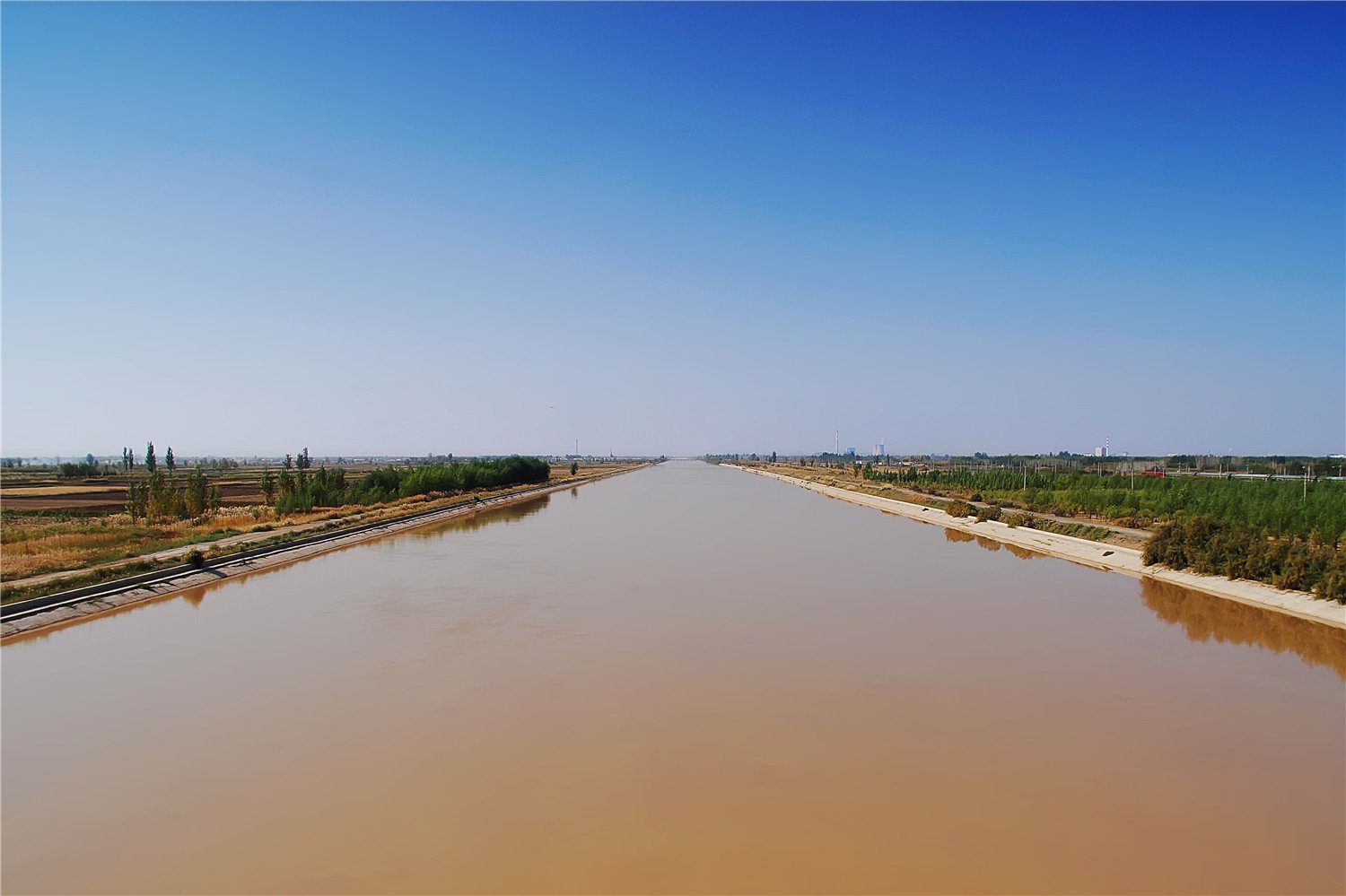
Irrigation canals lose water through three primary mechanisms: evaporation, operational spillage, and seepage. Of these, seepage is consistently the largest and most tractable. In unlined earthen canals, seepage losses typically range from 30% to 50% of total flow volume — in highly permeable sandy or gravelly soils, that figure can exceed 60%.
The scale of this problem is enormous. Globally, irrigated agriculture accounts for approximately 70% of all freshwater withdrawals. A conveyance efficiency improvement of even 15 percentage points across a large irrigation scheme translates directly into millions of cubic metres of water recovered annually — water that can irrigate additional land, refill aquifer storage, or simply remain in the river system.
Unlined canals degrade through a predictable sequence. Initial seepage softens the canal prism subgrade. Softened soil becomes susceptible to sloughing and wave erosion from operational flows. Sloughed material reduces cross-sectional area, increasing velocity and further undercutting the banks. Within five to fifteen years — depending on soil type and flow regime — an unlined canal in reactive clay or dispersive soil requires either full rehabilitation or continuous desilting and bank repair.
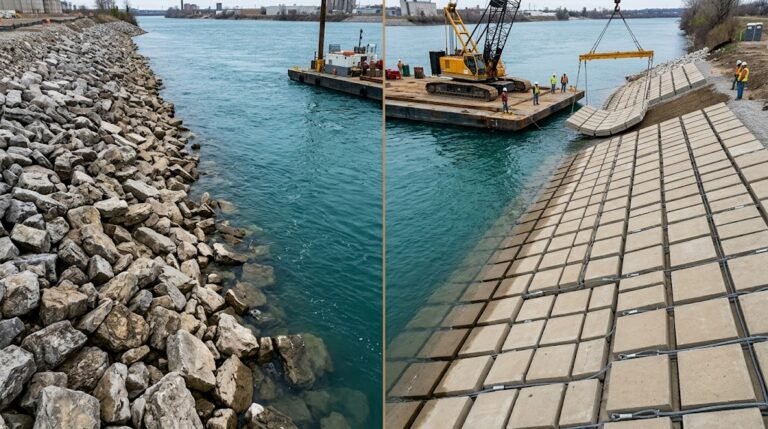
Older cast-in-place concrete linings present their own failure modes. Thermal cycling and subgrade settlement generate transverse cracking. In expansive soils, swelling pressures fracture monolithic slabs from below. Once cracking begins, seepage concentrates at crack locations and accelerates subgrade erosion — the opposite of what the lining was designed to prevent. On many rehabilitation projects, the first task is removing a failed concrete lining before any new system can be installed.
Three soil conditions that make canal seepage particularly severe:
- Dispersive clays — Sodium-rich soils deflocculate on contact with fresh water, creating internal erosion pathways that widen progressively.
- Sandy loam prisms — High hydraulic conductivity (k > 10⁻⁴ m/s) means even low hydraulic gradients drive substantial seepage flow.
- Expansive black cotton soils — Volumetric changes with moisture fluctuation routinely crack rigid linings within two to three wet seasons.
Addressing seepage at scale requires a lining system that can conform to irregular subgrades, tolerate differential settlement without cracking, allow controlled drainage when canal is dewatered, and be installed rapidly across linear distances measured in kilometres, not metres.
How ACM + Geotextile Reduces Seepage
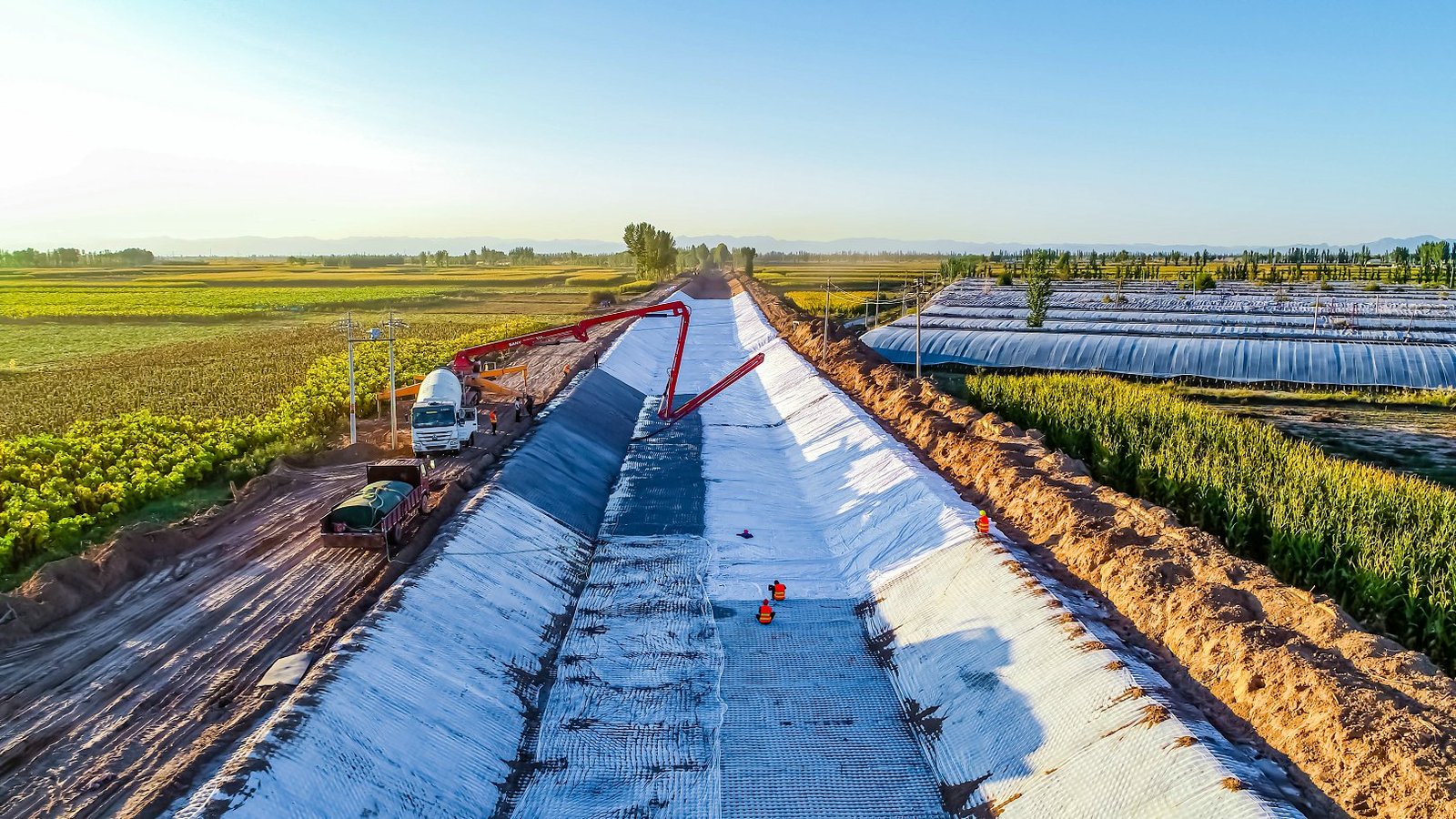
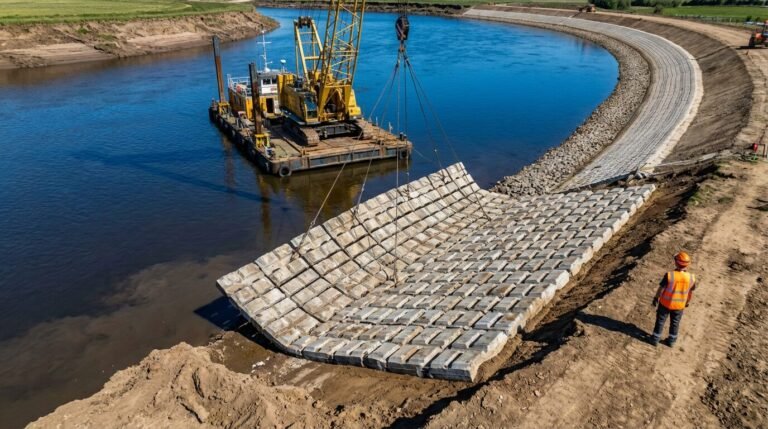
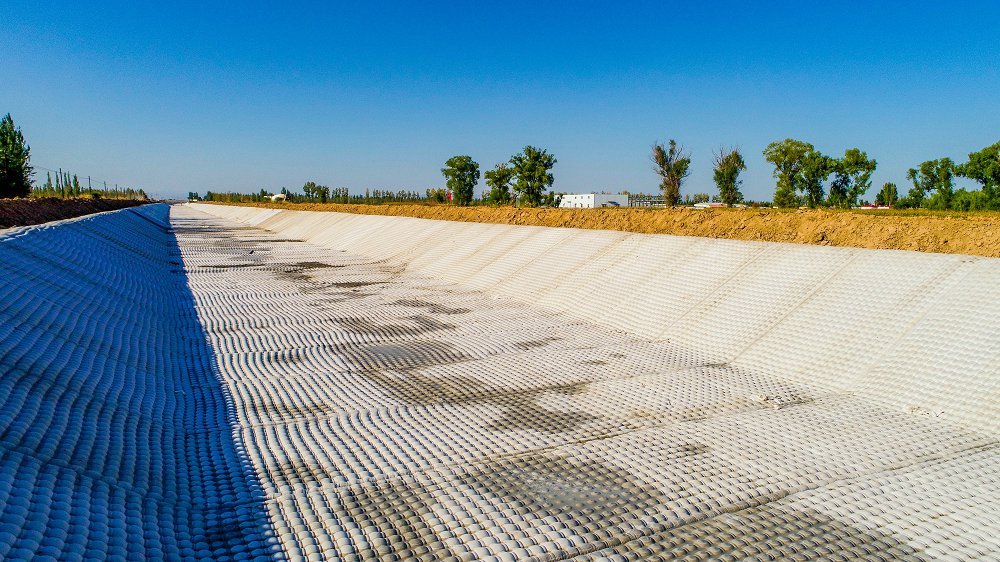
Articulated concrete mattress controls seepage through a two-layer system. The geotextile performs the hydraulic sealing function; the ACM provides structural protection for the geotextile and manages hydraulic loading from canal flow.
The geotextile underliner — typically a needle-punched non-woven fabric at 200–300 g/m² — acts as a low-permeability barrier with a filtration coefficient (permittivity) in the range of 0.02–0.05 s⁻¹. It conforms tightly to the prepared subgrade profile, eliminating the void spaces that allow water to track under rigid linings. The geotextile also performs a critical separation function, preventing fine soil particles from migrating upward into the ACM joints under cyclic hydraulic loading.
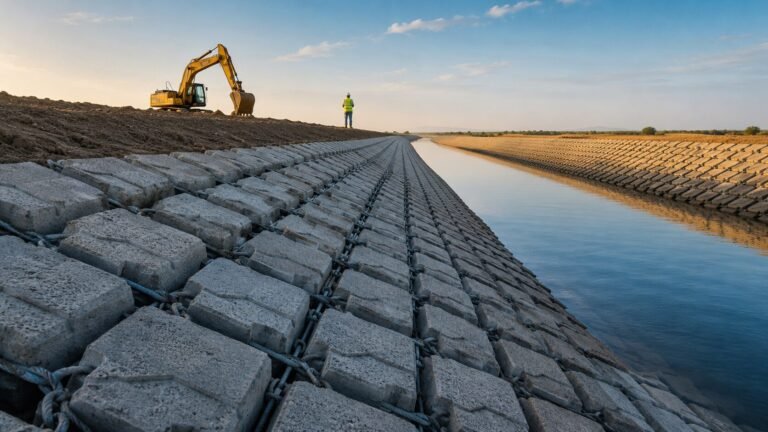
The concrete mattress layer protects the geotextile from UV degradation, flow-induced uplift, wave action, and incidental trafficking during maintenance operations. A correctly specified ACM — typically 100mm block thickness for canal bed and 150mm for bank slopes — applies sufficient self-weight to keep the geotextile in intimate contact with the subgrade, even in dewatered conditions.
The seepage reduction mechanism works as follows: canal water that would otherwise percolate freely through the soil prism now encounters a near-impermeable geotextile membrane. Residual seepage is limited to water passing through geotextile fabric pores (a small, controlled flow) plus any water tracking through ACM block joints where geotextile has not achieved full contact. Properly installed, this system reduces seepage flux by 60–80% compared to an unlined canal, and by 20–35% compared to an unprotected geomembrane installation without the concrete protective layer.
Why the combination outperforms either layer alone:
A geotextile without ACM protection degrades rapidly. UV exposure reduces tensile strength by 40–60% within 12 months in high-irradiance environments. Vandalism, maintenance equipment, and debris impact can puncture or displace unprotected fabric. ACM without a geotextile reduces flow velocity and controls erosion but does not address seepage — water passes freely through the open block joints into the subgrade.
For detailed design parameters on how the ACM block pattern affects hydraulic performance in canal applications, the canal lining concrete mattress design guide provides engineering-level coverage of block spacing, geotextile selection, and slope stability calculations.
Seepage Rate Calculation Method
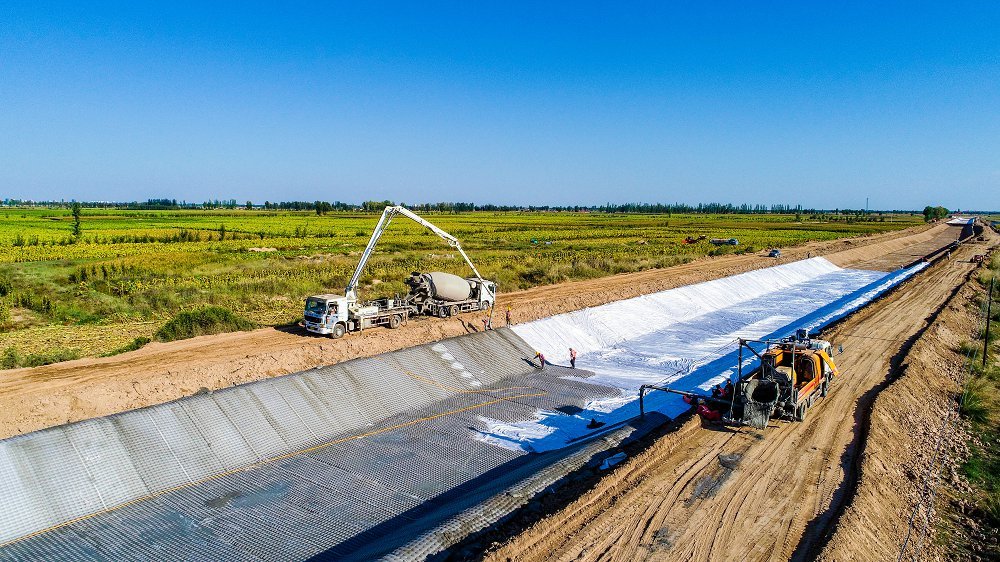
Quantifying seepage before and after lining is essential for both design validation and project performance reporting — particularly on World Bank and ADB-funded schemes where water efficiency targets are contractually specified.
The standard method for canal seepage measurement is the ponding test (also called the inflow-outflow method or the lined section test), as described in USBR Water Measurement Manual procedures.
Basic seepage rate calculation:
The volumetric seepage loss per unit area of canal wetted perimeter is expressed as:
q = ΔV / (A × t)
Where:
- q = seepage rate (m³/m²/day)
- ΔV = volume of water lost during test period (m³)
- A = wetted surface area of test reach (m²)
- t = test duration (days)
For a practical field estimate, USBR guidelines suggest a minimum test reach of 300 metres and a test duration of at least 24 hours after equilibration (typically 48–72 hours from initial filling to allow subgrade saturation).
Typical seepage benchmarks by lining type:
| Lining Type | Seepage Rate (m³/m²/day) | Conveyance Efficiency |
|---|---|---|
| Unlined earthen canal | 0.25 – 0.65 | 55 – 70% |
| ACM + 200 g/m² non-woven geotextile | 0.04 – 0.09 | 88 – 93% |
| Cast-in-place concrete (uncracked) | 0.01 – 0.03 | 95 – 98% |
| Cast-in-place concrete (cracked) | 0.08 – 0.22 | 72 – 86% |
| Geomembrane (HDPE, 1.0mm) | 0.005 – 0.02 | 96 – 99% |
The important takeaway from this table: ACM + geotextile achieves seepage performance that closely matches uncracked cast-in-place concrete. In reactive soil environments where CIP concrete routinely transitions to the “cracked” performance row within five years, ACM maintains its seepage performance indefinitely because differential settlement causes ACM panels to articulate rather than fracture.
Manning’s equation remains relevant for verifying that the ACM surface roughness (Manning’s n typically 0.016–0.020 for concrete block mattress) does not reduce conveyance capacity below design discharge. For a trapezoidal canal section with base width 3.0m, side slope 1.5H:1V, normal depth 1.2m, and design flow of 8.5 m³/s, the required bed slope remains achievable at Manning’s n = 0.018 — confirming that ACM roughness is not a conveyance constraint in typical irrigation canal hydraulics.
ACM vs Cast-In-Place Concrete Lining
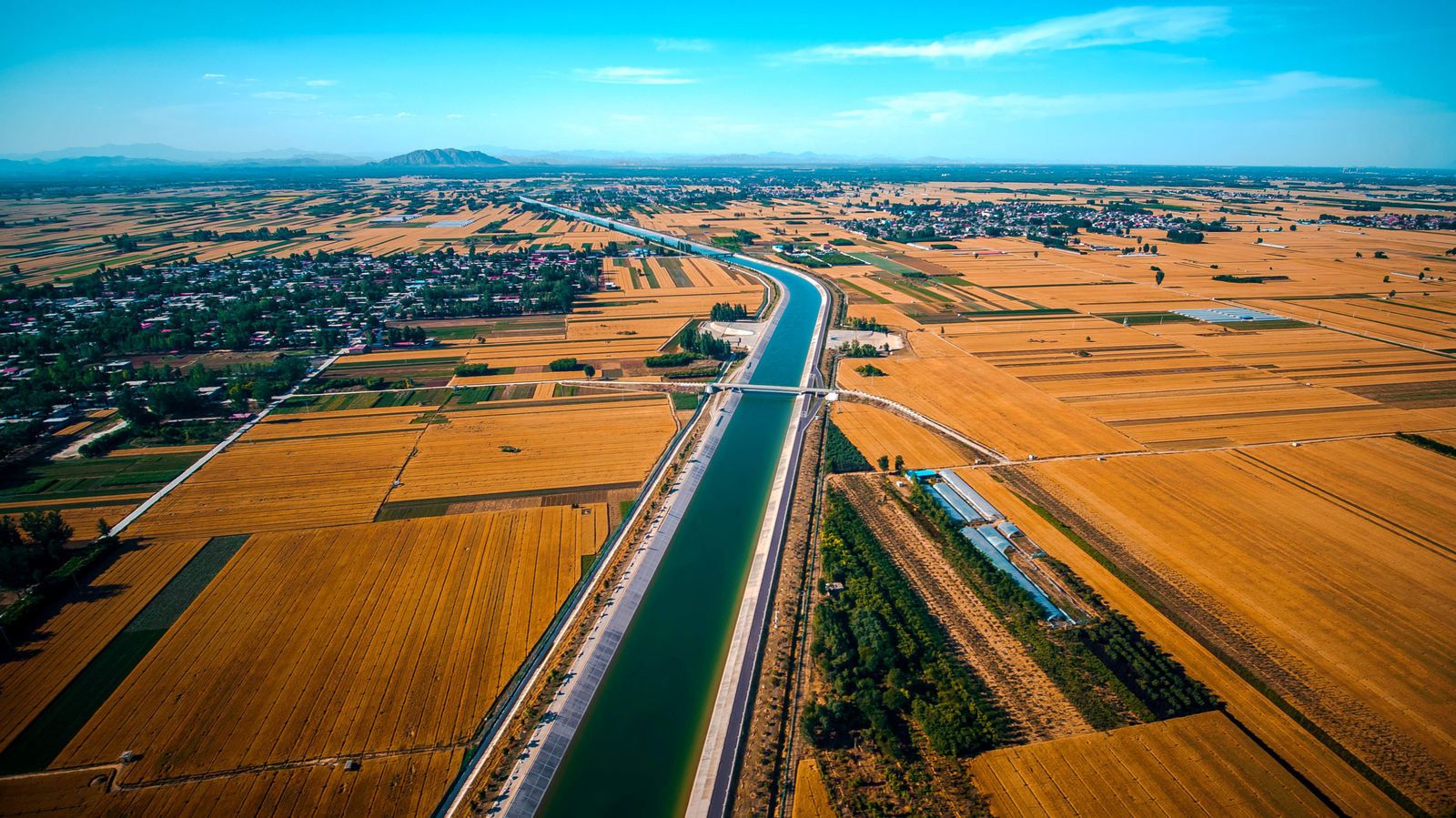
This comparison comes up on virtually every canal rehabilitation project where budget is constrained and long-term performance matters. Here’s an honest breakdown across the criteria that actually drive project outcomes.
Technical Performance Comparison:
| Parameter | ACM + Geotextile | Cast-In-Place Concrete |
|---|---|---|
| Seepage reduction vs earthen | 60–80% | 85–95% (uncracked) |
| Performance over reactive soils | Excellent — articulates | Poor — cracks within 2–5 yrs |
| Installation rate (m²/day, 20-person crew) | 800–1,500 | 150–350 |
| Minimum subgrade preparation | Light grading + compaction | Precise grading to ±20mm |
| Settlement tolerance | High — blocks articulate | Low — cracks at >10mm differential |
| Maintenance access | Full — panels lifted | Requires saw-cutting |
| Dewatering behaviour | Stable — drainage through joints | Risk of uplift pressure on thin slabs |
| Design service life | 40–60 years | 15–25 years (uncracked condition) |
Cost comparison (indicative, USD/m² of wetted perimeter):
- Cast-in-place concrete lining (100mm): USD 28–45/m²
- ACM + geotextile (100mm block, 200 g/m² GT): USD 18–32/m²
- Cost advantage for ACM: typically 25–40% lower installed cost
The cost gap widens further when lifecycle costs are included. A 30-year lifecycle cost model that accounts for crack repair (CIP) versus panel replacement (ACM) consistently shows ACM achieving lower total ownership cost from year 12 onwards, even where ACM has a slightly higher initial installed price in remote locations.
Where CIP concrete is still the right choice: very high velocity channels (> 3.5 m/s) where ACM block size would need to be impractically large, or where a smooth hydraulic surface is mandatory to achieve design discharge in a fixed channel cross-section. For slope protection applications beyond canal work, the slope protection concrete mattress engineering design guide covers the velocity rating selection process in detail.
Application in Large Irrigation Schemes
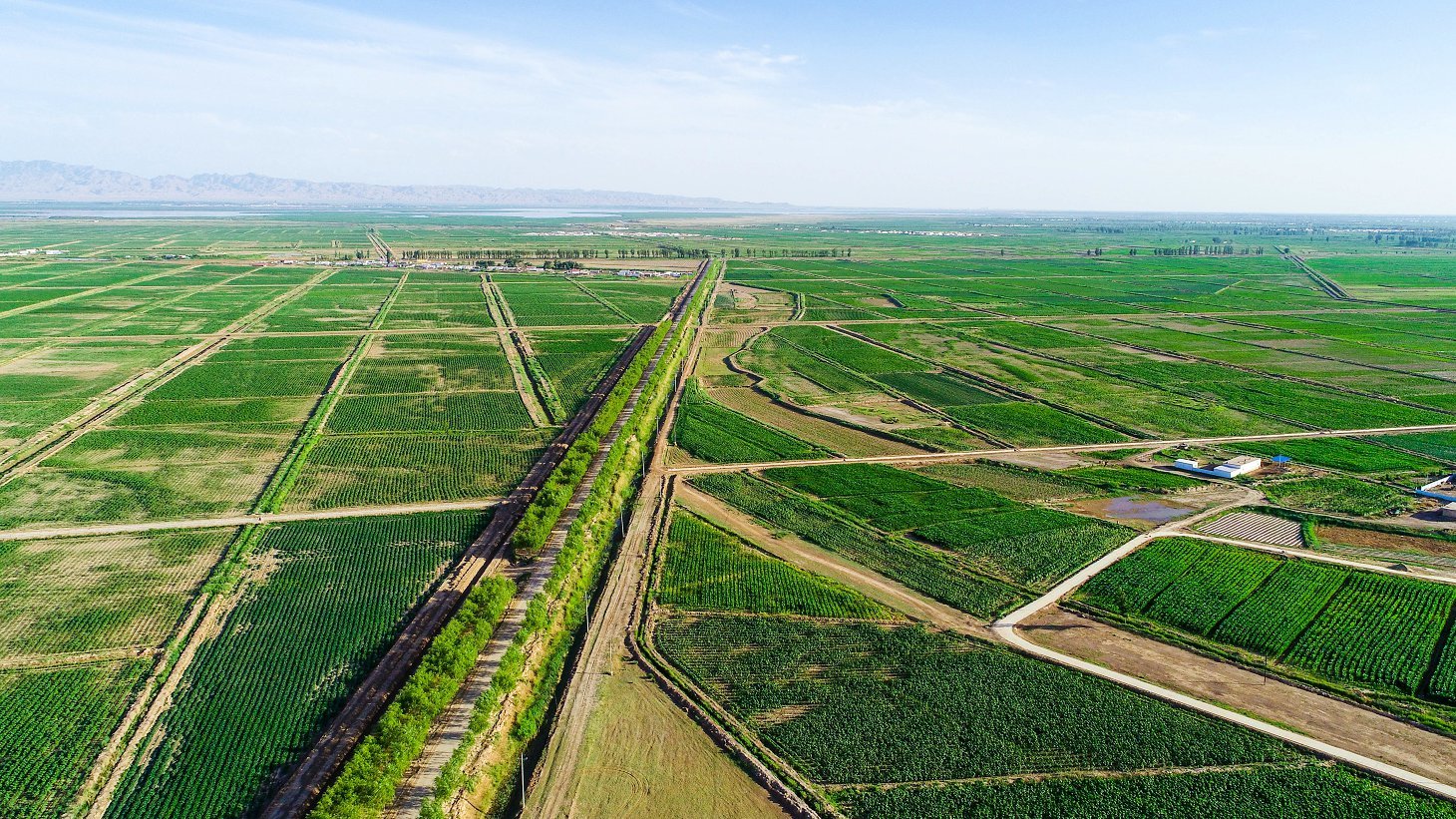
Large irrigation schemes — those serving 10,000 hectares or more — have specific constraints that influence lining system selection beyond pure hydraulic performance.
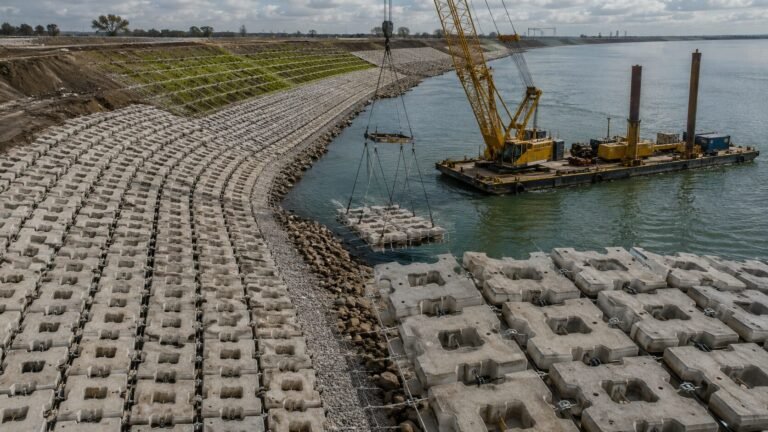
Logistical scale matters. A 50,000-hectare scheme with a primary canal network of 180 km of lined channel represents somewhere between 400,000 and 700,000 m² of wetted perimeter lining area. Manufacturing capacity, transport logistics, and installation rate all become critical selection factors. ACM panels manufactured to standard mattress dimensions (typically 6.0m × 3.0m or 4.0m × 2.0m depending on canal geometry) can be flat-packed and shipped in containers, significantly reducing transport cost per m² compared to pre-cast concrete panel alternatives.
Phased installation is straightforward with ACM. Unlike CIP concrete where curing time dictates construction sequencing, ACM panels can be installed, immediately trafficked by maintenance equipment, and have canal operations resumed within 24 hours of placement. This matters enormously on schemes that cannot afford extended canal shutdowns during cropping seasons.
Typical ACM specification for primary irrigation canals:
- Block dimensions: 400mm × 300mm × 100mm (bed) / 400mm × 300mm × 150mm (side slopes)
- Cable specification: 6mm stainless steel (AISI 316) or HDPE-coated galvanised wire rope
- Geotextile underliner: 200–250 g/m² needle-punched non-woven polypropylene, permittivity ≤ 0.05 s⁻¹
- Mattress panel size: customised to canal geometry, typically 3.0–6.0m width × 2.0–4.0m length
- Design velocity: up to 3.5 m/s for 100mm blocks, up to 5.0 m/s for 150mm blocks
- Weight per m²: 195–245 kg/m² (100mm block, closed pattern)
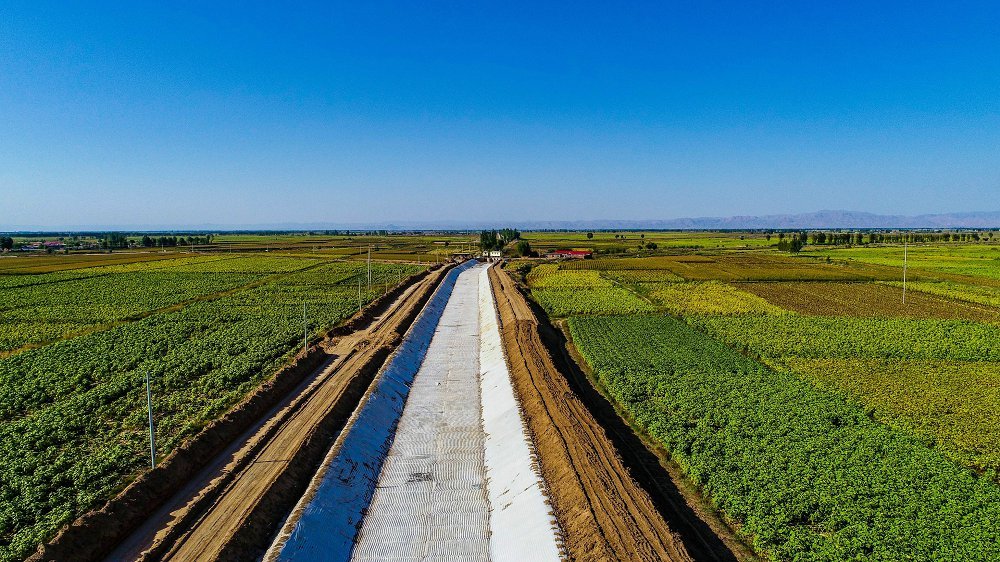
For secondary and tertiary canals where flows are lower (typically < 2.0 m/s) and canal sections smaller, a filter-point open-block pattern ACM reduces material weight and cost while still providing adequate geotextile protection. The open block configuration also allows controlled seepage where a degree of aquifer recharge is intentionally maintained as part of a conjunctive water use strategy.
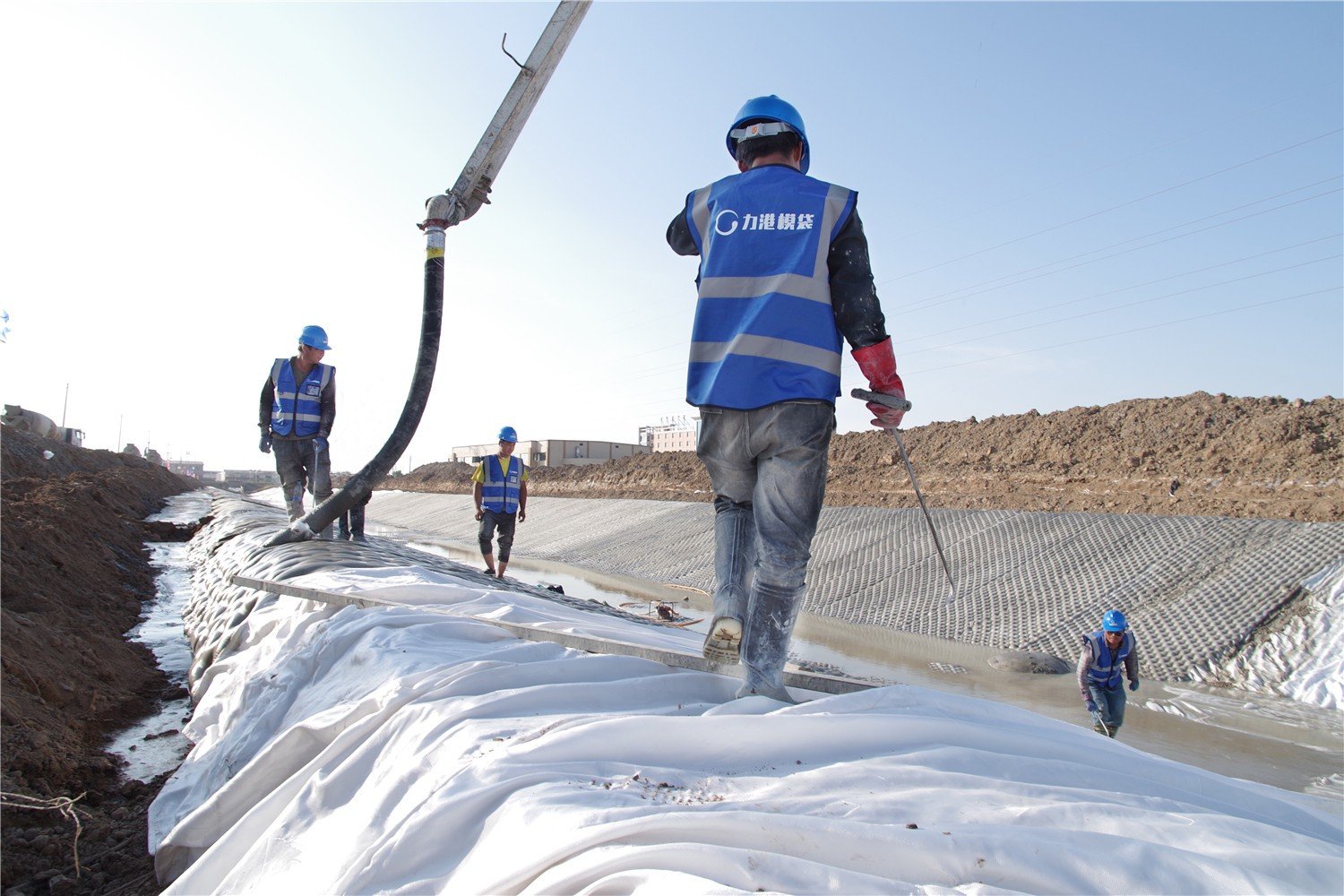
On secondary canal networks, installation is often done by local contractor crews with relatively modest equipment. ACM’s tolerance for less precise subgrade preparation (±30mm versus ±20mm for CIP) translates into lower skilled labour requirements and faster crew mobilisation. For project engineers evaluating installation methodology, the step-by-step ACM installation guide for site engineers covers equipment requirements, panel placement sequencing, and anchor detail at canal transitions.
Design Standards (USBR, FAO-29)
Two reference frameworks dominate irrigation canal lining design for internationally funded projects: the USBR Design of Small Canal Structures (Engineering Monograph No. 41) and FAO Irrigation and Drainage Paper No. 29 (Water Quality for Agriculture). For ACM-specific hydraulic design, HEC-23 (Bridge Scour and Stream Instability Countermeasures) provides the foundational velocity-block size relationship, even though it was developed for scour protection rather than canal lining.
Key USBR design requirements relevant to ACM canal lining:
- Canal bed slope: design for normal depth at design discharge, verified with Manning’s equation using appropriate roughness coefficient (n = 0.016–0.020 for ACM)
- Freeboard: minimum 0.3m above design water surface for canals with flow < 10 m³/s; 0.5m for larger canals
- Side slope stability: ACM + geotextile system must satisfy factor of safety ≥ 1.5 for slope stability under both saturated and drawdown conditions
- Anchor trench depth: minimum 0.5m at canal crest, 0.3m at toe — deeper where uplift pressure calculations indicate risk
FAO-29 water efficiency benchmarks that ACM systems are routinely designed to meet:
- Overall project efficiency target: ≥ 0.60 (field application efficiency × distribution efficiency × conveyance efficiency)
- Conveyance efficiency target for lined primary canals: ≥ 0.90
- Distribution efficiency target for lined secondary canals: ≥ 0.85
ACM + 200 g/m² geotextile consistently achieves conveyance efficiency of 0.88–0.93 in well-constructed installations, meeting FAO-29 primary canal targets.
Geotextile filter design should comply with AASHTO M 288 criteria for separation and filtration applications. For typical irrigation canal subgrades (fine sand to silty clay), a non-woven geotextile with apparent opening size (AOS) of 0.075–0.150mm and permittivity of 0.02–0.08 s⁻¹ satisfies both retention and permeability requirements.
Selecting the Right ACM Configuration: A Practical Checklist for Irrigation Engineers
Before specifying ACM for a canal lining project, work through these parameters systematically:
| Parameter | Design Input Required | Typical Range / Benchmark |
|---|---|---|
| Design flow velocity (m/s) | From hydraulic model or Manning’s calc | < 2.0 m/s: 100mm block; 2.0–3.5 m/s: 150mm block |
| Canal side slope | Survey / geotechnical recommendation | 1.5H:1V to 2.5H:1V standard; steeper requires slope stability check |
| Subgrade soil type | Geotechnical investigation | Dispersive/expansive = ACM preferred over CIP |
| Seepage reduction target | Project specification / FAO-29 benchmark | ≥ 60% reduction → specify ACM + 200 g/m² GT |
| Geotextile permittivity | AASHTO M 288 filter design | 0.02–0.05 s⁻¹ for fine-grained subgrades |
| Block pattern (open / closed) | Based on velocity + seepage priority | Closed pattern: max seepage reduction; Open: lower weight, aquifer recharge |
| Panel dimensions | Canal geometry + installation equipment | Customised to match canal width and available crane/barge capacity |
| Anchor trench specification | USBR guidelines + site hydrostatic uplift | Min 0.5m depth at crest; deeper for high-pressure situations |
| Cable specification | Corrosion environment assessment | Stainless AISI 316 for saline or aggressive water; HDPE-coated for freshwater |
| Lifecycle cost target | Client brief / project economic analysis | ACM lifecycle cost advantage materialises from year 8–12 vs CIP concrete |
For projects sourcing ACM from international suppliers, the complete guide to sourcing articulated concrete mattress from China provides procurement-specific guidance on quality verification, shipping logistics, and documentation requirements for internationally funded projects.
On projects where seepage reduction, installation speed, and long-term performance over reactive soils all matter simultaneously, manufacturers who have invested in both production capacity and application engineering support make a measurable difference to project outcomes. HydroBase, based in China, manufactures articulated concrete mattress panels specifically for irrigation canal applications, with block configurations and geotextile pairings that have been validated across canal lining projects in Southeast Asia, the Middle East, and Africa. Their articulated concrete mattress product range includes both standard and custom block dimensions suited to the range of canal geometries encountered in large irrigation schemes.
What sets production-capable ACM suppliers apart on large-scheme projects isn’t just block quality — it’s the ability to supply consistent panel dimensions across a multi-month production run, with quality control documentation (block compressive strength ≥ 35 MPa, cable tensile load test results, geotextile conformance certificates) that satisfies World Bank and ADB procurement requirements. HydroBase maintains production capacity sufficient for large-scale irrigation projects while offering engineering support for site-specific panel dimension and geotextile specification.
Frequently Asked Questions
Q: What geotextile weight should be used under concrete mattress for irrigation canal lining?
A 200–250 g/m² needle-punched non-woven polypropylene geotextile is the standard specification for most irrigation canal applications. For fine-grained subgrades (silty clay or dispersive soils), 250 g/m² provides better particle retention. For coarser subgrades with lower uplift risk, 200 g/m² is sufficient. Always verify that the apparent opening size (AOS) satisfies AASHTO M 288 retention criteria for your specific soil gradation.
Q: How long does articulated concrete mattress last in an irrigation canal?
Properly installed ACM with stainless steel or HDPE-coated cable has a design service life of 40–60 years in freshwater irrigation environments. The concrete blocks themselves — manufactured at ≥ 35 MPa compressive strength — are effectively permanent. The cable is the primary maintenance focus: stainless steel AISI 316 cable in freshwater has corrosion-free life exceeding 50 years. Periodic inspection every five years is recommended to identify any localised cable damage from debris impact.
Q: What is the minimum block thickness for ACM in irrigation canal bed applications?
100mm block thickness is the standard minimum for irrigation canal bed lining where flow velocities are below 3.0 m/s. At velocities between 3.0 and 4.5 m/s, 150mm blocks are required to provide sufficient self-weight and resistance to hydrodynamic uplift. For steep side slopes (steeper than 1.5H:1V), 150mm blocks are also recommended regardless of velocity to ensure slope stability under saturated conditions.
Q: What does articulated concrete mattress cost for irrigation canal lining, and what is the MOQ for international procurement?
Indicative supply pricing (ex-factory China) ranges from USD 18–28 per m² for standard 100mm ACM panels including geotextile, depending on block size, cable specification, and order volume. Installed cost adds USD 8–15/m² depending on site access and crew experience. For international procurement, most manufacturers set a minimum order quantity of 500–1,000 m² per shipment to achieve economical container loading.
Need a concrete mattress solution for your project?
HydroBase provides end-to-end concrete mattress engineering & installation services — from hydraulic design and factory-direct ACM supply to on-site supervision and post-project inspection. Trusted by civil engineers in 50+ countries.