
ACM Quality Control: Factory Testing Inspection Protocols & Third-Party Certification
Quick Answer: Concrete mattress quality inspection at the factory must cover six core tests: compressive strength (cube test at 28 days, ≥30 MPa), block dimension tolerance (±5 mm), cable tensile strength (≥25 kN/m), cable elongation (≤10% at break), geotextile permeability (0.05–0.1 m/s), and post-packing breakage rate (target <0.5%). Third-party inspection by SGS, Bureau Veritas, or Intertek is strongly recommended for orders over 5,000 m².
—
Procurement managers sourcing articulated concrete mattress from Chinese factories face a consistent challenge: suppliers quote to the same specification, but finished product quality varies considerably between facilities. Without a structured concrete mattress quality inspection factory protocol, you won’t catch the gaps until the product is on-site — sometimes underwater. With 18 years working on ACM manufacturing and specification, I’ve developed a testing framework that eliminates ambiguity and gives QA engineers a clear, enforceable standard.
—
Table of Contents
1. 6 Essential ACM Factory Tests
2. Cube Test: Concrete Compressive Strength
3. Cable Tensile and Elongation Test
4. Geotextile Permeability Test
5. Third-Party Inspection: When and How
6. ITP Template for ACM Orders
7. Frequently Asked Questions
—
6 Essential ACM Factory Tests
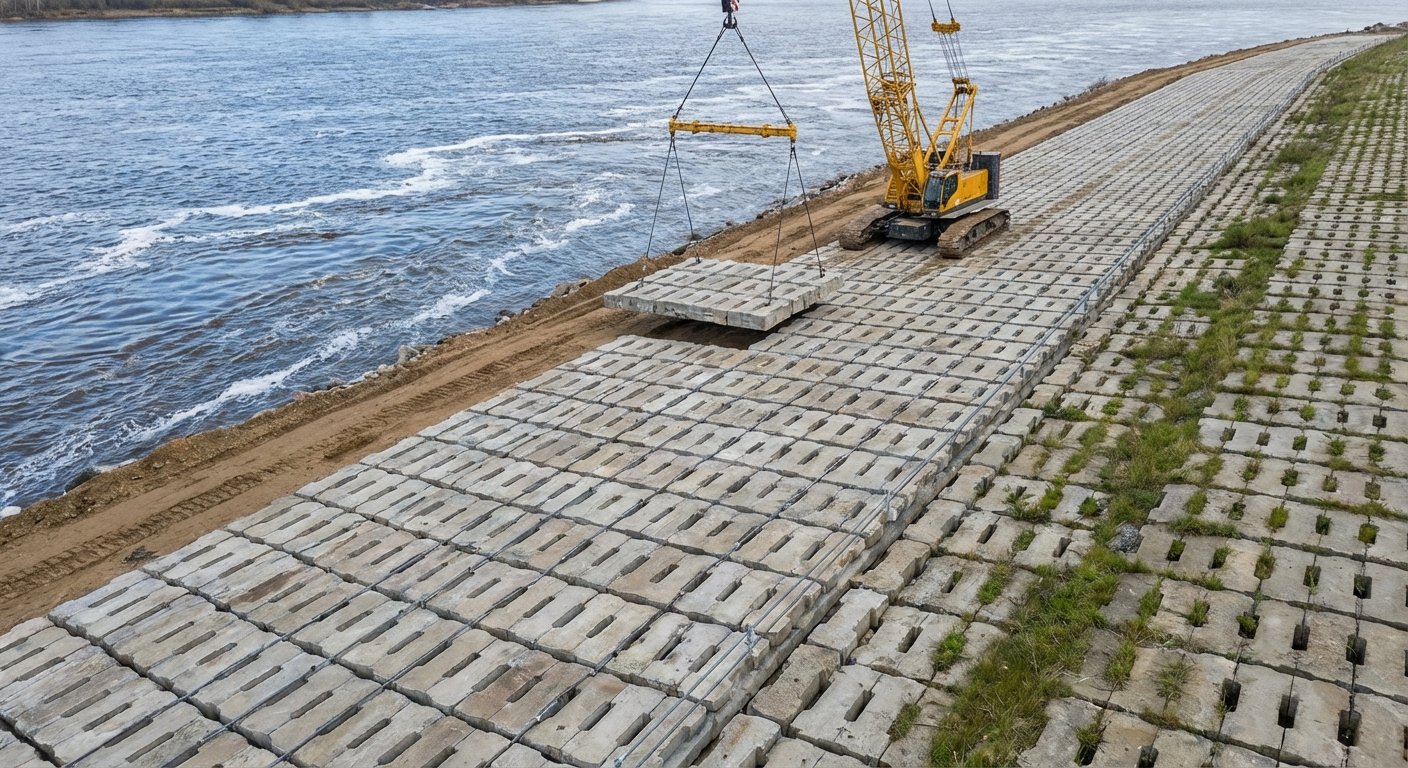
A well-run ACM factory should have no hesitation providing test certificates for all six of the following — if they stall on any one of them, that’s worth noting before you place your order.
| Test | Standard Reference | Pass Criterion |
|---|---|---|
| Compressive Strength (28-day cube) | BS EN 12390-3 / ASTM C39 | ≥30 MPa (C30/37 minimum) |
| Block Dimension Tolerance | Project spec / factory ITP | ±5 mm on all faces |
| Cable Tensile Strength | ASTM A416 / EN 10138 | ≥25 kN/m width |
| Cable Elongation at Break | ASTM A416 | ≤10% |
| Geotextile Permeability | ISO 11058 | 0.05–0.10 m/s |
| Post-Packing Breakage Rate | Factory AQL sampling | <0.5% of blocks per roll |
Each of these tests maps to a real failure mode in the field. Low compressive strength leads to surface abrasion and block fracture under high-velocity flow. Oversized blocks create flex-point stress concentrations in the cable matrix. Weak or brittle cables fail progressively once a single strand frays. Geotextile permeability outside the target band either allows fine sediment migration (too open) or hydrostatic pressure buildup (too closed).
Running all six tests on every production batch isn’t excessive — it’s the baseline that serious hydraulic projects demand.
—
Cube Test: Concrete Compressive Strength
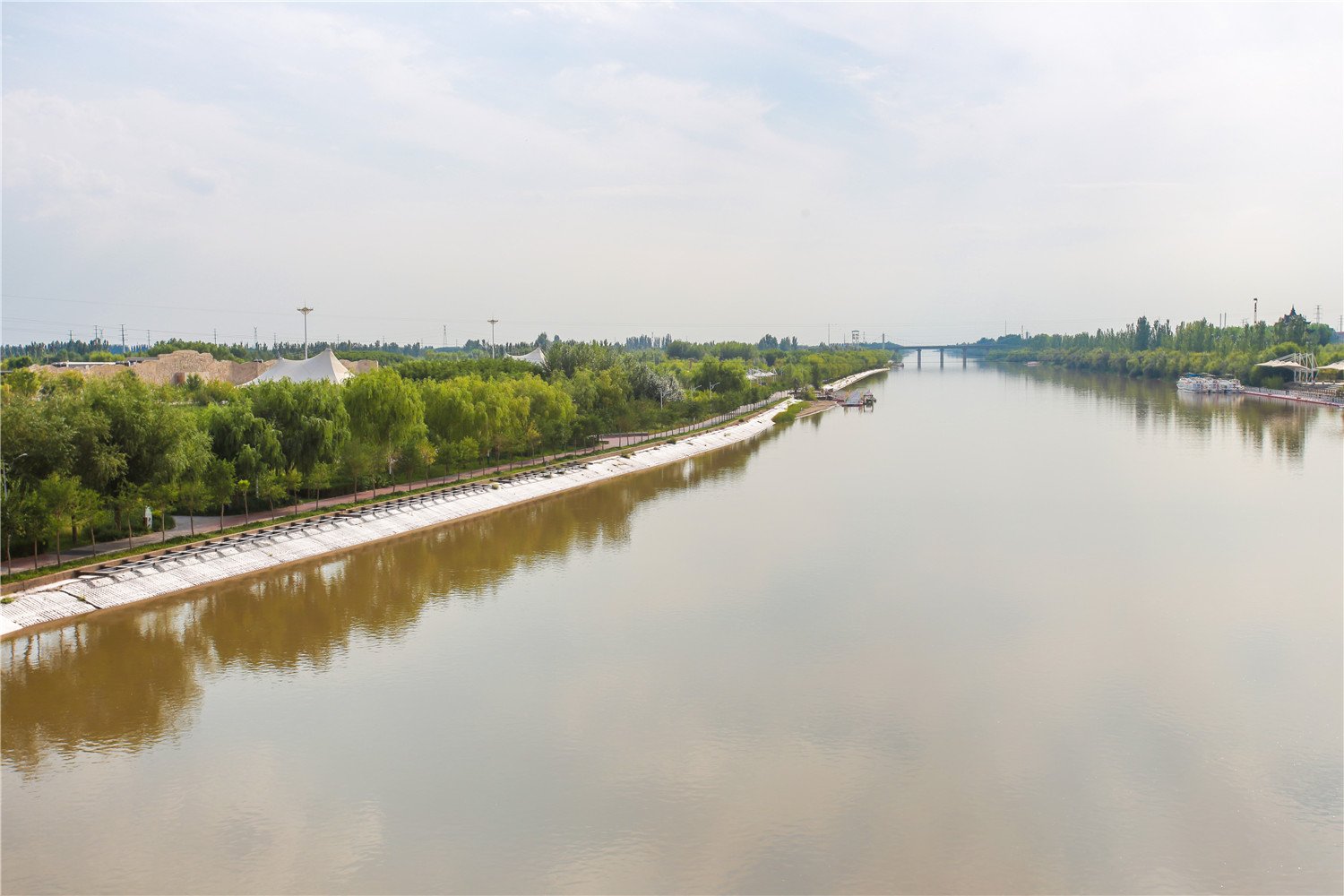
Concrete compressive strength is the single most audited parameter in any ACM factory inspection, and for good reason. Blocks operating in high-velocity channels or tidal zones experience sustained hydraulic loading, abrasion from suspended sediment, and repeated wet-dry cycling — all of which degrade weaker concrete faster.
What to require:
- Minimum characteristic cylinder strength: f’c = 30 MPa at 28 days (equivalent to C30/37 cube strength per EN 206)
- Cube sample size: 150 mm × 150 mm × 150 mm, cured under standard conditions (20°C ± 2°C, ≥95% RH)
- Sampling frequency: minimum 3 cubes per 50 m³ of concrete poured, with one set retained for independent re-testing
- Test method: BS EN 12390-3 or ASTM C39 (specify which standard in your purchase order — don’t leave it open)
Interpreting the results:
Factories sometimes present 7-day cube results as a proxy for 28-day strength. The typical 7-day/28-day ratio for OPC concrete is approximately 0.65, so a 7-day result of 21 MPa projects to roughly 32 MPa at 28 days — marginally acceptable, but always require the 28-day certificate before final acceptance.
Watch for coefficient of variation (CoV) in the batch results. A CoV above 15% indicates inconsistent mix design or batching control, even if the mean strength passes. That variability is a quality signal worth flagging.
For projects in aggressive marine or tidal environments, consider specifying C35/45 (35 MPa cylinder / 45 MPa cube) and a maximum water-cement ratio of 0.45 to improve chloride resistance. Understanding the full durability picture of your ACM installation is covered in the articulated concrete mattress lifespan and durability guide for project owners.
—
Cable Tensile and Elongation Test
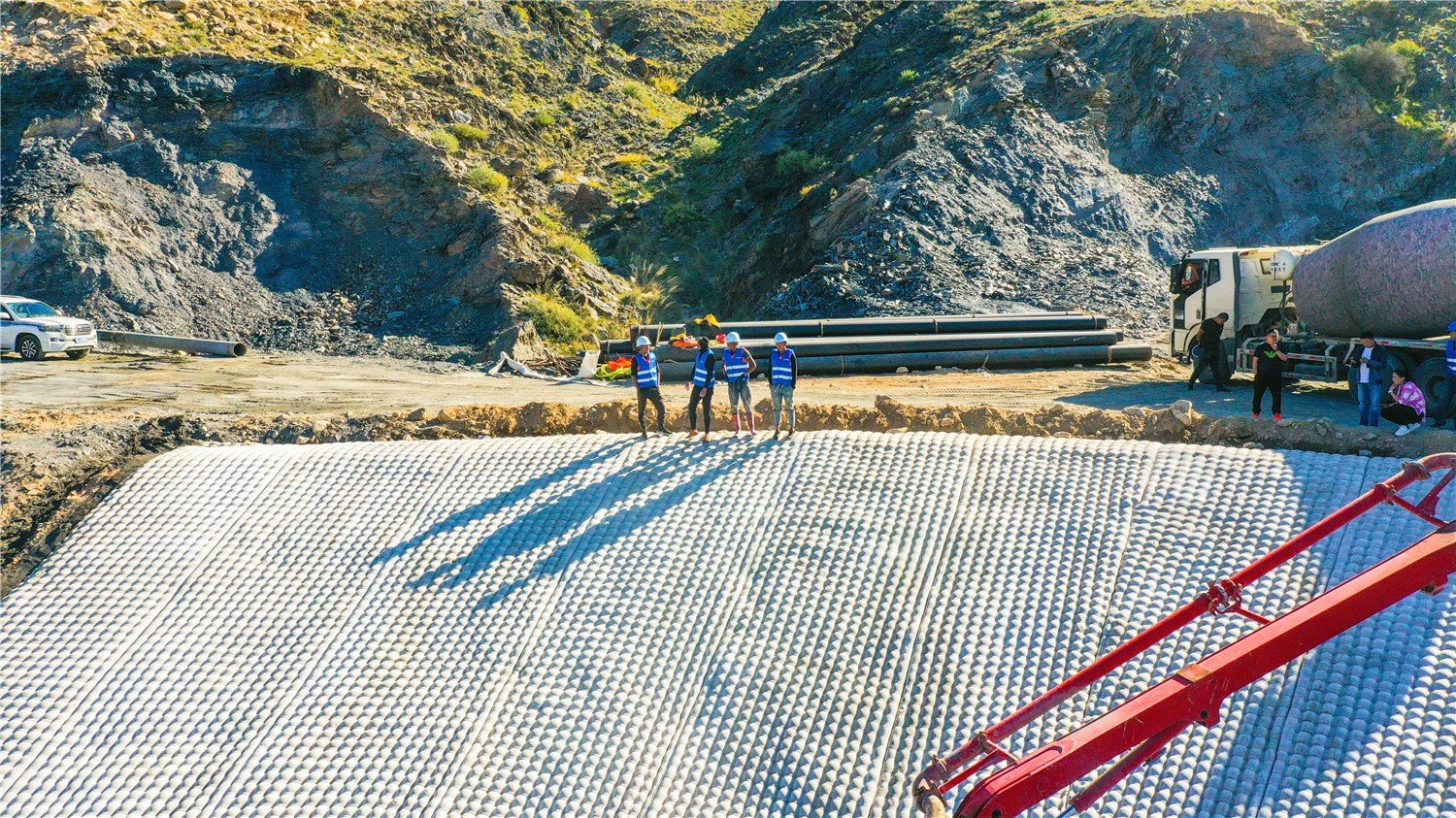
Cables are what turn a collection of individual concrete blocks into a flexible, articulating system. When cable integrity fails, you don’t lose one block — you lose a section of mattress. ACM factory QC on cables is non-negotiable, yet it’s the test that gets skipped most often on low-budget projects.
Cable types commonly specified:
- Galvanised steel wire rope: typically 6×19 or 6×37 construction, 4–8 mm diameter
- UV-stabilised polyester rope: used where electrochemical corrosion is a concern (saline or acidic environments)
- Stainless steel wire rope (AISI 316): premium specification for permanent offshore or tidal installations
Test parameters:
- Tensile strength per metre width: minimum 25 kN/m measured at the mattress panel level (not just the cable itself)
- Elongation at break: ≤10% — higher elongation allows excessive block separation under load, compromising interlocking
- Cable spacing: verify against design drawings (typically 300–500 mm centres); tolerance ±10 mm
- Block embedment depth: cable should pass through the full block depth with a minimum 25 mm concrete cover on all sides
For the tensile test, the correct method is to load a representative mattress sample (typically 1 m × 1 m panel) in tension perpendicular to the cable axis, recording peak load and elongation. Factory pull-test certificates on isolated cable lengths are not sufficient — they don’t capture the cable-block interaction.
Practical tip: request photographs of the cable routing during block manufacture. Cables that kink at the entry/exit points of the block are a common defect that reduces effective tensile capacity by 15–30%.
—
Geotextile Permeability Test
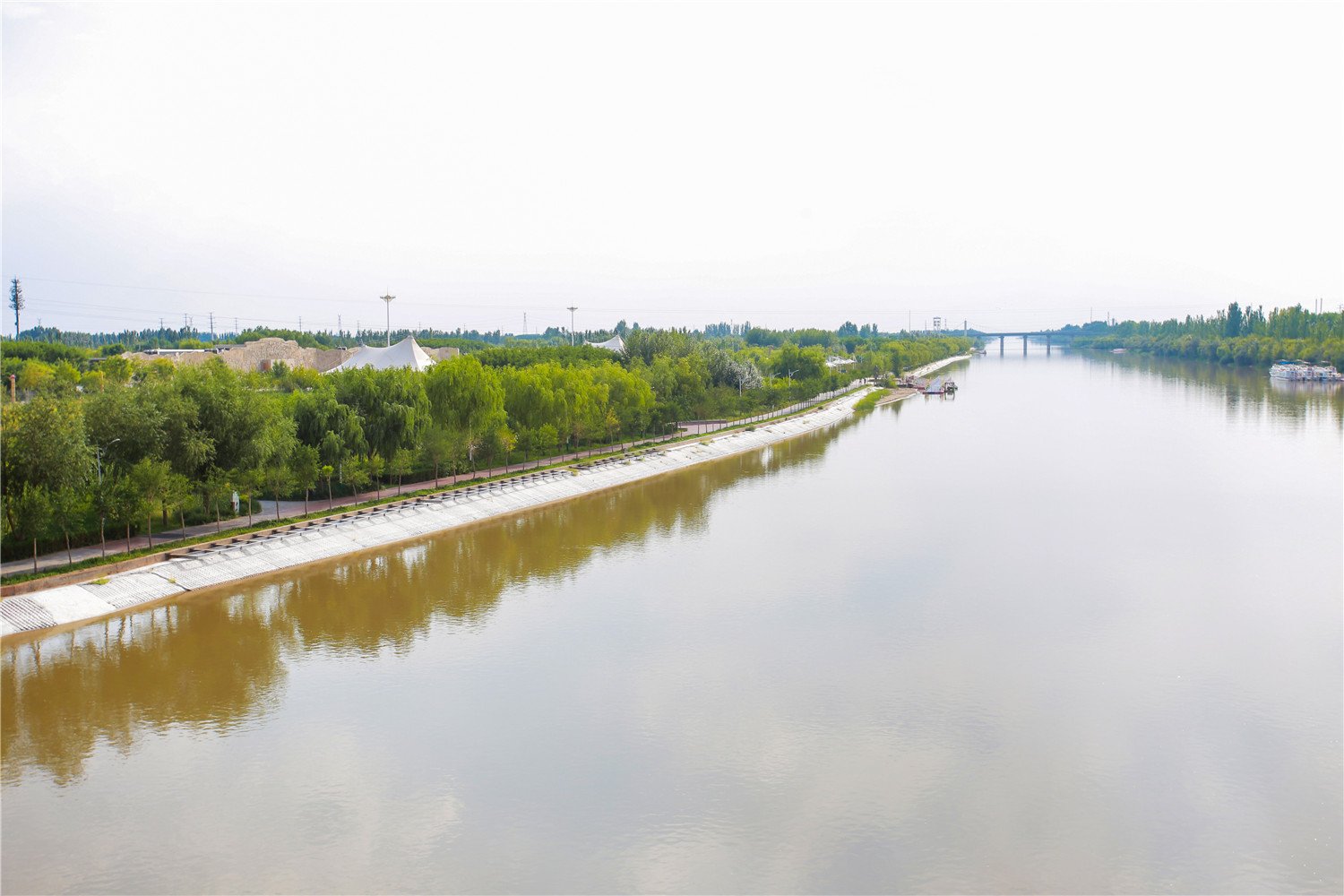
Most ACM systems are installed over a geotextile filter layer, and in many designs the geotextile is integrated directly into the mattress panel. The permeability specification controls whether that filter layer does its job: allowing pore pressure dissipation while preventing fine particle migration.
Target permeability range: 0.05–0.10 m/s (measured by the falling head or constant head method per ISO 11058 or ASTM D4491).
Outside this range, both failure modes are real:
- Below 0.05 m/s: the geotextile acts too much as a barrier; hydrostatic uplift pressure builds beneath the mattress during flood events, potentially causing mattress uplift or substrate piping
- Above 0.10 m/s: the filter opens too freely, allowing fine substrate migration through the geotextile under cyclic hydraulic loading, leading to undermining
What to check at the factory:
- Geotextile type and weight: nonwoven needle-punched, typically 200–400 g/m² for ACM applications
- AOS (Apparent Opening Size): should be specified relative to the D85 of the protected substrate (O90 < 0.2 mm for fine-grained soils)
- UV stability: if geotextile is exposed pre-installation, require a minimum UV resistance rating of 150 hours per ASTM D4355
- Seam overlap: where geotextile panels are joined under the mattress, minimum 300 mm overlap with no gapping
The geotextile batch certificate from the roll manufacturer is acceptable for most commercial orders, but independent permeability testing is worth requiring for critical infrastructure projects (bridge abutments, dam toe protection, major pipeline crossings).
—
Third-Party Inspection: When and How
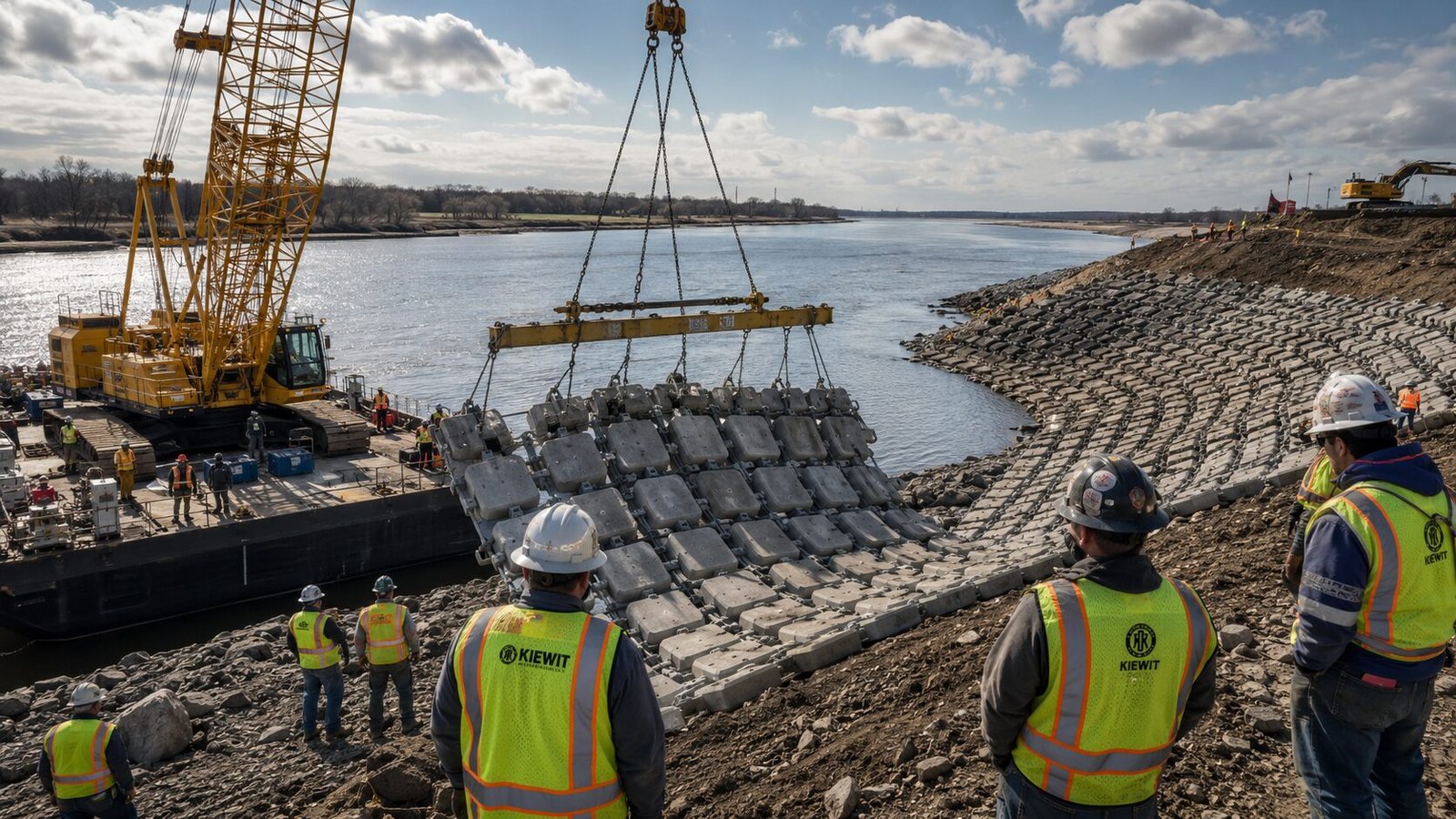
Third-party inspection adds cost — typically USD $400–800 per man-day for a qualified inspector in China — but it’s rarely the most expensive decision you’ll make on a project. Receiving non-conforming ACM on-site in a remote location, or worse, after underwater installation, is significantly more expensive.
When third-party inspection is worth requiring:
- Orders over 5,000 m² of finished ACM
- Projects with water velocity design loads exceeding 3.5 m/s
- Permanent installations (50+ year design life) in critical infrastructure
- Contracts where end-client specifications reference SGS, Bureau Veritas, or Intertek certification
- First orders from a new Chinese supplier (regardless of order size)
How to structure the inspection engagement:
Inspection bodies like SGS, Bureau Veritas, and Intertek operate standard Pre-Shipment Inspection (PSI) programs for construction products, but you’ll get far better results with a customised inspection mandate tied to your ITP (Inspection and Test Plan). A generic PSI catches obvious visual defects; a purpose-built mandate specifies exact sampling frequencies, test methods, and pass/fail criteria.
Practical checkpoint stages for a China ACM factory inspection:
1. During Production (IPI): verify mix design records, cube sample collection, cable routing, block casting dimensions
2. Pre-Packing (FRI): full dimensional check on a 10% random sample, cable pull test on 2% of panels, visual block integrity check
3. Pre-Shipment (PSI): packing integrity, roll labelling, breakage count per roll, loading supervision
A note on sampling: use AQL Level II, Inspection Level S-3 as the minimum standard for dimensional checks. For structural tests (compressive strength, cable tensile), every batch certificate must be traceable to the specific production lot being shipped.
The full sourcing and supplier qualification framework — including how to evaluate ACM manufacturers before you get to the inspection stage — is detailed in the complete procurement guide for buying articulated concrete mattress from China.
—
ITP Template for ACM Orders
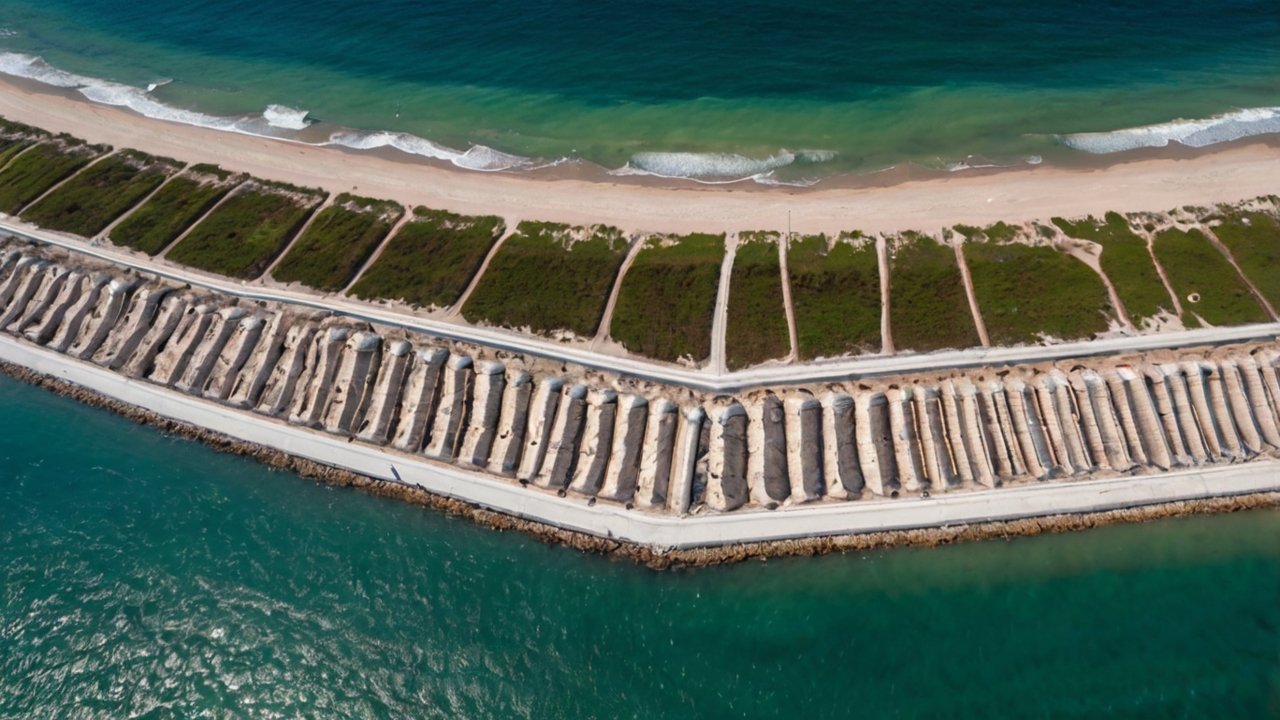
An Inspection and Test Plan (ITP) is the document that converts your quality requirements into a legally enforceable factory checklist. Without an ITP referenced in your purchase order, you’re relying on goodwill — which isn’t a QA strategy.
ACM Factory ITP — Core Elements:
| Activity | Frequency | Method | Accept Criterion | Witness |
|---|---|---|---|---|
| Raw material cement certificate | Per delivery | Mill cert review | Grade 42.5N or equivalent | Doc review |
| Concrete mix design approval | Per project | Review & approve | W/C ratio ≤0.50, min cement 350 kg/m³ | Buyer approval |
| 28-day cube test | 1 set per 50 m³ | BS EN 12390-3 | ≥30 MPa mean | Lab cert |
| Block dimension check | 10% per production run | Manual gauge | ±5 mm all faces | Factory QC |
| Cable tensile & elongation | 2% of panels | Panel pull test | ≥25 kN/m, ≤10% elongation | Witnessed by TPI |
| Geotextile permeability | Per roll lot | ISO 11058 | 0.05–0.10 m/s | Cert from manufacturer |
| Post-packing breakage | Per pallet/roll | Visual count | <0.5% blocks | Factory QC + TPI |
| Shipping mark & packing check | 100% | Visual | Per shipping spec | TPI pre-shipment |
How to use this table: copy it into your purchase order as an attachment and require the factory’s Quality Manager to sign it. That signature converts a table into a contractual obligation. Any deviation from the acceptance criteria triggers a hold until disposition is agreed in writing.
One practical addition: specify that all cube test certificates must include the batch number, pour date, curing temperature log, and testing laboratory accreditation number. Certificates that lack these details — even if the number itself looks fine — are difficult to audit and should be challenged.
For projects where ACM is specified for slope protection or embankment revetment, the ITP should also cross-reference the design requirements for slope protection with articulated concrete mattress to ensure manufactured dimensions match design intent before shipment.
—
Frequently Asked Questions
Q: What compressive strength should I specify for articulated concrete mattress blocks?
Specify a minimum 28-day cube strength of 30 MPa (C30/37 per EN 206) for standard hydraulic applications. For aggressive marine, tidal, or saline environments, upgrade to C35/45 with a water-cement ratio cap of 0.45. Always require 28-day test certificates — not 7-day projections — before accepting a production batch.
Q: How many cube samples should a factory take per production batch?
The minimum acceptable frequency is three cube samples per 50 m³ of concrete poured. One set should be tested at 28 days by an accredited third-party laboratory; retain one set at the factory for verification testing if disputes arise. Higher-risk projects (permanent infrastructure, offshore installations) should increase sampling to one set per 30 m³.
Q: What’s the difference between a Pre-Shipment Inspection and a witnessed factory test?
A Pre-Shipment Inspection (PSI) happens after production is complete and checks finished goods for quantity, labelling, packing integrity, and visible defects. A witnessed factory test occurs during production — an inspector observes and signs off on the cube sampling, cable pull tests, and dimensional checks as they happen. For structural products like ACM, witnessed factory testing provides far stronger quality assurance than PSI alone.
Q: What is the typical lead time and MOQ for ACM orders from Chinese factories?
Typical MOQ for a China ACM factory order is 500–1,000 m², though some facilities accept smaller trial orders of 100–200 m² at a price premium. Standard production lead time is 25–45 days after design approval, depending on block size and order volume. Third-party inspection adds 3–5 working days to the schedule; build this into your procurement timeline from the start.
—
Ready to Specify ACM with Enforceable QC?
If you’re preparing a technical specification or purchase order for an upcoming ACM order, the articulated concrete mattress product page at concretemattress.com includes downloadable specification sheets with standard test parameters already formatted for inclusion in procurement documents.
HydroBase manufactures ACM under an ISO 9001-certified quality system with full ITP documentation available on request — including traceable cube test certificates, third-party cable test reports, and pre-shipment inspection coordination with SGS and Bureau Veritas.
Procurement teams with active RFQs: request the HydroBase ACM Factory QC Pack — a single document containing the standard ITP template, cube test certificate format, and cable test protocol — by submitting your project details through the product enquiry form. Response within 4 working hours.
—
Conclusion
Concrete mattress quality inspection at the factory isn’t complicated, but it does require specificity. Vague specifications produce vague results. The six core tests outlined here — compressive strength, block dimensions, cable tensile strength, cable elongation, geotextile permeability, and post-packing breakage — cover the failure modes that actually matter in service.
An ITP signed by the factory’s Quality Manager, combined with third-party inspection for orders above 5,000 m², closes the loop between what you specify and what gets delivered. On a project where ACM is protecting a pipeline crossing or a bridge pier scour zone, that documentation trail is worth considerably more than the inspection cost.
Bring the same rigour to your material sourcing that you apply to your hydraulic design — because the best velocity rating calculation in the world doesn’t help if the blocks are under-strength or the cables fail in year three. As our lead installation engineer always says, “You can feel when the cable tension is right.”
Need a concrete mattress solution for your project?
HydroBase provides end-to-end concrete mattress engineering & installation services — from hydraulic design and factory-direct ACM supply to on-site supervision and post-project inspection. Trusted by civil engineers in 50+ countries.