
Articulated Concrete Mattress Cost: Unit Price Per m² Installation Cost and Total Lifecycle Analysis
**Quick Answer:** Ex-works China pricing for standard articulated concrete mattress (200 mm block, open-core) ranges USD 18–32/m² depending on block specification and order volume. CIF to Southeast Asia adds USD 6–10/m². Installation adds USD 12–25/m² for river applications, bringing total installed cost to USD 36–67/m² — competitive with riprap when 50-year service life is factored in.
Pricing for articulated concrete mattress systems is one of those topics most manufacturers dance around, and that silence costs procurement teams real money during budget and tender estimation. With 18 years of experience in ACM manufacturing at HydroBase, I’ve watched quantity surveyors build project budgets on figures that were either wildly optimistic or padded to the point of killing value engineering opportunities. This guide gives you the actual numbers — ex-works, CIF, installed, and whole-life — so your next cost estimate holds up under scrutiny.
Table of Contents
1. Ex-Works China Pricing by Block Specification
2. CIF Pricing to Major Ports
3. Installation Cost Breakdown
4. Whole-Life Cost vs Riprap and Gabions
5. What Drives the Unit Price Up or Down
6. Volume Discount Structure
7. Frequently Asked Questions
Ex-Works China Pricing by Block Specification

Ex-works pricing is where ACM procurement begins. These are factory gate prices before freight, insurance, customs duties, or local handling — the baseline every QS needs before adding a country-specific logistics layer.
Standard articulated concrete mattress blocks are typically manufactured in China to one of three thickness bands, each with a distinct weight and hydraulic performance envelope. Here’s what the market looks like right now:
| Block Specification | Block Dimensions (L×W×H) | Approx. Weight kg/m² | Ex-Works China (USD/m²) | Typical Velocity Rating |
|---|---|---|---|---|
| Lightweight open-core | 300×200×100 mm | 52–68 | USD 14–20 | Up to 3.5 m/s |
| Standard open-core | 400×300×150 mm | 95–120 | USD 18–27 | Up to 4.5 m/s |
| Heavy closed-block | 500×350×175 mm | 140–180 | USD 25–38 | Up to 5.5 m/s |
| Extra-heavy closed-block | 600×400×200 mm | 190–240 | USD 32–52 | Up to 6.0 m/s |
A few things worth noting about these ranges. The spread within each band is real — it reflects differences in concrete compressive strength (typically C25 to C45), the type of connecting cable (galvanised steel vs. HDPE-coated stainless), and whether the mattress includes a factory-attached geotextile backing. Open-core configurations, where approximately 30–40% of the mattress surface is void, come in at the lower end. Closed-block patterns with geotextile integration sit at the top.
Concrete grade matters more than many buyers realise. A C25 mix block at 150 mm thickness will meet most channel lining requirements, but a coastal or tidal application calling for HEC-23 compliant design will typically require C35 minimum with a water-cement ratio below 0.45. That specification change alone can push unit price up by USD 3–5/m².
For projects needing detailed technical cross-referencing, the complete articulated concrete mattress technical guide for civil and hydraulic engineers covers block geometry, cable specifications, and compressive strength requirements in detail.
**Practical takeaway:** For budget estimation purposes, use USD 20–28/m² ex-works as your central range for the standard 150 mm open-core configuration. Adjust upward if the spec sheet calls for C35+ concrete, stainless cable, or geotextile backing.
CIF Pricing to Major Ports
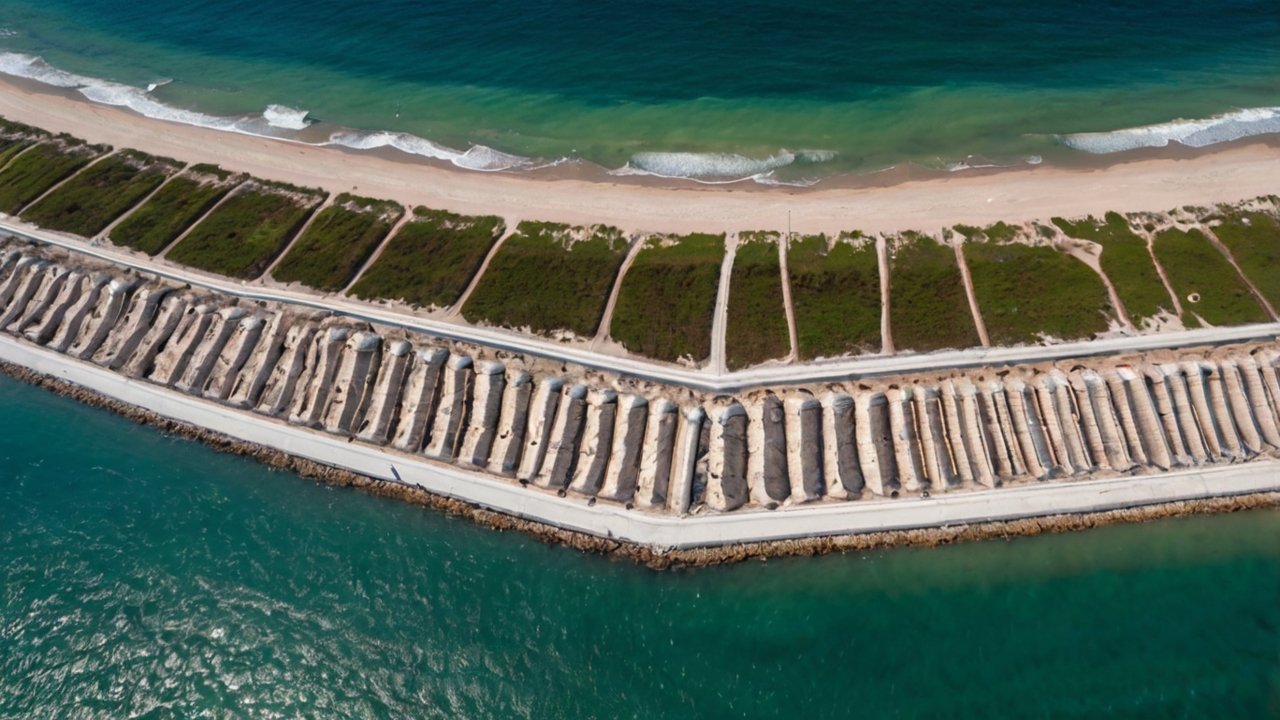
Ex-works gets you to the factory gate. CIF (Cost, Insurance, Freight) gets the product to your destination port, and the delta matters considerably for ACM given its weight per container.
ACM is a dense product. A standard 20ft container typically carries 18–22 tonnes of assembled mattress panels, equating to roughly 130–180 m² of coverage depending on block thickness. A 40ft HQ container stretches that to 280–360 m². The weight-to-volume ratio means sea freight dominates the logistics cost — air freight is not a realistic option for anything beyond small sample quantities.
Indicative CIF additions from South China ports (Guangzhou, Shenzhen):
| Destination Port | Sea Freight Add (USD/m²) | Typical Transit Time |
|---|---|---|
| Singapore / Batam | USD 4–7 | 7–10 days |
| Colombo, Sri Lanka | USD 5–8 | 10–14 days |
| Dubai / Jebel Ali | USD 6–10 | 18–22 days |
| Rotterdam, Netherlands | USD 8–13 | 28–32 days |
| Houston, USA | USD 9–14 | 22–28 days |
| Sydney, Australia | USD 7–11 | 14–18 days |
These ranges assume FCL (full container load) shipments. LCL (less-than-container-load) for smaller trial orders typically adds 30–50% to the per-m² freight cost and introduces consolidation delays of 5–7 days.
Import duties vary by destination country and HS code classification. ACM typically classifies under HS 6810.99 (other articles of cement, concrete, or artificial stone), though some customs authorities classify cable-tied systems under 6810.91. Duty rates range from 0% (most ASEAN countries under ACFTA) to 8% (USA under current trade schedules) to 6.5% (EU). Confirming the correct HS code with your freight forwarder before finalising the landed cost estimate is non-negotiable — misclassification at destination can create material cost variance.
For buyers navigating supplier selection and import logistics in detail, the complete procurement guide for sourcing articulated concrete mattress from China covers supplier qualification, inspection, and documentation requirements.
**Practical takeaway:** For Southeast Asia and Middle East projects, budget USD 26–38/m² as your landed (CIF + duties) cost for standard 150 mm ACM. European and North American projects should use USD 32–45/m² landed.
Installation Cost Breakdown
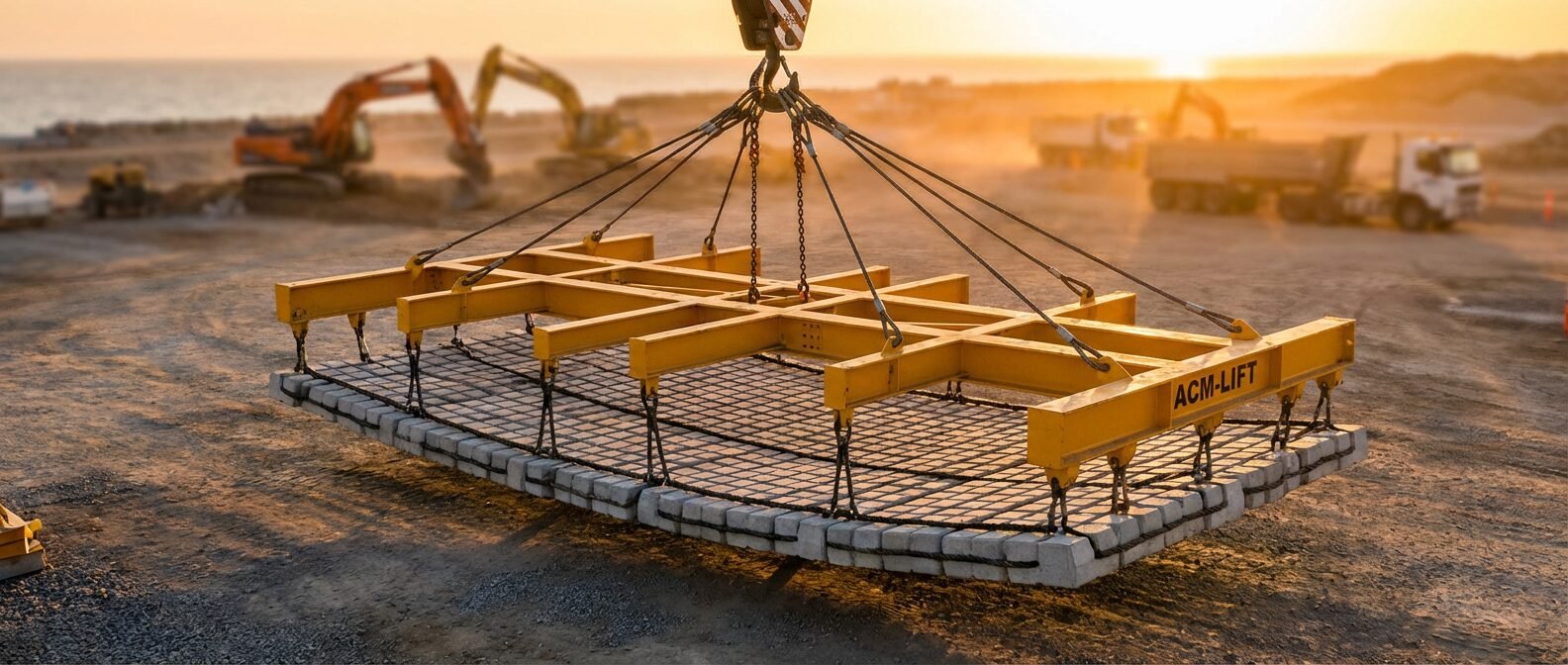
Material cost is only half the story. Installation is where ACM’s real value proposition either holds up or gets eroded by poorly estimated site costs.
ACM installation costs depend heavily on the application type — riverbank revetment, underwater scour mat placement, or slope lining all carry different equipment and labour requirements. Here’s a realistic breakdown by scenario:
**Riverbank and Channel Lining (Dry or Dewatered)**
– Geotextile filter layer installation: USD 2–4/m²
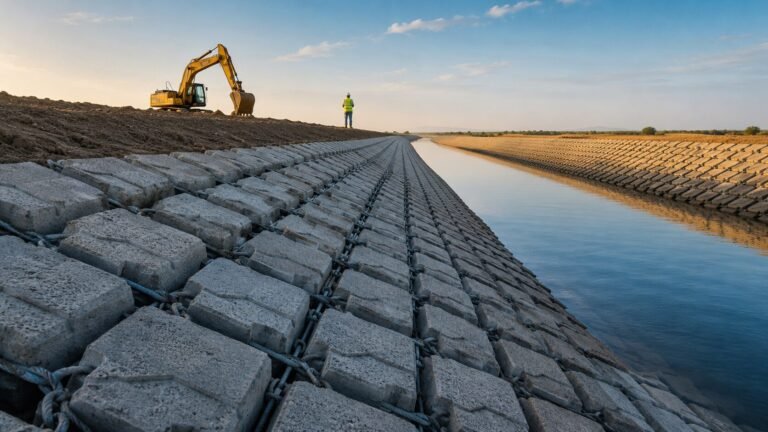
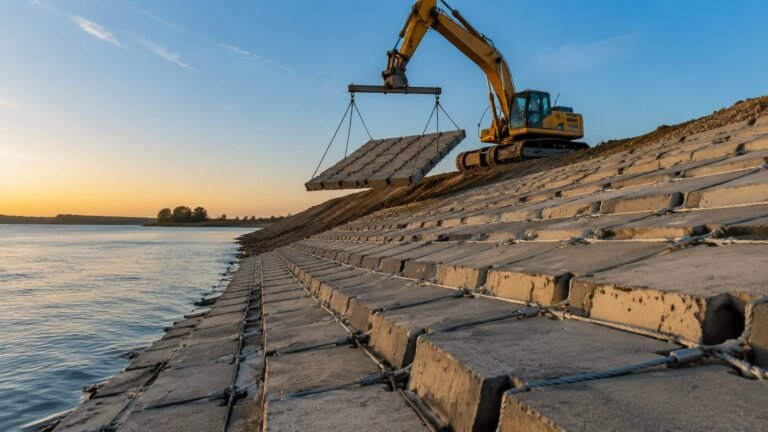
– ACM panel placement by excavator with lifting beam: USD 5–9/m²
– Cable termination, overlap, and pin connection: USD 1–2/m²
– Edge treatment and toe anchoring: USD 2–4/m²
– **Subtotal: USD 10–19/m²**
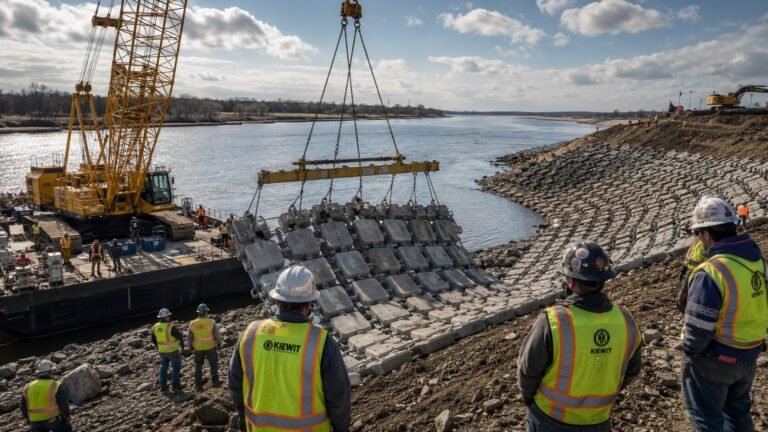
**River Crossing or Underwater Placement (Crane Barge)**
– Crane barge mobilisation (amortised per m²): USD 3–8/m²
– Diver assistance for positioning and overlap: USD 4–7/m²
– Geotextile placement underwater: USD 2–4/m²
– ACM panel lowering and pinning: USD 6–10/m²
– **Subtotal: USD 15–29/m²**
**Slope Revetment with Anchor Trench**
– Anchor trench excavation and backfill: USD 2–3/m²
– Geotextile and ACM placement on slope: USD 7–11/m²
– Termination at crest and toe: USD 2–4/m²
– **Subtotal: USD 11–18/m²**
Labour rates in these figures assume South/Southeast Asian construction markets. European or North American projects should apply a multiplier of 1.8–2.5× on the labour component.
One frequently underestimated item is the lifting frame. ACM panels at 150 mm thickness weigh 95–120 kg/m², meaning a standard 10 m × 3 m panel runs 2.8–3.6 tonnes. A proper spreader beam or custom ACM lifting frame is essential for safe placement and avoiding cable damage — budget USD 800–2,500 for equipment hire or fabrication if the contractor doesn’t carry this already.
**Practical takeaway:** For dry riverbank applications, USD 12–20/m² installed is a defensible estimate. Underwater placement budgets should start at USD 18–30/m² before site-specific mobilisation costs.
Whole-Life Cost vs Riprap and Gabions
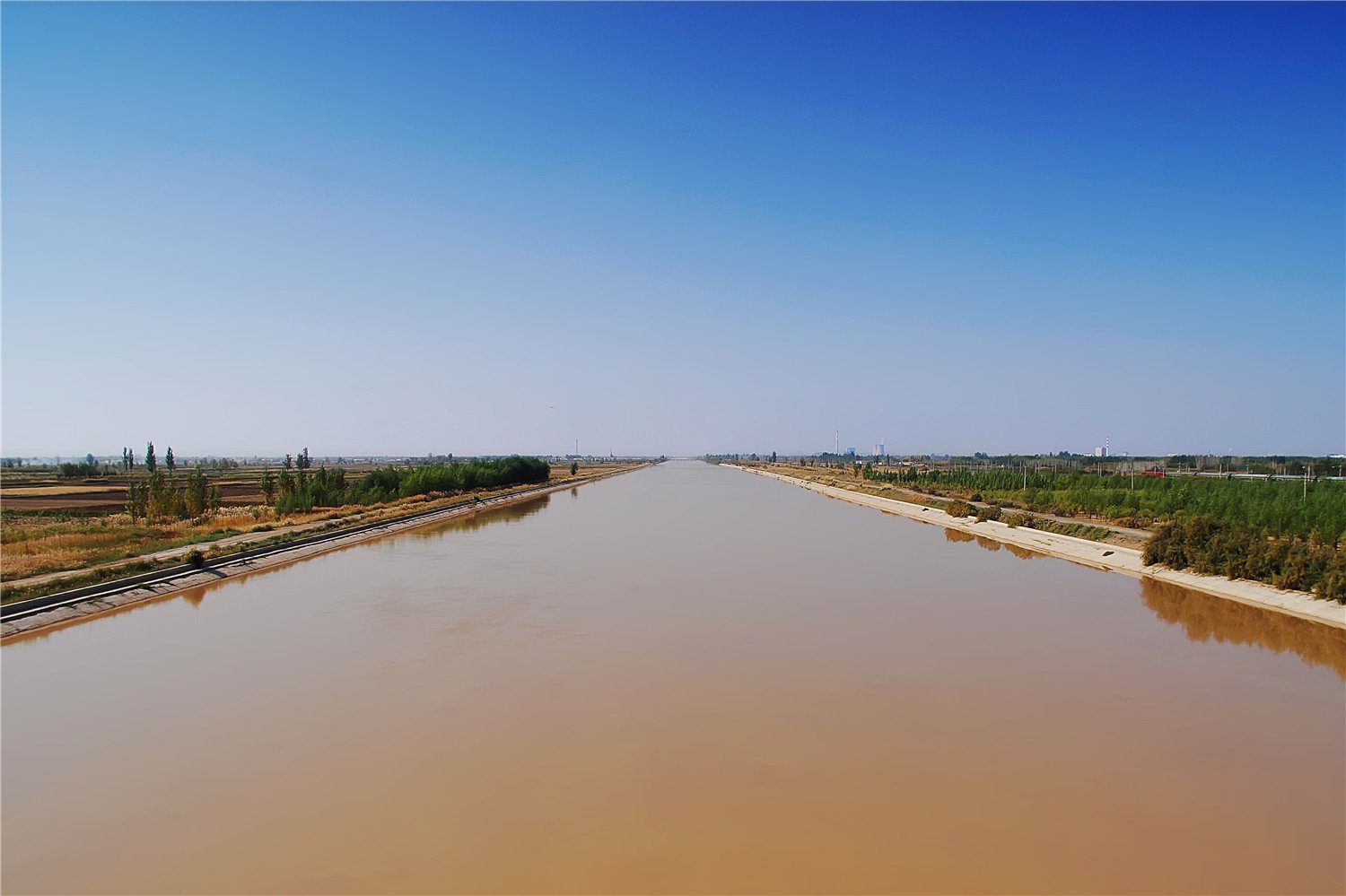
Capital cost comparisons between revetment systems are almost always misleading without a lifecycle lens. This is where articulated concrete mattress consistently wins arguments it initially appears to lose.
Let’s run the numbers honestly. A riverbank revetment project covering 10,000 m² with a 50-year design life:
| System | Installed Cost (USD/m²) | Maintenance Cycle | Maintenance Cost | End-of-Life Replacement | NPV Total (USD/m², 5% discount) |
|---|---|---|---|---|---|
| Articulated Concrete Mattress | USD 36–55 | 20–25 years (inspection only) | USD 1–3/m² | Nil (service life ≥50 years) | **USD 39–61** |
| Riprap / Rock Armour | USD 28–48 | 8–12 years (re-grading) | USD 6–12/m² | Partial at year 30–35 | **USD 52–84** |
| Gabion Mattress | USD 32–52 | 12–15 years (wire replacement) | USD 8–15/m² | Full at year 25–30 | **USD 68–105** |
| Concrete Channel Lining (cast in-situ) | USD 45–75 | 15–20 years (crack repair) | USD 4–9/m² | Partial at year 30 | **USD 64–96** |
The articulated concrete mattress advantage compounds over time. Galvanised or HDPE-coated stainless steel cable systems have documented service lives exceeding 50 years in non-aggressive environments, as the articulated concrete mattress durability and lifespan guide covers in detail. Riprap’s primary failure mode is progressive displacement under sustained flow, requiring periodic re-grading that riprap contractors rarely factor into the original cost estimate.
Gabion systems carry a structural liability most specifications underweight: wire corrosion. Even with PVC-coated Galfan wire, coastal or polluted river environments degrade gabion baskets within 15–20 years, triggering full replacement at a point when the project team has often long since moved on.
For scour protection at bridge piers and culvert outfalls, the lifecycle gap widens further. Riprap at a bridge pier requires ongoing bathymetric monitoring and periodic replenishment — costs that don’t appear in the construction contract but accumulate significantly across a 50-year maintenance budget.
What Drives the Unit Price Up or Down
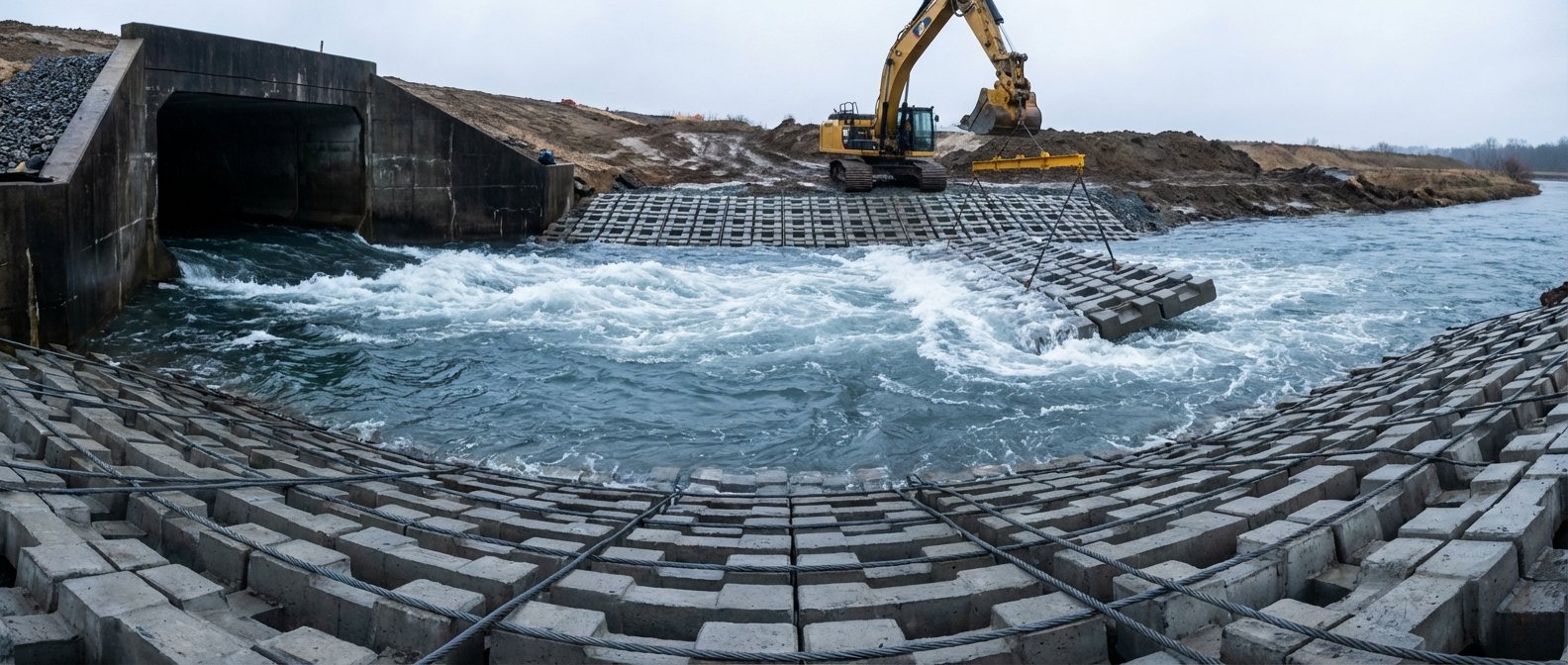
Understanding what levers move ACM pricing helps procurement teams write smarter specifications and avoid paying a premium for requirements the project doesn’t actually need.
**Factors that push price upward:**
– **Concrete grade above C30:** Each grade step (C30→C35→C40) adds approximately USD 1.50–3.00/m² at standard block thickness. C40 is rarely required outside aggressive chemical environments.
– **Stainless steel cable over galvanised:** AISI 316 stainless adds USD 2–5/m² but is worth specifying for tidal or chemically aggressive applications where galvanised cable service life drops below 20 years.
– **Block thickness above 175 mm:** Moving from 150 mm to 200 mm increases concrete volume by approximately 33% — price premium follows proportionally, plus increased freight weight.
– **Factory-attached geotextile:** Pre-bonded geotextile filter layers add USD 3–6/m² but reduce site installation time. Worth the premium for underwater placements where separate geotextile handling is difficult.
– **Third-party certification testing:** DNV-GL or independent HEC-23 hydraulic testing documentation adds USD 0.50–1.50/m² to unit cost but is increasingly required by government infrastructure tender specifications.
– **Small order quantities (under 500 m²):** Setup costs amortise poorly over small runs. Expect a 15–25% premium on orders below 500 m².
**Factors that reduce price:**
– Open-core block geometry (30–40% void ratio) reduces concrete volume significantly versus solid blocks — price saving of USD 4–8/m² vs. equivalent-thickness closed-block systems.
– Locally sourced aggregate at the manufacturing facility — Chinese manufacturers in Guangdong province benefit from low aggregate and cement costs that manufacturers in Europe or the US cannot match.
– Standard panel sizing (typically 6 m × 2 m or 8 m × 3 m) versus custom dimensions — non-standard sizing requires tooling adjustments that add to unit cost.
– Volume (covered in the next section).
**Practical takeaway:** Specifying C30 concrete, galvanised cable, and open-core geometry for non-aggressive freshwater applications will keep you at the lower end of the pricing range without compromising hydraulic performance.
Volume Discount Structure
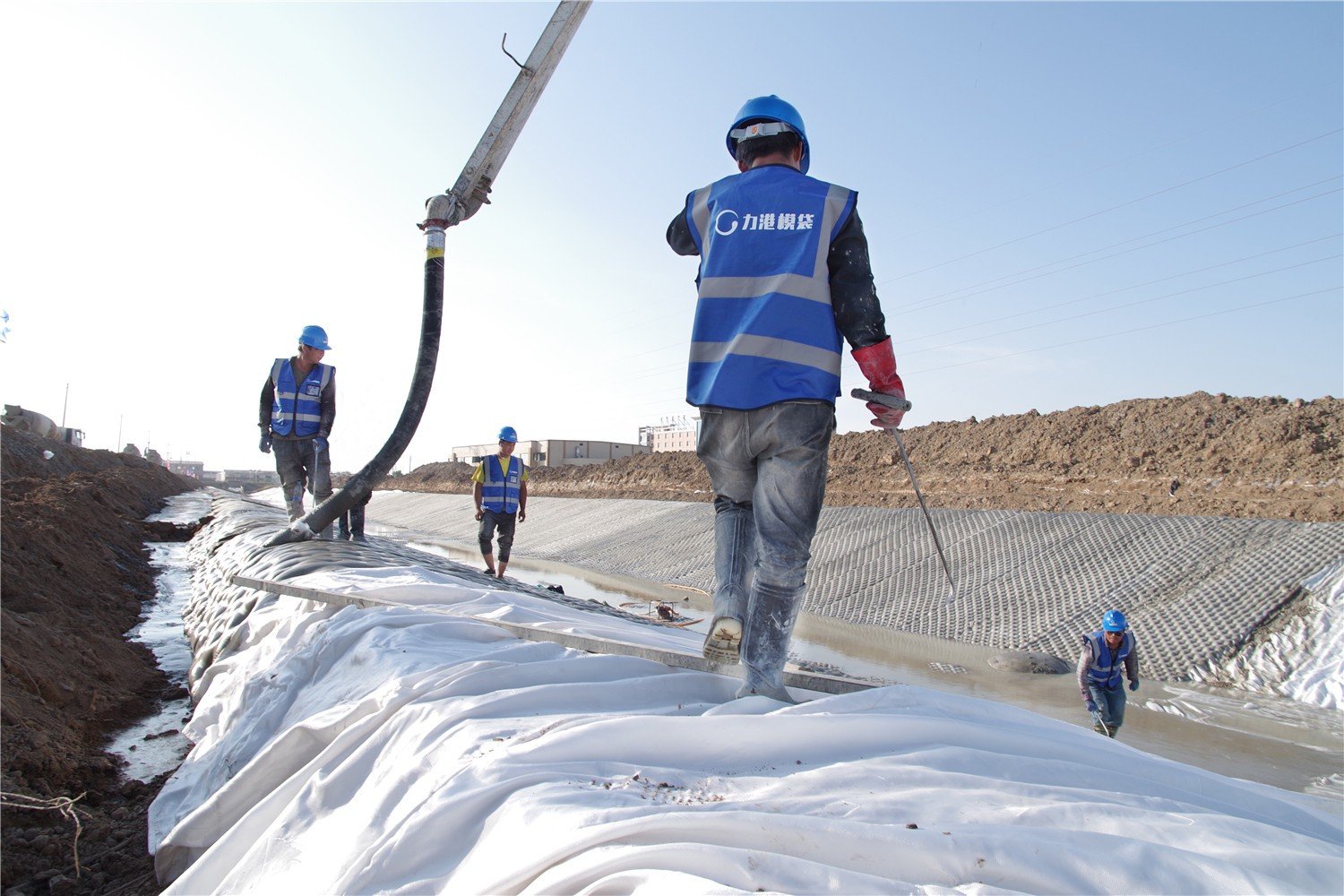
Volume is the most reliable lever for reducing ACM unit cost. Manufacturing concrete mattress panels is capital-intensive in setup but highly efficient at scale — and reputable manufacturers will share that efficiency with buyers who commit to volume.
Typical discount structure from Chinese ACM manufacturers:
| Order Volume | Typical Discount vs. List Price | Notes |
|---|---|---|
| Under 500 m² | +10–20% premium | MOQ pricing, setup costs dominate |
| 500–1,999 m² | List price (baseline) | Standard commercial quote |
| 2,000–4,999 m² | 5–10% discount | Volume production efficiency |
| 5,000–9,999 m² | 10–15% discount | Dedicated production run |
| 10,000 m²+ | 15–22% discount | Framework pricing, negotiate payment terms |
Framework supply agreements — where a contractor or government agency commits to a minimum annual volume across multiple projects — can push effective pricing even lower, particularly when combined with consistent specification standards that eliminate retooling between orders.
Lead times also scale with volume in ways that affect project scheduling. A 1,000 m² order from stock or near-stock typically ships within 15–20 days. A 10,000 m² custom specification order requires 45–60 days manufacturing lead time. Building procurement schedules around realistic lead times prevents the expensive expediting that happens when ACM arrives as the critical path item.
One practical approach for large civil programmes: split the order into a primary volume covering confirmed scope and a secondary volume option (exercisable within 90 days) to capture volume pricing while managing cash flow risk.
ACM Cost Estimation Checklist for Quantity Surveyors
Use this checklist before finalising your ACM budget line:
– [ ] **Block specification confirmed:** Thickness (mm), concrete grade (C25/C30/C35/C40), open vs. closed core
– [ ] **Cable type confirmed:** Galvanised steel, HDPE-coated, or stainless (AISI 316)
– [ ] **Geotextile requirement:** Factory-attached or site-installed separately
– [ ] **Total area (m²):** Including overlaps at edges, toes, and panel joints (typically add 8–12% to net area)
– [ ] **Ex-works price obtained:** In USD/m², including packing
– [ ] **Freight cost calculated:** FCL vs. LCL, destination port, current shipping rates
– [ ] **Import duty confirmed:** HS code verified with freight forwarder
– [ ] **Installation method confirmed:** Dry placement, slope revetment, or underwater (crane barge)
– [ ] **Lifting equipment costed:** Spreader beam or ACM lifting frame hire/fabrication
– [ ] **Geotextile filter layer costed separately** if not factory-attached
– [ ] **Anchor trench and edge termination included**
– [ ] **Certification requirement confirmed:** DNV-GL, HEC-23, or local standard — affects unit price
– [ ] **Volume discount level applied:** Check whether project volume qualifies for tiered pricing
– [ ] **Lead time confirmed against programme:** Manufacturing + shipping vs. installation start date
– [ ] **Lifecycle cost comparison completed:** Compare NPV against riprap and gabion alternatives
—
Frequently Asked Questions
### Q: What is the concrete mattress price per m² for a typical riverbank protection project?
For a standard riverbank protection project using 150 mm open-core ACM, budget USD 18–27/m² ex-works China. Add USD 5–9/m² CIF freight to Southeast Asia or Middle East, plus USD 12–19/m² installation on dry or dewatered works. Total installed cost typically falls in the USD 35–55/m² range, depending on project scale, site conditions, and local labour rates.
### Q: How does articulated concrete mattress cost compare to riprap on a lifecycle basis?
Riprap typically costs USD 28–48/m² installed — lower than ACM’s USD 36–55/m² initial cost. However, riprap requires re-grading every 8–12 years and partial replacement around year 30–35. Over a 50-year NPV analysis at 5% discount rate, ACM total lifecycle cost of USD 39–61/m² compares favourably against riprap’s USD 52–84/m². The gap widens further in high-velocity or scour-critical applications.
### Q: What is the minimum order quantity for articulated concrete mattress from a Chinese manufacturer?
Most Chinese ACM manufacturers set MOQ at 200–500 m² for standard specifications. Below this threshold, setup amortisation adds a 15–25% price premium. Orders under 100 m² are generally only viable as sample or trial quantities. Projects exceeding 2,000 m² begin qualifying for volume discounts of 5–10%; orders above 10,000 m² can achieve 15–22% below standard list pricing.
### Q: What makes ACM more expensive than standard rip rap when the concrete blocks are relatively simple to produce?
The cost premium in ACM comes from three sources: the connecting cable system (stainless or HDPE-coated cable accounts for 15–25% of unit cost), quality-controlled precast production requiring consistent compressive strength across every block, and panel assembly including cable threading, tensioning, and factory inspection. That quality-controlled assembly is exactly what delivers consistent hydraulic performance and long service life — rip-rap’s lower cost reflects its higher variability and shorter effective service life.
### Q: How long is the lead time for articulated concrete mattress orders from China?
Standard specification ACM (400×300×150 mm, C30, galvanised cable) from a Chinese manufacturer typically takes 25–35 days production plus 7–32 days sea freight depending on destination. Custom specifications — non-standard block dimensions, C40 concrete, stainless cable — require 45–60 days manufacturing. Buyers should confirm lead time against their installation programme start date and include a 10–15 day buffer for port clearance and local delivery.
—
Request a Detailed Cost Breakdown for Your Project Scope
If you’re pricing a specific project — whether it’s a 500 m² culvert outfall or a 50,000 m² river training scheme — a generic cost guide only gets you so far. The variables that move the number most (block specification, order volume, destination port, and installation method) are project-specific.
HydroBase manufactures articulated concrete mattress systems to HEC-23 and DNV-GL standards, with ex-works pricing, technical datasheets, and production lead times available on request. You can review the full articulated concrete mattress product range and specification options and submit a project enquiry with your area, block specification, and destination port — a detailed CIF cost breakdown is typically returned within 4 business hours.
For projects still in the design phase, the hydraulic design guide covering ACM velocity tolerance and stability analysis provides the velocity rating methodology needed to confirm the right block specification before the cost estimate is finalised.
—
Conclusion
Articulated concrete mattress cost is a topic the industry has historically been cagey about — and that opacity costs procurement teams time, money, and credibility when budgets need to hold up through design development and tender. The numbers in this guide reflect real market conditions: ex-works China pricing of USD 14–52/m² across the specification range, CIF additions of USD 4–14/m² depending on destination, and installed costs of USD 35–67/m² for most river and coastal applications.
The lifecycle story is where ACM’s value case closes most convincingly. Against riprap and gabion alternatives over a 50-year horizon, ACM’s lower maintenance burden and longer service life consistently produce a lower NPV total — and that’s before accounting for the reduced hydraulic risk of a system that performs consistently under design flow conditions rather than requiring periodic inspection and replenishment.
For quantity surveyors and project managers pricing revetment systems: use the checklist above to structure your enquiry, confirm the block specification against your hydraulic design, and get an actual CIF quote from a manufacturer before locking budget numbers. The transparency is available — you just need to ask for it specifically.
Need a concrete mattress solution for your project?
HydroBase provides end-to-end concrete mattress engineering & installation services — from hydraulic design and factory-direct ACM supply to on-site supervision and post-project inspection. Trusted by civil engineers in 50+ countries.